Monday, August 15, 2011

August 15: Daily Guru, "Gurucast #85"

CLICK HERE TO LISTEN (will open in new tab)


(Left Click (PC) or Command-Click (Mac) to save it to your desktop...it's about 75MB)

One hour of amazing music and commentary from "The Guru" himself.

Tracklist (all links are to MY review of that artist, song or album):
1. Dinosaur Jr, "We're Not Alone"  Beyond
2. Television, "Venus"  Marquee Moon
3. U-Roy, "Natty Don't Fear"  Dread In A Babylon
4. Del McCoury Band, "Learnin' The Blues"  Del And The Boys
5. Thin Lizzy, "Do Anything You Want To"  Black Rose
6. Marvin Gaye, "Flyin' High (In The Friendly Sky)"  What's Going On
7. The Clash, "Hateful"  London Calling
8. The Jimi Hendrix Experience, "Long Hot Summer Night"  Electric Ladyland
9. Notorious BIG, "Everyday Struggle"  Ready To Die
10. The Damned, "So Messed Up"  Damned Damned Damned
11. John Scofield, "Offspring"  Uberjam
12. The Misfits, "Where Eagles Dare"  12 Hits From Hell
13. Oysterhead, "Rubberneck Lions"  The Grand Pecking Order
14. Prince, "Let's Go Crazy"  Purple Rain

Sunday, August 14, 2011

August 14: Gene Vincent, "Be-Bop-A-Lula"

Artist: Gene Vincent
Song: "Be-Bop-A-Lula"
Album: Be-Bop-A-Lula (single)
Year: 1956


CLICK HERE TO LISTEN (will open in new tab)


While many may believe it is a relatively new tactic, the idea of record labels seeking out artists that sound similar to the given "hot trend" goes back as far as one can imagine.  Though the way in which the labels marketed such individuals may have been slightly different, the practice can clearly be seen across the decades, and in at least one case, it has led to one of the most common "mistaken credits" in history.  The incident in question occurred during the mid-1950's, when the sounds of country and western music were fusing together with r&b and blues, resulting in what is not terms "rockabilly."  There were a number of legendary artists that had their own unique taken on this blend of styles, and there is no question that one of the finest was Gene Vincent.  On many levels, one can argue that it was Vincent that embodied the entire rockabilly sound and style better than any other artist, and yet even though he fit this description at the height of the style's popularity, Vincent only managed to gain a single "big" hit, though a number of songs across his recorded catalog are equally representative of the period in music history.  Strangely enough, this lone hit is often improperly credited to his biggest rivals, as their voices sound similar, and yet there is no mistaking the superior take on the rockabilly sound that one can experience on Gene Vincent's magnificent 1956 classic, "Be-Bop-A-Lula."

Though the lyrical content of "Be-Bop-A-Lula" remains somewhat up for debate, there is no question that it was Vincent that wrote the songs' now-iconic musical arrangement.  After hearing the song only for a few moments, it becomes clear that on many levels, the music defines the entire era and genre, led by the moody, jerky guitar from both Willie Williams and Cliff Gallup.  It is Gallup that takes the solo mid-way through the song, and this performance in many ways set the standard for guitarists within the rockabilly style.  Compared to most other recordings of the time, the solo is rather aggressive, and yet it fits perfectly with the mood of the song.  Bassist Jack Neal provides much of the darker tones that run throughout "Be-Bop-A-Lula," and it is the way that his playing perfectly compliments the vocals that pushes the song to greater heights.  Rounded out by drummer Dickie Harrell, the band is in top form throughout the entire song, and it is Harrell that screams on the track, as legend says he did this so his family could "hear" him on the record.  Yet even this move manages to work perfectly with the overall flow and tone of the song, and one can easily picture the song ringing forth from a drive-in burger joint or in nearly any film from the era.  This feeling remains strong even after hearing the song countless times, and it is this fact that proves not only the timeless nature of the song, but the absolutely perfect performance from each member of the band.

However, while one can easily argue that without this group of musicians "Be-Bop-A-Lula" would not have found the success that it did, there is never any question that the most important element of the song is the vocal performance from Gene Vincent.  There are few other voices of the era that are as definitive of the time as one can hear in Vincent's singing, as he strikes the ideal balance between crooning and the swagger that would form the basis for the "rock" singer.  Throughout the song, Vincent works the entire vocal scale, from smooth higher notes to a deep vocal strut that surely lit up dance halls all across the country.  It is this somewhat dark, perhaps menacing sound that Vincent deploys all across "Be-Bop-A-Lula" that sets the song apart from others, and yet there is an authenticity within this element that pushes it far beyond other singers attempting a similar approach.  The source of the lyrics to "Be-Bop-A-Lula" remains somewhat up for debate, as a number of different parties have taken credit for the words over the decades, and yet on many levels, they are secondary when compared with how Vincent delivers each line.  Much like the music and singing, the words to "Be-Bop-A-Lula" have a classic 1950's feel, as it is a more subtle ode to the beauty and allure of a woman, and yet the way that Vincent's singing seems to imply a bit of an ulterior motive makes the song far more enjoyable than nearly any other single of the entire era.

Truth be told, both Gene Vincent and "Be-Bop-A-Lula" owe much of their success due to the reality of the fame of a rather similar performer at the time.  Capitol Records was actively seeking an "answer" to the overwhelming success of Elvis Presley, and one can easily see why they chose both Vincent and this song as their attempt to match his runaway triumph.  In a number of ways, both the label and Vincent succeeded in this quest, as "Be-Bop-A-Lula" it broke into the top ten on three different sales charts in the U.S., as well as a strong showing on similar charts in the U.K.  Due to the large sales and notoriety of the song, Vincent was asked to perform the song in the film The Girl Can't Help It, and as the years have passed, it has been featured in countless other films and television shows.  Furthermore, the range in bands that have covered "Be-Bop-A-Lula" places it far beyond almost every other recording in history, as everyone from Suicide to Foghat to The Beatles have recorded their own takes.  The song is also referenced in Dire Straits' "Walk Of Life," and the title was famously written on the back of George Harrison's trademark Fender Stratocaster.  Yet even with all of these accolades and tributes, the song itself remains largely unrivaled in terms of both musicality and historical significance, as there is not another recording in history that is quite on par with Gene Vincent's phenomenal 1956 single, "Be-Bop-A-Lula."

Saturday, August 13, 2011

August 13: Mongo Santamaria, "Afro Blue"

Artist: Mongo Santamaria
Song: “Afro Blue”
Album: various
Year: 1959


CLICK HERE TO LISTEN (will open in new tab)


Though they are one of the most rare breeds in all of music history, there are a handful of performers that truly transcend the title of “musician,” and one can seem them as an absolute vessel of the muse that is music itself.  That is to say, when one experiences the music of these giants, it is as if they are being driven by some greater power, simply serving as the mechanism through which their brilliant arrangements are conveyed.  This has perhaps never been more true or clear than when one inspects the timeless career of percussionist Mongo Santamaria, as he is without question in a class all his own.  As a major force within multiple genres for more than half a century, his style, sound, and sheer presence have played a massive role in shaping countless iconic musicians, as well as many sub-genres onto themselves.  Honing his talents in the New York City nightclubs in the late 1950’s and early 1960’s, he was one of the few players at the time who clearly had his own unique take on jazz itself and he seemed to pride himself on being able to flawlessly fuse it together with the sound of whomever surrounded him on stage. To this day, few musicians deliver as absolutely mesmerizing and moving performances as Santamaria, and though his studio records are certainly worth owning, it is in his live recordings where one can experience the true genius of his music.  To this end, there is no other song in music history that can compare to the sound and influence found within Mongo Santamaria’s magnificent 1959 composition, “Afro Blue.”

The number of versions of "Afro Blue" that exist are quite literally impossible to count, but it is the early live recordings of the song that offer the most impressive sound.  Though the players on the recordings changed over the years, the structure of the song and the additional instruments necessary to create the song remain very much the same.  In nearly every live recording of the song, one of the most fascinating aspects of "Afro Blue" is the way that Santamaria's brilliant rhythms lock in with the piano progression.  Serving as almost a second "vocal," the piano in many ways engages the listener moreso than the rhythm itself, as it tends to find perfect ways to fill the open spaces that Santamaria leaves throughout the song.  It is also the power that can be found on the versions from the early 1960's that set this song so far apart from others, as Santamaria has composed the ideal arrangement for every musician in the group to excel to their fullest potential.  This contrasting sound is furthered by the saxophone that is also always present, and this aspect of "Afro Blue" was explored to its fullest potential when the song was slightly adapted and recorded by none other than John Coltrane.  The interplay between these instruments and the often present flute playing is absolutely superb, and the balance of sound and instrumentation that exists in every Santamaria-led take on the song is what turned "Afro Blue" into a true jazz landmark.

It is due to his exceptional talents as a band leader, as well as his unparalleled skills on percussion that make Mongo Santamaria the icon that he remains to this day, and once one hears his sound, it is clear that he was playing and writing far beyond the visions of any of his contemporaries.  When it comes to revealing the full power and sound of the conga, there are none that can compete with Santamaria, and it is also the amazing level of energy he is able to extract from the instrument that makes his playing so distinctive.  At every turn, Santamaria blends together his native Cuban sound with the larger Latin-jazz sound, as well as elements of be-bop, soul, and even blues.  It is the fact that he is able to place these different influences together into something completely new and exciting that makes "Afro Blue" such a unique musical experience, and it is also the way in which so many time signatures are simultaneously at play which make his versions superior to later covers.  Seeming to have some members playing in three-four time, and others in six-eight, there is a magnificent poly-rhythm throughout the live versions of "Afro Blue," and it would be this sort of rhythmic experimentation that would pave the way for countless later artists.  Working a number of other percussive elements along with the conga, all across every recording of "Afro Blue," Mongo Santamaria sets the standard for the term "percussionist" with his masterful performance.

While his name may not be as instantly recognizable as some other jazz luminaries, there is no question that the contributions of Mongo Santamaria remain one of the most vital pieces in the development of both jazz as well as Latin music in general.  It is the way that Santamaria is able to bring such a raw, almost tribal sound and mood to "Afro Blue" that sets it so far apart from any other composition in history, and it is also this aspect that makes the live recordings of the track so superior to studio takes on the song.  The outright freedom that one can sense in these live recordings is the very essence of jazz, as one can hear the lead on "Afro Blue" being seamlessly passed from one musician to the next, creating a fluid and relaxed feeling that plays in brilliant contrast to the upbeat pace of the song.  It is also the wide range in musical octaves that give "Afro Blue" its amazing level of depth, as the distance between the notes on the flute and those coming forth from Santamaria's congas reinforce the idea of spirit and mood over musical tradition.  This contrast in sound also provides for the almost hypnotic sense that "Afro Blue" carries, and it stands as one of the few tracks in jazz music that truly has no boundaries to its appeal.  The multiple rhythms and exuberant mood that run all across the track not only prove the unique genius of Mongo Santamaria, but they remain the reasons that his live takes on "Afro Blue" continue to be the definitive version of this essential jazz composition.

Friday, August 12, 2011

August 12: P.M. Dawn, "Set Adrift On Memory Bliss"

Artist: P.M. Dawn
Song: “Set Adrift On Memory Bliss”
Album: Of the Heart, of the Soul and of the Cross: The Utopian Experience
Year: 1991


CLICK HERE TO LISTEN (will open in new tab)


Within every musical genre, there are moments that so completely go against everything that has been done previously, that many of the already established artists lash out at the new sound with a wide array of negative commentary.  In most cases, this is due to the new sound being so shocking and overly creative that one can argue the “older” artists fear their sound will be topped, and in some cases, this has occurred.  However, in the early years of the 1990’s, music was being fused together in countless previously unexplored ways, and few groups received as much criticism from their “own” genre as P.M. Dawn.  Taking the delivery style of hip-hop music and infusing it heavily with everything from psychedelic moods to new wave keyboards to almost mystical sounds and themes, the group presented hip-hop without any aggression or pretension, and this clearly did not sit well with the rapidly growing “gangsta rap” movement.  Even KRS-ONE took a lyrical shot at P.M. Dawn, though his accusation that they were just another “pop rap” group could not have been further from the truth, as P.M. Dawn have proven to be brilliant musicians with a vision and musical courage far beyond that of nearly any of their peers.  From their completely entrancing musical arrangements to their almost philosophical lyrics, the group stands in a category all their own, and there are few songs from the decade that stand as iconic and memorable as P.M. Dawn’s classic 1991 single, “Set Adrift On Memory Bliss.”

From the moment that “Set Adrift On Memory Bliss” begins, the song is clearly unlike anything else in music history, and yet at the same time, there is no question that the musicians behind the song are well versed in all genres.  This is largely apparent through the spectacular mix of samples that can be found throughout the song, as it is based around the core hook from Spandau Ballet’s “True.”  It is the way that DJ Minute Mix is able to make this classic sound work in an entirely new manner that makes the song so fantastic, and the fact that he makes the sample blend perfectly with the core drum hook from Eric B & Rakim’s “Paid In Full” eliminates any question of the groups’ hip-hop knowledge.  The other noticeable sample within the song comes from The Soul Searcher’s “Ashley’s Roachclip,” and the flawless fusion that comes to fruition on the track is nothing short of unforgettable.  The combination of the sounds has an almost ethereal sense, and it manages to be mellow and relaxing, while at the same time having a spirit and bounce that is unquestionably hip-hop.  It is also the fact that the music on “Set Adrift On Memory Bliss” seems to spin around the listener that draws them in so deep, and in this aspect, one can see links to groups like De La Soul and other sonic pioneers within hip-hop history.  Every note on “Set Adrift On Memory Bliss” is absolutely perfect, and it is the unique musical ecstasy that comes forth which makes the song such an unforgettable high-point of the entire decade.

It is also the way that the vocals and lyrics from Prince Be blend so flawlessly into the music, becoming an instrument onto themselves that completes the amazing experience that is “Set Adrift On Memory Bliss.”  If there was every a lyricist that sounded as if his vocals were completely effortless, it is Prince Be, as he rarely moves much beyond smooth, calculated speaking, though this in no way detracts from the impact and unique allure of his performance.  It is his measured, calm delivery that makes “Set Adrift On Memory Bliss” all the more hypnotic, and yet it is also his verses which deepen the display of the duos’ vast display of their musical expertise.  Though they were certainly lost on a majority of listeners at the time, the first verse of the song pays heavy tribute to Joni Mitchell’s “The Boho Dance,” as Prince Be changes only a few words from the original lyric, and later in the song, the line “subterranean by design” is also a nod to the same source material.  Prince Be also gives a nod to the likes of George Michael and The Pointer Sisters throughout the song and then finishes it off with one of the most infamous lines every from A Tribe Called Quest.  Throughout all of these references, Prince Be spins one of the deepest and most intellectual lyrics ever composed, as he provides a commentary on letting go of the material things in life.  The poetic brilliance of the rhymes cannot be overlooked, and when it comes to the finest lyricists of the 1990’s, it is impossible to leave this moment out of the discussion.

Whether it is hip-hop, new age, psychedelic, or any other genre, it is simply impossible to classify “Set Adrift On Memory Bliss” into any single category.  The song manages to pull from so many difference sources that the resulting material remains completely unique more than twenty year after its initial release.  Yet on many levels, the song fit perfectly into the time period and culture of the early 1990’s.  The sense of freedom and pure acceptance is unparalleled, and the song also has a rather unexpected “danceability” that cannot be denied.  One can also cite “Set Adrift On Memory Bliss” as one of the key moments in the resurgence of the 1960’s “hippie” culture, as the psychedelic influences and lyrics which question the importance of certain parts of life match perfectly.  Furthermore, the musical roots which P.M. Dawn displays at every turn show an understanding and appreciation for all forms of music, and this is likely one of the keys to the song itself standing as so impossible to classify.  However, at the same time, there is no way to argue that the base of the song does not reside within the world of hip-hop, and the way in which many of the “high visibility” entities of that community turned on the group stands as one of the more bad-mannered moments in music history.  There is no question that the song itself is one of the most impressive musical amalgamation’s ever captured on tape, and there has simply never been another song quite like P.M. Dawn’s unforgettable 1991 single, “Set Adrift On Memory Bliss.”

Thursday, August 11, 2011

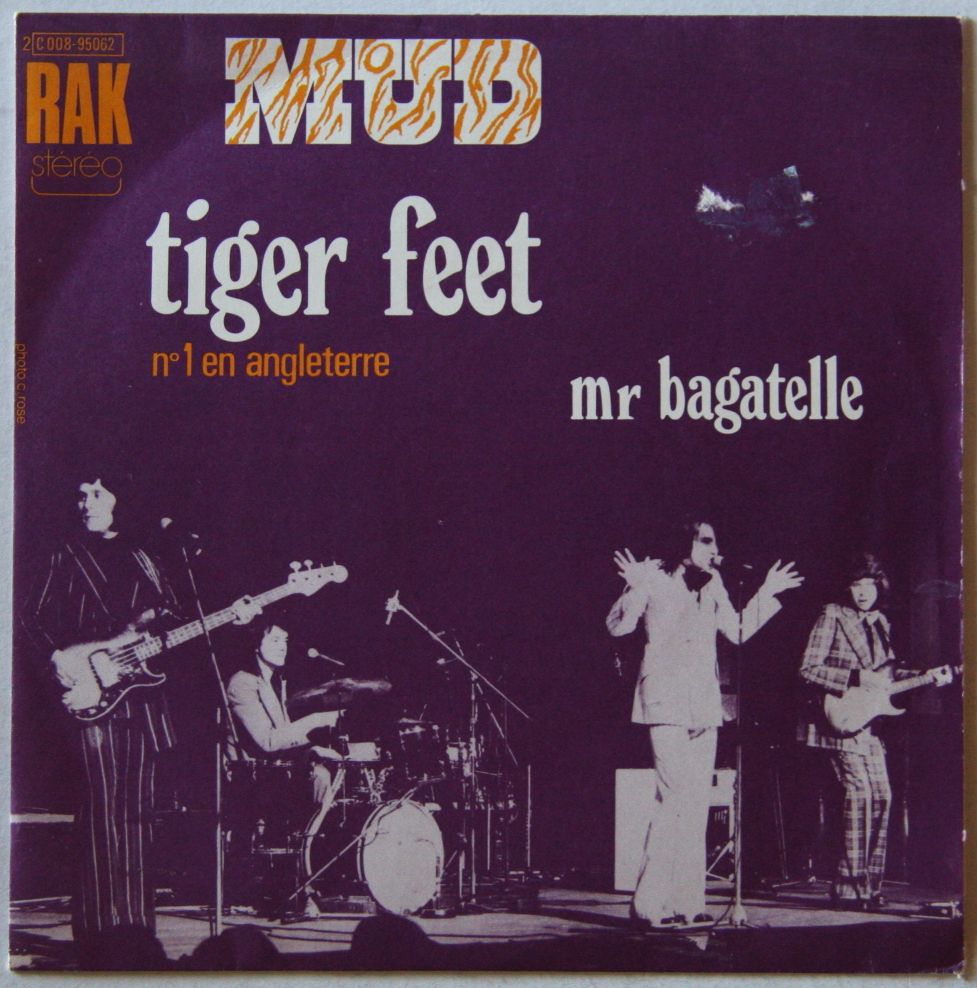
August 11: Mud, "Tiger Feet"

Artist: Mud
Song: “Tiger Feet”
Album: Tiger Feet (single)
Year: 1973


CLICK HERE TO LISTEN (will open in new tab)


Though it is often attributed only to the dance and club scene of the era, across almost every genre, the early and mid-1970’s were one of the most outright upbeat points in all of music history.  “Feel good” music was overflowing within almost every style, and there was a freedom and positivity that has rarely been heard since.  While many were attempting to make outrageously grand rock anthems of extraordinary length, it was the handful of groups that put their energy into making more straightforward, almost more organic rock songs that stand as the true high-points of the era.  Though they remain sadly unknown within the U.S., one cannot overlook the superb music and overseas dominance of U.K. glam-rock masters, Mud.  Having already been playing as a band for nearly a decade by 1973, the group had honed their own sound, and yet there was still some aspect that was missing to complete their overall approach.  This final element came in the form of songwriters and producers Mike Chapman and Nicky Chinn, whose previous work with the likes of The Sweet made them a rather natural fit for the style of Mud.  Once they were all in the same room, some of the most memorable songs of the entire 1970’s were created, and the amazing live power and presence of Mud was finally properly captured within a studio setting.  Though a number of their songs are still as fresh as every today, there are few other songs of the era that can compare to the punch and drive found on Mud’s brilliant 1973 single, “Tiger Feet.”

The moment that “Tiger Feet” begins, the fun-loving nature of the song is completely apparent, as the shouts followed by the absolutely decimating guitar riff is easily one of the most energizing openings in history.  Rob Davis is absolutely amazing across the entire track, and the tone of his guitar is unlike that of any other guitarist.  There is an urgency within his performance that completely grabs the listener, almost forcing them to get up and dance.  This is a spirit and sound that can easily be seen as one of the major components in the development of U.K. punk, and yet his descending solos are just as fantastic.  The swing and sway provided by bassist Ray Stiles is equally spectacular, as his sound is as good of a side-to-side head shake progression as has ever been heard.  It is the way that he manages to be such a force whilst never dominating the mix that shows what a potent but patient band lived within the members of Mud, and it is also this balance that set their sound so far apart from that of their peers.  Drummer Dave Mount has a light touch to his performance, and this highlights the balance of the bands’ approach, as well as shows their wide range of influences.  Within “Tiger Feet,” one can hear traces of everything from Buddy Holly to T. Rex to the entire “Southern rock” style, and it is this diversity in influence that makes their sound so fantastic, and leads to “Tiger Feet” having a massive appeal across nearly every musical genre.

However, it is within the vocals of Les Gray where the clearest connections to the glam-rock sound can be heard, and his performance on “Tiger Feet” is without question the finest of his entire career, as well as that genre.  Perfectly straddling the line between speaking and singing, Gray has the swagger of a hard rock frontman, and yet there is also a slight restraint that manages to make his sound far more accessible.  On many levels, his performance on “Tiger Feet” is what truly draws in the listener, and the song is one of the most difficult in history to not sing along.  It is the upbeat, almost bouncing vocal delivery that is strangely endearing, and this enables the song to rarely be forgotten once heard.  It is also the fact that the lyric that Gray sings is so simple and universal that made it such a success in the U.K., as it perfectly captures the very essence of youthful nerves and hormones.  One can feel the energy in the situation he sets, as well as almost smell the club during which the song surely takes place.  The fact that the imagery is so vivid serves as the final piece to this fantastic song, and it is the chorus of “Tiger Feet” that pushes it to a rarely matched height.  The chanting of “…that’s neat, that’s neat, that’s neat, I really love your tiger feet” may seem somewhat nonsensical, but within the confines of the song, it works perfectly, and is perhaps the most lasting after effect of this true classic.

Scattered all across the history of every genre of music, there are countless classics that did rarely receive their due as they did not reach international impact for one reason or another.  This works across all international borders, and there is no question that some of the most enjoyable moments in all of music history live within these songs which some must seek out to experience.  This is certainly the case in the glam-rock movement, as the style in itself was somewhat overshadowed by the rise of heavy metal and disco, so a number of the styles finest songs are more akin to “cult classics” that anything else.  However, this In no way diminishes from their historical significance, nor their musical worth, and in most cases, the sheer energy coming off of these tracks is far beyond that of the more well known songs of the era.  Once one hears “Tiger Feet,” it is almost impossible to explain why the song did not reach the international level, as it easily equals or surpasses mot other glam-rock singles of the time, and the pure elation that comes off of the record is nothing short of superb.  From the brilliant musical arrangement to the fantastic vocal performance to the almost vigorous lyrics, “Tiger Feet” hits in a flawless manner at every turn, and it is just as fun and energizing to hear today as it was nearly forty years ago.  Though both their name as well as the song remain someone lost amongst the global music community, there is no other song in history that brings a similar musical exuberance that can be found on Mud’s exceptional 1973 single, “Tiger Feet.”

Wednesday, August 10, 2011

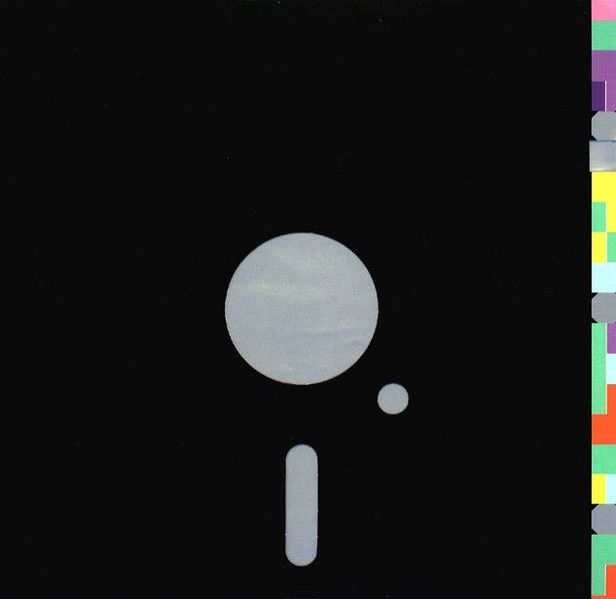
August 10: New Order, "Blue Monday"

Artist: New Order
Song: “Blue Monday”
Album: Blue Monday (single)
Year: 1983


CLICK HERE TO LISTEN (will open in new tab)


While many live their lives by the phrase, “everything happens for a reason,” during the darkest hours of human existence, such sentiments can seem both futile and perhaps cold-hearted.  However, in an overwhelming majority of cases, it holds true in the end, though often times such cannot be fathomed “in the moment.”  This is certainly the case that one can argue in the period that followed the tragic suicide of Joy Division’s Ian Curtis in May of 1980.  Coming on the eve of the bands’ first ever U.S. tour, the group was left shattered and frustrated, as one can make the case that they were on the verge of breaking huge on the international music scene.  However, it was out of this tragedy that an equally pivotal band was birthed, and a majority of music in the 1980’s and beyond would have never come to be had it not been for the pioneering sounds of New Order.  Though they remain somewhat overlooked in the list of “big” bands from the 1980’s, their contributions cannot be denied, and many of their songs remain just as relevant and exciting today as they did upon first release.  Fusing together the rising synthesizer-based dance sound with the darker themes of Joy Division, the band carved out an entirely new genre of music, quickly establishing themselves as a group completely separate from their previous band.  New Order forever cemented their names as one of the greatest acts in music history when they released what when on to become the best selling twelve-inch single in history in the form of 1983’s, “Blue Monday.”

Though many may not be aware of the songs’ name or those responsible for its creation, the moment that “Blue Monday” begins, the rhythm and melody are instantly recognizable.  The immediate link to their earlier band is set into play by the stark, almost military-like cadence from the programmed drums, and yet it is this same element which makes “Blue Monday” uniquely danceable.  As the synthesizers slowly fade into the mix, the depth of the song becomes realized, and there are few songs of the era that seem to completely surround the listener in the manner that one can experience on this track.  After the introduction, one of the most distinctive aspects of “Blue Monday” becomes apparent, as the sequencer played by Gillian Gilbert is in fact slightly off rhythm.  Though the band was well aware of this mistake, it was agreed that the “error” managed to work quite well, so it was left as is for the final mix of the song.  The bassline seems to bounce off the track in a completely unique manner, and this is perhaps the most modern aspect of the song, and countless bands that followed in the footsteps of New Order would copy the tone found here.  The interplay between all of the instruments during the “solo” section is unlike anything else, and may very well be the highlight of the entire song.  It is this combination of multiple rhythms and upbeat fills and progressions from the synthesizers that on many levels make “Blue Monday” the quintessential 1980’s pop sound, and few artists deployed as perfectly balanced and toned a sound as one can experience here.

Serving as the ideal finishing touch to an exceptional musical arrangement, the vocals of Bernard Sumner drive home the dark, if not haunting nature of “Blue Monday.”  It is also in his vocals where the most obvious separation between New Order and Joy Division occurs, as his singing is far deeper and darker than that of Ian Curtis.  Yet his vocal approach works perfectly throughout “Blue Monday,” as there is a looming sense of sadness that runs throughout the song, yet there is no question that this is a dance song at its core.  The way with which the almost church-like backing vocals are placed around his futuristic-sounding leads is nothing short of superb, and there has rarely been a vocal performance that can be compared on any level.  Furthermore, one can easily hear the impact of Sumner’s vocal style in later artists like Peter Steele and many other performers.  However, it is also the nature of the lyrics that Sumner sings that makes “Blue Monday” such an overwhelming experience, as they can be interested on a number of different levels.  While at their most basic, the words seem to speak to a broken relationship, due to reality of the world around them, one cannot help but read into the words as a statement to their fallen bandmate.  Every line of the song is beautifully crafted, and it is lines like, “…but if it wasn't for your misfortunes, I'd be a heavenly person today…” that make it impossible not to consider the song as some sort of homage or final statement that “formally” closed the door on Joy Division.

Taking all of this brilliant musicianship into account, one can see the overall success of “Blue Monday” as a rather large surprise, as it had a number of factors working against it.  First off, the full release of the song clocks in at just under seven-and-a-half minutes, and one can easily understand how unfriendly such length is in terms of radio airplay.  Secondly, the song was not placed on the original releases of the bands’ Power, Corruption, And Lies record, igniting the ire of many fans to a point where special labels were placed on the record to formally indicate the absence of the track.  Furthermore, the twelve-inch singles that were released did not actually have the songs’ title or band name on them; instead displaying a “color code” that had to be decoded from the back of the full length album.  Yet even with all of these obstacles, it is estimated that “Blue Monday” sold well over one million copies, instantly cementing its place as one of the best selling singles in history.  As the years have passed, “Blue Monday” has been remixed and re-released on a number of occasions, and this has helped to keep the song fresh and relevant as the musical trends have changed.  In all, more than twenty versions of “Blue Monday” have been formally released over the years, and yet there is still a greatness within the original that has never been matched.  Though nearly every band in the 1980’s attempted to duplicate its perfection, there has never been another track that can compare to New Order’s brilliant 1983 single, “Blue Monday.”

Tuesday, August 9, 2011

August 9: Joe Tex, "I Gotcha"

Artist: Joe Tex
Song: "I Gotcha"
Album: I Gotcha
Year: 1972


CLICK HERE TO LISTEN (will open in new tab)


While many may try and make the case that hip-hop music "came out of nowhere," once one inspects the lineage of music throughout the 1960's and 1970's, the way in which the style developed is completely obvious.  Furthermore, it is within this development that the reason why so many early rap songs were based on older funk and soul break-beats becomes quite understandable.  This is due to the fact that the rapping style of performance was widely used within the soul sound, and though it may have been overlooked due to the backing music, its presence within these songs is impossible to argue.  For those who may wish to think otherwise, there is one performer whose catalog makes this link abundantly clear, and there were few soul singers that could compare to the power and presence of Joe Tex.  Though he remains in comparative obscurity, his writing and songs were one of the most critical elements to the entire rise of soul music, and it was his later work that cemented the base from which hip-hop music grew.  As his career progressed, his sound became more aggressive, jarring, and forceful, and this is the reason why it so naturally led to the development of hip-hop music.  While his early singles remain some of the finest fusions between soul and r&b, it is Joe Tex's 1972 single, "I Gotcha" that forever altered the landscape of nearly every musical style.

The musical arrangement found on "I Gotcha" is as much of a perfect balance between funk, soul, and what would become hip-hop as has ever been recorded, and it is one of the few songs that instantly grabs the listener, almost demanding some sort of positive body movement.  The bassline is without question one of the most infectious in history, as it winds through the song, giving "I Gotcha" a fantastic sway and dip.  Yet it is the fact that there is also an ample amount of attitude and grit within this groove that sets the bassline apart from most others, and it is this tone that quickly differentiates the music of Joe Tex from that of his peers.  The way in which the guitars weave brilliantly in and out of the rest of the music is equally amazing, and it is the largely the guitar that makes "I Gotcha" one of the most irresistible dance songs ever recorded.  However, the element that truly pushes the track to greatness is the signature soul horns, and one can quickly understand that it is this sonic presence that makes all other dance-style songs pale in comparison.  The drumming on "I Gotcha" is also quite unique, as there is a relaxed freedom within the playing that is unlike anything else, and this loose feeling drives home the amazing tone of the song.  The combination of all of these sounds truly has something for every music fan, and it is much the reason that "I Gotcha" is able to light up a room just as easily today as it did nearly four decades ago.

Along with the unique musical tone, there is simply no way that one can mistake the voice of Joe Tex for any other performer in the entire history of music.  In both his sound and swagger, Joe Tex was one-of-a-kind, and it is often the way that he approaches the lyrics as opposed to the lyrics themselves that make his music so amazing.  Throughout "I Gotcha," Tex brings an amazing level of energy, and it is the punch with which he delivers every word that makes the song impossible to forget.  Though he can be aligned with the other greats of soul singing due to his more straightforward, almost "unsung" style, there is an edge and grittiness to his sound that makes him completely distinctive.  It is due to this more raw and unpolished sound that the link to the hip-hop style is more apparent, and once one hears "I Gotcha," there is simply no question that the song was one of the most important building blocks in the development of the later style.  Even during the more melodic verses, Joe Tex's vocals are more "reading rhymes" that singing, and it is this slight tilt in the balance that would influence so many followers.  Yet the subject matter of "I Gotcha" is certainly up to debate, as it is perhaps a bit questionable in morality, as the singer seems to scold a woman for not coming to him after she left her previous relationship.  However, regardless of the intent behind the words, the song has an overall upbeat and spirited tone, and the key to this is the unrestrained manner with which Joe Tex delivers every line.

As the years have passed, "I Gotcha" has become far more of a pivotal moment in music than one would have expected when it was first released.  Though it was without question Joe Tex's most commercially successful song, it would be its lasting impact in all areas of media that would serve as the true testament to its greatness.  While one can easily find samples and references to the song all throughout hip-hop history, "I Gotcha" also continues to appear in countless films and television shows, most notably in Quentin Tarantino's movie, Reservoir Dogs.  The fact that the song continues to find relevance within modern society proves what a seminal recording it was, as it embodies the power and spirit of the classic soul sound, as well as adapting to the culture of the time during which it was recorded.  Though one might be inclined to cite another soul icon as the only source of hip-hop music's development, it is impossible to make such a solitary argument once one experiences the stunning masterpiece that is "I Gotcha."  From the hard hitting horns to the brilliant bassline, the song overflows with energy and musical perfection, and it is much the reason that all these decades later, there are few songs that can compare on any level to what one can find within Joe Tex's extraordinary 1972 classic, "I Gotcha."