Saturday, May 14, 2011

May 14: The Jam, "Down In The Tube Station At Midnight"

Artist: The Jam
Song: "Down in the Tube Station at Midnight"
Album: All Mod Cons
Year: 1978


CLICK HERE TO LISTEN (will open in new tab)


When it "exploded" in 1977, many were under the impression that there was no way to modify the punk ethos to bring it closer to the mainstream sound of the day.  In many ways, this exact thought was the complete opposite of everything that it meant to be punk, and yet there were a number of bands that were looking for ways to bring this punk spirit to the masses.  In doing so, these bands found different styles with which they could infuse the punk attitude, and it is largely due to these groups that the punk sound survived.  Though most bands simply found ways to take some of the edge off of the sound, there were groups that looked far deeper into other styles of music, and though they rarely receive the credit they deserve, there are few bands that played a more vital role in the development of music than one finds in the songs of The Jam.  Remaining largely unnoticed outside of their native England, it was The Jam that not only found a new way to fuse together punk and r&b, but one can point to them as the key group in the transition from punk rock to "new wave."  The true brilliance of The Jam was perfectly captured on their 1978 record, All Mod Cons, and to this day, few albums can boast as wide ranging and truly captivating a sound.  It is on this album that one can also find the groups' most important song, as The Jam's status was quickly cemented with the release of their stunning, unnerving 1978 single, "Down in the Tube Station at Midnight."

From the very first moments that the music enters the song, there are a number of aspects that become clear about both the song, as well as the band.  As the fast-paced, almost nervous drum beat kicks in from Rick Buckler, one cannot help but link their sound to The Buzzcocks, as the pace and attitude are quite similar.  However, "Down in the Tube Station at Midnight" almost instantly builds a far darker, almost sinister mood than nearly anything else that had been previously recorded by any band, and it is this mood that defines much of the song.  The scattered, unsettling bass from Bruce Foxton is nothing short of perfect, and one can almost feel the protagonists eyes darting around the station nervously as he walks.  It is this sense of movement that sets "Down in the Tube Station at Midnight" apart from its peers, and it is a fear which remains largely unmatched to this day.  Guitarist Paul Weller both compliments and contrasts the bass throughout the song, as his sound seems to almost stride along, offering a different cadence than either of the two other band members.  This combined style is where one can see the full transition of The Jam compared to their earlier singles, as they have clearly found the ideal balance within their music.  It is this balance, along with the way in which all of the sounds come together to form one of the most captivating moods in history that makes "Down in the Tube Station at Midnight" such a unique moment in music history.

In many ways, the music itself can stand on its own, yet it is the context and tone added by Paul Weller's vocals that truly make "Down in the Tube Station at Midnight" a song that stands far above a majority of other recordings.  While the bite and attitude of his earlier songs is still very much intact, on this song, Weller has found a slightly more gentle way to deliver his words, and yet the overall impact is never lost.  This new sense of control serves him well, as instead of filling the song with rageful outbursts, he lets it out slowly, building the tension to an almost unbearable level with every new line.  The fact that he is able to make this song so captivating, whilst simultaneously spinning one of the darkest tales every recorded is the true magic behind "Down in the Tube Station at Midnight," and perhaps the reason it hits so hard is how easily anyone can relate to the circumstances.  As the title slightly implies, the song speaks of a man heading home late at night on the London Underground.  Weller paints a brilliantly vivid picture of every aspect of his journey, from the stark appearance of the tube entrance, to the smell of the two men who he finds in the station.  It is the detail of the moments leading up to the attack that are perhaps the most chilling, as the narrator gives a very lifelike description of his wife, waiting for him at home.  Yet it is the final verse of the song that is truly unsettling, as one is left to wonder not only whether the narrator will die, but what is to become of his wife, as, "...'cause they took the keys and she'll think its me..."

This rather chilling narrative hits just as hard today as it did more than thirty years ago, and it is largely due to the straightforward, rough delivery from Weller.  The way in which he clearly understands how to emphasize certain words proves that he was a singer far beyond a majority of his peers, and yet the fact that "Down in the Tube Station at Midnight" found moderate commercial success is almost a bit confusing, given the subject matter.  Yet one can also argue that it was the fact that the song was so perfectly crafted, pulling from a number of genres, that made it irresistible to the general public, and one can cite this song as the moment that not only turned The Jam into icons, but also kicked off many of the "post-punk" genres.  It is the way in which Weller's vocals seem so spare, almost desperate, against the bassline of the song that makes it impossible to turn off "Down in the Tube Station at Midnight," and it is this element that also makes the song completely unforgettable.  The vivid picture that Weller paints as the song progresses is also so clear and accurate that even those who have never stood on a subway platform can easily picture and relate to the action of the song.  In many ways, it is this fact that defines "what" makes a truly great song, and it is the way in which all of the elements combine with one another that make it impossible to deny the overall impact and sheer magnificence of The Jam's 1978 single, "Down in the Tube Station at Midnight."

Friday, May 13, 2011

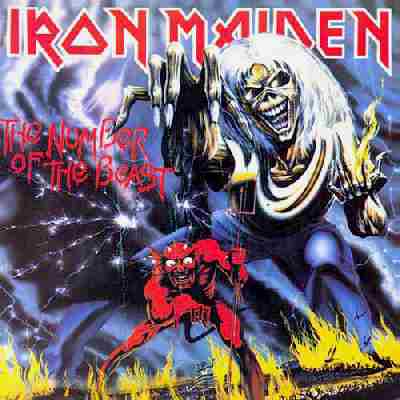
May 13: Iron Maiden, "Number Of The Beast"

Artist: Iron Maiden
Song: “Number Of The Beast”
Album: Number Of The Beast
Year: 1982


CLICK HERE TO LISTEN (will open in new tab)


Though genres shift and change as time progresses, it is almost ways the initial, pure form of the style that endures the longest, as it is this to which the initial fans were drawn.  It is also within this pioneering sound where one can find the links between bands that existed decades apart, as this form serves as a common thread across time.  In both of these cases, it is rarely more true than one finds within the genre of heavy metal, and even four decades after the term was first being widely used, the core form of the style remains largely the same.  However, there are also few genres of music that have been subject to as much criticism over the years, and yet even as this continues, heavy metal continues to be the sound of choice for countless music fans across the globe.  Though there have been many iconic names in heavy metal throughout its existence, few command the respect and status across the generations as one finds in a band that almost perfectly defines the style: Iron Maiden.  For more than thirty years, the band has been one of the most powerful, wildest groups on the planet, and yet that have done so without very much radio support.  Reaching what is without question their creative apex in 1982, Iron Maiden released onto the world what remains one of the greatest heavy metal records in history: Number Of The Beast.  Filled with some of the most memorable songs in the history of the genre, Iron Maiden perfectly captures everything it means to “be” heavy metal within the albums stunning title track.

Though it is often mistaken, the opening reading from The Book Of Revelation on the song that precedes the music was NOT performed by Vincent Price, but by a man named Barry Clayton, who the band asked to read it in a “Vincent Price” style.  As soon as he completes the reading, “Number Of The Beast” formally begins with what has become one of the most iconic guitar riffs in music history.  The energy that can be felt through the playing of the duo of Dave Murray and Adrian Smith remains unparalleled to this day, and in both the speed and tone, “Number Of The Beast” establishes itself as a true heavy metal masterpiece.  After this progression, the rest of the band joins in, and it is once this occurs that the full power of Iron Maiden becomes abundantly clear.  The rhythm section of bassist Steve Harris and drummer Clive Burr have rarely sounded better, and they help to build an overwhelming sense of tension and grandeur as the song progresses.  Harris is able to even give the song a distinctive groove, and the fast repetition of his playing is one of the keys to the overall tone of “Number Of The Beast.”  Similarly, it is the force and emotion with which Burr approaches the song that embodies the sound every metal drummer strives to achieve.  It is the way in which he seems to almost bounce across the song that makes it so significant, and yet the sheer power in his performance cannot be ignored.  Iron Maiden furthers their attempt at the “perfect” metal song with the soaring, blistering guitar solo that transitions into the final verse of the song, and few solos carry the intensity that can be found here.

However, while the musical performance is absolutely that of legend, there may be no other vocal track in the entire history of heavy metal that can compete with the singing here by the one and only Bruce Dickinson.  Utilizing the entire vocal scale in a way unmatched by any other singer, the drawn-out wail that he supplies at the top of the song is without question one of the most memorable moments in all of music history.  Following this, Dickinson delivers what stands as one of the most impassioned and absolutely mesmerizing vocal performances of all time, and even those that are not huge heavy metal fans must give ample respect to his vocals on “Number Of The Beast.”  Easily keeping pace, if not surpassing his bandmates in terms of pure energy, Dickinson is clearly letting the music take him as it wants, and this leads to some of the most stunning vocal progressions ever recorded.  Whether it is in the powerful, aggressive verses, or the soaring bridge and chorus sections, this is clearly “the” performance of his career, and on many levels, it is this vocal track that defines the heavy metal singing approach.  Yet it is also within the lyrical content of “Number Of The Beast” where one can find the projected definition of “heavy metal,” and it is Iron Maiden’s unrestrained, unsubtle words that not only fueled their fans, but loads of controversy at the same time.  As if the songs’ title was not clear enough, the lyrics to the song spin a dark tale of a nightmarish run in with The Devil, and yet there is an almost upbeat tone to the song that never ceases.  It is the fact that Bruce Dickinson is able to take this subject and make it so much more powerful through his vocals that pushes “Number Of The Beast” into a musical category all its own.

Yet it was also the subject matter of “Number Of The Beast” that incited the ire of countless “music watchdog” groups across the globe.  Easily painting the group as worshipers of Satan, this fact alone personifies much of the image of heavy metal in general, and yet at the same time, it was this same aspect that made their fans even more dedicated.  While these “watchdog groups” soon had a wide range of bands to harass, it was Iron Maiden that took the brunt of their hate-speech throughout the early 1980’s, and yet even in the face of this, the song continued to find success.  This, in many ways, is the most obvious evidence of the songs’ greatness, as the truly special songs in history will find a way to rise, regardless of the circumstances it is given.  As the decades have passed, “Number Of The Beast” has continued to grow in stature, and it stands today as one of the most highly revered songs in the entire history of heavy metal, with new bands spinning their own covers.  The song has also found its way into many parts of popular culture, and in the current day, the subject matter has become almost ignored due to the sheer force and talent put forth within the musical performance.  Each of the band members is in top form on “Number Of The Beast,” and yet one can also sense that they were having quite a good time during the recording session.  Whether it is this uniquely positive feeling, the masterfully executed musical arrangements, or the breathtaking vocal performance, there is perhaps no other song in history that better defines the term “heavy metal,” than one can experience on Iron Maiden’s monumental 1982 single, “Number Of The Beast.”

Thursday, May 12, 2011

May 12: Bill Haley & The Comets, "Rock Around The Clock"

Artist: Bill Haley & The Comets
Song: "Rock Around The Clock"
Album: Rock Around The Clock (single)
Year: 1954


CLICK HERE TO LISTEN (will open in new tab)


In the case of every genre in history, there are a number of songs that can be seen as pivotal moments in its development, and it is the earliest appearances of that style that stand as the most significant.  However, one of the most inexplicable trends is the fact that so many of these groundbreaking songs have somehow fallen into a "second tier" when compared to the bigger commercial hits, and yet their overwhelming significance cannot be ignored.  This is most clear when one looks into the early days of rock and roll, as there were a number of artists who paved the way for the likes of Elvis Presley and Buddy Holly, and yet somehow remain an afterthought to those whom they influenced.  While it is not to say that their own musical efforts have been ignored, the fact of the matter is, they rarely receive the complete credit they deserve for their pioneering efforts.  It is with this in mind that one can only wonder how, even with the unquestionable status as "the" first rock and roll song to receive airplay, Bill Haley And The Comets remain in a secondary status to many later artists.  Though many believe it was others, it was in fact Haley that made many of the earliest recordings of the fusion of the country style and r&b, and one can argue that he was the first "rockabilly" artist.  The culmination of this new sound came to a head in what remains the pivotal moment in the rise of rock and roll, Bill Haley And The Comets unmistakable 1954 single, "Rock Around The Clock."

Though there are many, the opening notes of "Rock Around The Clock" without question rank among the most recognized progressions in the history of music, and it is both in what the band plays, as well as the tone with which they play that made it such a hit.  Much of this lives within the fantastic swing that is set in place by drummer Billy Gussak, and yet he was a session musician on the track, as opposed to a "member" of The Comets.  Though his cadence is sharp, it is the unique stutter and flow that he brings to the track which can still light up any dance floor to this day.  The other key to "Rock Around The Clock" was the performance by the other "non-Comet," electric guitar player Danny Cedrone.  He had worked with Bill Haley before, and his iconic guitar solo on this song was actually the same he played on Haley's "Rock This Joint" a few years earlier.  However, this time around it would become absolutely legendary, and it is impossible to cite all of the times it has been copied over the decades.  However, "Rock Around The Clock" is very much an example of a song being greater than the sum of its parts, and one cannot overlook the amazing groove that is injected by saxophonist Joey Ambrose.  Often emphasizing the down-beat, it is his performance on the second solo that has become almost as legendary as the guitar work, and it is the combined sound of the entire band that enables "Rock Around The Clock" to retain its upbeat and irresistible draw more than half a century after its initial release.

The other key element in the success of "Rock Around The Clock" lives in the fact that Bill Haley possessed one of the most ideal voices for rock music, as it swings in much the same way as the music over which he sings.  After hearing his performance on "Rock Around The Clock," one can easily understand how such a sound would have quickly lit up and dance hall at the time, and the song may very well be "the" sock-hop classic.  Haley makes great use of a large portion of the vocal scale, and yet there is a relaxed, almost smooth sound to his voice, and this style would be another element of "Rock Around The Clock" that would be copied countless times over the generations.  In many ways, one can argue "Rock Around The Clock" as the ultimate song of youthful wanting, as in the music, singing, and especially the lyrics, the song screams of the sheer joy of being young and not wanting "the party" to end.  This idea has also been copied many times over the years, with the most obvious being Kiss' classic, "Rock And Roll All Night."  Yet there is something wonderfully innocent about Haley's singing here, and one would be hard pressed to find a more iconic lyric than when he sings, "...we're gonna rock around the clock tonight, we're gonna rock, rock, rock, 'till broad daylight..."  Whether it is what he sings or the way in which he delivers the lines, one cannot deny the fact that almost every rock song in history can find its roots in this performance.

However, though it now lives with an absolutely iconic status, it took quite some time before "Rock Around The Clock" caught on with radio and the general public.  Though it was initially released in early 1954, it was not until an appearance in the 1955 film, Blackboard Jungle, that the song gained a wide audience.  "Rock Around The Clock" quickly rose to the top of the charts across the world, and it stands as the first "rock style" song to achieve such a feat.  The sales of the single were truly unprecedented, and many movie studios did all they could to find ways to cash in on the songs' success, including the 1956 film that shares the same name as the song.  On nearly every continent, the song was a massive hit, and it was one of the first clear cases where one can see the common threads that connect the youth around the globe.  It was "Rock Around The Clock" that forever marked rock and roll as "young music," and the trends the song set into motion remain in place to this day.  In fact, even after so many decades have passed, there are still cover versions of "Rock Around The Clock" being recorded, and everyone from The Sex Pistols to David Cassidy have recorded their own take on the song.  The fact that the song stands today as a bit of a "secondary" thought after the more commercially successful acts of early rock is nothing short of a travesty, as one can easily argue that rock and roll would not exist had it not been for Bill Haley And The Comets and their monumental 1954 single, "Rock Around The Clock."

Wednesday, May 11, 2011

May 11: The Rondelles, "Distraction"

Artist: The Rondelles
Song: "Distraction"
Album: Fiction Romance, Fast Machines
Year: 1998


CLICK HERE TO LISTEN (will open in new tab)


In the case of nearly every artist or band, it takes a considerable amount of time for the complete sound or aim to develop, as with experience often comes a better understanding of music in general.  However, one can look at this the completely opposite way and argue that there is something to be said for the "blissful ignorance" of a band that simply plays as hard as they can, as by not knowing any better, there are no thoughts or notions to cloud or alter their sound.  While almost every time the latter happens, it is nothing worth noting, every once in a great while, this can lead to absolutely brilliant musical recordings.  There has rarely been a better example of this idea than the unique blend of pop, retro, and punk that can be found within the music of The Rondelles, and there is a raw, yet stunning tone to their entire 1998 debut, Fiction Romance, Fast Machines.  Writing a majority of the songs while the band members were still in high school, the record was released by the label owned by Sonic Youth's Steve Shelley, and there are moments on the record where one can hear a connection between the two bands.  However, in almost every aspect, the sound of The Rondelles is completely distinctive, and the amount of noise and attitude that the trio is able to inject into their music is truly uncanny.  Though there is not an "off" moment anywhere on the record, one can quickly understand the unique musical brilliance that "is" The Rondelles within their magnificent 1998 song, "Distraction."

The song, which opens the album, sets a very high bar for the quality and mood of the rest of the record, as the distorted guitar from Juliet Swango rings across the track with all of the majesty and impact of the greatest punk songs in history.  There is almost instantly a sway to the song, and yet "Distraction" also gains its unrelenting drive through this aspect of the song.  The other two members of the band quickly join the fray, and bassist Yukiko Moynihan adds a sharp groove to the arrangement, while drummer Oakley Munson pushes it along at an almost feverish pace.  There is a dry, almost untouched feel to the combined sound of the trio, and it is this straightforward sound that instantly hooks the listener.  Clearly, the trio also has a great understanding of how to work musical tension, as the brief pauses at the end of each verse give "Distraction" a feeling of continually falling over the edge, and it makes the song enjoyable in a completely unique manner.  Later on the song, Munson also adds what may be the most distinctive aspect of the music of The Rondelles: the retro-sounding keyboard.  It is the fact that the pulsating progressions fit so perfectly into their powerful punk mix that sets them apart from the rest of their peers, and the fact that the overall tone of the song is never lost is all the proof one needs to argue the high level of talent within the group.  In many ways, "Distraction" is one giant hook, and much like the rest of the album, once you hear the song, it can never be forgotten.

Adding the ideal finishing touch to the song, the voice of Juliet Swango can be compared to a number of other artists, and yet she does not completely fit into any other description.  Much like the music over which she sings, there is an attitude and presence within her vocals that captivates the listener, and at the same time, one cannot help but sing along with many parts of the song.  On "Distraction," she works the entire vocal range, and few performers have been able to work as wide a set of notes with the ease that one can experience on this song.  It is also the way in which the pushes her voice at different points that reinforces the mood, and it is nothing short of stunning when one considers how young the band was when the song was recorded.  The youthful spirit of her voice is unlike anything else, and it is this aspect that proves to be one of the most intriguing of all of the amazing sounds that The Rondelles deploy.  However, it is also the way in which her voice perfectly captures the emotions of the songs that is so fantastic, and one cannot help but be drawn in by the innocent, easily relatable lyrics.  Understandably, a majority of the lyrics seem to deal with youthful crushes and frustration, and in its own beautiful way, "Distraction" is a love song that knows no match.  While they are complex in their own, unique style, it is the combination of the simple phrasing, and absolutely mesmerizing voice of Swango that completes the perfection of "Distraction."

Through all of these amazing musical achievements, one cannot help but draw comparisons from The Rondelles to many of the great "girl groups" of the 1950's and 60's, and even in their name, one can assume that this was rather intentional.  The way in which Swango manages to tackle the ideas of the innocence of young love is very similar to the way in which these themes were approached by groups like The Shangri-La's, and this shows an amazing understanding of a generation of music from which The Rondelles were far removed.  Yet there is also the presence of the punk movement that is woven deep into the bands' sound, and one can safely assume that everyone from The Go-Go's to Liz Phair had influence of the shape of The Rondelles.  It is the way in which the band is able to take these diverse examples and mix them into something entirely new that makes them so fantastic, and yet one can only be frustrated by the fact that the bands' career was so short lived.  However, the entire Fiction Romance, Fast Machines album, which takes its name from a Buzzcocks song, is as close to musical perfection as one will find anywhere, and one can easily argue that it is very much the fact that the group was "not over-thinking" the album that makes it so wonderfully unique.  Combining soaring vocals with as much punk attitude as one could want, there is simply no other song in history that packs the same punch as one can experience in The Rondelles' 1998 track, "Distraction."

Tuesday, May 10, 2011

May 10: Dr. John, "Gris-Gris Gumbo Ya Ya"

Artist: Dr. John
Song: "Gris-Gris Gumbo Ya Ya"
Album: Gris Gris
Year: 1968


CLICK HERE TO LISTEN (will open in new tab)


Often times, it can take a musician a fair amount of time before they completely develop or "find" their own sound.  This "discovery" can be the result of a traumatic incident, or simply being in the right place at the right time, and hearing music in a new and exciting way.  However, one would think that after a decade "in the business," one would have found their own unique style, and found any success that they will at any given point.  Yet this is precisely the opposite of the history that gave the world one of its most unique musical voices: Dr. John.  Though he had already spent the better part of a decade as a session keyboard player throughout New Orleans, it was the tail-end of the 1960’s that would provide the ideal environment for him to completely re-write the books on musical expectations.  Fusing together dark blues music with a psychedelic madness, and topping it off with what can only be described as “voodoo soul,” there has simply never been another musician that created sounds quite like Dr. John, and one can see his influence across countless artists that followed.  While he would find greater commercial success with later singles, it was his 1968 debut, Gris-Gris, that displays the unique genius of his music, and one can easily see the album as the pivot from his days as a boogie-style pianist to the true musical mastermind that he remains to this day.  The entire album overflows with deep moods and completely captivating arrangements, and there is no other song in history that can compare to the records’ stunning lead track, “Gris-Gris Gumbo Ya Ya.”

The track opens with a whispery, almost haunting saxophone line from Plas Johnson, and one cannot help but compare the tone and soul within to that of the great Pharoah Sanders.  The mood that this short solo sets is nothing short of perfect, and one is quickly transported to a humid night, deep in the bayou, and one can almost feel and see a campfire burning through the trees.  As the rest of the band drops in, there is an almost surprisingly sensual swing to the music, as the rhythm section of bassist Harold Battiste and drummer John Bordreaux intertwine to form a simple, yet amazingly deep groove.  The echo from the drums only adds to the atmosphere of the song, and it is in this element that “Gris-Gris Gumbo Ya Ya” takes on a bit of a dangerous tenor.  The guitars and mandolin that play lightly in the background reinforce this uneasy, almost menacing feel, and one would be hard pressed to find a song from any genre that achieves this level of emotion.  It is the way in which all of the sounds combine together where one can sense that the musicians have moved beyond simply “playing” and are truly invoking a musical spirit.  Whether it is the sometimes oddly placed drum beats, or where the other instruments “wander” within the arrangement, one cannot help but feel that there is something “larger” that is dictating the paths of the players.  The tension the group creates, as well as the way in which the sound pans between the channels serves as the element that pushes “Gris-Gris Gumbo Ya Ya” into a category all its own, and there are few songs where firsthand experience is more necessary for proper understanding of this unique genius.

Yet even though his own addition of keyboards to the song cannot be overlooked, it is the unmistakable vocal work of Dr. John that makes “Gris-Gris Gumbo Ya Ya” the legendary musical work that it remains more than four decades after its first release.  Within seconds of the vocals beginning, one can never forget the sound of Dr. John’s voice, and it is in these moments that the vocal inspiration for everyone from Tom Waits to Jim Morrison can be heard.  Beyond raspy, the vocals that Dr. John brings to this song border on creepy, and yet there is a sense of allure and mystery within his performance that completely envelop the listener.  It is also the persona that Dr. John creates for himself that is so intriguing, and this is the more literal transition into the main phase of his career.  With the opening lines of, “…they call me Dr. John, The Night Tripper, got my sizzling gris-gris in my hand…,” Dr. John has turned himself into a voodoo Medicine Man, and it is this personality that becomes the ideal finishing touch to the song.  Even without this literal reference, one can easily interpret his position and intensions through the tone of his voice, as one can picture his wild eyes across the campfire, as he speaks of his abilities to help and heal.  Yet even when he is singing these words, one can sense an underlying sense of malice within his singing, and the grin with which the words must have been delivered is completely clear.  However, the true “magic” of Dr. John’s vocal performance is the fact that even after hearing it countless times, the impact remains just as strong, and this is the key reason why “Gris-Gris Gumbo Ya Ya” stands as such a distinctive and absolutely breathtaking moment in music history.

Though many artists have attempted to create dark, mysterious, often ethereal sounds in their music, once one hears “Gris-Gris Gumbo Ya Ya,” it becomes obvious that these others are all simply trying to achieve the levels on this song.  In short, it is a song that knows no peer, and its presence completely re-defined what was possible within studio recordings.  One can find countless links and remnants to other genres within the song, as many progressions sound like jazz structures, and yet there is a deep sense of blues, as well as more straightforward soul than one can find almost anywhere.  The way in which all of these sounds blend together under a psychedelic sheen is in itself rather representative of the culture from which the sound was birthed, and it can also be seen as a culmination of everything that Dr. John had learned in his time as a session musician.  Yet legend says that the Gris-Gris album itself was one of the most hastily recorded albums in history, rumored to have been recorded during “left over” time from a session originally paid for by Sonny and Cher.  The fact that such complex and deep sounds could be conceived in such a rush only adds to the brilliance of the album as a whole, and especially on the entrancing lead track.  Though he has spent his career living slightly under the radar, there is no way that one can overstate the impact and importance of Dr. John and his musical creations.  One can argue that almost every musician that followed has borrowed from his sound in one way or another, and one can quickly understand why he is held in such regard by experiencing the true musical masterpiece that is Dr. John’s 1968 song, “Gris-Gris Gumbo Ya Ya.”

Monday, May 9, 2011

May 9: Daily Guru, "Gurucast #71"

CLICK HERE TO LISTEN (will open in new tab)


(Left Click (PC) or Command-Click (Mac) to save it to your desktop...it's about 75MB)

One hour of amazing music and commentary from "The Guru" himself.

Tracklist (all links are to MY review of that artist, song, or album):
1. Ween, "Push The Little Daisies"  Pure Guava
2. The Transplants, "California Babylon"  The Transplants
3. Erykah Badu, "Didn't Cha Know"  Mama's Gun
4. The Clash, "Lover's Rock"  London Calling
5. John Lee Hooker, "Tupelo"  The Folk Lore Of John Lee Hooker
6. The Fall, "Jawbone And The Air Rifle"  Peel Sessons
7. Alice In Chains, "Love, Hate, Love"  Music Bank
8. Guns N' Roses, "Out Ta Get Me"  Appetite For Destruction
9. Cee-Lo Green, "Wildflower"  The Lady Killer
10. Lucero, "Ain't So Lonely"  Tennessee
11. Sly & The Family Stone, "Sing A Simple Song"  Stand!
12. The Thought Criminals, "So All The Superheroes"  Murder Punk
13. Esthero, "Thank Heaven 4 You"  Wikked Lil' Grrrls
14. The Stooges, "No Fun"  2011/04/19, Ann Arbor, MI

Sunday, May 8, 2011

May 8: Ice-T, "New Jack Hustler"

Artist: Ice-T
Song: "New Jack Hustler"
Album: O.G.  Original Gangster
Year: 1991


CLICK HERE TO LISTEN (will open in new tab)


In some way or another, every genre deviates from its original sound at some point, as every style of music must grow and progress.  However, this can become problematic when during such changes, the original meaning or mood behind the genre in question becomes lost and the style almost becomes a joke of what it was meant to be.  One can see this trend occur when a particular sound begins to crossover into the mainstream, and it is perhaps no more clear than when one examines the rise of what has become known as "gangsta rap."  When one mentions the genre, a handful of artists come to mind, and yet a majority of these performers represent the more pop-centric style of the genre, and they have little in common with the few emcees that "started" this style.  When one traces "gangsta rap" back to its roots, it leads to one man: Ice-T.  Bringing an unapologetic, often overly-aggressive performances style, Ice-T is responsible for some of the most gritty, yet vivid insights into inner-city life, and though many have tried, none have been able to match his intensity.  Yet there was almost always a deeper, socially conscious subtext to his songs, and while many did not like his music, it was impossible to ignore.  Though his later would would cause massive controversy, the true definition of both his own persona, as well as "gangsta rap" as a whole can be found in Ice-T's brilliant 1991 single, "New Jack Hustler."

Almost form the first note of the song, it is completely clear that "New Jack Hustler" is completely unlike any other rap music that was being recorded at the time, and even more than twenty years later, the sound remains unique.  The edge and attitude that comes through in the musical arrangement sets a fantastic, dark mood for the song, and yet there is a swagger that fits perfectly with the character and scene that Ice-T presents.  The combination of samples stands as one of the best in all of hip-hop history, and one can easily pick out pieces from James Brown's, "Blues And Pants," as well as Sly And The Family Stone's, "You Can Make It If You Try."  The third major sample on the song comes from Bobby Humphrey's "Jasper Country Man," and it is the way in which DJ Aladdin fuses the sounds together, creating something entirely new, that makes the song so amazing.  The three samples are combined with a handful of more modern sounds and record scratching, and yet DJ Aladdin shows just how much musical range one can create within hip-hop.  There are times when he pulls all of the sound minus just the bass or break-beat, and the way that this emphasizes certain lines of the song is a technique that would become widely used.  Yet it is also the way in which guitars, a saxophone and other more traditional instruments are used that give a peek into the music that Ice-T would soon create with his band, Body Count.  Though many have tried to duplicate the sound, there has rarely been another musical backing that worked as perfectly with the rhymes as one can experience throughout "New Jack Hustler."

However, throughout his entire musical catalog, there has never been another element that even came close to eclipsing the power and presence of Ice-T's vocals, and he remains one of the most instantly recognizable voices in the entire history of hip-hop music.  While he may not use much more than his speaking voice when he raps, it is the way in which Ice-T raises and lowers the intensity in his delivery that makes him so distinctive, and there are few emcees that better define the idea of "inner city storytelling" than one can find in his rhymes.  On tracks like, "New Jack Hustler," his rhymes are so vivid that one cannot help but become completely mesmerized, and while many rappers that followed have attempted to paint a similar picture of "ghetto success," none have come close to this original display from Ice-T.  However, though his rhymes here may have set the blueprint for "gangsta rap," there is far more going on within his lyrics, as he speaks directly to both political and financial systems in his words.  When Ice-T drops rhymes like, "...I got nothin to lose, much to gain, in my brain, I got a capitalist migraine...,"it becomes clear that this is far more than just your average "power and money" rap, and he completely turns society onto itself when he makes the almost philosophical comment on the "drug game" with the line, "...is this a nightmare? Or the American dream?"  Simply put, though he may have kick-started the "gangsta rap" movement, few later artists even came close to the level of thought or intensity that Ice-T brings on "New Jack Hustler."

Only a few months before it was released as part of his game-changing O.G. Original Gangster record, "New Jack Hustler" was used as the primary theme to the film, New Jack City.  The film and song matched perfectly, telling a story of the darker aspects of the inner-city drug trade.  Yet even without its connection to this movie, "New Jack Hustler" easily stands on its own, as Ice-T paints what may be the most vivid scenes in the entire history of hip-hop music.  Furthermore, Ice-T challenges the idea that the power and money gained through drug sales is a "bad" thing, and it is very much this song and notion that created the persona that scores of later emcees would follow.  In many ways, Ice-T makes the lifestyle out to be perhaps the only way for urban youth to gain such power and money, and yet one can see the third verse of the song almost as a reflection of "the dealer" in a wider social context.  Across the entire lifespan of hip-hop music, many have made allusions of the conditions within the inner city, but few have made as poignant a statement as when ice-T delivers the lines, "...pregnant teens, childrens' screams, life is weighed on the scales of a triple beam..."  It is this line that in many ways sums up the entire song, as it somehow manages to almost justify the actions of the main character.  Though many may attempt to write it off as "just another gangsta rap" song, there has never been another recording that either musically or lyrically can compare to Ice-T's brilliant 1991 single, "New Jack Hustler."