Friday, January 14, 2011

January 14: The Ethiopians, "Come On Now"

Artist: The Ethiopians
Song: "Come On Now"
Album: Engine '54: Let's Ska And Rock Steady
Year: 1968


CLICK HERE TO LISTEN (will open in new tab)


Though throughout the course of history countless genres have somehow morphed into new sounds, it is a very rare occasion that this transitional process is actually captured on tape.  In most cases, these changes occur during rehearsals as a band emerges, and while the end product is always clear, how the band found their way to that sound is often a bit of a mystery.  Furthermore, in a number of instances where a sort of "middle ground" can be heard, it often leans too far to one sound or the other, leaving only traces of the old or new.  However, as the roots of reggae began to turn into what would eventually be termed as "ska," there were a handful of groups that made brilliant songs that perfectly walk the line between the two sounds.  Understandably, nearly all of this took place in Jamaica in the mid and late 1960's, and while groups like The Skatalites are perhaps best known for their contributions during this time, one cannot overstate the importance of their fellow countrymen, The Ethiopians.  Though the group primarily consisted of only two musicians, the amount of sound they were able to produce is nothing short of stunning, and many of their melodies have become standards as the decades have passed.  While their first single, "Train To Skaville," is as much of a classic as one will find, the amazing sound and perfectly balanced ground between the old and new sounds can be experienced on The Ethiopians' extraordinary 1968 single, "Come On Now."

As the song begins, "Come On Now" shows a clear mastery of the old, reggae and rock steady sounds, as the bright horns and smooth tempo are as good as either of those styles ever sounded.  The way in which the drums echo across the track also brings an exceptional amount of mood to the song, and "Come On Now" appears as laid back as any other song in recorded history.  However, after the opening musical segment, it becomes clear that there is something else at play on this song, as the tempo slowly speeds up, and there is a great deal of emphasis being placed on the downbeat. The way in which the guitars emphasize the bounce of the drums is where one can easily hear how the song is no longer a roots-style reggae tune, and there is little question that "Come On Now" is one of the earliest instances of a "true" ska sound.  Yet it is not only the historical significance that makes the musical composition so fantastic, as the manner in which the horns seems to almost become a second vocal track, often sounding as if they are imitating the "real" vocal track is one of the most enjoyable aspects of the song.  Along with this, the melody which the entire band deploys is without question one fo the most catchy and unforgettable sounds ever recorded, and even after the first listening, the descending musical pattern sticks in your head.  This ability to compose such memorable pieces, as well as craft them into something entirely new is what quickly cemented The Ethiopians legacy as true innovators of sound.

However, while one cannot overlook the significance of the music on "Come On Now," the fact of the matter is, The Ethiopians were a vocal group above all else, and that fact is as easy to hear here as anywhere else in their catalog.  The combination of Leonard Dillon and Stephen Taylor proves to be one fo the finest vocal pairings in history, and there is clearly no limit to their talents in terms of the musical scale or the amount of emotion which they can convey.  On "Come On Now," there is another, almost strange influence that one can detect, as in the level of soul, as well as the way in which their voices move across the track, the sounds of Motown can clearly be heard.  This is no surprise, as if one strips the two sounds to their core, they have a great deal in common, yet there are few traces within the reggae/ska sounds where one can hear such vocals.  Though it is a bit of a contrast to the vocals they had previously recorded, it is perhaps the fusion of these styles that also helped to push the genre forward, and one would eb hard pressed to find a more beautiful vocal track anywhere in the history of reggae or ska.  As has always been the case in the so-called "island sounds," the level of honestly and simplicity in the lyrics has been one of its key aspects, and on "Come On Now," this is no different, as the song sings of taking advantage of the moment, and perhaps realizing that there is always time to change.  This almost blissful way in which this message is delivered places the song into a category all its own, as in its entirely, one would be hard pressed to find a song with a wider appeal.

While it is often a side-note to the sources of rock and blues, one simply cannot overlook the massive amount of influence that has come as a result of the sounds of "island music."  Though many others have tried to copy the sound over the decades, it is the early performers of reggae, rock steady, and ska that defined an entirely different way of approaching music, and their sounds have rarely been matched.  Though both reggae and ska are fantastic on their own, the transition from one to the other is one of the few "documented" cases of a new style forming.  Though a handful of bands played important roles in this movement, few were more important than The Ethiopians, and there is a level of authenticity and joy in their music that is far beyond that of their peers.  The way in which the music echos the vocals, as well as the more clear concentration on the downbeat is what would become the blueprint for the ska sound, and there are virtually no other places one can hear it so clearly before their 1968 single, "Come On Now."  In fact, one can make the case that in both ska and reggae, the group played a vital role, as one can see nearly everything before their recordings as rock steady.  Regardless of the terminology one uses, it is impossible to argue against the changes that one can hear in their music, and it is much the reason that The Ethiopians and their 1968 song, "Come On Now," remain such highly regarded classics more than forty years after their first release.

Thursday, January 13, 2011

January 13: Mazzy Star, "Fade Into You"

Artist: Mazzy Star
Song: "Fade Into You"
Album: So Tonight That I Might See
Year: 1993


CLICK HERE TO LISTEN (will open in new tab)


While there are a number of components that are necessary to make a song truly unforgettable, perhaps the most important is also the most overlooked.  Though there are much to be said for a great musical hook or a moving lyric, without the right mood for the song, all these other elements almost become irrelevant.  Furthermore, deploying a proper mood is often the most difficult task, as regardless of where on the spectrum the song falls, most artists either go too far or don't even bother with this part of the song.  Yet conversely, when a performer truly achieves that special height where the mood of a song is both genuine and balanced, there is almost nothing that can hold the song in question from becoming a classic.  While there are a number of bands that have found this space within the more aggressive genres, composing proper mood in the more mellow genres has proved to be a far more difficult task.  Yet this type of perfection was found in a band that mastered the art of what is often called "dream pop," and it is this mesmerizing sound that makes the music of Mazzy Star so fantastic.  Fusing together elements of jazz, blues, soul, and much of the darker side of the post-punk sound, the group offered an album the likes of which have rarely been matched within their brilliant 1993 release, So Tonight That I Might See.  Filled with some of the most extraordinary musical textures ever recorded, there are few songs that better show the true power of the overall mood of a song than one finds in Mazzy Star's unforgettable 1993 single, "Fade Into You."

While in most cases, it is due to the almost overwhelming, full sound of a song from which a mood as moving as that found on "Fade Into You" is derived, with this song, it is perhaps how much the band does with so little that is the most significant.  The slow-rolling, almost lulling sound that the band puts forth is uniquely hypnotic, and one can easily feel the waves within the music.  By all popular accounts, this entire mood, both in composition as well as deployment, is the product of David Roback, and one can easily make the case that his work here is one of the finest singular achievements in all of music history.  The way in which the piano combines with the acoustic guitar sound provides a sweeping, dramatic feel that is truly in a class all its own.  Furthermore, it is in this combination of sounds that one can even hear rumblings of a "country twang," and this fusion of styles and genres perfectly mirrors the still underground resurgence of the late 1960's sounds.  Mixing into this musical base a strangely haunting, almost crying slide guitar, and "Fade Into You" quickly becomes one of the finest examples of the idea of "dream pop."  The fact that even with this strangely sorrowful, slow rolling sound there is an undeniably catchy hook is what makes it the very definition of "dream pop," and it is one of the few songs ever recorded in which one can truly get lost, solidifying its place amongst the greatest songs in history.

Though the music on "Fade Into You" is absolutely unforgettable, it is the vocal contributions of Hope Sandoval that truly make this song a masterpiece.  Bringing an almost whispered, ethereal sound to the song, Sandoval quickly made her voice one of the most unforgettable ever, and there is no other word that can be used to describe how her vocals fit into the song other than "perfection."  Working the entire vocal scale, the way in which she sings proves to be just as important as the words she is singing, and yet there is a strange disconnect that one can sense within her vocals.  It is in this element that one can pinpoint the true brilliance of "Fade Into You," as in every aspect, the sound of the song mirrors the words which are being sung.  This sense of Sandoval's singing being disconnected from the song conveys the feeling that she herself is fading away in some sense, and this suggests a very close proximity to the lyrics which she sings.  The amount of isolation and sorrow in the song comes across most clearly within Sandoval's singing, and it also highlights what stand as some of the finest lyrics of the entire decade.  Though they are perhaps a bit lost behind her stunning voice, when Hope Sandoval sings lines like, "...you live your life, you go in shadows, you'll come apart and you'll go black...," one is almost overwhelmed with the overall mood.  Providing a breathtaking compliment to the music, it is the extraordinary voice of Hope Sandoval and deep lyrics that push "Fade Into You" into a class all its own.

In nearly every aspect, "Fade Into You" defines the idea of "dream pop," and the sound that Mazzy Star conveys on this song would serve as a blueprint for a number of bands that followed.  The ability shown here to communicate such deep and powerful emotions within a uniquely minimalistic musical arrangement is where much of the genius of this song lives, and it is this combination that has proved to be one of the most rare occurrences in all of music.  In many ways, one can almost feel as if Roback and Sandoval started the song and then simply let the mood takeover.  It is in this idea that one can understand how they might have been able to master such a lulling, yet completely mesmerizing sound.  The fact that "Fade Into You" was released during an era of far louder and more aggressive songs further adds to its uniqueness, as one can easily see the song as an anomaly on the charts at that time.  This is perhaps the final piece of evidence needed to prove just what a significant moment in music history the song represents, as to this day, it is just as moving and fresh, and it is still able to crossover into nearly any musical style.  There are simply not enough words to do justice to the stunning combination of sonic beauty and an almost ethereal mood that one finds here, and it is much the reason that even almost two decades later, there are few songs that can even remotely compare to the overall impact of Mazzy Star's unforgettable 1993 song, "Fade Into You."

Wednesday, January 12, 2011

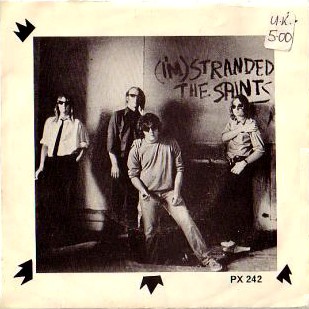
January 12: The Saints, "(I'm) Stranded"

Artist: The Saints
Song: "(I'm) Stranded"
Album: "(I'm) Stranded" (single)
Year: 1976


CLICK HERE TO LISTEN (will open in new tab)


While it is almost impossible to argue that there was another band of the "modern" punk era before The Ramones, it is often in the months that followed their debut in which many people have simply been given a false history.  Though many may wish it to be different, the fact of the matter is, there was another massively important band that made their own debut after The Ramones, yet preceded releases from groups such as The Sex Pistols and The Clash.  Bringing a more musically complex approach to the attitude-driven style, one simply cannot deny the importance and influence that lives within the music of Australian punk legends, The Saints.  One can even make the argument that The Saints brought more attitude and the "buzzsaw" sound on guitars than any band before them, and the bands influence can easily be heard in nearly every group that followed them chronologically.  Though The Saints released a number of brilliant records over the decades, it is still their February, 1977 debut that stands as their finest work, highlighting their amazing energy and unique spin on the punk rock sound.  However, even before this album was released, the group had already set a standard for the style, and there are few songs that better represent the true punk ethos than one finds in The Saints 1976 single, "(I'm) Stranded."

The moment that "(I'm) Stranded" begins, it is clear that this is punk rock at its finest, as the high energy tempo and distorted guitar are nothing short of perfect.  The way in which guitarist Ed Kuepper screams across the track is absolutely stunning, and yet there is an almost strangely positive energy that can be felt i his playing.  While there is no question that this is an aggressive progression which he plays, this spirit and freedom that one can experience in itself represents the entire ethos of the early punk sound.  The rhythm section, anchored by drummer Ivor Hay, is equally fantastic, and his playing is far more forward in the mix than on most songs.  Working his entire kit with a furious pace, one can still detect a musicality in his playing, and it is very much in his performance that one can hear influences of other Aussie bands like The Easybeats.  Bassist Kym Bradshaw mirrors this idea, as he plays at an almost manic speed, injecting a superb groove into the song.  The speed and mood that the rhythm section keeps intact throughout the song makes the overall experience of "(I'm) Stranded" almost exhausting, as they never let up for even a moment, again embodying the punk spirit perfectly.  The way in which these three move as a single unit would form the blueprint for countless bands that followed, and their influence is especially clear within fellow Australian punk bands like The Fun Things and The Victims among others.

Providing what is nothing short of the ideal vocal compliment to the music over which he sings, Chris Bailey uses "(I'm) Stranded" to set another standard within the punk rock world.  Bringing a slightly nasal, attitude-packed sound, the fact that the single pre-dates so many other acts forces one to argue that the later artists took at least some of their sound from Bailey's performance.  Though it is not as much of a sneer as others would bring, there is a disconnected, almost disinterested sound in his voice that sets him apart from nearly all of those punk-style vocalists that came before him.  Much like the music, Bailey brings an exceptional level of energy to "(I'm) Stranded," and one can easily imagine how a song like this would have set off a live crowd.  Furthermore, in both the music and the vocals, there is a sense that The Saints were far more "real" than many of their contemporaries, and one is left to wonder if lines like, "...they cut out some heart and some brains..." might not, even in retrospect, be aimed at some of the others in the punk scene.  The way in which Bailey delivers the lyrics can easily be related to by anyone, and there is no sense of superiority which plagued so many early punk singles.  Without question, Bailey's vocals on "(I'm) Stranded" help to give the final lift that the song needs, and his performance is just as refreshing and fun today as it was more than thirty years ago.

Truth be told, when one looks for purity within the early years of the modern punk movement, there may not be another band that better represents this idea than one finds in The Saints.  Refusing to "sell out" or even remotely compromise their sound, it is rather well documented how the band somewhat avoided the "safety pin punk" that plagued much of England at that time.  This fact, combined with their authentic, unapologetic sound which they deployed, makes them without question one of the most important bands in the entire development of punk rock.  While other bands may have tried to make more of a "show" of their songs, and some attempted to find humor through the medium, it was bands like The Saints that proved that the basic, stripped down sound of punk rock was still the best way to deploy the true spirit of the style.  Though they were from Australia, there is no arguing that their influence was all over the early English punk scene, and due to the time of their first single being released, one cannot deny the fact that "(I'm) Stranded" clearly had a large influence on some of the more commercially known punk bands of this time period.  Whether it is The Sex Pistols, The Damned, Sham 69, or a countless other groups, it is quite easy to hear the sounds of The Saints in their music, and it is this fact, along with the unforgettable performance that "is" the song that makes both The Saints, and their 1976 single, "(I'm) Stranded," two of the most overlooked, yet massively influential pieces of the development of the punk rock sound.

Tuesday, January 11, 2011

January 11: Lee Dorsey, "Working In The Coal Mine"

Artist: Lee Dorsey
Song: "Working In The Coal Mine"
Album: The New Lee Dorsey
Year: 1966


CLICK HERE TO LISTEN (will open in new tab)


Though the city is perhaps best known for its massive influence and contributions to jazz and blues, one cannot overlook the fact that New Orleans was also responsible for one of the most important shifts in the r&b style.  Much in the same way that the overall mood of the city brought a far more loose, often strangely upbeat mood to other styles of music, it had a similar impact on r&b, and offered a fresh, yet stark contrast to the dominant sound of the time.  While a number of artists helped to push this sound to the forefront of popular music, few were as important or influential as the one and only Lee Dorsey.  Often working alongside fellow new Orleans legend Allan Toussaint, the pair are responsible for some of the most significant hits to come out of te south outside of Stax and Sun Records.  Bringing a unique, quirky sense of humor to his songs, Dorsey stormed the charts with his first single, 1961's "Ya Ya," and in many ways, the world of music was never the same after this song.  Proving that it was often the way in which one presented a song as opposed to the actual content, Dorsey quickly went back into the studio, releasing a number of albums, culminating with his brilliant 1966 record, The New Lee Dorsey.  Standing as what may be the greatest "working man's song" in history, one can find everything that makes Lee Dorsey such a vital part of music history in his 1966 single, "Working In The Coal Mine."

From the moment that "Working In The Coal Mine" begins, it is easy to hear what a stark contrast the song was in nearly every aspect.  Bringing together a number of different musical styles all in one, it is easy to make the case that this very idea mirrors the entire spirit of the city of New Orleans.  Kicking off with what is meant to be the sound of a miner's pick, quickly followed by one of the deepest, yet lightest grooves ever recorded, "Working In The Coal Mine" almost instantly grabs the listener.  It is this interplay between the percussion and the fantastic bass of Chuck Badie that is the key to this song, as the almost relaxed feel presents a great contrast to the high-energy, musically complex sounds that Motown was releasing under the genre of r&b.  However, it manages to work just as perfectly on "Working In The Coal Mine," as even considering the rather unexciting subject of the song, there is a strangely upbeat mood that is kept in place by the rhythm section.  Furthermore, the perfect touches and stings that are played by guitarist Roy Montrell offer a fantastic sonic contrast within the song itself, and the similarly subtle, yet vital horn interjections finish off what remains one of the most uniquely perfect musical arrangements in history.  It is also the repetition of this progression played by the group that reinforces the overall theme and mood of the song, and the way in which the players move as a single unit through the loose feel of the song has rarely been matched in the decades that have passed.

Much like the music, Lee Dorsey's vocal on "Working In The Coal Mine" stands all on its own when compared to the rest of music history.  Both in the sound of his voice, as well as the mood he conveys, there was not another artist with a similar sound.  Throughout the song, Dorsey maintains a smooth, soulful sound, and there is not a moment where it sounds as if he is pushing his vocal abilities.  The fact that he was so easily able to work the entire vocal scale sets him far apart from many of his New Orleans contemporaries, and yet there is an obvious proximity to the words he sings that helps the song move to another level.  Truth be told, after failing to find similar success following "Ya Ya," Dorsey returned to his auto repair shop, and it is perhaps this fact that helped to push "Working In The Coal Mine" to be considered one of the greatest "working man" anthems ever recorded.  Yet even within the lyrics, there seems to be an odd contrast at play, due to the fact that though he is singing lines like, "...lord I'm so tired, how long can this go on...," there is an energy and spirit in his voice that seems to not be in such a tragic condition.  It is in this juxtaposition that one can detect the unique brand of humor that runs throughout nearly every one of Lee Dorsey's recordings, and it is also one of the key aspects that makes "Working In The Coal Mine" such an essential piece in the overall progression of music.

While it was certainly a hit when it was first released in 1966, the lasting impact of "Working In The Coal Mine" can be seen in the way in which it has endured the generations.  Though the original version is still without question the standard, there have been a number of covers of the song that are fantastic in their own right, with versions by Devo and The Judd's releasing two of the most interesting interpretations of the song.  The fact that the song has found its way into so many different styles of music reflects its own roots, as one can hear everything from jazz to blues to gospel within Lee Dorsey's original recording.  This idea in itself is in many ways the most clear example of "what" r&b music truly is at its core, and yet it was Dorsey's sound that proved that there was far more to the genre than the singles coming out of Detroit and Memphis.  Furthermore, though many had tried over the years, there is a certain spark within "Working In The Coal Mine" to which anyone who regularly puts in long work hours can relate.  Though Dorsey's character is clearly exhausted from the brutal week of labor, there is a subtle tongue-in-cheek mood that can be detected when he wails about not having enough energy to go out on the weekend.  This humor, combined with the overall loose, yet unquestionably deep groove is the formula that defined the New Orleans style of r&b, and there is perhaps no finer example of this essential turning point in music history than one finds in Lee Dorsey's 1966 classic, "Working In The Coal Mine."

Monday, January 10, 2011

January 10: Daily Guru, "Gurucast #54"

CLICK HERE TO LISTEN (will open in new tab)


(Left Click (PC) or Command-Click (Mac) to save it to your desktop...it's about 75MB)

One hour of amazing music and SOME commentary from "The Guru" himself.

Tracklisting (all links are to MY reviews of that particular artist, song, or album):

1. Manu Chao, "Merry Blues"  Proxima Estacion: Esperanza
2. Third World War, "Working Class Man"  Third World War
3. Beastie Boys, "So What'cha Want?"  Check Your Head
4. The Stooges, "Search And Destroy"  Raw Power
5. Blonde Redhead, "In Particular"  Melody Of Certain Damaged Lemons
6. The Clash, "Clampdown"  Live At Shea Stadium, October 1982
7. Alice In Chains, "We Die Young"  Facelift
8. Wayne Shorter, "Witch Hunt"  Speak No Evil
9. The Damned, "Fan Club"  Damned Damned Damned (Japanese Edition)
10. Belly, "Super-Connected"  King
11. Steve Poltz, "I Thought I Saw You Last Night"  One Left Shoe
12. Nick Cave And The Bad Seeds, "From Her To Eternity"  From Her To Eternity
13. Phil Lynott, "Story Of My Life"  Unreleased Track

Sunday, January 9, 2011

January 9: The Jesus And Mary Chain, "Just Like Honey"

Artist: The Jesus And Mary Chain
Song: "Just Like Honey"
Album: Psychocandy
Year: 1985


CLICK HERE TO LISTEN (will open in new tab)


Though it is usually easy to trace the sound of a band back to their roots, it can often be shocking to do this in reverse.  That is to say, while many believe that the long-term impact of a certain type of music is always clear, there are often cases where it can produce such a distant sound, many fail to make the connection.  Case in point, though it is certainly easy to connect the hardcore movement to its punk rock roots, many fail to acknowledge the direct correlation between punk and the musically complex, often over-bearing sound that many now call "noise pop."  Perhaps due to the stark contrast in musical arrangements, it is a bit more difficult to see this connection, yet tracing both sounds back, there is no question that they can both be seen as descendants of the sound of bands like The Velvet Underground.  While many bands attempted this "noise pop" sound, an overwhelming majority miss by a long shot, yet there is perhaps no other band that more accurately represents the genre than one finds in the stunning music of The Jesus And Mary Chain.  Combining the "wall of sound" approach with often dark, almost haunting lyrics, along with a simplicity that is unquestionably punk, The Jesus And Mary Chain completely rewrote the books on music with their extraordinary 1985 debut, Psychocandy, and their amazing fusion of sounds and moods can be found at its best within their phenomenal single from that record, "Just Like Honey."

The song starts off simply enough, as drummer Bobby Gillespie puts forth a rhythm that seems to almost bounce off the track, and the echo that comes from the almost stark cymbal hits is strangely perfect.  Many have gone so far as to link this cadence back to the classic song "Be My Baby," and even with the rest of the sound going on around it, the comparison is not that far off base.  While this sound is certainly a key part of the songs over all power, there is no question that the most stunning aspect of "Just Like Honey" lives within the tone of William Reid's guitar work.  It is here that one can experience the sound that would later be dubbed as "buzzsaw guitar," and there is an odd beauty that one can find in this sound that appears at the surface to be extremely aggressive.  The amount of emotion that Reid is able to convey through his guitar is truly unparalleled, as there is a level of sadness here that is unlike anything previously recorded.  Bassist Douglas Hart is also able to find this amazing musical space, and the bassline often seems as if it is taking a dejected walk across the rest of the song.  The way in which the instruments come together to create this strange combination of dark, somber feelings with a grinding, aggressive sound is absolutely stunning, and the musical perfect found on "Just Like Honey" has never been achieved since, proving what a unique grouping of musical talents one can find in The Jesus And Mary Chain.

Perfectly mirroring the music over which he sings, many point to the vocals of Jim Reid as one of the most important pieces in the development of what is now seen as the "emo" sound.  Easily working the entire musical scale, there is a morose, despondent mood in his vocals, and yet this mood is strangely captivating, pulling the listener in completely.  Yet it is this sense of the dramatic that makes "Just Like Honey" such a phenomenal musical achievement, as even with these overwhelming moods, the song never feels "overdone" or cliché, and the heartbreak and frustration experienced here is such to which anyone can relate.  Furthermore, the connection to "girl groups" like The Ronettes can once again be seen, as the mood and lyrics are quite similar between the two vocal performances.  This is to say that on many levels, "Just Like Honey" would have fit in easily during the 1960's, and one can even go as far as saying that both in the melodies and harmonies, one can hear traces of influence from groups like The Beach Boys.  This strange combination of sounds and styles has never been replicated, and yet Jim Reid finishes off the song with some of the most simple, yet pained lyrics ever penned, as there are few that cannot relate to the frustration found in lines like, "...walking back to you is the hardest thing that I can do..."  In both the way he sings, well as the words he presents, the vocals found on "Just Like Honey" serve as a perfect complement to the superb wall of sound over which they have been placed.

Flawless in a way unlike any other song ever recorded, one cannot overstate the quality and lasting influence of The Jesus And Mary Chain's "Just Like Honey," as it paved the way found countless other bands.  The way in which the group was able to fuse together so many different styles remains nothing short of extraordinary, and yet even with the clear connection to so many groups, the sound found throughout Psychocandy is unquestionably all their own.  Showing the common ground between The Beach Boys and The Velvet Underground is something that most would say does not exist, yet after experiencing "Just Like Honey," one simply cannot deny the connection, as well as the link to the great "girl groups" that preceded them all.  Though it had not been heard in over a decade, the "wall of sound" approach that The Jesus And Mary Chain bring to the song works perfectly, and yet there is a strange warmth to the song that seems to contrast the overall mood and musical arrangement.  The fact that the group was able to create this mood with such aggressive sounding guitars is another nod to their unique blend of musical perfection, and even nearly three decades later, both the song and the single remain absolutely unrivaled in this sense.  Proving that there can be a stunning beauty within the punk, hardcore, and "noise" styles of music, there has simply never been another song that was on par with The Jesus And Mary Chain's phenomenal 1985 single, "Just Like Honey."

Saturday, January 8, 2011

January 8: The Pharcyde, "Passing Me By"

Artist: The Pharcyde
Song: "Passing Me By"
Album: Bizarre Ride II The Pharcyde
Year: 1992


CLICK HERE TO LISTEN (will open in new tab)


Though it may not seem as important as the sounds that emerged at the end of the 1960's, one cannot deny the fact that the first four years of the 1990's stand as one of, if not the most creative point in all of music history.  Due to a number of factors, music splintered off like never before, and countless genres were being mixed together, creating genres that were impossible to define.  While one can easily see how much the more traditional rock-based genres were changing, the same was true in hip-hop, yet it was far harder to see due to the massive dominance of the "gangsta rap" sound.  It was because of this reality that the idea of "conscious hip-hop" was almost "forced" to develop, yet at the same time, there were other crossover styles that went far beyond these two in a number of different ways.  Though there were a great deal of new sounds at the time, few were as creative or refreshing as the oddly unique blend of funk, psychedelic, and soul tha tone finds in the music of The Pharcyde, and their 1992 debut record, Bizarre Ride II The Pharcyde, remains today one of the most impressive and influential albums in the history of hip-hop.  Combining absolutely amazing musical arrangements with some of the most honest, often lighthearted rhymes, the group offered a clear alternative to the sound of "gangsta rap," and one can experience all of their brilliance in The Pharcyde's 1992 single, "Passing Me By."

Almost from the moment that "Passing Me By" begins, there is a deep, yet fun groove established, and the overall complexity of the samples being used was a far cry from the more predictable sounds of the time.  Largely based around samples from Quincy Jones' "Summer In The City" and Weather Report's "125th Street Congress," it is instantly clear that producer J-Swift has an uncharacteristically wide range in musical taste, and he is able to weave together sounds that seem unlike to pair well together.  The smooth, funky mood that he sets is highlighted by other samples, like Jimi Hendrix's "Are You Experienced?" and Skull Snaps' "It's A New Day," and even with a number of sounds being used simultaneously, the song never seems congested or over-done.  It is J-Swift's brilliant crafting here that makes the song absolutely unforgettable, and his rearrangement of these songs has itself been sampled in recent years, further solidifying its overall significance.  The way in which he changes the sound from the verses is absolutely fantastic, and it is during the chorus sections that one can more clearly hear the groups' connection to blues and jazz.  In many ways, the overall musical creativity shown here is akin to the psychedelic experimentation that occurred as the 1960's transitioned into the 1970's, and it was sounds such as these that birthed what many now call the "alternative rap" movement.

Providing an exceptional mirror to the style of the music, the fact that all four emcees are able to drop a verse on this song, without it seeming crowded is a testament to the talents of each member.  Though each of the emcees has their own, distinctive style, they share a common theme here, and it is on "Passing Me By" that it becomes clear that these performers have far more than just humor in their rhymes.  Each of the four delivers with a measured, sincere style, and each verse could easily have stood on its own.  It is perhaps this diversity in sound that helped the song to rise above others at the time, but there is no overlooking the fact that Bootie Brown, SlimKid3, Imani, and Fatlip stand today as some of the most talented and creative emcees in history.  Furthermore, in an era of "gangsta rap," it was songs like "Passing Me By" that were without question far easier to relate to, as this song recounts a school-age crush of each member.  This almost lighter, yet strangely heartbreaking set of rhymes makes it so there is some part to the song that anyone can make a direction connection with, and even nearly twenty years later, this fact remains true.  While this enables every listener to cite their own "favorite" rhyme from the song, one can make the case that it is the songs' opening lines of, "...now in my younger days I used to sport a shag, when I went to school I carried lunch in a bag..." that has proved to be truly unforgettable.

Taking all this into account, one can easily make the case that there was just as good a chance of the entire Bizarre Ride II The Pharcyde completely flopping commercially due to being so drastically different form a majority of the hip-hop being made at the time.  Perhaps the only links between this and the "gangsta rap" sounds are the level of rhyming talent and the base in funk samples, yet even with this reality, "Passing Me By" found its way all the way to the top spot on the rap charts.  In many ways, the success of this song proved that even so early in the "gangsta rap era," there were already hordes of people looking for an alternative to the sound.  While many groups have presented such an alternative, none have been able to duplicate the sound and mood found on The Pharcyde's debut record, and it retains its fresh and enjoyable personality to this day.  Whether it is due to the wide range of samples and flavors that each song brings or it is the fact that all four emcees deliver top-notch rhymes with their own style, there is simply no denying the overall quality and lasting influence that the record has had.  On "Passing Me By," the music seems to bounce and flow in a way that has never been duplicated, and it helps to reinforce the almost freeform feel of the record as a whole.  Setting itself far apart from everything else at the time, as well as proving that there was just as much diversity in hip-hop as any other genre, few songs have retained their feel and impact as well as one finds in The Pharcyde's 1992 single, "Passing Me By."