Thursday, December 16, 2010

December 16: The Aggrolites, "Work It"

Artist: The Aggrolites
Song: "Work It"
Album: Reggae Hit L.A.
Year: 2007


CLICK HERE TO LISTEN (will open in new tab)


Occasionally, even when an artist or group of bands are trying to revive a sound or pay tribute to the spirit of a somewhat forgotten style, the "point" becomes lost or muddled in their more modern twist in the sound.  Though bands like No Doubt, Sublime, and many others may like to think that they were representing "true" ska or reggae music in their songs, the truth of the matter is, they are quite a distance from the "real" sound and mood that defined that style.  In fact, throughout the 1980's and 1990's, there were very few bands that one could site as properly playing this classic sound, and one can make the case that for at least a few years, it had completely disappeared.  Then, in the early 2000's, the sound began to appear across the globe again, and few groups have carried the torch as brightly and brilliantly as Los Angeles, California's Aggrolites.  Originally conceived as a sort of "all star" band to serve as the backing band for a one-off show from the legendary Derrick Morgan, the chemistry within the band members was instantly clear, and they soon began working on original studio material.  Whether playing more fast-paced ska sounds or the more mellow sounds of reggae, The Aggrolites are without question the closet representation of the roots of their music that the world has heard in decades, and one can easily understand their impact by listening to their 2007 song, "Work It."

Serving as the lead track on their Reggae Hit L.A. album, the song opens with a sound that is something beyond the word "classic," as organ player Roger Rivas is nothing short of perfect in the brilliant tone that he deploys.  The organ bounces across the song, setting the core riff, as well as an upbeat, yet relaxed mood, and this alone brings the listener back to the classic Kingston sound quicker and more accurately than anything that had been released in years.  Rivas' sound pushes the song along at every turn, and the way in which it combines with the rhythmic guitar of Brian Dixon and Jesse Wagner is nothing short of ska bliss.  Though in most cases, ska has been portrayed as a fast, more punk sound, on "Work It," The Aggrolites show how the same feelings can be achieved at a slower tempo, and the harmony between these three musicians gives the song a flow and feel that remains unmatched.  The rhythm section of bassist J. Bonner and drummer Korey "Kingston" Horn are the final pieces in helping "Work It" to attain a sense of movement that is completely distinctive, and the overall sound can easily induce "skanking" as easily as any of the classic reggae or ska songs.  The fact that The Aggrolites leave and modern "tricks" or studio polish off the album is perhaps the key to their authentic sound, and it proves that keeping things simple is the best way to accurately represent the classic style.

The spirit of reggae and ska are further reinforced by the loose, almost free flowing lyrics, and in terms of both tone and mood, Jesse Wagner is in a class all his own.  Though the vocals are quite laid back, there is no question that Wagner possesses a fantastic voice, as even in these somewhat sparse lyrics, he shows an ability to work nearly all of the vocal spectrum.  Furthermore, there is an upbeat, bright tone in his voice that perfectly matches the mood of the music over which he sings, and it is often this combination that proves most difficult to achieve.  Never having to "push" to convey the sound or mood he is shooting for, there is an authenticity and honesty in Wagner's vocal approach, and there is little question that he is anything short of "the ideal vocalist for The Aggrolites and the sound they play.  Keeping the vocals in an almost "call and response" style, Wagner clearly knows his history, and the simple lyrics are able to bring an ideal finishing touch to "Work It."  As was often the theme during the "classic" eras of reggae and ska, the song seems to revolve around the simple idea of working hard to get ahead in life and not "lose it."  Much in the spirit of the classic sound, these lyrics can be applied to a wide range of situations, and it is largely the reason that like the style which they represent, The Aggrolites' "Work It" is extremely catchy and one cannot help getting pulled in and the song is nothing short of pure enjoyment.

Throughout all of Reggae Hit L.A., The Aggrolites are in top form, and this is perhaps due to the fact that it was the second record that the band had recorded in a very short time span.  Only two weeks earlier, the iconic Tim Armstrong released his solo album, A Poet's Life, and throughout that album, The Aggrolites served as his backing band.  Their ability to perform on the wide range of sounds found on that record, as well as the similar sounds on Reggae Hit L.A. serve as a testament to the exceptional level of talent within the band members, and their overall relationship with Armstrong and Hellcat Records provides a clear link between the sounds of reggae and ska and the more modern punk rock movement.  Yet even without these elements, one cannot deny the fantastic sounds and moods that one finds throughout the album, and it is without question one of the most refreshing and enjoyable records from any genre that has been released over the past decade.  In an era of over-production and some of the most bland and inauthentic music ever, it is groups like The Aggrolites that prove the power and beauty that one can find in music from truly talented and knowledgeable bands.  Without a down moment anywhere on the record, one can experience everything that makes The Aggrolites one of the finest bands in the current music scene on their 2007 song, "Work It."

Wednesday, December 15, 2010

December 15: Counting Crows, "Sullivan Street"

Artist: Counting Crows
Song: "Sullivan Street"
Album: August And Everything After
Year: 1993


CLICK HERE TO LISTEN (will open in new tab)


During any era in history, when a specific sound or style is dominant, it is difficult for anything else to gain much notoriety.  Though a band may find moderate commercial success, it is usually as a "side note" to the larger musical trend of the time.  Yet every once in awhile, a band is able to bring a sound so divergent from the popular trends that not only is it not ignored, but it ignites an entire secondary musical wave.  While the early 1990's were being dominated by the aggressive, loud sounds of the so-called "grunge" movement, a sharply contrasting, more reflective sound emerged and offered a wide range of approaches and musical depth.  Among these bands, one of the most unique was the distinctive country-folk-indie rock sound from San Francisco's Counting Crows.  Without question one of the most definitive bands of the decade, the group stormed the charts with their unavoidable hit, "Mr. Jones," and they remain one of the most important groups in the development of what is now labeled as "alternative rock."  Though they have released a number of albums over the past two decades, they've yet to top their brilliant 1993 debut, August And Everything After, and the record stands as one of the greatest of the entire decade.  While every single song on the album is fantastic in its own way, everything that makes the band so uniquely enjoyable can be found in their 1993 song, "Sullivan Street."

Perhaps the most distinctive aspect of the Counting Crows is the wide range of instruments with which they create each song.  From mandolins to violins to piano and more traditional "rock" instruments, even on their debut, it seems as if nothing is off limits, and it is due to this diversity in sound that their songs become so fantastic.  "Sullivan Street" begins with a mellow, yet unmistakable guitar riff from David Bryson, and it is quickly joined by a low, bassline from Matt Malley that is mixed far more forward on the track that is the norm.  This greater presence of the bassline gives the song a bit more of a lulling, deeper sound, and it is also from Malley's playing that the song gains its sense of movement.  Drummer Steve Bowman moves the song with an almost jazz-like approach, as he shifts the tempo a few times during the song, and it is this aspect that further separates "Sullivan Street" from nearly every other song of the era.  Multi-instrumentalist Charlie Gillingham brings an absolutely beautiful piano progression to the song, and the way in which Counting Crows worked pianos, organs, and accordions into their songs remains one of their most distinctive characteristics.  The way in which all of these sounds come together gives the song a mood and feel unlike anything else at the time, and it is this mesmerizing combination of sounds that makes "Sullivan Street" such a uniquely stunning musical experience.

Though there were many, one cannot deny the fact that Adam Duritz stands as one of the most distinctive and instantly recognizable voices of his generation.  With his somber, pained voice that is easily capable of working the entire vocal spectrum, few vocalists of any era have shown as much emotional commitment and vocal honesty as one finds in Duritz's voice.  On "Sullivan Street," Duritz instantly captures the listeners' attention, and the way in which he croons and cries across the track is heartbreaking, yet charming in a way unlike any other recording in history.  Duritz rarely relents from his raw, open approach, and the close proximity that he has to the lyrics which he sings is almost never in question.  Though the feeling behind his words is always clear, Duritz also stands as one of the most brilliantly poetic lyricists of his generation, and there is often as much beauty in the words he sings as there is in actual vocal work.  With "Sullivan Street," Duritz seems to sing of a relationship that while wonderful, seems doomed for failure.  When he sings lines like, "...pretty soon now, I won't come around...," one can hear the pain and frustration that Duritz feels, and the tragic beauty of the song is solidified when he sings, "...she's almost everything I need..."  The way in which the situation is presented allows a number of interpretations of the lyrics, and yet the pain and disappointment in the voice of Adam Duritz makes the song one to which all can relate in their own way.

In an era filled with angst-ridden, distortion fueled post-punk sounds, it was nothing short of unfathomable when a band like Counting Crows suddenly found themselves at the top of the pop charts.  Representing nearly everything opposite of the "grunge" sound, the band defined what it meant to be "alternative," and one can hear influences ranging from Tim Buckley to Van Morrison to R.E.M. in their music.  Ignoring all musical conventions, it is this blend of influences and their unparalleled musical approach that made the group into icons of their generation, and there has still yet to be another group that made music which was even remotely similar.  Counting Crows 1993 debut album stands as one of the finest of the decade, and it is as close to musical perfection as one can wish to achieve.  Filled with complex musical arrangements and a more diverse instrumentation than nearly any other band of the era, there is a beauty to their music that cannot be found elsewhere in the music of the early 1990's.  Whether it is the unpredictable, yet always magnificent music or the unmistakable voice of Adam Duritz, few groups have been able to achieve the level of expression that one finds in their music.  Though it was not released as a single, and it stands as one of an album full of flawless songs, the complete package that makes Counting Crows such a beautifully brilliant band can be found in their 1993 song, "Sullivan Street."

Tuesday, December 14, 2010

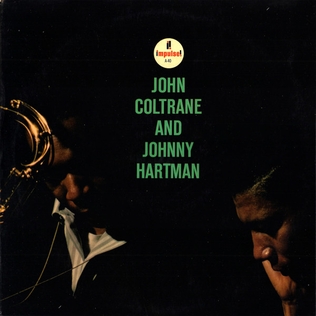
December 14: John Coltrane And Johnny Hartman, "My One And Only Love"

Artist: John Coltrane And Johnny Hartman
Song: "My One And Only Love"
Album: John Coltrane And Johnny Hartman
Year: 1963


CLICK HERE TO LISTEN (will open in new tab)


Though it happens very rarely, there have been a few instances in music history where two of the greatest performers of their generation came together for more than just a "one off" recording.  While many do this for benefit records or to attempt to jump-start one of the players' careers, the most amazing work comes when both artists enter the studio simply wanting to record alongside one another.  If in such a situation, the performers in question are true legends, it is hard for a spectacular album NOT to be the result.  Every piece of this can be seen as clear fact with just a brief listen to the sonic bliss that is the aptly titled 1963 release, John Coltrane And Johnny Hartman.  As the story goes, the pair knew one another from their time as part of Dizzy Gillespie's band in the 1940's, though Hartman was initially hesitant to be a part of the project, as he did not feel his style would fit well with Coltrane's playing.  After seeing Coltrane play live, the two set a date, and six of the seven songs found on the album were recorded in single takes.  The only song that required a second take, "You Are Too Beautiful," only needed it because drummer Elvin Jones dropped a stick on the first attempt.  Such perfection is almost understandable considering the monumental level of talent in the room, and the stunning chemistry between the pair can be summed up in John Coltrane and Johnny Hartman's 1963 rendition of, "My One And Only Love."

The entire album boasts one of the most impressive lineups of players ever in the same studio, and it largely due to the fact that the band is comprised of Coltrane's backing band at the time.  The rhythm section of bassist Jimmy Garrison and Elvin Jones are without question one of, if not the finest rhythm section in history, and pianist McCoy Tyner adds brilliant touches to play in contrast to Coltrane's sound.  On the record, Coltrane only plays tenor saxophone, and though he recorded a number o unforgettable moments, his performances here are without question some of his most inspired and beautiful.  From the moment "My One And Only Love" begins, Coltrane sets a soft, intimate mood, and few players have ever been able to achieve such expression of emotion as one finds here.  Working the melody as he sees fit, and it is performances such as this that prove just how brilliant he was at playing more structured pieces, as opposed to the more free style with which he built his legendary status.  Coltrane's playing on "My One And Only Love" has a vocal quality unlike any other instrumental performance in history, and in the latter parts of the song, this becomes most clear, as the pair seem to almost have a duet going.  Though he is best known for his revolutionary work in mode and tone, one cannot overstate the sheer beauty and brilliance that John Coltrane brings to "My One And Only Love."

For a number of reasons, it is mind-boggling that before this date with Coltrane, Johnny Hartman had not recorded for the better part of a decade.  Yet even with this fact in play, as well as the "single take" nature of the recordings, Hartman never sounded better than he does throughout the entire John Coltrane And Johnny Hartman album, and one would be hard pressed to find a more moving and striking voice anywhere in music history.  Easily able to work the entire vocal range, there is a sorrow that is ever-present in Hartman's voice, and it brings a distinct beauty and mood to every song that he sings.  On "My One And Only Love," Hartman perfectly matches the tone of the band behind him, and lets the mood they set carry his vocals.  At no point on the song does Hartman sound anything short of completely honest, and it is the combination of his immense talent and vocal heartbreak that proves how superior he was not nearly all of his peers.  It is with this idea in mind that one is left to wonder why Hartman does not receive the accolades that others of this era do, as there is little argument that he remains among the greatest vocalists in history.  Rarely has a vocalist meshed so seamlessly with a backing band, especially one that was not their own, and it is this amazing fusion that makes this version of "My One And Only Love" the definitive recording of the song.

While Hartman is far forward in the overall mix of the song, the balance that is achieved between the different musicians is absolutely perfect, and this is largely due to the production of the great Bob Theile.  Legend has it that along with Theile, Hartman's vocal idol, Billy Eckstine, oversaw the albums' recording, and this only adds more to the overall iconic status of the lineup present for the session.  Theile manages to give each instrument its own place in the music, and each musician clearly understands the exact nature of their role, resulting in harmony, as opposed to any single player attempting to take the spotlight.  This unselfish performance from all of the musicians proves that whenever this is honestly done, the greatest of musical results will be achieved.  Yet there is not a moment where either Coltrane or Hartman are not the center of attention, and they both manage to give "career performances," perhaps pushing one another to greater heights.  Truth be told, in his entire career, Coltrane only worked with one vocalist in the studio, and it may be due to the high level of musical achievement that can be found on John Coltrane And Johnny Hartman.  Later releases of the album contain both the original mono mixes, as well as stereo mixes, and the record remains one of the most impressive in all of music history.  Though some have tried to top their perfection, there is not another recording that even holds a flame to John Coltrane and Johnny Hartman's 1963 take on "My One And Only Love."

Monday, December 13, 2010

December 13: Daily Guru, "Gurucast #50"

CLICK HERE TO LISTEN (will open in new tab)


(Left Click (PC) or Command-Click (Mac) to save it to your desktop...it's about 75MB)

One hour of amazing music and SOME commentary from "The Guru" himself. 

Tracklist (all links are to my reviews of that band, song, or album) :
1. G. Love And Special Sauce, "Astronaut"  The Hustle
2. The Misfits, "All Hell Breaks Loose"  Walk Among Us
3. Ween, "Help Me Scrape The Mucus Off My Brain"  12 Golden Country Greats
4. Miriam Makeba, "A Piece Of Ground"  Pata Pata
5. Digital Underground, "Flowin' On The D-Line"  Sons Of The P
6. X-Ray Spex, "I Am A Poseur"  Germ Free Adolescents
7. Del McCoury Band, "Recovering Pharisee"  Del And The Boys
8. The Clash, "Jimmy Jazz"  London Calling
9. North Mississippi Allstars, "Drinking Muddy Water"  Shake Hands With Shorty
10. Tom "T-Bone" Stankus, "Existential Blues"  Dr. Demento 20th Anniversary Collection
11. Lucero, "Drink 'Till We're Gone"  Lucero
12. Tinariwen, "Chet Boghassa"  Amassakoul
13. Tom Petty, "Time To Move On"  Wildflowers
14. Minor Threat, "Minor Threat"  Dischord 1981: The Year In Seven Inches
15. Led Zeppelin, "Good Times Bad Times"  Led Zeppelin I
16. Sublime, "Ebin"  40 Oz. To Freedom
17. Primus, "Mrs. Blaileen"  Tales From The Punchbowl

Sunday, December 12, 2010

December 12: Funkadelic, "Maggot Brain"

Artist: Funkadelic
Song: "Maggot Brain
Album: Maggot Brain
Year: 1971


CLICK HERE TO LISTEN (will open in new tab)


Though it is perhaps the most rare occurrence in the entire history of recorded music, there are a few cases where a song is able to completely eclipse a band.  In every one of these cases, the band in question has a number of other songs that are well known, yet this single song becomes so iconic, so special, that nearly every music fan knows the song, many are not aware of the band by which it is performed.  Add in the fact that in at least one of these cases, the band in question was being overshadowed by one of the band members' other projects, and the uniquely mythical status that is the band Funkadelic was born.  Without question, Funkadelic represented the pinnacle of psychedelic funk, yet for a majority of the years they recorded, they were almost seen as "secondary" to George Clinton's other project, Parliament.  The bands had Clinton and a revolutionary approach to funk music in common, yet while Parliament was more upbeat, it was Funkadelic that explored the deeper, often more somber sounds.  Though Funkadelic released a number of brilliant albums, it is impossible to argue any of their records as more significant than their landmark 1971 album, Maggot Brain.  Completely destroying every norm and notion as to what could be achieved through the sounds of rock, funk, and psychedelia, there is not another song in history that can compare to the majesty that one finds in Funkadelic's 1971 classic, "Maggot Brain."

While a number of bands had attempted to bridge funk and psychedelia before this recording, such as Jimi Hendrix's "Machine Gun" and Frank Zappa's, "Black Napkins," neither come close to the perfection that Funkadelic achieves on "Maggot Brain."  The impact of the song simply cannot be measured, and there are many critics who have compared the song on many levels to John Coltrane's A Love Supreme.  While such accolades may seem a bit much, "Maggot Brain" is worthy of such comparisons, as it begins as an odd spoken piece from Clinton, followed by a rather unassuming, reflective bass progression from Billy "Bass" Nelson.   The bassline rarely deviates during the ten-plus minute run of the song, and yet it somehow manages to get deeper and deeper as "Maggot Brain" progresses.  There are also light touches that can be heard from drummer Tiki Fulwood, but they are mixed perfectly so as not to detract from the unparalleled mood and tension that defines the song.  Truth be told, during the session in which the song was recorded, the entire band contributed parts, but after hearing the interplay between the guitar and bass, Clinton mixed the other tracks mostly or completely out of the song, leaving the stripped down, yet absolutely stunning musical landscape that "is" "Maggot Brain."

Instantly cementing his name as one of the greatest guitarists in history, there is no other performance ever recorded that even comes close to the brilliance that Eddie Hazel displays on "Maggot Brain."  As stated, the song was originally meant to be played by the entire band, but Hazel's performance was so moving and emotive, that it demanded the complete spotlight for the entire run of the song.  Recorded in a single take, legend has it that Clinton told Hazel to "play like yo’ mama just died" in hopes of being able to capture the strong emotion on the song without having to speak a word on the track.  Clearly, Hazel achieved this goal and then some, as the song stands today as one of the most iconic and most highly revered pieces of guitar work in history.  Hazel works the entire fret-board with stunning precision, and it is clear that he is simply letting the music guide him, as opposed to following a previously decided musical path.  This manner in which he lets the music completely control him is the sign of true musical brilliance, and it embodies the idea of how powerful a song can be, even without a vocal track.  Often working in double and triple time to the tempo set by the rhythm section, Hazel uses few effects on the track, featuring only a bit of wah pedal and fuzz from time to time.  Hazel never lets the listener go at any point during the ten-plus minutes of the song, and the way in which he is able to give a complete musical journey through his guitar is what makes both him and the song absolute legends.

Though it did not "start" the psychedelic-funk sound, there is no arguing that it was "Maggot Brain" which set the standard for what could be achieved through the style.  Pulling elements from a number of artists, as well as other George Clinton projects, the song is sad and soulful in a way unlike any other recording in history.  As Eddie Hazel's finest moment, he fuses together this psychedelic-funk sound with elements of blues, jazz, and even heavy metal, resulting in what is arguably the greatest guitar performance in music history.  Through the raw, honest performance Hazel delivers, "Maggot Brain" was able to transcend all musical boundaries, as any fan of any type of music cannot help but stand in awe of this extraordinary display of talent.  Furthermore, the fact that the song found regular radio rotation even at nearly four times the "standard" song length serves as a testament to the undeniable majesty that the song provides.  Yet there is one aspect of the song that remains a question nearly four decades later, and that is from where the song title was derived.  While some claim that "Maggot Brain" was Eddie Hazel's nickname, there are others who argue that the title was taken from when Clinton found his brothers' dead body in a Chicago apartment.  Regardless of the songs' source, it has gone on to completely define guitar greatness and in many ways, part of the counter-culture of the time, and to this day, no song can even come close to the overall impact and presence that is Funkadelic's monumental 1971 recording, "Maggot Brain."

Saturday, December 11, 2010

December 11: Sam Cooke, "A Change Is Gonna Come"

Artist: Sam Cooke
Song: "A Change Is Gonna Come"
Album: Ain't That Good News
Year: 1964


CLICK HERE TO LISTEN (will open in new tab)


Bringing fans of different musical styles together is one of the more daunting tasks that a musician can tackle, as it is often a matter of structuring ones music to that it speaks to a wide group, yet at the same time stays true to that performers original sound so their core fan-base does not feel alienated.  While this is how it operates in a modern sense, there have been a few performers throughout the history of music whose music was so beautiful, so revolutionary, that it managed to speak to all people without sacrificing anything at all.  Though some genres have multiple people who can be seen as the "founder" of that style of music, there is no question that the sound of soul music began with any other than the late, great Sam Cooke.  Bringing stunning musical arrangements alongside his unparalleled voice, Cooke's sound reached audiences of every race, social status, and age group across the globe with a similar impact, and this is a feat that can rarely be seen elsewhere in music history.  Furthermore, the fact that Cooke never backed down from writing about "hot button" topics, especially civil rights, enabled his music to move beyond "just a song," and many of his recordings remain today as rallying cries for the disenfranchised across the world.  Though he had a number of amazing songs, there is simply no other recording in history that even comes close to the power and presence that one finds in his unforgettable 1964 classic, "A Change Is Gonna Come."

One of the most stunning aspects of "A Change Is Gonna Come" lives in the grand, orchestral musical arrangement, and the fact of the matter is, sounds like those found here are simply not found elsewhere in popular music.  The fact that with the deep sounds of the string section, sorrowful french horns, and the lone, marching snare drum are all that keep this song moving makes it almost impossible to explain how this song became a hit in any way, as it defies every norm of pop music.  However, this is also the genius that was René Hall, as he was the individual that put together the arrangement on "A Change Is Gonna Come," as legend has it that Sam Cooke gave Hall free reign to compose the song as he saw fit.  Obviously, this worked in amazing fashion, and the opening musical slide stands as one of the most memorable moments in all of music history.  Hall's arrangement also sets the stage perfectly for Cooke's vocals, as there is a sense of deep sorrow and reflection that comes through clearly in the music.  The pain that the instruments are able to convey are truly unparalleled, and it is this aspect that gives the song an almost religious feeling.  There are points when the strings seem to be singing a duet with Cooke, and at these moments, "A Change Is Gonna Come" moves into a musical category all its own, as no other song in history ever achieved this sense of the dramatic through the instrumentation alone.

However, while the music on "A Change Is Gonna Come" is nothing short of extraordinary, there are simply not enough words that one can say that would do justice to the voice and performance that Sam Cooke brings to "A Change Is Gonna Come."  Without question, Cooke has one of, if not the greatest voice in history, as both in terms of pitch as well as emotion, there is never anything short of musical perfection.  Easily able to work the entire vocal spectrum, Cooke's voice often soars with a sound and energy that defines the idea of gospel music, as his singing is nothing short of a spiritual experience for the listener, and one can feel that he himself had a similar feeling during the actual recording.  On "A Change Is Gonna Come," Cooke holds absolutely nothing back, and the raw pain that one can hear in his singing is a result of both his exceptional talent, as well as the fact that the lyrics he wrote can largely be seen as referring to painful incidents he had experienced the same year the song was recorded.  Only a few months before the recording of "A Change Is Gonna Come," Cooke lost his eighteen-month-old son in a tragic drowning accident, and the pain that this brought Cooke can clearly be heard in both the lyrics and his voice when he sings lines like, "...there been times that I thought I wouldn't last for long, now think I'm able to carry on..."  In this simple lyric, one can understand the cathartic power of music, yet the pain he felt is something that clearly has not left him in the least.  The song also speaks to the still-present racism Cooke dealt with, and it is much the reason that "A Change Is Gonna Come" remains one of the most powerful and often used songs of civil rights across the world.

In quite literally every aspect, Sam Cooke's, "A Change Is Gonna Come" is a song that knows no equal or even any other song that comes remotely close.  From the phenomenal orchestral arrangement to the absolutely brilliant vocals from Cooke himself, the song transcends every social boundary, and it retains all of its power after countless listenings as well retaining its impact nearly fifty years later.  However, "A Change Is Gonna Come" is also notorious for being one of the most eerily prophetic songs ever released.  Truth be told, the song was not released as a single until ten days after Sam Cooke's tragic murder on December 11, 1964.  Serving as the "b-side" to his "Shake" single, the song began to take on a life of its own, and many see the song as Cooke's finest recording.  Though it was the b-side on the single, "A Change Is Gonna Come" found great success in the charts, and it is without question the stand-out track on the album.  As the decades have passed, many other artists have made their own version of the song, yet for a number of reasons, none of these covers even come remotely close to the overall power that one finds on the original.  This, in many ways, is the most clear sign of the genius that was Sam Cooke, as the power and pain one can feel in his voice are the true definition of what soul music was meant to be.  Though he had other songs that were more commercially successful, there is no other song in his catalog or anywhere else in music history that even comes close to the overall impact and influence that one finds in Sam Cooke's monumental 1964 song, "A Change Is Gonna Come."

Friday, December 10, 2010

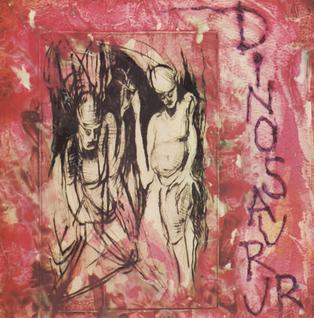
December 10: Dinosaur Jr., "Freak Scene"

Artist: Dinosaur Jr.
Song: "Freak Scene"
Album: Bug
Year: 1987


CLICK HERE TO LISTEN (will open in new tab)


One can easily make the case that perhaps the biggest misconception in music over the past thirty years is the idea that the "grunge" sound "came out of nowhere."  While many critics and fans alike prefer to think that these bands were so revolutionary and "fed up" with the sound of the prebious decade that it was their collective frustrations that led to this sound, it is simply not the case.  Though it does not sound as exciting, the fact of the matter is, a number of bands were recording this so-called "grunge" sound many years before it broke though into the mainstream.  Bands like The Pixies and Hüsker Dü had been making a point of bringing heavy emotion and loud guitars back into rock, yet there was no other band that pushed music forward quite like Dinosaur Jr.  Largely the brain-child of the brilliant J. Mascis, the music of Dinosaur Jr. brought a distorted fuzz and power to music that can clearly be seen as the blueprint for the Seattle-based bands that would become famous for the sound.  While the bands' 1987 album, You're Living All Over Me, was nothing short of a landmark recording, it was their next release, 1988's Bug, that remains one of the most stunning moments in all of music history.  Released on the equally legendary SST label, the album brings together a strange combination of metal, sludge, and noise that somehow manages to fit perfectly with the almost folk-like writing of Mascis.  Without an off moment anywhere to be found, one can point to Dinosaur Jr.'s  1987 song, "Freak Scene," as one of the most overlooked, yet truly monumental recordings ever made.

The instant that "Freak Scene" begins, the crushing three-chord progression grabs the listener, and in this distorted twang, one can hear the formula for bands ranging from Nirvana to The Lemonheads, and nearly every other "alternative" or "indie" band that appeared over the next few years.  Furthermore, the simple hook is amazingly catchy, and Mascis brilliantly bounces back and forth between a heavy metal style aggression and a strangely poppy, clean riff.  During the mid-section of "Freak Scene," Mascis makes his case as one of the most talented and creative guitarists of his generation, and the manner in which his pulverizing solo turns on a dime back into a more mellow progression is nothing short of stunning.  It is the way in which Mascis seems to move effortlessly through the different tempos and moods on "Freak Scene" that in many ways embodies his generation, and it is this element that later bands would attempt to replicate.  Along with Mascis, "Freak Scene" would be one of the final recordings that bassist Lou Barlow would make with Dinosaur Jr. for nearly two decades.  His work here is superb, and it is the oddly upbeat, winding groove that he brings that gives "Freak Scene" its signature groove.  Rounding out the band is the man simply known as "Murph" (real name: Emmett Murphy) on drums, and the aggression with which he plays would be the defining sound of the "grunge" movement.  The way in which the trio comes together on "Freak Scene" is truly beyond words, and it is their combined effort that turns the song into an unquestionably pivotal moment in music history.

Along with being a top-notch guitarist and music writer, J. Mascis also stands as one of the most unique vocal talents, as well as a lyricist whose words are some of the most moving of his generation.  Making no attempts to "hide" his voice, Mascis' sound is completely unique, and the raw nature of his singing helps to add an uncanny level of emotion to every song which he sings.  There is an odd beauty to Mascis' voice, and many later bands would also attempt (unsuccessfully) to replicate this sound.  The level of honesty in his voice also remains unrivaled, and one can feel the close connection he has to every lyric which he sings.  On "Freak Scene," Mascis recalls a rather muddled relationship, yet he does so with a clear grin, and it is this odd brightness that largely defines the music of Dinosaur Jr.  There is a simple beauty to the words of J. Mascis, and one would be hard pressed to find a more universally relatable lyric than when he sings, "...sometimes I don't thrill you, sometimes I think I'll kill you...just don't let me fuck up will you, 'cause when I need a friend it's still you..."  Such a sentiment can be found across all of music history, yet the style and words he chooses here make this version nothing short of perfect for the generation that was "on the rise" during the tail end of the 1980's.  Though it is about as non-traditional as it gets, there is a rare beauty in the voice of J. Mascis, and it is this aspect that defines Dinosaur Jr. as a band.

While the frank, yet profound writing is largely what makes Dinosaur Jr's songs so phenomenal, there are also moments when one can see the true genius of J. Mascis.  This has rarely been more clear than on "Freak Scene," when as the song progresses, it almost seems as if Mascis' words are beginning to fail him.  This does not seem to throw Mascis even for a moment, as he breaks into a guitar solo, and it is here that one can experience emotive playing on a truly unrivaled level.  The amount of feeling that Mascis is able to convey via his guitar is nothing short of stunning, and one can make the case that it is this performance that defines the idea of music being able to communicate feelings that cannot be described through words.  Buried in the heavier, slightly aggressive music, there is a magnificence that knows no peer, and it is due to "Freak Scene" excelling on so many different levels that it can be seen as the catalyst for so many later bands and movements.  Though the song did not achieve the type of success that many of the bands contemporaries and followers would find, it is impossible to deny the overall importance of the song, as it is unquestionably the precursor to the musical explosion that followed a few years later.  Somehow, Dinosaur Jr. manages to get better and more impressive as the years pass, yet one cannot deny the historical significance, massive influence, and remarkably moving achievement that is their 1988 song, "Freak Scene."