Tuesday, September 6, 2011

September 6: Butthole Surfers, "Sweet Loaf"

Artist: Butthole Surfers
Song: "Sweet Loaf"
Album: Locust Abortion Technician
Year: 1987


CLICK HERE TO LISTEN (will open in new tab)


When it comes to making completely original music, there are very few bands worthy of being given such a title.  While there are countless groups that have made exceptionally good music, those who stand in categories all their own due to their musical approach remain exceptionally rare.  Yet it is within the music of such bands that much of the most exiting and influential musical achievement in all of music history can be found, but some such groups remain arguably overlooked due to other aspects of their existence.  Though they are often grouped as "just punk," the truth of the matter is, there has never been another band that even remotely sounded like the music of Butthole Surfers, and the group is unquesitonably responsible for some of the most intriguing and absolutely original recordings of all time.  While they would achieve some commercial success a few years later, there is no arguing that the bands' tour dé force lives within their absolutely breathtaking 1987 release, Locust Abortion Technician, and the record remains unparalleled to this day.  Filled with a brilliant combination of punk, hardcore, metal, blues, noise, and funk, all pulled together in songs that have undeniable pop appeal, there has simply never been another record quite like this, and one can quickly understand just why Butthole Surfers stand as such crucial figures in the development of countless genres within their 1987 song, "Sweet Loaf"

From the moment that "Sweet Loaf" begins, one of the primary influences on the song and band are unabashedly clear, as both the name as well as the first main riff pay tribute to the legendary Black Sabbath song, "Sweet Leaf."  However, this is where any sort of similarities cease, as guitarist Paul Leary slides into a truly gorgeous, more relaxed melody, before shifting back into an aggressive chord progression that is almost akin to those found on Blue Oyster Cult's "Godzilla."  It is the way that Butthole Surfers shift seamlessly back and forth between moods and pace that make "Sweet Loaf" such a stunning musical experience, as they make this six-plus minute musical exploration seem completely effortless.  In many ways, "Sweet Loaf" attempts the "wall of sound" musical approach, and they succeed in brilliant fashion, as the song completely bowls over the listener, and the power of the track remains even after repeated listenings.  Drummer "King Coffey" is in top form all across the track, giving it an imposing presence, and the fact that former-band-drummer Teresa Nervosa returns on this song gives it an even more aggressive feel, pushing the energy to unmatched levels.  Keeping the song rooted in a deep, dark groove, bassist Jeff Pinkus deploys the finest performance of his career, and "Sweet Loaf" is without question a song that must be experienced firsthand to be properly understood and appreciated.

While the music of Butthole Surfers is absolutely peerless, it is impossible to downplay the importance of the vocals and lyrics of their music, and this is where one can experience the true genius of band founder, Gibby Haynes.  Performing with a voice that is truly unmistakable, in many ways his vocal approach is an amalgamation of a number of earlier performers, and once again, one can see the bands' influences, yet at the same time there has never been any similar recording.  There is a fantastic grind and grit to Haynes' singing, and even within the existence of this "heavy" sound, one can constant detect a light, almost menacing tone in his voice.  It is this strangely playful nature that makes "Sweet Loaf" so endearing, and it is also this aspect that makes the track one by which listeners cannot help but be completely mesmerized.  Though the lyrics to "Sweet Loaf" are almost entirely Haynes singing notes as opposed to actual words, there is a power within this that defines just "why" Butthole Surfers are in a musical category all their own.  All across the track, Haynes completely gives into the power and spirit of the music over which he is singing, and this submission leads to a vocal track that is brilliantly lyrical without any need for actual words.  Such an achievement has rarely been accomplished anywhere else in music, and it is the purity in this performance that almost demands the listener to sing and shout along with Haynes' fantastic vocals madness.

One can easily argue that when "Sweet Loaf" was released, the world simply had no idea how to "deal" with the track, as it defines nearly every convention of music.  Whether it is the songs' musical structure, the shifting tempos and moods, or the absolutely dizzying overall feeling, there is no precedent for the track, and it remains in a category all its own to this day.  This outright musical anarchy defines the spirit of Butthole Surfers, and yet most have not experienced this true genius due to the band sporting what may very well be the most infamous name in all of music history.  Until their rather surprising breakthrough "hit" a few years later, one can easily argue that their name alone kept them off of radio airwaves, and yet one cannot deny the amazing musical mastery that can be found on "Sweet Loaf."  The exceptional level of talent displayed by every member of the band all across the track pushes them far beyond a simple classification of "just punk," and the entire Locust Aborition Technician record remains one of the most brilliantly original efforts of all time.  Furthermore, the vocal technique found on "Sweet Loaf," which would be given the name "Gibbytronix," would be borrowed and altered by a number of bands that followed, solidifying the bands' spot as one of the most important of their generation.  Striking the ideal balance between countless musical influences and finding a way to make a completely new and unique sound, there is simply no other song in history that can match the power and presence of Butthole Surfers' phenomenal 1987 song, "Sweet Loaf."

Monday, September 5, 2011

September 5: Daily Guru, "Gurucast #88"

CLICK HERE TO LISTEN (will open in new tab)


(Left Click (PC) or Command-Click (Mac) to save it to your desktop...it's about 75MB)

One hour of amazing music and commentary from "The Guru" himself.

Tracklist (all links are to MY review of that artist, song, or album):
1. The Sound, "Heartland"  The BBC Recordings
2. Sepultura, "Refuse/Resist"  Chaos AD
3. Robert Johnson, "Hell Hound On My Trail"  King Of The Delta Blues
4. Unknown Artist, "Rashdayl"  The Music Of Islam, Volume 7
5. Grinderman, "I Don't Need You (To Set Me Free)"  Grinderman
6. Tet Somnang & Meas Samon, "Khynyom Jah Karake"  Cambodia Rock Spectacular Volume 2
7. Tim Armstrong, "Among The Dead"  A Poet's Life
8. Fela Kuti, "Zombie"  Zombie
9. The Clash, "Career Opportunities"  Polydor Demo
10. Kino, "Просто хочешь ты знать"  45
11. Django Reinhardt, "Daphné"  Djangology
12. Kraftwerk, "Spacelab"  The Man Machine
13. Manu Chao, "Malegria"  Clandestino
14. The Roots, "100% Dundee"  Things Fall Apart

Sunday, September 4, 2011

September 4: Toots And The Maytals, "Funky Kingston"

Artist: Toots And The MaytalsSong: "Funky Kingston"
Album: Funky Kingston
Year: 1972


CLICK HERE TO LISTEN (will open in new tab)


Regardless of the time period, there are moments within every era where a certain sound or artist will stand up and shout in some way, reminding the world that music is still developing, and that there are always new sounds to be found and explored.  In most of these cases, the performers in question are in the process of developing an entirely new approach to music, and these moments represent some of the most important and exciting points in all of music history.  Though it may be slightly overlooked due to the assumed mood of the music, this was certainly what occurred in the early 1970's when the "island sounds" of rock-steady and reggae began to take on a new form that would become ska.  While a few groups had already made small forays into such a sound, it would be the legendary Fredrick "Toots" Hibbert that would present the style in its current form, setting the stage for a rediscovery of the music of "the islands."  Boasting one of the finest backing bands in history, The Maytals, the group released a handful of singles that remain the building blocks of the entire ska style, and a majority of these songs remain just as potent and important today as they were more than three decades ago.  Though it is difficult to cite a single song from the group as their finest or most influential, it can easily be argued that one can experience one of the most high energy and definitive moments in all of music history within Toots And The Maytals phenomenal 1972 song, "Funky Kingston."

From the moment that "Funky Kingston" begins, it is clear that the song is both unlike anything else ever recorded, as well as a stunning combination of many different sounds from the current era of music.  Every instrument on the track bounces in a completely captivating manner, and one cannot deny the somewhat aggressive, funky tone of the song that is rather reminiscent of the sounds of Sly And The Family Stone.  It is the way that the piano from Neville Hinds dances across the track that provides the bulk of the groove to the song, and in this manner, "Funky Kingston" quickly becomes unlike any other recording.  The way that this sound plays with the purposefully scattered guitar pieces is nothing short of perfect, and the overall rhythm of the song is further punctuated by the perfectly placed horn blasts.  Drummer Winston Grennan keeps the bounce in line, working a number of percussive instruments and truly displaying the soul of "Funky Kingston."  Yet it is the way that all of these musicians come together a single unit that makes the song such an amazing musical experience, as the energy and sheer sound found all across the track give a glimpse into just how wildly fun live performances from Toots And The Maytals must have been at the time.  "Funky Kingston" absolutely jumps through the speakers, and one cannot help but be completely caught up in the party-like atmosphere that the song provides at every turn.

Further reinforcing the amazing level of enthusiasm and providing a clear example of how the interplay of energy between band can push a song to even greater heights, the vocals all across "Funky Kingston" are in a category all their own.  While they are shared at many parts throughout the song, a majority of the lead portions are handled by Hibbert, and there is no question that "Funky Kingston" represents the finest vocal moment of his entire career.  The way in which he delivers the lyrics has an almost gospel feel to them, as there is a clear and complete commitment to every line, and the sheer joy with which he performs remains one of the most endearing displays in all of music history.  There has rarely been as ideal an example of a musician "letting the music take him" as one can experience on "Funky Kingston," as one can feel the music pushing the vocals to greater heights, and vice versa.  This reality is the key to the overall impact of the song, and again, when the group vocals come into play, the similarities to the sound of Sly And The Family Stone cannot be ignored.  Yet there is no question that "Funky Kingston" is a completely original effort, and one can sense Toots And The Maytals encouraging the listener to sing along, whether live in concert or decades later alone at home.  This ability to engage the listener to such an extent is the true spirit behind the group, and they were never better at this task than on "Funky Kingston."

Truth be told, the album Funky Kingston, actually has two rather different releases in terms of content and sound, but the track "Funky Kingston" is found in the same, brilliant form on both of these versions.  This fact has enabled both releases to gain a large following in their own right, and it can be seen as the "anchor" of the two variations.  As the decades have passed, "Funky Kingston" has become one of the most heavily covered ska songs, and a wide range of artists from other genres have also made their own recordings of this tune.  The fact that "Funky Kingston" has found such wide acclaim and appreciation is a testament to just how important Toots And The Maytals remain to the continued development of all forms of music, as their combination of funk, soul, and reggae remains almost completely unmatched to this day.  Moreso than nearly any other band in music history, it is the spirit and energy found on "Funky Kingston" that makes the track so unforgettable, as there are few recordings from any other genre that exude as much pure joy and happiness as one can experience on this song.  Even as the group approaches their "half-century" mark of existence, they remain one of the most powerful and important bands in all of music history, and there is no finer example of the influence and unparalleled talent and energy of Toots And The Maytals than their extraordinary 1972 song, "Funky Kingston."

Saturday, September 3, 2011

September 3: Hank Williams, "Your Cheatin' Heart"

Artist: Hank Williams
Song: "Your Cheatin' Heart"
Album: Your Cheatin' Heart (single)
Year: 1953


CLICK HERE TO LISTEN (will open in new tab)


Though one cannot overstate the importance of those who can be seen as the founders of any musical genre as a whole, it is often the artists that brought a specific style its largest change that as the most recognized as the decades pass.  Whether it is the somewhat "lost" presence of early jazz and rock performers, or the fact that countless cover songs are better known by the copier as opposed to the original artist, this trend has existed throughout the entire history of recorded music.  This is not necessarily a negative judgment on the later performers in question, and the "good" that such instances can produce is perhaps no more clear than when one looks at the history of country music.  While he certainly did not found the genre in any way whatsoever, one can easily argue that there is no figure more critical to the development of the modern country sound than Hank Williams.  His name alone commands a reverence all across the musical spectrum, and one can find covers and tributes to his music from almost every musical style and every generation.  Williams also holds the distinction of being on the list of artists that passed away far too early, as he only lived to twenty-nine years old, and he was struck down as he approached the height of his fame.  However, his songs have lived on forever, and there is no more definitive a country tune than Hank Williams' magnificent 1953 single, "Your Cheatin' Heart."

While there is no arguing that every aspect of "Your Cheatin' Heart" is absolutely perfect, it is the way that Hank Williams deploys each element which makes the song so fantastic, and it begins with the brilliantly orchestrated, somewhat subtle musical arrangement.  The moment the song begins, the almost crying steel guitar instantly sets the tone, and while it is firmly rooted in the country style, there is some intangible element to this playing that makes it quickly appealing to fans of every musical genre.  It is the soft, almost lonesome sway that runs throughout "Your Cheatin' Heart" that makes it so easy to relate to, and on many levels the song represents the epitome of the ability of music to capture a human emotion without words.  The way that the guitar piece manages to blend perfectly with the steady bounce of the bass is the very essence of country music, as one can feel the movement similar to a horse's gait.  The addition of the fiddle throughout the track provides a superb diversity in sound, and it is the way in which these three elements work together that would become the blueprint for the contemporary country sound.  From the "twang" in the guitar to the smooth, sliding sound of the fiddle solo, there is not a moment that feels forced or out of place, and it is this true musical perfection that has enabled "Your Cheatin' Heart" to become an absolutely timeless musical achievement.

It is also the way that the captivating voice of Hank Williams works within this musical structure that makes "Your Cheatin' Heart" truly unforgettable, and the combination of raw emotion and his sturdy singing voice remain unparalleled to this day.  Williams is able to easily work all across the vocal scale, and it is the almost crooning nature that runs underneath his vocals that give it an appeal beyond that of "just" country fans.  Even when his voice seems to waver for moments here and there, the conviction with which he is singing never lets up for a moment, and it is this completely raw and unguarded attitude which makes "Your Cheatin' Heart" such an unforgettable musical experience.  Perfectly displaying the "cowboy" sound within both his singing style and lyrical approach, one can argue that "Your Cheatin' Heart" is the finest song of heartbreak that has ever been recorded, as it is the simplicity of the lyrics that make them applicable to any person from any culture at any time in history.  Williams never lets up on the lyrics, as he digs deeper and deeper into his dismay and sorrow at his love lost under these circumstances, but it is the fact that one can interpret just "why" it ended on a number of levels that makes his such an exceptional achievement.  At every note, Williams expresses his feelings to their fullest, and regardless of ones' personal musical preferences, it is impossible to not get completely caught up in this true musical mastery.

Truth be told, "Your Cheatin' Heart" was not released until after the tragic and sudden passing of Hank Williams, and yet it lives on as his most memorable recording.  Over the decades since its release, it has become one of the most heavily covered songs of all time, with artists ranging from Jerry Lee Lewis to Beck cutting their own takes.  Among the myriad of cover versions, the likes of Ray Charles, Elvis Presley, and Don McLean all made recordings that had their own chart success, and yet there has never been another version that comes close to the feelings and intensity of the original.  It is the pure, almost humble sound and tone all across Hank Williams' recording of "Your Cheatin' Heart" that sets it aside from the others, and it is this aspect that has also made the song a consistent choice for use in all sorts of popular culture.  From films to television to commercials, "Your Cheatin' Heart" stands as one of the most recognized songs all across the globe, and the fact of the matter is, the song remains as relevant and powerful today as it was more than half a century ago.  This "staying power" is one of the most rare occurrences in all styles of music, and this in itself is enough to cement the iconic status of Hank Williams.  Yet the fact that almost every country artist that followed him borrowed heavily from his style cannot be denied, and one would be hard pressed to find a more definitive country song, or another recording that so accurately captures real human heartbreak than what can be found on Hank Williams' extraordinary 1953 single, "Your Cheatin' Heart."

Friday, September 2, 2011

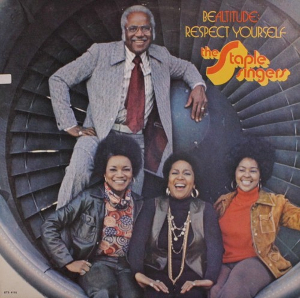
September 2: Staple Singers, "Respect Yourself"

Artist: Staple Singers
Song: "Respect Yourself"
Album: Be Altitude: Respect Yourself
Year: 1971


CLICK HERE TO LISTEN (will open in new tab)


While every band or artist has their own story, some groups have legends that stretch back to the time before recorded music existed.  Though this is not necessarily a guarantee of any larger success, it is often the more classic, well-rooted sound of such acts that endear them to audiences, as their recordings are rarely anything less than fantastic.  Yet such groups can take quite some time to evolve, and few groups have shown both sides of this idea than one finds in the history of The Staple Singers.  Beginning in the early 1930's, Roebuck Staple was performing on guitar and singing in spiritual and gospel groups, before relocating to Chicago a few years later.  As the 1950's rolled around, Roebuck began performing with his three children in a number of different settings, and the group had a sound unlike anything else, staying firmly rooted in the spiritual sounds, yet spinning a jazzy groove over many of their songs.  This unique musical approach garnered them a recording contract, and the group experimented in everything from folk to blues, trying to find the best way to present their sound to the public as a whole.  However, it was not until the group signed to Stax Records that they truly found their form, and they reached their creative apex with their 1971 release, Be Altitude: Respect Yourself.  Filled with some of the groups most timeless recordings, there is no other song in history that carries with it a similar musical and historical significance than what can be experienced on The Staple Singers' 1971 classic, "Respect Yourself."

In many ways moreso than any other song of the era, "Respect Yourself" perfectly captures the wide range of musical fusions that were present in the early 1970's, as the song is a fantastic blend of soul, funk, blues, and gospel.  From the moment the track begins, there is a deep groove in place, and the smooth, bouncing keyboard riff is nothing short of fantastic.  As this tone combines with the almost skip-paced drumming, one can hear the early signs of what would become the disco sound, and yet "Respect Yourself" is far funkier than anything from that time period.  This combination yields one of the smoothest musical landscapes in recorded history, and it is this tone that gives "Respect Yourself" a massively wide appeal.  Pushed even further by the winding, deep grooving bassline, it is quite understandable why the song quickly became an anthem, transcending boundaries in terms of both culture as well as musical preference.  Yet "Respect Yourself" manages to defy the popular notions of what a "radio friendly" song was, as the track is far longer than most in such a category, featuring a fantastic scat-laden breakdown.  The musical punctuation from the horns during this section becomes the ideal finishing touch to the song, and the way in which the entire band drops quickly back into the groove remains one of the most perfectly executed moments of musical drama ever recorded.  In fact, this is not all that surprising, as the band responsible for this sensational musical performance is none other than the famed Muscle Shoals Rhythm Section.

However, while the music is certainly a building block for later sounds, it was the shared vocals within The Staple Singers that was their most impressive aspect, and the singing has not lost any of its power over the decades that have passed.  Regardless of which member of the family is singing, the level of intensity never drops, and the same can be said of the sheer talent within the vocals.  The fact that the singing is passed between different members gives "Respect Yourself" even more depth and range, as well as making the song more approachable in terms of singing along and making the song "your own."  This element is even more important due to the rather unsubtle message that the group conveys through the lyrics, written by Luther Ingram and Mark Rice.  The team penned the lyric after a discussion of the current state of African American culture (specifically youth) at the time, and the songs' title reflects their sentiment.  Holding nothing back, "Respect Yourself" goes after the overall attitude of youth towards the world at large, and the song places the responsibility for their lot in life on the people in question.  "Respect Yourself" quickly became an anthem for self-improvement and empowerment, and it would be one of the "calling cards" of the post-civil rights movement.  In many ways, the song is just as applicable today as it was nearly four decades ago, and its aim and intent can be easily pointed to any group of people from anywhere on the globe.

The lasting impact of "Respect Yourself" can be seen all across the decades and genres, with the track being covered by everyone from B.B. King to Joe Cocker to a rather unexpected hit from actor Bruce Willis.  Parts of the track were also lifted for Madonna's song of the same name, as well as a massive number of hip-hop songs.  These tributes are clearly not only due to the liberating and powerful lyrics, but to the music as well, and one would be hard pressed to find a better example of the "fat funk" sound that was the trademark sound of Southern soul as the 1970's began.  The way in which the horns push the sides of the song outward, with the bass and keyboards dancing down the center is as enjoyable a musical arrangement as one will find anywhere, and the clear link to the disco sound cannot be denied.  However, it is the vocal work of the entire Staples family that makes the original recording of "Respect Yourself" impossible to top, as they manage to perfectly balance their gospel-based style with the "new soul" approach of the era.  Whether it is Roebuck's almost scolding deep voice or the limitless soaring of Mavis, this is as close to vocal perfection as has ever been captured on tape, and the power of their singing is something that must be experienced firsthand to be properly appreciated.  Though the entire civil rights movement was filled with a number of unforgettable anthems, no other is on par with the power and sound one can find on The Staple Singers' magnificent 1971 single, "Respect Yourself."

Thursday, September 1, 2011

Daily Guru: Something Old, Something New #04

It's Thursday, and time for another dose of "Something Old, Something New" with The Daily Guru. Enjoy!

September 1: Ike Turner, "Rocket 88"

Artist: Ike Turner
Song: "Rocket 88"
Album: Rocket 88 (single)
Year: 1951


CLICK HERE TO LISTEN (will open in new tab)


Though music history is filled with countless moments which shaped the sounds that followed, there are a small handful that were so significant that they mark points not only in music, but in the overall course of human history itself.  It is in these few instances where one can understand the complete impact that music has all across culture, as one can cite these moments as those which altered culture, pushing humanity into a brand new direction on all fronts.  If one gives such occurrences an honest look, there are less than five that have occurred over the past century, with one of them standing as perhaps the most controversial in all of music history.  It would be this recording which would not only be labeled as the "first" rock and roll song, but the results of the sales of the recording would also provide the financial foundation for what would become one of the most important labels in music history.  While country and jazz were still far beyond a term like "dominant" in the early 1950's, rhythm and blues music was finding ways to fuse together with these sounds and create shocking results.  Many of these "new" sounds were coming form the deep south, and it was a song that was largely pieced together during rehearsals that would forever change the world.  Though one cannot definitively name the "first" rock recording, it is rather difficult to argue against giving such a title to 1951's, "Rocket 88."

On a number of levels, "Rocket 88" stands as an unprecedented recording, and this goes all the way to actual credit that was given for the performance of the song.  On the original pressings of the single, it is attributed to "Jackie Breston And His Delta Cats," but the reality is that the song was written by Ike Turner and his band, The Kings Of Rhythm.  Breston was the vocalist and saxophone player with the band, and the band name listed on the single was created by Chess Records with little or no knowledge of this given to the band before the record was released.  Along with this element, "Rocket 88" is rightfully cited as the first recording that contained a distorted guitar track, as there is a fantastic fuzz and crunch to Willie Kizart's sound.  The question of how exactly this occurred is still somewhat up for debate, as the legend says the amplifier fell from the roof of a car, and newspaper was used to try and keep the sound cone in place, resulting in the fuzzy sound.  However, Ike Turner has stated that the amplifier did not fall from any height, and the sound was likely a result of rain damage from being stored in the trunk of a car.  Regardless of the actual reason as to how or why Kizart's amplifier was damaged, the sound that was captured on this take was nothing short of revolutionary, and one can easily use this fact alone as the reasoning behind labeling "Rocket 88" as the first and most important song in the history of rock music.

However, controversy and new sounds alone would not be enough to make a song so significant, and one cannot understate just how perfectly the band manage to balance the sounds of r&b with the exciting energy that would become rock and roll.  The loose, almost jazzy funk that Ike Turner brings to the piano piece on "Rocket 88" is absolutely phenomenal, and one can easily hear the influence this performance had on the next few decades of recorded music.  It is the way in which Turner spins the "jump blues" sound and an almost swing arrangement that is so exciting, and the rest of the band follows is lead perfectly.  His playing presents a fantastic compliment to Kizart's guitar progression, and in terms of both mood and tone, this remains one of the finest pairings in music history.  Yet it is the saxophone part, played by a teenage Raymond Hill, that steals much of the show on "Rocket 88," giving the track a superb growl and attitude.  All of the instruments come together in brilliant fashion, and the vocals lain over them from Jackie Breston complete an unparalleled musical achievement.  Breston mirrors the swing and attitude found within the musical arrangement, paying tribute to what was then the vehicle with the largest engine in production.  There is a somewhat mischievous swagger within Breston's vocals, and it is this reality that serves as the ideal finishing touch to the track, as well as enabling "Rocket 88" to attain a truly timeless sound and appeal.

Only a few months after the "original" release of "Rocket 88," Bill Haley and The Comets released their own take on the song, and while there was more of a wide-ranging swing to this version, the spirit and attitude of the original were made even more clear.  It is this sound and approach that "makes" "Rocket 88" the amazing track that it remains to this day, and it is impossible to cite any rock band that does not owe its existence to the work of Ike Turner and Kings Of Rhythm.  Furthermore, "Rocket 88" was recorded by none other than Sam Phillips, and the profits that he earned from the sales of the track were used to open Sun Studios.  Had this not occurred, countless keystone artists from the early rock era may have never secured recording contracts, and this is yet another way in which "Rocket 88" can be seen as the most pivotal song in all of music history.  Yet even with these realities in place, the song somehow manages to remain slightly overlooked, often falling behind or below songs that were recorded far later, but achieved more commercial success.  This is one of the largest injustices in the history of music, as "Rocket 88" stands as the track which provided the formula from which the entire rock genre was created.  Bringing together a stellar musical arrangement, along with a mood that pushed far beyond anything previously recorded, there is simply no other song that sounds similar or holds as significant a space in history as the iconic single, "Rocket 88."