Saturday, May 21, 2011

May 21: The Ink Spots, "If I Didn't Care"

Artist: The Ink Spots
Song: "If I Didn't Care
Album: If I Didn't Care (single)
Year: 1939


CLICK HERE TO LISTEN (will open in new tab)


While one can easily trace the roots of almost every rock-based genre back to the blues, it can often be a bit confusing to try and find the origins of the "simple" pop songs that have been present within music almost since the beginning of the "recording era."  Though a number of pop hits can be linked back into the rock genre after awhile, there remains a large group of songs that are "only" pop, and one must go back quite a long time to find the source of this style.  It was during the transition from the 1930's to the 1940's where one can find the beginning of the "pop era," and though the time period is best known for the rise of both jazz and folk, it is also responsible for one of the most important singles in the history of music.  The group in question were a vocal quartet that had been trying to break through called The Ink Spots, and though their name may not be instantly recognizable to many, their contributions continue to impact modern music nearly a century after their seminal recording.  Having been given a song that was penned by the legendary hand of Jack Lawrence, the group actually recorded the song in question before Lawrence had completed it, and there was supposed to be a different ending, but by the time this information was passed along, The Ink Spots had already made a massive hit out of their timeless 1939 single, "If I Didn't Care."

The opening notes of "If I Didn't Care" can quickly confuse the listener into thinking that the song is a country ballad, as the acoustic guitar from Charlie Fuqua has a meandering, soft tone.  Yet there is also something completely inviting about the progression he plays here, and one cannot help but smile at the simple beauty within.  The way in which the piano and bass from Hoppy Jones manage to perfect fuse together with the guitar instantly transports the listener back in time, and the fact that this arrangement remains as captivating now as it did in 1939 is proof of the songs' timeless appeal.  The three instruments work lightly behind the vocals, and the overall delicate nature of the song is made obvious by the fact that there are no drums anywhere on the track.  This also enables "If I Didn't Care" to lock into a smooth sway that persists throughout the entire song.  However, it is in the final bars of the song where the "mistake" ending occurs, and yet one can look at this instance as proof of the true power of a brilliant recording.  If one listens closely, the ending of the song is actually performed in a different key than the rest, and this was due to a mistake by Jack Lawrence.  Though he did write a second ending, The Ink Spots had already recorded the original, and as one can clearly hear, it is this "mistake" that enables "If I Didn't Care" to have one of the most uniquely perfect endings in music history.

Due to the rather subdued and sparse nature of the musical arrangement, the focus of the song is on the vocals from the group, and this works to the pleasure of anyone who listens to the song.  On "If I Didn't Care," The Ink Spots quickly prove the value of "real" musical talent, and there are few recordings from any point in history that can boast as beautiful a vocal performance.  Whether it is during the solos on the verses, or the absolutely mesmerizing harmonies, "If I Didn't Care" is as close to vocal perfection as one will find anywhere, and the talent and allure of their voices are able to easily have as much impact today as they did in 1939.  One can also point to their performance here as the source of the "doo wop" sound, as well as the blueprint for the modern pop vocal.  Within the singing, one can hear influences of everything from gospel to jazz to blues, and it is the way in which The Ink Spots combine these elements into something new that makes "If I Didn't Care" so magnificent.  Whether it is the high-toned, almost gentle singing of Bill Kenny or the unforgettable, trend-setting, deep speaking from Hoppy Jones, one can find nearly every aspect of modern, popular vocals within "If I Didn't Care."  It is also the way in which the group presents this lyric of longing and hope that makes the song so amazing, and again, it is the direct, simple words which make it rise so far above other such songs.

Truth be told, it is almost impossible to cite all of the influence that "If I Didn't Care" has had over the decades, as there are few, if any songs that can boast as much impact.  While it can almost be assumed that there have been a number of covers over the years, one must look to other forms of media to completely understand just how significant a song The Ink Spots recorded.  From the hit TV show Sanford And Son to the Oscar-winning film The Shawshank Redemption, the song seems to never have been out of the ear of popular culture for very long, and it made a bit of a comeback when it was featured in the most unlikely of places: the "shoot 'em up" horror video game, BioShock.  Though it is likely that most were not aware of the piece of music history which they were experiencing, the fact that so many people still choose to feature the song is a testament to the lasting power and beauty one can find within the recording.  Furthermore, "If I Didn't Care" holds a very unique place in history, as it is one of only twenty-six singles to have sold in excess of ten million copies.  Modern estimates claim the single to have sold nearly twice that number, that that fact alone should be enough to prove the songs' lasting impact and worth.  These realities make it rather confusing that The Ink Spots are often overlooked for this massive achievement, yet after only one listen, one can quickly understand the significance and unrivaled beauty within their groundbreaking 1939 single, "If I Didn't Care."

Friday, May 20, 2011

May 20: Slick Rick, "Children's Story"

Artist: Slick Rick
Song: "Children's Story"
Album: The Great Adventures Of Slick Rick
Year: 1988


CLICK HERE TO LISTEN (will open in new tab)


Within the world of hip-hop music, on can argue that it is necessary to have two complete elements to be truly successful as an emcee.  The most noticeable necessity is that of having a unique sound and style to the rhyme, and while this certainly does not mean one must be loud, there needs to be some sort of swagger or intrigue within the vocals.  The second, and perhaps more difficult element, is that of exceptional writing talent, and it is the overall lacking in this area that has dulled a majority of the current hip-hop scene.  If the emcee cannot pull in the listener by spinning vivid images and thought provoking rhymes, then there is really no reason for them to be rapping in the first place.  Though there have been many emcees that combined these two elements in a number of different ways, there has never been another artist in the history of hip-hop that sounded or wrote quite like Slick Rick.  Bringing a smooth delivery that remains completely unrivaled, it is impossible not to get caught up in his voice.  Yet it is also the unapologetic words which he raps that pushed him to the status of "icon" within hip-hop, and few records can stand alongside his flawless 1988 release, The Great Adventures Of Slick Rick.  Containing a number of true hip-hop classics, it is almost impossible to measure the impact the album has had over the years, and few songs continue to hit as hard and remain as captivating as Slick Rick's 1988 single, "Children's Story."

Though to the modern ear, the musical backing on "Children's Story" may sound quite familiar, the fact of the matter is, when the song was first released, it was as exciting and fresh as one could imagine.  In fact, the artists that have lifted the beat and musical progression since have done so with complete knowledge that they were simply copying the tone found here.  Yet this does not detract in the least from the tone set forth by the music, which revolves around samples of Lyn Collins', "Think (About It)" and Bob James', "Nautilus."  The smooth, yet unquestionably dancable progression from the synthesizer is the key to the songs' appeal, and it is just as enjoyable now as it was more than two decades ago.  In many ways, the fact that the musical arrangement remains so fresh and enjoyable is a testament to just how influential a song one can find within "Children's Story," and it represents the "Golden Age" of hip-hop as perfectly as any other song.  The way in which the beat bounces across the track gives "Children's Story" an aggressive edge to match the vocals, and yet overall, the sound shows the blueprint for a majority of the early Def Jam recordings.  It is the way in which the musical arrangement perfectly locks in with the rhymes that makes "Children's Story" such a brilliant effort, and this amazing level of fusion is likely due to the fact that Slick Rick handled nearly every aspect of the song on his own.

Yet as unforgettable as the music remains, there is simply no getting past the fact that the vocals of Slick Rick remain completely unmatched.  In both his delivery style, as well as the content of his rhymes, he stands far above other emcees, and few other rappers have even attempted to copy his style.  Much like the music over which he raps, there is a smooth, almost cool tone within the voice of Slick Rick, and the way in which his British accent comes through from time to time only makes his vocal tracks more intriguing.  To this point, one can argue that without Slick Rick, the hip-hop movement would never have taken off in the U.K., and he also proved that the dark and gritty conditions found in the U.S. cities was similar to that of his own country.  Though many of his songs have a lighter or more racy overtone, on "Children's Story," Slick Rick delivers what remains one of the most unapologetic and brutal rhymes on the downfall of inner-city youth that has ever been recorded.  The lyrics are straightforward and non-stop, and the lack of any bridge or chorus makes the words hit even harder.  As the songs' single verse continues, Slick Rick gets deeper and deeper into the dark choices of the protagonist, ending in his arrest, and it is the fact that the story is so vivid that makes "Children's Story" completely unforgettable.

The influence that has been taken from the raw and in-your-face style of "Children's Story" is impossible to measure, as one can find traces of the song throughout a massive amount of songs that followed.  Many emcees even pulled complete lines from the song, and everyone from Eminem to Tricky have sampled "Children's Story" in part or whole.  Along with the lyrical copies, the music to "Children's Story" has become one of the most overly-sampled songs in history, most famously used by 'Ol Dirty Bastard's, "Baby I Got Your Money," as well as on Montell Jordan's chart-topping, "This Is How We Do It."  The fact that "Children's Story" has had so much impact is a testament to the unique perfection that can be found on the track, and yet one can argue that the song is distinctive within Slick Rick's catalog, as it is far more serious and cautionary that his usual subject matter of women and pimping.  This song can be seen as one of the first "warning" songs to rise to prominence within hip-hop music, and it also strangely foreshadowed the next "big thing" to rise in the genre, as "gangsta" rap would explode only a few months later.  Yet even without all of the influence and accolades that followed in the wake of the songs' release, at its core, Slick Rick's 1988 single, "Children's Story" is an ideal example of how vivid lyrics and an exceptional musical arrangement can combine to become the very definition of hip-hop perfection.

Thursday, May 19, 2011

May 19: Ornette Coleman, "Lonely Woman"

Artist: Ornette Coleman
Song: "Lonely Woman"
Album: The Shape Of Jazz To Come
Year: 1959


CLICK HERE TO LISTEN (will open in new tab)


While every genre has its changes and sub-genres that occur over time, there is no other style of music that saw as many groundbreaking changes in as short an amount of time as one sees within jazz music.  When one looks at the history of the genre, for almost three decades, it seemed that every year or two, an entirely new school of jazz was rising, and one cannot overstate just how much impact this had on the entire world of music.  Similarly, the number of artists who helped to create all of these changes is quite long, and yet there are a few names that rise above the others.  Though many of these elite performers brought with them amazing back-stories, there were few that seemed as unlikely to become legendary than the great Ornette Coleman, who burst into the world of jazz in the late 1950's.  The odd thing about this was that unlike nearly every other jazz icon, Coleman was virtually unheard of before his first released, as he did not hone his craft in the same style as most other jazz greats.  This is one of the many reasons that his 1959 album, The Shape Of Jazz To Come, is such a stunning and mind-blowing musical achievement, and it remains one of the most important and influential records in all of music history.  Largely regarded as the beginning of the "free jazz" movement, one can quickly understand why both the album and Ornette Coleman are held in such esteem by hearing the albums' extraordinary opening track, "Lonely Woman."

Almost from the moment that the song begins, there is a spirited tension that dominates the mood of "Lonely Woman," and it is set into place by bassist Charlie Haden.  Though there is nothing overly complex about his opening notes, it is the tone and echo he brings that makes it so unique.  As the song progresses, he digs in deeper, establishing the swaying groove that has a slightly Middle-Eastern feel to the sound.  The way in which he manages to simultaneously compliment and contrast the playing of drummer Billy Higgins is equally impressive, and the two quickly make their case as one of the greatest rhythm sections in jazz history.  Yet it is the rhythm itself that stands out more than almost anything else on "Lonely Woman," as each of the four musicians seems to be working within their own time signature.  Though there are periods on the song where they are all locked into the same tempo, a majority of the progressions exemplify the "free jazz" style in that they are often playing in double or half time when compared to one another.  It is the way in which all of these tempos lock in so perfectly with one another that makes the track such an amazing musical experience, and it is further highlighted by the fact that the quartet almost completely ignores any need for chords within their playing.  The combination of these two elements is what would define the "free jazz" sound, and "Lonely Woman" also displays the power that can be achieved within only the rhythm section.

However, the fact that chords are so purposefully ignored is without question the most significant aspect of "Lonely Woman," and one can pick up on this difference within the other half of the instrumentation.  Instead of the more traditional trumpet or piano, "Lonely Woman" features cornet player Don Cherry working alongside the bands' leader, and it is the way in which he matches, the veers away from the saxophone line that sets this song apart from the rest of the Coleman catalog.  Throughout his playing, one can sense the freedom of his improvisations, and even when they return to the songs' theme, there is an open, almost wild feel to his performance.  Yet it is the way in which Cherry is able to help frame and spotlight the saxophone playing of Ornette Coleman that proves to be the finest point of this song, as Coleman re-writes the books on what is possible within the jazz world with every note he plays.  Completely throwing all previous "rules" to the wayside, this is without question the finest moment of Coleman's entire career, and there are moments where he seems to have completely flown out of control with his playing.  Yet the fact that he is always able to bring his solos back to the central theme proves his unparalleled mastery of jazz, and while many have tried to copy his style, none have been able to bring all of the elements together in the manner that one can experience on "Lonely Woman."

In retrospect, one might not see "Lonely Woman" as that "far out" a performance, as the music that would appear in the years that followed certainly put it into a greater perspective.  However, when one considers what had been recorded previous to this point, it is easy to understand why so many performers and critics were polarized by the sound found here.  Easily living up to its name, The Shape Of Jazz To Come completely blew open a new avenue for jazz musicians, and one can cite the album as the reason that so many of the tonal and modal experiments occurred in the years that followed.  Furthermore, the fact that the instrumentation was so non-traditional also enabled other artists to test new formations within the lineup of a jazz outfit, and this again shows just how pivotal a release one can see in this record.  However, even with all of these far-reaching realities, at its core, "Lonely Woman," as well as the album as a whole, presents the finest jazz work one could want, and it leaves little question that Ornette Coleman belongs among the jazz elite.  Clearly interpreting music and mood in a way unlike any of his peers, the meandering progressions he plays are able to provide a brilliant contrast to the shrieks and squelches that seamlessly work their way into the arrangement.  It is the way in which he is able to play such wild sounds, yet never lose sight of the melody that enables Ornette Coleman's 1959 recording, "Lonely Woman" to achieve the status that it has, and there are few jazz songs that have proven to be as stunning or as massively influential.

Wednesday, May 18, 2011

May 18: James Carr, "The Dark End of the Street"

Artist: James Carr
Song: "The Dark End Of The Street"
Album: You Got My Mind Messed Up
Year: 1967


CLICK HERE TO LISTEN (will open in new tab)


One of the great tragedies of recorded music is the number of phenomenal artists that have become somewhat lost as time has progressed.  While it is not to say that they are any more or less deserving of accolades for their talents, it is often within these lesser known artists where the truly spectacular moments of music reside.  Perhaps due to the fact that they do not receive as much pressure or "guidance" from their labels as the "superstars," there is a sense of purity and authenticity that can be heard in these artists, and this is exactly what one finds in the soulful, often dark sounds of one of the greatest voices in history: James Carr.  Without question easily able to be mentioned in the same sentence as greats like Otis Redding and Wilson Pickett, Carr's voice was nothing short of spectacular, and in nearly every song he recorded, one sense that he had a personal understanding of the pain within the words he sang.  It is the fact that his performances were often darker in nature than his peers that set him apart from the others, and yet regardless of what he was singing, the power and presence within his voice was often nothing short of completely mesmerizing.  One need look no further than his 1967 album, You Got My Mind Messed Up, to understand just why he was such an amazing artist, and it is James Carr's single from that album, "The Dark End Of The Street," that stands as not only his finest moment, but one of the greatest in all of music history.

Almost from the instant that the song begins, there is a groove within "The Dark End of the Street" that is completely unique.  It is led by the echoing, yet perfectly toned guitar of Chips Moman.  It is the way in which the guitar seems to slide effortlessly across the track that makes it so fantastic, and the deep, soulful sounds it puts forth easily rank among the greatest of all time.  Yet the guitar work is highlighted by the rest of the session players, and it is the potent, yet restrained horn section that seems to push the song along.  The way in which the horns blend into the track helps "The Dark End of the Street" ring of a slightly earlier time in history, as one could easily imagine a "doo wop" group performing the same song.  The light piano that seems to find its place as a "second vocal" role to Carr remains one of the few truly flawless performances in history, and it is clear that the player perfectly understands their role in the overall musical arrangement.  It is the fact that none of the musicians on the track seem to push beyond "their place" that enables the overall sound to become so fantastic, as the blending of instruments leads to one of the most potent moods ever captured on tape.  Yet when one steps back, the arrangement is rather simple, and it is songs like "The Dark End of the Street" that prove that one need not be overly complex to have a massive amount of musical and emotional impact.

Yet as brilliantly crafted as the music is on "The Dark End of the Street," there is not a moment where the focus is not on James Carr, and within moments of his first lines, it is clear that he is one of the most talented performers in all of music history.  The power and presences that can immediately be felt by his voice is truly unparalleled, and it seems there is not a note anywhere on the musical scale that is out of his reach.  It is the way in which he has clearly "given in" to the music that helps to elevate "The Dark End of the Street" above nearly every other soul song in history, as it is in this element where one can clearly sense how "close"" he is to the words he sings.  The clear understanding that he displays of exactly where to push his voice and were to "let it glide" reinforces this sense, and it is the emotion that he puts forth which completely captivates the listener.  Yet it is also within the words where he separates himself from his peers due to the darker, almost more realistic nature of the lyrics.  On "The Dark End of the Street," Carr spins a tale of two adulteress lovers, and while this is nothing new to music, it is the tone one can sense that makes the song so different.  While most other songs paint the situation as one to be regretted, within "The Dark End of the Street," the characters do not seem in any way set to "stop" their actions.  It is the way in which Carr sings each line where one can sense the love and pain, and after hearing his performance, his voice can never be forgotten.

Though his name, and perhaps the song, have been slightly forgotten by history, one can gain a full understanding of the true power of "The Dark End of the Street" by looking and the massive amount of cover versions that have been released over the years.  Everyone from Aretha Franklin to Bruce Springsteen to Adam Duritz have recorded their own takes on the song, and this not only proves its timeless quality, but just how much it influenced so many other styles of music.  After hearing James Carr's original, this is not as surprising, as it quickly establishes itself as a one-of-a-kind vocal performance, with an emotional connection that remains unrivaled.  This, in many ways, is the essence of soul music, and the fact that Carr is able to connect so deeply with every listener makes it almost impossible to comprehend the fact that he did not become a "household name" along with the other great soul singers of his era.  Furthermore, when one listens closely to his songs, there are a number of other genres at play in his sound, and one can detect influences from r&b and country within his singing and vocal approach.  It is this combination that many cite as the "Muscle Shoals" sound, and few deployed it as perfectly as James Carr.  Backed by one of the most potent and deep musical arrangements ever recorded, there are few vocal performances in history that can even remotely compare to the power and emotion that can be experienced within James Carr's magnificent 1967 song, "The Dark End of the Street."

Tuesday, May 17, 2011

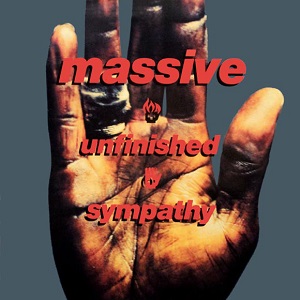
May 17: Massive Attack, "Unfinished Sympathy"

Artist: Massive Attack
Song: "Unfinished Sympathy"
Album: Blue Lines
Year: 1991


CLICK HERE TO LISTEN (will open in new tab)


Though many try and lump all of the variations on the core style together as a single genre, much like any other type of music, once one explores electronic music, the differences become quite obvious.  While they all have a common link, much like the patterns or instrumentation of jazz and rock music, it is the way in which different artists re-interpret this core sound that makes the genre so intriguing.  Furthermore, each of the sub-genres has its own origins, and while some of the styles can be attributed to a number of artists, one can give nearly all of the credit for the development of the "trip-hop" genre to one of the longest-running acts in the history of electronic music: Massive Attack.  In modern times, their name is almost synonymous with electronic music in general, as the inroads and innovations they have brought over the past three decades remain unrivaled, and their 1991 album, Blue Lines, remains one of the most perfect and absolutely mind-blowing records ever recorded.  Sounding nothing like anything else being recorded at the time, the album completed shifted the mindset on what was possible within the electronic genre, and even more than twenty years after its release, it remains the blueprint for the style.  Though the entire album is well worth experiencing, there may be no better a song in the entire history of "trip-hop" than the sheer brilliance that one can find within Massive Attack's 1991 song, "Unfinished Sympathy."

When compared to the more modern interpretations of the trip-hop style, "Unfinished Sympathy" may appear to be more mellow, as it is not overflowing with speedy drum loops or overly distracting sound effects.  It is in this more refined approach where one can find the true beauty that "is" the style at its finest, and the trio of Robert "3D" Naja, Grant "Daddy G" Marshall, and Andy "Mushroom" Vowles do not waste a second anywhere within the songs' arrangement.  Each element of "Unfinished Sympathy" is perfectly crafted, playing an essential role within the song, and even with the varied sounds, it never even comes close to sounding chaotic or over-done.  It is this balance that is achieved on "Unfinished Sympathy" that sets the song so far apart from its peers, as there is a clear musicality, as opposed to too much reliance on artificial elements.  The way in which these sounds are able to so seamlessly blend with the delicate string arrangement is the combination that paved the way for countless other artists, as well as serving as the link to the down-tempo and ambient styles, and with this in mind, one can easily make the case that "Unfinished Sympathy" is one of the most important songs in the entire history of the electronic genre.  There is a sophistication and complexity within the arrangement on "Unfinished Sympathy," and yet it is so direct that one cannot help but be completely captivated by the sound, and it is this fact that enables it to endure just as strong after so many years since its initial release.

However, the other element that sets "Unfinished Sympathy" far apart from other electronic recordings is the absolutely beautiful vocal on the track that is provided by Shara Nelson.  While other electronic groups had dabbled in this approach, it was Nelson's performance that turned the delicate, almost ethereal vocal sound into the standard for the genre, and in many ways, her showing here has yet to be matched.  The amount of emotion that she is able to convey within her vocals helps to bring out the similar elements within the music over which she sings, and it cements the idea that there is absolutely a great deal of "music" within "electronic music."  There is also a swinging, almost carefree feeling within her singing, and it is this fact that enabled "Unfinished Sympathy" to dominate the dance club scene, and it remains a staple to this day.  The fact that Nelson delivers such a moving performance is also due to the rather straightforward, universal theme within the lyrics, as the group is able to approach the idea of longing in a wonderfully unique way.  Clearly missing her partner, there are few who have been in love that cannot relate to a simple, yet powerful statement like, "... how can you have a day without a night..."  It is the smooth, almost jazzy way with which Shara Nelson deploys each line that makes "Unfinished Sympathy" truly unforgettable, and one can find copies of the formula found here in nearly every recording in the electronic style that followed.

Truth be told, as the years have passed, "Unfinished Sympathy" has seemed to move beyond the electronic genre, as it is quite regularly cited as one of the finest and most important songs ever recorded.  Across the globe, it has been given such accolades, and when one looks at the other songs with which it is grouped, it provides a basis for the argument that it is the most significant and influential song in the history of electronic music.  There are virtually no other songs from the long history of the genre that have ever even been considered for such praise, and it is likely due to the perfect balance of sounds that one finds on "Unfinished Sympathy" that makes it impossible to write it off as "just another" electronic song.  Furthermore, the fact that even so many years after its release, the sound and production remains fresh is a testament to how forward-thinking and truly pioneering a style there was within Massive Attack, and it is much the reason they continue to be a dominant force within the genre.  From the smooth string arrangement to the multiple rhythms, the groove and mood set by "Unfinished Sympathy" shows the true beauty which can only be achieved through electronic music, and it proves that one can find just as much emotion and bliss within this style as any other type of music.  As they progressed, the group released a number of other fantastic songs, yet none continue to have the wide-reaching impact as one can experience within Massive Attack's phenomenal 1991 song, "Unfinished Sympathy."

Monday, May 16, 2011

May 16: Daily Guru, "Gurucast #72"

CLICK HERE TO LISTEN (will open in new tab)


(Left Click (PC) or Command-Click (Mac) to save it to your desktop...it's about 75MB)

One hour of amazing music and commentary from "The Guru" himself.

Tracklist (all links are to MY review of that artist, song, or album): 
1. Foo Fighters, "This Is A Call"  Foo Fighters
2. Minutemen, "There Ain't Shit On TV Tonight"  Double Nickles On The Dime
3. Dave Brubeck Quartet, "Blue Rondo a la Turk"  Time Out
4. Janis Joplin, "Half Moon"  Joplin In Concert
5. New York Dolls, "Looking For A Kiss"  New York Dolls
6. B-52's, "Channel Z"  Cosmic Thing
7. Atom Orr, "Walking Snow White"  This Was Tomorrow
8. Joe Strummer & The Mescelaros, "Mega Bottle Ride"  Global A Go-Go
9. Frost, "Damian"  Melodica
10. Masshysteri, "Panik"  Var Del Av Stan
11. Y Pants, "Favorite Sweater"  Y Pants
12. The Time, "Jerk Out"  Pandemonium
13. Miroslav Vitous, "Infinite Search"  Infinite Search
14. Third World War, "Preaching Violence"  Third World War

Sunday, May 15, 2011

May 15: Buck Owens, "Together Again"

Artist: Buck Owens
Song: "Together Again"
Album: My Heart Skips A Beat (single)
Year: 1964


CLICK HERE TO LISTEN (will open in new tab)


Though many wish to place them on opposite ends of the musical spectrum, it is impossible to deny all of the common ground and links between rock and roll and country music.  One can easily see their shared roots within blues music, and throughout the late 1950's and early 1960's, as rock and roll began to take over mainstream music, one can find it seamlessly blending into the country style.  Though at first, many country "purists" rejected this new blend of music, known as "the Bakersfield sound," it would be these early musical pioneers that would shape modern country music, as well as most popular country music for the decades that followed.  Within this group of trailblazing performers, few were as important to the development of the new sound than Buck Owens, and though his songs have been covered countless times over the years, it is his original versions that still stand as the finest.  Whether it was due to his wide-ranging, yet straightforward voice, or the simple, yet beautiful ways in which he captured human emotion at it's finest, Owens' songs remain absolutely perfect even after many generations have passed.  It is also the way in which he was able to transition the traditional country sound to a more modern, electric style, without losing any of the core elements that had been in place for decades.  Though he had a number of truly unforgettable songs in his career, few present him as perfectly and beautifully as one can experience in Buck Owens' heartbreaking 1964 single, "Together Again."

Within moments of "Together Again" beginning, the stripped-down and straightforward nature of Buck Owens becomes clear, and it is this simple, almost sparse arrangement that immediately pulls in the listener.  The amount of emotion that Owens is able to convey through his guitar is virtually unparalleled, and this is one of the earliest examples of the idea of making a guitar "sing" on a track.  The slow, sorrowful sounds of his pedal-steel guitar match his voice and the lyrics perfectly, and it is also in this aspect where the connection to the "old" style of country music cannot be denied.  Complimenting the lone guitar is a similarly slow, steady drum beat, and it is in this element of "Together Again" that the feeling of somber movement can be felt.  The beat seems to almost pull itself along, and one can picture the protagonist with his head down, on a dark, empty street.  The mood set in place by the guitar and drums are truly timeless, and this is evident in the fact that after almost fifty years, they still hit just as hard and are just as accurate.  The rhythm guitar further enforces this defeated, almost listless movement, and one would be hard pressed to find a finer example of emotional expression in music.  The way in which these sounds combine also suggests a bit of influence from r&b, and if one follows the progression of the Bakersfield sound, this connection becomes more apparent.

However, the downcast, almost pitiful musical arrangement would not hit with maximum impact without the outstanding vocal work of Buck Owens.  The sense of raw emotion and honesty in the music are mirrored in his singing, as he brilliantly works all over the vocal scale.  The uniquely glum verses are made heavier by Owens' deep and powerful voice, and one cannot deny his ranking among the finest vocalists of his generation.  On "Together Again," Owens has clearly given himself completely to the song, and the way in which his voice soars across the musical scale remains one of the most truly beautiful moments in recorded history.  Again, it is the twang-tinged croon that he presents which keeps the spirit of country music intact, and yet his vocals are far more clear and forceful than most of what had previously been done within the genre.  Yet if there was one element that defined country music, it would be within the lyrical content; and in this aspect, "Together Again" is as country as one can find anywhere.  Rarely in any genre has there been as simple, yet perfect a composition of longing and heartbreak, and yet when one actually listens to the words, as opposed to the emotion, one can find the lyrics are of a reuniting.  It is within this juxtaposition that one can argue that the song is a dream or a wish, but regardless of how one interprets it, the vocal performance from Buck Owens is absolutely superb.

Strangely enough, "Together Again" was never meant to be a big single, as it was released as a b-side to Owens' "My Heart Skips A Beat."  However, shortly after its release, both sides began getting a great deal of attention, and there was a point where the two songs held both of the top spots on the "Country Singles" charts.  The two songs also switched positions with one another a few times, and it was largely upon this occurrence which Owens cemented his legacy.  In the decades that followed, the formula that Owens pioneered would become the "standard" approach for mainstream country music, and yet in many ways, he himself would become somewhat forgotten by the genre which he largely created.  This fact in some ways fits perfectly with his overall personality, as his music constantly seemed to contradict itself, and this was rarely more true than what one finds on "Together Again."  At face value, the song is a soft, sad lament for a lost love, and yet when one actually listens to the words, they are the complete opposite.  The fact that Owens was able to create such space between the mood and the words remains unrivaled to this day, and it is also the almost effortless manner with which he deploys the sound that sets him so far apart from his peers.  Though many long-time country fans wanted nothing to do with this new sound, it would eventually re-write everything the genre stood for, and it is due to this that one must experience firsthand the sonic bliss and beauty that is Buck Owens' 1964 single, "Together Again."