Friday, February 4, 2011

February 4: Beasts Of Bourbon, "Hard Work Drivin' Man"

Artist: Beasts Of Bourbon
Song: "Hard Work Drivin' Man"
Album: Sour Mash
Year: 1988


CLICK HERE TO LISTEN (will open in new tab)


While in many cases, a band comes together and runs a full course, there are other situations where outside factors prevent such from occurring.  In these situations, unless the timing is perfect, some of the greatest possible often never come into existence; but every once in awhile, the timing works perfectly.  Though they had been experimenting with different lineups and sounds for nearly a decade, in the late 1980's, due to the break-up of The Scientists and The Johnny's both closing out their careers, if provided a perfect moment for what would become the definitive record from the Australian super-group known as Beasts Of Bourbon.  It is perhaps due to the fact that the band began as a side project, playing "bar style" rock, that the music is far more loose, yet aggressive than work of their other bands, and one can feel the enjoyment that each member is having throughout their stunning 1988 release, Sour Mash.  Blending together blues, country, punk, and outright experimental sounds, Sour Mash truly knows no peers, and one can trace both its roots and influence across the entire Australian music landscape.  Though each song on the record has it's own distinctive feel, there is no question that all the power and sleaze that defines Beasts Of Bourbon is on full display in their 1988 song, "Hard Work Drivin' Man."

The moment that "Hard Work Drivin' Man" begins, the entire intent and personality of the song and band are instantly clear, as there is a hard, dark groove and sway immediately set into place.  The tone from drummer James Baker is almost unsettling, and one can hear a close sonic kinship to the almost chaotic sounds of fellow Australians, The Birthday Party.  The way in which bassist Boris Sujdovic emphasizes this looming, intimidating mood completely captivates the listener, and there is an aggression and power within this rhythm section that has rarely been matched elsewhere in recorded history.  The blues-based swing that the duo put forth absolutely reeks of a smoky, dirty bar in "the bad part of town," and yet it is this very tone that makes "Hard Work Drivin' Man" such a fantastic song.  The addition of the dual guitars of Spencer Jones and the great Kim Salmon only add to this already phenomenal mood, and they also present a fantastic sonic contrast.  As the song progresses, the guitars begin to ring out, adding more to the bluesy undertones, as they cross in and out of a slide-guitar sound, seeming to shoot through the rhythm at random angles.  The combined sound also leans heavily on the post-punk sound, and this is where much of the dark mood comes into play, and the overall raw, unrestrained feel is what sets "Hard Work Drivin' Man" so far apart from everything else being created musically at the time.

Though there are have been many great pairings of vocalists with bands, few present as perfect a match in sound and style as the combination of this musical lineup of Beasts Of Bourbon and legendary vocalist, Tex Perkins.  Bringing a rough, gritty growl that is far beyond that of others who attempt such a sound, Perkins' voice adds even more to the overall mood, as there is simply no other vocal sound that would have sounded proper on "Hard Work Drivin' Man."  Furthermore, his raw, gruff sound lends even more of an "everyman" quality to the music, and it is very much his voice that helped make "Hard Work Drivin' Man" and underground classic.  It is also the fact that the lyrics which Perkins sings are equally appealing to the "working man" which push the song to such a status, and few bands have ever been as unrelenting and honest about the frustrations of "getting through the nine to five" as one finds here.  The sound and swagger with which Perkins sings the lines, "...boss man needs a kick in the pants, I'm gonna give it to him..." quickly brings a grin to the face of nearly everyone, as this is one of the most universal sentiments one can imagine.  As Perkins sings other thoughts of the difficult of getting through the day, only to be left exhausted in the evening, it is clear that there is a proximity to the words, and this reality, combined with the unapologetic lyrics are the key to making "Hard Work Drivin' Man" such a special moment in music history.

Though the band ha gone through a number of lineup changes and hiatuses over the decades, it is difficult to argue that Beasts Of Bourbon sounded any better than one finds them on their 1988 release, Sour Mash.  Clearly hitting their artistic stride as a group, much of the overall greatness of the band is due to the fact that even though many of the members had already made a name for themselves with other projects, there are no egos at play here.  The result of this collectively unselfish approach is one of the most powerful and dirty rock records ever recorded, though it also remains one of the most overlooked outside of Australia.  Yet if one compares Sour Mash to music from any other place on the planet from that time, it easily buries nearly everything else being recorded.  The sheer sonic force of which Beasts Of Bourbon are capable is at its high-point on "Hard Work Drivin' Man," and it is also this song that largely defines their overall mission as a group.  The rhythm section is nothing short of intimidating, and yet there is a dark, bluesy edge to the music that makes it brilliantly unique.  The addition of the dual guitar sound only makes "Hard Work Drivin' Man" more musically robust, and one can picture the song being played in a run-down bar as easily as on an arena stage.  Quite simply, Beasts Of Bourbon manage to pull off sleazy hard rock in a way that no other band has achieved, and one can experience this unique musical greatness within their 1988 song, "Hard Work Drivin' Man>"

Thursday, February 3, 2011

February 3: Megadeth, "Peace Sells"

Artist: Megadeth
Song: "Peace Sells"
Album: Peace Sells...But Who's Buying?
Year: 1986


CLICK HERE TO LISTEN (will open in new tab)


Whenever a band pushes to any extreme point across the musical spectrum, the chances of success are at their smallest, as history has shown that taking such a musical approach is almost always forced to compromise in some way.  This can be seen in the most mellow and melodic styles, as far too often, there is some element of the music that gets in the way of its own perfection.  Such instances are just as common in the most aggressive music one can find, yet in either case, when a band is able to overcome this trend, they are almost instantly vaulted to legendary status.  This is exactly the case that one finds within the music of thrash-metal icons, Megadeth.  Formed in the wake of Dave Mustaine's brief stint with Metallica, the group quickly distanced themselves from the rest of the heavy metal scene, and to this day, few groups have even come close to the energy and sound they produce.  Making a conscious effort to be a bit darker, a bit faster, and taking plenty of time to show off their superb talents via instrumental passages on nearly every song, Megadeth formed the blueprint for thrash-metal, and nearly thirty years after their first records, they sound just as fresh and fierce.  Boasting a massive catalog of heavy metal classics, there are few songs from any point in music history that can compare to the power, mood, and impact found on Megadeth's 1986 anthem, "Peace Sells."

As "Peace Sells" begins, it sounds about as far from heavy metal as one could imagine, with the bassline from Dave Ellefson standing in retrospect as the first clear link between funk and metal.  The fact that Megadeth is able to fuse these two styles together is one of the clearest examples as to why their music is "more" than metal, and countless bands have copied this hybrid over the decades.  Yet even with this groove being set into place from the onset, it is the drumming underneath by Gar Samuelson that injects the nervous energy into the song.  It is this strict, quick pace that gives "Peace Sells" much of its mood, and as the song progresses, the power displayed by Samuelson grows with every minute.  While the rhythm section here is certainly in top form, there is simply no way to discuss the sound of Megadeth without mentioning the core of their sound: the guitar tandem of Dave Mustaine and Chris Poland.  Whether they are pounding out the songs' rhythm or playing brilliant, speedy fills and solos, in many ways, this is as good as heavy metal gets.  The energy and emotion that one can feel within their playing is captivating from beginning to end, and one can hear influences form bands ranging from The Stooges to Black Sabbath within their sound.  Furthermore, there is a simplistic genius in the combined sound of the band on "Peace Sells" that is nothing short of heavy metal bliss.

Along with the brilliant musical arrangement on "Peace Sells," the song is made better by the somehow perfect vocals from Dave Mustaine.  Though his vocal range is rather limited, they are able easily convey all of the necessary emotion and power, and it is perhaps this limit in range that makes the songs of Megadeth so anthemic in nature.  This is especially evident during the closing section of "Peace Sells," as the entire band joins in on the chorus, and it is this part of the song that has made the song a regular part of the bands' set, and why it remains one of the most treasured songs in their entire catalog.  Yet one can also see the lyrics on "Peace Sells" as the definition of the early years of Megadeth, as they bring a straightforward, critical attack that can be interpreted in a number of different ways.  Though the band has denied it at times over the decades, the most popular interpretation of the song is that it is an attack on the stereotype that all "metalheads" are lazy, anti-everything idiots.  On many levels, this is clearly untrue, and one can even hear the lightning fast guitar solos as a statement to refute this generalization.  Obviously, one can also take the songs' lyrics on a far larger scale, giving it a global social context, and regardless of which way one reads the song, the impact and oddly inspiring vocals from Mustaine help to propel this song to the level of absolute thrash classic.

Strangely enough, though the station rarely made any "real" time for heavy metal over the years, the opening bassline of "Peace Sells" was used for years as the closing music for EmpTV News.  This fact makes it clear that though they preferred to play less aggressive music for their viewers, at least one person in the stations' programming department had a far wider range in musical taste.  The song has also appeared in a number of video games and TV shows over the years, and this is the final piece of evidence that one needs to argue just how important a song "Peace Sells" has been in the development of modern music.  Though there were many metal bands at the time, Megadeth sounded very little like their peers, as in both their town and musical arrangement, they were completely unique.  Throughout all of Peace Sells...But Who's Buying?, the band is in top form, and though they have released a large number of records over the years with many changes in lineup, one can still argue that it is this record that best defines the band and their sound.  Whether it is the unique groove put forth by the rhythm section or the fast-paced, crushing guitars, there is a dark, almost apocalyptic feel to their music, and it is this mood that makes the album stand out among the other metal bands of the era.  The aggressive, grity overall feel is both perfect and unique, and there is no denying the lasting impact that one can hear within Megadeth's 1986 thrash-metal classic, "Peace Sells."

Wednesday, February 2, 2011

February 2: Belly, "Feed The Tree"

Artist: Belly
Song: "Feed The Tree"
Album: Star
Year: 1993


CLICK HERE TO LISTEN (will open in new tab)


Though many musicians would be more than satisfied with a single iconic band, there are a select few who are so talented, that it seems regardless of the group around them, musical greatness simply happens.  It is these elite performers that have helped to shape music over the decades, and it is truly impossible to picture the musical landscape without their presence.  Whether it was her groundbreaking work as part of Throwing Muses, her brief stint with The Breeders, or her later solo work, one cannot deny that Tanya Donelly belongs within such a list, and she rarely sounded as free and creative as her work within her short-lived project, Belly.  Unquestionably one of the most unforgettable bands to come out of the fertile "alternative rock" scene of the early 1990's, the band in many ways encapsulated the free spirited, "dark happiness" that is present across nearly all the music of the time, and it is due to their honest, beautiful sound that Belly were able to rise above their peers.  Blending together soft, soaring moods with an aggression and power that somehow worked perfectly together, the bands' 1993 debut, Star, remains one of the artistic high-points of the entire decade, and the album displays Donelly hitting her artistic stride.  Though every song on Star is nothing short of fantastic, in both content, as well as the way in which it changed the course of music history, there are few songs of the decade that can compare to Belly's magnificent 1993 single, "Feed The Tree."

As the song begins, it is easy to hear all the sides of Donelly's past, as the descending guitar riff has a tone and attitude that reflects her time in Throwing Muses, yet the song quickly shifts to a more sparse, light sound as the verse begins.  The way in which these two sounds play so perfectly with one another is largely due to the fantastic production work of Gil Nortion, whose previous work with bands like The Pixies as well as Throwing Muses made him a perfect fit for this project.  The tension created during the verses by the bass of Fred Abong and drummer Chris Gorman is absolutely fantastic, and it is this soft, almost nervous feeling that gives "Feed The Tree" much of its personality.  Adding in guitars from Donelly and Tom Gorman, and the overall sound of the group becomes an amazing clashing of sounds and moods.  Whether it is the way in which the bass seems to dance across the song or the brilliant fills from the guitars, it is very much the nuances of this song that make it so unforgettable.  The stark shift that "Feed The Tree" takes from the verses to the bridge and chorus sections adds to the overall impact of the song, and it is in this fact that one can clearly see just how much Donelly as grown as a writer.  Furthermore, there is a fantastic sense of movement on the song, and even during the slower sections, it is difficult to not get completely caught up in the mood that the band brings.

However, along with crafting the song so perfectly, one can also see "Feed The Tree" as the ultimate display of Tanya Donelly's superb voice and uncanny talent as a lyricist.  Having displayed in her previous projects an ability to work all over the vocal scale, "Feed The Tree" highlights her diverse sound, as the soft, low, reflective verse present a fantastic contrast to her soaring, powerful delivery during the bridge and chorus.  It is this shifting of styles that makes "Feed The Tree" all the more intriguing, and also provides for a great sense of drama on the song.  There is also a sense of raw, unrestrained emotion throughout "Feed The Tree," and it is moments like this that defined the new movement of music, pushing away from the over-produced, detached feel that represented much of the music of the 1980's.  Along with this straightforward, honest sound, the lyrics that Donelly sings stand as some of her finest work, and they were far deeper and more beautiful than nearly any other band at the time.  Though they can be interpreted in a number of different ways, Donelly claims that the song was about respect and commitment, using the tree as a place under which a family is buried over the generations.  With this knowledge in hand, the chorus of, "...take your hat off boy when you're talking to me, and be there when I feed the tree..." makes a great deal of sense, and it is this simple, yet powerful phrasing, combined with Donelly's amazing voice that make "Feed The Tree" such an unforgettable song.

There is perhaps no better gauge for the overall importance of "Feed The Tree" than when one inspects its performance and impact.  It is also in these elements where one can see the true difference between Belly and the previous projects of Donelly.  Though her previous groups were certainly influential in their own right, within Belly, Donelly was able to hit her stride and properly execute her amazing melodies that had their own unique pop sensibility.  Songs like "Feed The Tree" share very little with the music that was being created previously within the pop scene, yet the song reached the top spot on the "Modern Rock" charts, and remains one of the most definitive songs of the decade.  The fact that a song with such a non-traditional arrangement and dark mood was able to achieve this success is a testament to the sonic beauty and brilliance that one can find within, and there are a number of bands that attempted the same formula in the wake of Belly's success.  Whether it was the sharp, yet stark drumming, the uniquely distorted bass and guitars, or the shifts in tempo, there has never been another song quite like "Feed The Tree," and the way in which Donelly's voice soars across the chorus remains breathtaking even almost twenty years later.  Though every song on Star is outstanding, one can make the case that all of the talents of Belly came together perfectly in the form of their pivotal 1993 single, "Feed The Tree."

Tuesday, February 1, 2011

February 1: Elmore James, "Dust My Broom"

Artist: Elmore James
Song: "Dust My Broom"
Album: Dust My Broom (single)
Year: 1951


CLICK HERE TO LISTEN (will open in new tab)


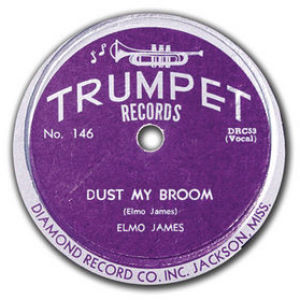
Though the idea of stating who the best guitar players of all time is certainly a subjective discussion, there are a handful of performers that simply cannot be left off of such a list.  Due to their exceptional level of talent, the time in which they played, or some factor so rare they it cannot be topped, it is these few guitarists that have truly shaped the world of popular music over the past century.  Among these great names, few were as important as the great Elmore James, and even almost five decades after his passing, there remain no other guitarists that have unseated him as the King of slide guitar.  In both his approach and his tone, James was truly a revolutionary player, and across the musical landscape, from blues to rock to punk, one can hear clear echoes of his style.  Yet within his own music, one can also easily hear his own influences, most significantly, the one and only Robert Johnson.  As a clear disciple of Johnson's style, it was very much James that provided the "proper" transition of Johnson's playing into the more modern world, largely being responsible for "electrifying" the blues.  Over his short recording career, James played a truly staggering amount of music, and this makes it virtually impossible to single out any one song as his finest.  Furthermore, with James largely pre-dating the LP era, his recordings are scattered across countless sessions on a number of labels.  However, taking this all into account, there may be no other song more important to the development of music across the decades than one finds in Elmore James' classic 1951 recording, "Dust My Broom."

There is no secret that this song is, in both musical and lyrics, almost entirely lifted from the Johnson recording, "I Believe I'll Dust My Broom," and over the decades, there have been a myriad of other adaptations of the song.  In fact, one can easily argue that aside from perhaps Bo Diddley's opening progression on "I'm A Man," there is no more famous a progression that the one fond here.  However, James' take on the song is absolutely mind-blowing, as the gritty, dirty guitar sound, and the aggressive mood is far ahead of its time.  Even more "in your face" than a majority of the rock music of that entire decade, there is a tone on "Dust My Broom" that would have been mesmerizing in the late 1960's, let alone twenty years earlier.  The way in which James seems to fly across the fret-board gives it a uniquely dangerous feel, and it is largely this recording that would be the main source of fuel for the development of the early rock and roll sound.  As James rolls across the track in brilliant fashion, with Frock O'Dell on drums and the now-legendary grooving bassline from Leonard Ware, the song takes on a personality far greater than the sum of its parts, and there is simply no resisting the allure of "Dust My Broom."  The sound of the harmonica from Sonny Boy Williamson III provides an amazing compliment to James' sound, and the full, almost overly-loud sound of the combined group is the reason the song stands as such a pivotal moment in music history.

Yet as fantastic as the overall sound on "Dust My Broom" may be, there is not a moment anywhere on the song where the focus is taken from Elmore James and his phenomenal display of talent.  After hearing his work here, it is understandable why he remains the unchallenged champion of slide guitar, and this honor alone vaults him high atop the list of greatest guitarists of any style.  While to the more modern ear, his performance may not seem that out of the ordinary, there is simply no getting around the fact that the fast, almost distorted style with which he plays was years ahead of its time, and one can trace the origins of rock and roll back to this recording.  James gives "Dust My Broom" a unique swing, and it is this slight shift away from the "classic" blues sound that can be seen as a vital piece of the formation of the "boogie woogie" sound.  However, even though it has its own unique personality, there is no question as to the songs' roots, as the musical progression almost completely matches that of the original composition which has become attributed to Robert Johnson.  Furthermore, the lyrics, both in structure and content have a similar source, as James took the Johnson words, yet used the slightly modified additions from the version of the song recorded by Arthur Crudup a few years prior.  Regardless of these material sources, Elmore James' take on the song stands far above the others, and the sound and sting of his guitar here remains one of the most important moments in all of recorded music.

While many still do not quite see how the blues transitioned into the sound now known as rock and roll, one can easily see the connection within Elmore James' take on the classic arrangement, "Dust My Broom."  In terms of tone, speed, and talent, there was simply no other similar song before his, and one can point to this moment as the "beginning" of rock music in its more modern sense.  Furthermore, it is on this track that James is perhaps at his best, and after hearing his performance, one cannot deny his rightful place among the most elite guitarists in all of music history.  Truth be told, every slide guitar player that followed him owes a great deal of their sound to James, and even later blues legends like Muddy Waters and Howlin' Wolf cited James as a massive influence on their playing style.  On "Dust My Broom," James not only gives a legendary performance on guitar, but his singing also serves as a bridge between the traditional blues sound and the more modern approach to the style.  Mirroring his guitar work, there is a grit within his voice and helps to further express the deep emotions that he pulls from the song.  It is this combination that sets James apart from his peers, as few others were able to perform as brilliantly in both singing and guitar playing simultaneously.  This is yet another reason why he stands as such a massive icon in the overall history of music, and there are simply not enough words to do justice to the sound and impact that one can find within Elmore James' monumental 1951 recording, "Dust My Broom."

Monday, January 31, 2011

January 31: Daily Guru, "Gurucast #57"

CLICK HERE TO LISTEN (will open in new tab)


(Left Click (PC) or Command-Click (Mac) to save it to your desktop...it's about 75MB)

One hour of amazing music and commentary from "The Guru" himself.

Tracklist (all links are to MY review of that band, song, or album) :
1. Allman Brothers Band, "One Way Out"  Eat A Peach
2. Oysterhead, "Pseudo Suicide"  The Grand Pecking Order
3. Múm, "We Have A Map Of The Piano"  Finally We Are No One
4. Circle Jerks, "Product Of My Environment"  Golden Shower Of Hits
5. Lucinda Williams, "Right In Time"  Car Wheels On A Gravel Road
6. Reflection Eternal, "Eternalists"  Train Of Thought
7. Alice Cooper, "Desperado"  Killer
8. Greg Aranda, "Double Jeopardy"  Outlaw Blue
9. The Clash, "What's My Name"  The Clash (UK)
10. Lou Reed, "Street Hassle"  Street Hassle
11. Martha & The Vandellas, "Nowhere To Run"  Nowhere To Run (single)
12. Bad Manners, "Sally Brown (live)"  Trojan Ska Revivial Box Set
13. The Avett Brothers, "Tin Man"  I And Love And You
14. This Bike Is A Pipe Bomb, "Selma"  Front Seat Solidarity

Sunday, January 30, 2011

January 30: Killing Joke, "Eighties"

Artist: Killing Joke
Song: "Eighties"
Album: Night Time
Year: 1985


CLICK HERE TO LISTEN (will open in new tab)


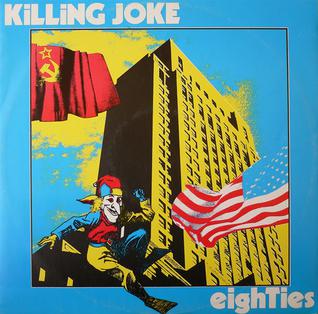
Though there are many, there are few things more difficult in music than to be truly ahead of your time.  While an overwhelming majority of artists alter their sound in some way to be more appealing to the current music scene, those performers that stick to their sound, regardless of the reaction, are almost always those that become legends.  In the case of "being ahead of your time," it is something that can take decades to be fully realized, and even at that later point, some bands still do not receive all of the credit that they deserve.  This is exactly the case when one considers the entire career of hardcore-post punk-new wave-heavy metal pioneers, Killing Joke.  Quite simply, it is impossible to categorize their sound under any single genre, and one can hear their influence quite clearly across the following decades of popular music.  The way in which the band was able to fuse together a heavier, more aggressive musical approach with a dark mood, yet unquestionably danceable sound makes them amazingly unique, and there are few records that are on par with their monumental 1980 self-titled debut.  Yet if one wants to clearly understand just how influential they were as a band, it is all over their 1985 album, Night Time, and few songs are as musically brilliant or obviously crucial to the development of music than Killing Joke's, "Eighties."

From the moment that "Eighties" begins, a number of things become instantly clear, yet the most obvious may be the bassline being played by Paul Raven.  The combination of sonic distortion and the aggressive feeling here sets the perfect stage for the song, and yet most listeners will immediately hear the progression to a later, chart-topping hit.  Once one hears "Eighties," it is impossible to deny that Nirvana did anything but completely steal this progression note for note on their song, "Come As You Are," and simply slow it down, making it less musically appealing.  This in itself is the direct link from Killing Joke's sound to the so-called "grunge" movement, and yet after hearing "Eighties," it is quite clear that Killing Joke did it both first, as well as better.  The bassline is complimented by the stiff, dry drumming from Paul Ferguson, as well as a slightly higher, more distorted guitar from Kevin "Geordie" Walker.  Adding in synthesizer work from Jaz Coleman, and "Eighties" simply sounds like nothing else ever recorded, as the music is unquestionably aggressive, and yet one cannot deny the oddly danceable mood created by the band.  It is this unique ability to bridge these two sounds that makes Killing Joke so significant, and the way in which the songs retain an almost punk feel, yet are more musically full and complex than their peers in those fields is what pushes them into a category all their own.

Providing the perfect finishing touch to the song, it is on "Eighties" that one can hear Jaz Coleman making his final transition from the more scream-based vocal approach of their early records to the more formal singing that he would display from this point forward.  Retaining the powerful and heavily emotive approach that defined the band throughout their career, Coleman is absolutely mesmerizing on "Eighties," as the song takes on a chanting feel that seems to beg for the listener to join in with an almost "call and response" style.  Though he is just as angst-ridden and critical as ever, there is something strangely accessible about Coleman's performance here, and it is this aspect that shows another way in which Killing Joke were able to find a way to make more aggressive music more appealing to a wider range of music fans.  Leaving little to the imagination, throughout "Eighties," Coleman is on an all out attack against the society in which he feels trapped, and this is most clear when he sings, "...eighties, I have to push, I have to struggle...eighties, get out of my way, I'm not for sale no more..."  The way in which the song is positioned in complete opposition to what was becoming a quickly accepted "life of excess" approach embodies the bands' punk roots, and it would be this sound and stance that would fuel the rise of "alternative rock" as the 1980's began to come to an end.

For a large number of reasons, one can easily make the case that Killing Joke were one of the most important bands of the entire music scene of the 1980's.  However, they are rarely given such credit, and yet once one hears songs like "Eighties," it is almost impossible to argue otherwise.  The way in which they were able to take the angst-ridden, stripped down sound of punk rock and hardcore, and inject into it a distinctive sonic beauty is truly like nothing else ever recorded.  Furthermore, the fact that the music retains a groove and beat that is danceable in its own way places them far apart from any of their peers.  Adding in the final element of the sharp, often insightful and revealing lyrics, and there are few other bands from any point in history that have been able to boast as complete a musical package.  The way in which one can hear the bands' progression as musicians over their first few records is also an amazing experience, and one can easily see their 1985 album, Night Time, as the culmination of their efforts.  To put it simply, if one takes a song like "Eighties," slows it down, pulls out the synthesizer, and turns the vocals to screaming, what one is left with is in fact the entire "grunge" sound that was seen as "new" throughout the early 1990's.  It is this fact that serves as the final evidence in the massive influence and importance that Killing Joke played on nearly every style that formed in their wake, and one can hear how brilliant a band they were in their superb 1985 single, "Eighties."

Saturday, January 29, 2011

January 29: Dick Dale, "Misirlou"

Artist: Dick Dale
Song: "Misirlou"
Album: Surfers' Choice
Year: 1962


CLICK HERE TO LISTEN (Misirlou Twist) (will open in new tab)

CLICK HERE TO LISTEN (Del-Tones) (will open in new tab)

CLICK HERE TO LISTEN (Late Mix) (will open in new tab)


Though it is often looked down upon in the larger sense, some of the more interesting moments in the history of recorded music have come via artists covering the songs of other musicians.  While in most cases, the cover version cannot compete with the original, there are a few instances where the latter take on the song has opened entirely new roads in music.  Furthermore, there are a number of situations where the general public is simply not aware that the song is a cover, and the recording can take on an entirely new life due to this misconception.  If one adds into this equation a new, exciting sound and an exceptional level of musical talent, it becomes understandable why people assume the originality of the piece, and this is exactly what occurred in the early 1960's with guitar god, Dick Dale.  Though the progression had been first performed in the 1920's as a slow, Greek folk song, over the decades that followed, the song simply known as "Misirlou" took on a number of different forms as musicians and composers across the world modified it to keep with current musical trends.  Yet even with all of these different arrangements, it would take nearly forty years before the world as a whole were aware of the song, and since that point, it has become one of the most easily recognizable songs in history.  The year was 1962, and Dick Dale sped up the pace and re-arranged the progression, and he became an instant legend when he released his version of the classic song, "Misirlou."

Truth be told, there are actually three well known recordings of Dick Dale doing "Misirlou," with each of them having their own, distinctive sound.  The first version, found on his groundbreaking 1962 album, Surfers' Choice, was called "Misirlou Twist," and incorporates a full string section, giving the song an almost "spy movie" feel.  The way in which the strings both compliment and contrast the guitars is absolutely stunning, and the brief appearance of a horn section helps to heighten the tension and mood on the song.  This is also the longest take on the song, clocking in at over four minutes nearly twice the length of any other version he recorded.  Shortly after the release of the Surfers' Choice recording, Dale worked a second version, with his band, The Del-Tones, in tow, and it sheds a completely different light on the song.  On this take, there is a far greater Spanish influence to be heard, as well as the introduction of backing vocals, singing along with the track.  The drumming is also more forward in the mix, and take the place of the strings in terms of contrasting the guitar playing.  Finally, there was a third take on the song, and it is this version with which most people have become familiar.  On this take, Dale brings back the horns, and the backing band gives the song an almost intimidating swing.  It is also on this version where Dale features the trumpet solo to contrast his guitar, and in many ways, one can see this final recording as the culmination of the work on the previous two takes on "Misirlou."

The only constant factor throughout the three best-known recordings of "Misirlou" is the absolutely brilliant guitar work of Dick Dale, and it is largely due to this song that he remains such a legend.  Without question one of the fastest guitar players of the era, the level of technical expertise and emotion he is able to convey is what sets him far apart from his peers.  Furthermore, there i s almost always an upbeat, fun feeling within his playing, and in many ways, it is the music of Dick Dale that defines the pure joy of playing guitar.  Legend has it that at a live performance, Dale was challenged by a fan to play the song on a single string, and this incident had a heavy infleunce on the later recordings of "Misirlou."  One can easily make the case that it was this song that set in motion the style that is called "surf rock," and the way in which Dale is able to inject a more mysterious, almost dangerous feel to songs like "Misirlou" is what sets him far apart from others in the genre.  On the song, it is easy to here the almost fiery energy he brings, and one can hear how his performances influenced everything from punk to heavy metal and even the psychedelic sounds.  Even almost five decades later, there is simply nothing that can compare to Dick Dale's performance on "Misirlou," and it continues to sound just and fresh and exciting as it did upon first release.

Almost since the day Dick Dale released his first version of "Misirlou," it has been a constant part of popular culture.  Shortly after his recording, The Beach Boys took a swing at the song, and one can find other covers from nearly every musical genre.  Furthermore, the Dick Dale version reaffirmed its iconic status when a modified version of the song was used to open the now-classic 1994 film, Pulp Fiction.  It was its use in this film that reminded many of the amazing mood that Dale conveys on the song, and it also proved that even so many decades later, the song remained fresh and unmatched.  Though in recent years, the song was disgracefully cannibalized to form the backing track for one of the most under-talented and overrated groups in the current music scene, Dick Dale's take on "Misirlou" has proven its strength in that it remains an untouchable classic that cannot have its greatness damaged in any way.  The way in which Dale was able to create three completely distinctive takes on this folk song serve as a testament to his massive talents, and it is amazing to be able to experience his development of the song through these versions.  Though each of them has their own personality, one simply cannot get past the absolutely breathtaking performance that Dale gives on all three, and it is this consistent display of true musical genius that vaults Dick Dale's takes on "Misirlou" to the level of unquestionably iconic status.