Friday, January 28, 2011

January 28: Urban Species & Imogen Heap, "Blanket"

Artist: Urban Species & Imogen Heap
Song: "Blanket"
Album: Blanket
Year: 1998


CLICK HERE TO LISTEN (will open in new tab)


While there are constant cases that leave one wondering how a certain song found its way to international notoriety, there are similarly countless examples of songs that are truly amazing, yet rarely receive the accolades that they deserve.  The latter of these situations can occur due to a number of reasons, but in most cases, with bands on larger labels, it is simply due to the label itself not pushing the song as much as others.  Due to this fact, one must often dig deep into the seemingly endless list of groups to find exceptional songs and true musical art, and this is the case when one looks into the music of Urban Species.  Bringing together jazz, funk, blues, and a number of other styles, and finding a way to blend it all into a hip-hop form, the group had a handful of hits in Europe throughout the 1990's, and they remain one of the most unique groups of that decade.  Yet it was often their collaborations with other artists that yielded the most impressive results, and after a change in lineup in the late 1990's, this reality became far more apparent.  Finding a new balance in their sound, as well as the way in which they work in the superb vocal talents of Imogen Heap, the group managed to push their sound into "ambient" territory, and the resulting song, 1998's "Blanket," stands today as one of the most beautifully blissful tracks ever recorded.

If one only hears "Blanket," it may be difficult to understand the groups' hip-hop roots, as even from the opening notes, the delicate, yet musically full sound that Urban Species put forth makes them sound as if they were long-time veterans of the electronic music scene.  From the soft keyboard progression to the oddly tension-filled cymbal tapping, there are few songs that pull the listener in as quickly as "Blanket."  This sound and mood, largely the creation of producer Mintos, is absolutely perfect, and even when the core section of the song kicks in, though it is slightly more aggressive, the song never loses its smooth, almost hypnotic feel.  It is within the main musical portion of the song that one can easily pick up on Urban Species' love for funk music, as they deploy one of the most subtle, yet unquestionably deep grooves ever recorded  In an era of excessive bass, the group uses "Blanket" to prove that the same results can be achieved with a far more restrained approach.  This groove is highlighted by the keyboard interjections, as well as the way in which they make the percussion almost dance over the rest of the sounds.  As the song continues, the listener is drawn in further and further, and this is where the songs' title takes on a second meaning, as the sonic creation very much envelops the listener, creating what can easily be termed as a modern lullaby.

Working in perfect harmony with the music, the vocal team of Imogen Heap along with emcee work from Mintos, are able to present a fantastic vocal contrast, whilst somehow making both their styles flow with the song.  Though at the time she was still very much a rising star, Imogen Heap now stands as one of the most well known voices within a number of different groups such as Frou Frou, as well as a solo artist.  The way in which her voice soars across and above the music on "Blanket" is truly breathtaking, and it is her contributions that help the song to gain an almost ethereal feeling.  It is also within Heap's vocals that one can feel the sense of loneliness that the song perfectly conveys, and there are few other examples in music history where this emotion is captured as honestly as it is here.  Yet the song would not be as brilliant as it is without the contrasting vocal performance from Mintos, as he connects the group to hip-hop, and much like the music, shows the power of subtlety.  Bringing a smooth, almost soft-spoken delivery to "Blanket," his work here stands as one of a handful of cases where the rhymes seem to transcend the genre of hip-hop, and one can easily understand why this song can appeal to a much wider audience.  Furthermore, the pain and almost dark feelings can be heard clearly in his voice, and yet there is an honesty in his delivery that makes the song easy to relate to by people all across the globe.

The final piece of "Blanket," the lyrics, are just as important as the music and vocals, as they hit quite hard and to those who have experienced the feelings conveyed, there are few other examples in history that speak of these feelings as accurately.  Though it is not an emotion to which all can relate, for those who find safety and solace within music, "Blanket" perfectly defines an idea which has rarely been explored, and it brings a strange comfort to those who truly understand the mood of the song.  Both Heap and Mintos take slightly different approaches to the idea, but when Mintos delivers the lines, "...see the music I consume to escape the doom and gloom, all the beats and melodies they keep realities at bay, but what happen when the record drummin' start to fade away...," there is an almost tragic beauty that can be felt.  Later in the song, Heap sings of the emptiness that can quickly overtake such people in the absence of music, and it is is within the combined sound of the two that one can truly feel why the title of "Blanket" is so fitting.  Yet one cannot look past the fact that outside of Europe, the song remains virtually unknown, though it is similarly impossible to deny the musical brilliance that is found in every aspect of the song.  Perfectly deploying a unique balance of funk, blues, electronica, and hip-hop, there is simply no other song in history that carries the same power and emotion that one can find in the 1998 collaboration between Urban Species and Imogen Heap, "Blanket."

Thursday, January 27, 2011

January 27: Fela Kuti, "Gentleman"

Artist: Fela Kuti
Song: "Gentleman"
Album: Gentleman
Year: 1973


CLICK HERE TO LISTEN (will open in new tab)


Though in most cases, it requires a handful of artists or bands to properly give a complete definition of a given genre, there are one or two styles of music that both begin and end with a single group or individual.  While many other artists may have attempted to duplicate the mood and style being played, in these few elite instances, the core artist in question is so far beyond their peers that the comparison simply holds no water.  Though it is perhaps the most rare occurrence in all musical trends, one can easily understand the concept and how accurate it is when one considers the only artist able to be truly called a player of "afro-beat" music, the late great Fela Kuti.  The way in which his music seems to soar in directions previous unheard, as well as the undertones to all of his compositions, Fela is beyond an icon, and his activism and personality outside of the musical arena only adds to his legendary status.  Releasing a massive amount of music over nearly two decades, his playing influenced countless genres around the world, and the complexity of his arrangements is often so far beyond that of anything else from the era that it simply defies description.  Though it is almost impossible to find a "bad" song anywhere in his catalog, there is simply no other track in Fela Kuti's career that defines his sound, as well as the "afro-beat" style in general than one finds in his 1973 masterpiece, "Gentleman."

While the opening section of "Gentleman" may seem like little more than a funky, uniquely beautiful saxophone progression, the truth of the matter is, this is in fact Fela playing, and he had only picked up the instrument a few months earlier.  When the bands' previous sax player, Igo Chico, left the group, Fela decided that instead of finding a replacement, he would learn the instrument himself, and his performance throughout "Gentleman" is all the more breathtaking with this knowledge.  When his sound blends together with trumpet player Tunde Williams, there is something amazingly powerful about the combination that cannot be found anywhere else in music history.  The deep groove is made even more clear through the simple guitar playing, and it is also this element that gives the song an amazing amount of movement.  However, still standing today as one of the greatest musical pairings in history, there is simply no overlooking the fact that the most important element to all of Fela Kuti's music was the presence of drumming legend, Tony Allen.  Switching tempos and bringing some of the most uniquely complex fills ever recorded, there is no question that while Fela may have been the spirit of the band, Allen was its soul.  Throughout "Gentleman," the instruments blend together in a manner previously unheard, and this upbeat, almost jazzy sound is the very definition of "afro-beat," and it never sounded as majestic as it does on this song.

Along with being one of the greatest composers of his generation, Fela Kuti also made his name as one of its most magnetic vocalists.  Much of his music was inspired by the struggles he saw around him, and this, combine with his activism, led to some of the most controversial, unapologetic lyrics ever recorded.  Within all of his vocals, there is an energy and allure similar to that of a preacher, and this is exactly what Fela was trying to do; to pull the listener into the song and inspire change within.  Yet even with this element, there is a soft touch to his vocal work, and even almost four decades later, his work on "Gentleman" remains just as moving.  It is within his vocal work that one can fully understand his mission to make his music accessible to all, as the lyrics beg for "call and response," and are written in simple terms that anyone could understand.  Sending a strong message to take pride in themselves, as well as a shot at the post-colonial English powers, when Fela sings, "...I am not a gentleman like that, I be Africa man original...," one can feel the pride in self he is attempting to instill in others.  Fela furthers this idea of self-identity when he rattles off a list of clothing that he sees others wearing that are clearly part of this English influence, and not the "true" dress that should be worn.  These seemingly subtle, yet powerful statements of self-pride help to give the song a rebellious, yet oddly upbeat feel, and the words, and the commanding way in which Fela delivers them, is what makes "Gentleman" such an extraordinary moment in music history.

It is truly impossible to fully capture just how unique and important Fela Kuti was to the overall development of music across the globe, as there has simply never been another artist that was capable of creating music with the same skill and spirit that one finds in his songs.  Due to this fact, one can argue that Fela stands as both the beginning and end of the "afro-beat" style, and those who claim this title in their music, while perhaps close, should be referred to by some different title.  Regardless, there are few personalities in music history that come close to that of Fela Kuti, and on "Gentleman," one can quickly understand why he retains such a revered status.  The way in which he blended together the bright brass sounds with the deep groove and found a way to fuse this together with a "native" sound is simply stunning, and the resulting product remains a true moment of musical genius.  Not only can this be heard in the various instruments, but the catchy hook that the band creates is second to none, and even those unfamiliar with such sounds cannot help but be drawn in by the infectious groove and progression deployed throughout "Gentleman."  Taking all of this and placing on top of it the almost scathing, scolding lyrics from Fela, there are simply not enough words one can say about this monumental achievement, and there is perhaps no other song in history that must be experienced firsthand to be properly appreciated than one finds in Fela Kuti's 1973 masterpiece, "Gentleman."

Wednesday, January 26, 2011

January 26: Sonic Youth, "Teen Age Riot"

Artist: Sonic Youth
Song: "Teen Age Riot"
Album: Daydream Nation
Year: 1988


CLICK HERE TO LISTEN (will open in new tab)


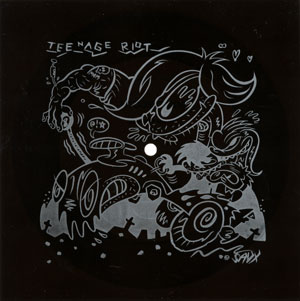
One aspect that links together every musical genre is the fact that within each of them, there are a few elite names that hold such reverence that they are almost sacred.  While the manner with which bands achieve this status are nearly always unique, the adoration and respect they command stands as a common bond.  Furthermore, bands of this caliber are also exclusive in the fact that the only accurate description of their music is to use the band name itself, and this is unquestionably the case with experimental, alternative rock pioneers, Sonic Youth.  One can easily argue that no other band played as vital a role in the development of music throughout the 1980's, and to this day, few groups still push the boundaries of music as much as this band.  Bringing together elements of early punk, "art rock," and all out free-form noise, the group stuck close to their want to be completely unique, and it was this ethos that spawned their monumental 1988 double-album, Daydream Nation.  The album brought their almost chaotic, yet stunning orchestrations into brilliant focus, and the sprawling musical passages found within remain some of the most beautiful in the entire history of recorded music.  Though every song on Daydream Nation is vitally important to the overall impact of the record, there are few songs that better display the sheer genius and talent of Sonic Youth than one finds in their 1988 single, "Teen Age Riot."

Not long after "Teen Age Riot" begins, the combination of sounds that the band creates becomes nothing short of hypnotic, and this is especially obvious in the first "part" of the songs' structure.  The manner with which the guitar progression of Thurston Moore and Lee Ranaldo slowly pull the listener in and completely captivates the ear is the true magic of Sonic Youth, and the strange sound effects and noise behind the guitar somehow manages to work perfectly.  Furthermore, drummer Steve Shelley uses the first part of "Teen Age Riot" to show that one can have brilliant results as a drummer even without using the kit.  The way in which he strips things down to simply using his drum sticks at times is absolutely prefect, and the way that Kim Gordon's bass playing lies gently over this sound is the unique sonic bliss that defines Sonic Youth as a band.  Once the band has the listener hooked via the first progression, the song quickly drops into a heavy, slightly dark sound that is more aggressive, yet in no way alters the overall mood they have created.  The sense of movement that one can feel during the remainder of the song is uncanny, as the music seems to veer all over, and it helps the song itself feel like a journey.  It is in this aspect that one can hear how Sonic Youth has managed to give some form to their "noise rock," and it is this delicate balance that would serve as the blueprint for countless bands that followed.

"Teen Age Riot" also features two distinct vocal sections, the first from Kim Gordon, and the second, larger section sung by Moore.  These split vocal duties help to further highlight the two sections of the song, as Gordon's soft, almost detached sound helps to further the hypnotic sense of the opening passage.  In fact, during this almost free-verse poetic performance, Gordon gives a nod to one of the bands' influences, as she quotes the title of The Stooges' song, "We Will Fail."  However, once Thurston Moore takes over, the true personality of "Teen Age Riot" becomes apparent, and he proves to have one of the most unmistakable voices in all of music history.  Often sounding like an odd combination of Lou Reed and Evan Dando, it is this sound that largely defined the entire "alternative" music scene.  Yet along with his amazing voice, the lyrics found on "Teen Age Riot" are without question some of the greatest ever, and the band would eventually admit that the idea behind the song is that of a time when Dinosaur Jr's J. Mascis has become President, and the world that would be created to foster such an event.  The lyrics are almost strangely uplifting and hopeful, yet there is still the rock and roll attitude in lines like, "...you come running in on platform shoes, with Marshall stacks to at least just give us a clue..."  The fact that one can read this line as music being an educator and a savior rings true with many music fans, and one would be hard pressed to find a better icon of this idea than the way that Thurston Moore paints J. Mascis on "Teen Age Riot."

Truth be told, it is rather difficult to understand just how "Teen Age Riot" became the hit that it remains to this day.  Clocking in at just under seven minutes, it certainly was not what one would consider "radio friendly," and yet it gained a massive amount of popularity due to being played on college and modern rock radio stations.  Strangely enough, if one looks at the overall catalog of Sonic Youth, "Teen Age Riot" stands as a bit of an oddity, as it lacks the bands' signature feedback, and it contains an almost traditional "verse-chorus-verse" structure.  Yet even with these realities, the shaped chaos that defines the bands sound is quite clear, and the way that Sonic Youth has focused their efforts remains today a turning point in the development of music.  The final element that sets "Teen Age Riot" apart from its peers lives within the fact that both Moore and Ranaldo are playing their guitars in a non-traditional tuning, and this helps the song to truly sound like nothing else ever recorded.  This fact also shows just how creative the band was, as well as their general disdain for any of the conventions of music that had previously been established.  Whether it is the sprawling, hypnotic musical passages or the contrasting vocal work, there is simply no getting around the beautiful genius constructed here, and it is this idea in itself which defines Sonic Youth, and it was rarely deployed as perfectly as one finds on their legendary 1988 single, "Teen Age Riot."

Tuesday, January 25, 2011

January 25: The Easybeats, "Friday On My Mind"

Artist: The Easybeats
Song: "Friday On My Mind"
Album: Friday On My Mind (single)
Year: 1966


CLICK HERE TO LISTEN (will open in new tab)


Though it makes very little logical sense, the fact of the matter is, for whatever reason, most people tend to overlook the importance of Australia when it comes to the overall development of music over the past decades.  From The Saints to AC/DC to Nick Cave and countless other groups, music simply would not progress in the way that it has without the unique contributions of Australia's finest musicians.  Yet even before these bands made their names as legends, there was a group that stormed the world and significantly altered the face of popular music.  Bringing an edge and tempo to popular music that seem to somehow also blend elements of the growing psychedelic movement, there was simply no other group on the planet that sounded quite like The Easybeats.  It was this distinctive sound that brought the band comparisons to the greatest groups of their time, yet there was something far more accessible about their music.  Furthermore, though countless artists have spent their entire career trying to write a single song that reverberates across all cultures and generations, most of the time, they end up trying to dig too deep and miss the most universal of all human feelings.  Yet The Easybeats managed to hone in on this almost simple approach, and there are few songs from any point in music history that are as unforgettable as The Easybeats' classic 1966 single, "Friday On My Mind."

In a manner unlike any other song in history, the moment that "Friday On My Mind" begins, the entire mood and tone is set instantly, and even after countless listenings, it still manages to completely draw in the listener.  The guitar team of George Young (older brother of AC/DC's Malcolm and Angus Young) and Harry Vanda is nothing short of perfect, and the opening guitar phrase gives the song a strange, almost clock-like sound that runs throughout.  It is also through the guitar playing that one can immediately feel the tension on the song, and even without the song title, the frustrated, almost desperate tone of the song is clear.  The rhythm section of bassist Dick Diamonde and drummer Gordon Fleet are equally impressive, helping to push the song over the edge as the bridge and chorus sections almost explode across the track.  Fleet makes the song almost skip due to the uncommon way that he approaches this song, and there is so much movement on the song that it is almost as if there are a number of different rhythms simultaneously at play.  The high-energy, tension-filled arrangement that is "Friday On My Mind" has become one of the most instantly recognizable over the decades, and it is very much due to the way in which the band seems to start and stop as a single unit that gives the song much of its unforgettable sound.

Along with the music moving at an almost frenzied pace, the vocals of Stevie Wright have etched their way into history, and there is simply not enough that can be said about his performance here.  Easily showing that he possesses one of the finest voices of his generation, on "Friday On My Mind," Wright also shows just how much emotion he can convey in a single line, as the exhaustion, if not exasperation of his work day are quite clear to any listener.  It is this common feeling, which he manages to capture in an authentic, honest manner, that makes the song able to cross nearly any boundary, and much the reason that it is still as refreshing and powerful today as it was more than forty years ago.  That is to say, the plight of the overworked, underpaid employee is a lifestyle to which a majority of the world can relate, and this reality has not lessened at all as the decades have passed.  Though it has been reworked in countless ways over the years, there has never been a more simple, yet on point way of expressing this universal feeling than when Wright opens the song with the lines, "...Monday morning feels so bad, everybody seems to nag me..."  As the chorus explodes into a celebration of cutting loose from the toils of the week, there is a huge release that can be felt, and the way in which Wright conveys these feelings almost instantly solidified his place as one of the finest vocalists in history.

While there are a vast number of other songs that work on this same theme, there remains something simple, almost pure about The Easybeats' "Friday On My Mind," and it is due to this fact that even more than four decades later, the song still holds the place for many as the "official" cue that the work week has ended.  With this in mind, the fact remains that a massive number of radio stations across the globe have made it a tradition to spin the song at five o'clock on Friday's, and it is this fact that cements both the group and the song in music history.  Whether it is the fast-paced, almost nervous energy of the verses or the overjoyed, truly happy sound that comes across in the chorus, there are few songs from anywhere else in music that helped to push the song high into the charts across the globe, as well as making "Friday On My Mind" what remains largely the quintessential Australian rock song.  Though within the music one can detect a number of influences, it would be this song that would in many ways kick-start the next wave of Australian rock music, and even bands that formed well over a decade later pay tribute to these pioneers, as traces of their sound can still be heard.  Perfectly capturing the tedium and almost painful nature of "everyman" type work, there are simply no other songs in history that can compare to the universal appeal and musical perfection found on The Easybeats' legendary 1966 single, "Friday On My Mind."

Monday, January 24, 2011

January 24: Daily Guru, "Gurucast #56"

CLICK HERE TO LISTEN (will open in new tab)


(Left Click (PC) or Command-Click (Mac) to save it to your desktop...it's about 75MB)

One hour of amazing music and commentary from "The Guru" himself.

Tracklist (all links below are to MY review of that band, song, or album) :
1. The Pixies, "Tony's Theme"  Surfer Rosa
2. Black Sabbath, "Sabbra Cadabra"  Sabbath Bloody Sabbath
3. LL Cool J, "Rock The Bells"  Radio
4. Bob Marley, "Judge Not"  Songs Of Freedom
5. The Cranberries, "The Rebels"  To The Faithful Departed
6. The Clash, "One Emotion"  Clash On Broadway
7. Santana, "Mother's Daughter"  Abraxas
8. Nine Inch Nails, "Head Down"  The Slip
9. Gogol Bordello, "Start Wearing Purple"  Gypsy Punks: Underdog World Strike
10. Zero 7, "Somersault"  When It Falls
11. Is World, "Either/Or"  Turning EP
12. Gang Of Four, "Ether"  Entertainment!
13. Stubborn All-Stars, "Because Of You"  Back With A New Batch
14. Metallica, "Whiplash"  Kill 'em All

Sunday, January 23, 2011

January 23: Geto Boys, "Mind Playing Tricks On Me"

Artist: Geto Boys
Song: "Mind Playing Tricks On Me"
Album: We Can't Be Stopped
Year: 1991


CLICK HERE TO LISTEN (will open in new tab)


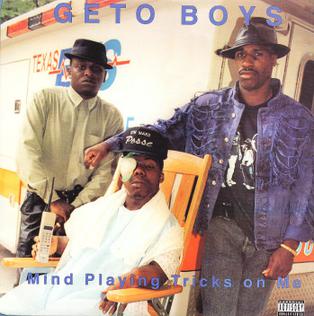
Within almost every genre, there are a number of different takes on the base style, and it is within this range that one often finds singular groups that push a sound to the extreme in one way or another.  Whether it is the way in which thrash pushed the limit of heavy metal or how a number of artists raised the question of "what" could be considered jazz, this diversity in sound is one of the few consistent factors across both genres and decades.  Though in some genres, these differences are bit more difficult to see, they are always there, and within the hip-hop community, there has simply never been another group that sounded quite like the Geto Boys.  A group that can truly be seen as ahead of their time, they began to rise to notoriety in the late 1980's, and they made their name due to the controversy that occurred when Geffen Records refused to release their debut record due to the content within.  Though not as aggressive or violent in the same way as the rising "gangsta" rappers, Geto Boys were far more strange, if not outright disturbing than any of their peers.  The level or paranoia and clear psychological issues has rarely been explored as it is though their rhymes, and it is this aspect that pushes their music into a category all their own.  Though these traits can be found across their catalog, few songs better define the group than their 1991 classic, "Mind Playing Tricks On Me."

As "Mind Playing Tricks On Me" opens, the mood is instantly set, as the sample of a crackling record, combined with the songs' core sample, creates a dark, deep groove, and one is almost immediately drawn in completely to the sound.  The song is built around a piece of Isaac Hayes' song, "Hung Up On My Baby," and the downward guitar progression, contrasted by the strangely sad bassline helps to give "Mind Playing Tricks On Me" an amazing amount of sonic movement.  In between verses, more of the sample is played, and there are few interludes that sound more ideal for a song than that which one finds here.  Furthermore, the way in which the drums are placed gently over this sample is nothing short of perfect, and it is this aspect that gives the song more attitude.   It is this contrast between the somber, slow groove of the sample and the more fast paced, dry sound from the drums that pushed "Mind Playing Tricks On Me" beyond the rest of the groups' catalog, and helped to push the single all the way to the top of the "rap singles" charts in 1991.  The overall greatness of the song also lives in the fact that while the samples and rums are so fantastic, they are not overbearing at any point, and it leaves the main focus on the emcees, which is a trend that would become largely reversed over the next few years in hip-hop music.

While they are often overlooked for their rhyming talent, the fact of the matter is, there have never been other artists that can even come close to the style that one finds in the trio or emcees that comprised Geto Boys in 1991.  With all three bringing a different sound, yet sharing a disturbed, almost scary lyrical approach, it is within songs like "Mind Playing Tricks On Me" that one can quickly understand why the songs of Geto Boys are often referred to as "horror rap."  Each of their voices hits as hard as the other, and there is a level of seriousness and proximity to the words they speak that makes one almost uncomfortable, as it seems as if the lyrics hold some level of truth.  As previously stated, the level of outright paranoia that the group displays on "Mind Playing Tricks On Me" is second to none, as each of the three take the listener on a strange journey into their own psyche.  In the opening verse, Scarface rhymes on the visions he has in his sleep, culminating with the lines, "...I can see him when I'm deep in the covers, when I'm awake I don't see the motherfucker..."  Willie D continues this idea in the next veruse, pondering whether the "being" that he feels is watching him might be one of his former victims, and the listener is left feeling rather uncomfortable.  In the final verse, Bushwick Bill goes all out, speaking of stealing candy from kids to beating down a person that was never there, and the borderline insanity that the three convey is nothing short of indescribable, and th authenticity in their verses is what places Geto Boys into a musical category all their own.

There is no arguing just how unique an approach Geto Boys have shown throughout their career, and in many ways they still stand as the only group to properly perform the style that they largely invented.  Even after two decades, the overall creepy mood that one finds on "Mind Playing Tricks On Me" can still be felt, and it never loses its power, even after countless listenings.  The way in which the three emcees paint this disturbing picture of a psychological disorder is hauntingly vivid, and there is never a moment where one feels the group is being disingenuous.  Furthermore, the song never feels as if it is a "novelty" song, and as the years have passed, it has been hailed as one of the most influential songs in the entire history of the hip-hop genre.  "Mind Playing Tricks On Me" has been name-checked in countless other songs, most notably in Ice Cube's, "When Will They Shoot," and Notorious B.I.G.'s "One More Chance," and the fact that these two hip-hop icons have done this cements the songs' place as a true classic.  Furthermore, pieces from the song have been sampled by Outkast, and even rock groups in the years since its release, and there is simply no denying how vital a piece "Mind Playing Tricks On Me" was in the overall evolution of hip-hop music.  Though it is without question one of the darkest and most truly unsettling songs ever recorded, there is simply no denying the impact and innovation that one can hear on Geto Boys monumental 1991 single, "Mind Playing Tricks On Me."

Saturday, January 22, 2011

January 22: Black Eyes, "Deformative"

Artist: Black Eyes
Song: "Deformative"
Album: Black Eyes
Year: 2003


CLICK HERE TO LISTEN (will open in new tab)


As the years pass, truly original music becomes more and more of a rare occurrence, as the general listening public seems to be becoming more satisfied with mediocre, copycat sounds that show no passion or imagination.  In an era when recording your own music has become increasingly more accessible, one would think that there would be countless new bands and sounds popping up all over the place, and yet it is almost tragic to stand by and watch the opposite become reality.  Thankfully, there are still a few record labels that pride themselves on finding creative, exciting bands, and even after thirty years, there is no more dependable a record label for this result than the iconic Dischord Records.  Boasting bands that play across the musical spectrum, there are few groups over the past decade that have brought an energy or aggression that compares to the short-lived project known as Black Eyes.  Taking the raw, in-your-face style of bands like Fugazi, there is a blunt, direct, and often almost overwhelming feel to the bands' music, and they stand as a band that is truly impossible to duplicate.  Releasing their absolutely stunning self-titled debut in 2003, the band proved that "real" music was still alive, and there are few songs that better define the group than one finds in Black Eyes song form that album, "Deformative."

From the moment that "Deformative" begins, the mission and tone of the band is instantly clear, as the tempo is almost spastic, and there is a dark, nervous, almost sinister feel to the song.  Overall, the term that best defines the song, and much of the groups' music is simply "unhinged," as there is a constant feel that everything can fall apart at any moment, and this delicate feel is perfectly deployed throughout each of their songs.  "Deformative" is breathtaking in a way unlike any other song, as it pace and feel quite literally have that effect, with drummers Dan Caldas and Mike Kanin spinning the song at a dizzying speed.  This dual-drum sound quickly makes the song completely unique, and the way in which the guitars from Daniel McCormick tear across the track and seemingly random times only adds to the mood, helping the song to define the word "unsettling."  The final addition of two bass players, Hugh MacElroy and Jacob Long, give "Deformative" a depth and sound that is nothing short of amazing, and it turns the entire album into a sound that must be experienced firsthand to be properly appreciated.  The combined sound of the group shows a close tie to the punk and hardcore sounds, and yet it is far more experimental and musically courageous than almost anything else released in recent years.  It is this brilliant deployment of a completely unique sound that makes Black Eyes so fantastic, and "Deformative" stands as a song that once heard, cannot be forgotten.

Perhaps the only aspect that better defines the band than the wild music is the way in which the fast-paced, almost off-kilter lyrics fall across "Deformative."  Much in the same way that the band presents the rhythm section, there are two vocalists on the track as well, and the way in which the two voices seem to completely contrast one another, yet somehow blend together is yet another way in which the band truly knows no peers.  Combining speaking, shouting, and a unique singing sound, the vocals perfectly match the sound of the music, and the speed and tension within the vocal performance also presents an ideal compliment to the overall feel of the song.  Almost poetic in both delivery and content, there are few other instances in history where the live energy of a group has been so perfectly captured on tape, and it is within the lyrics that one can find some of the most vivid and passionate words recorded in recent history.  Largely a tale of youth, one can draw a number of interpretations from the lyrics on "Deformative," and yet it is the fury with which they are delivered that makes one able to understand the proximity of the vocalists to the scene to which they create.  Truth be told, there is simply nothing like the vocal performance on "Deformative," and while one can compare them to other bands, it is within the vocals that they separate themselves from anything else in the history of music.

To be truly unique in the modern music scene has become something which both record labels and the general public seem to look down upon.  This can be seen as the "dumbing down" of the music industry, and one can easily point to this as the cause for the massive decline in music sales, as well as the overall distraught appearance of the industry as a whole.  While the "big labels" are struggling to force-feed the public more bland "flash in the pan" acts, it is the smaller labels that continue to carry the torch for "real" music, and in the bands of these labels that one can find some of the most amazing sounds heard in years.  Though there are a number of labels with these credentials, they all continue to look up to the "first" label of this type, as Dischord Records still remains the standard for unique, highly talented music.  Among their recent bands, few brought an energy and creativity similar to Black Eyes, and the bands' 2003 self-titled debut remains one of the most destructive and absolutely brilliant records ever recorded.  The sense of nervous, almost insane energy that runs throughout the album is one of its most distinctive features, and there is also a sense of authenticity within the songs, proving that this band wasn't trying to be something they weren't.  With each song on Black Eyes grabbing the listener and never letting go, it remains one of the most superb musical achievements in recent years, and one can quickly understand just why the band is so extraordinary by hearing Black Eyes 2003 song, "Deformative."