Saturday, January 23, 2010

January 23: Medeski, Scofield, Martin, and Wood, "Miles Behind"

Artist: Medeski, Scofield, Martin, and Wood
Song: "Miles Behind"
Album: Out Louder
Year: 2006


CLICK HERE TO LISTEN (will open in new tab)


Though the mainstream popularity of the jazz genre is certainly not what is was during the 1950's, the spirit behind the music, and the high level of creativity still stands strong in modern times. As the decades have passed, new technology and new styles of music have helped to push the jazz genre into new territory, and there are countless artists who seem to never be satisfied with the status quo of jazz music. Along with this constant quest for a new style, the idea of collaboration with other jazz greats has stayed remained strong, and this helps to create some of the most exciting and original records in the current music scene. Without question, one of the most intriguing jazz collaborations of the modern era occurred in 1997, when the jazz-fusion trio, Medeski, Martin, and Wood, essentially became the backing band for John Scofield's record, A Go-Go. The album was nothing short of brilliant, yet it took nearly a decade for the quartet to again enter the studio, and the resulting record was 2006's Out Louder. A far more collaborative effort, Out Louder is without question one of the most creative records of the modern era, and nearly every song on the album is worth experiencing. However, taking a far more upbeat and aggressive approach than anything they had previously done together, and unlike anything else in jazz at the time, the true genius of Medeski, Scofield, Martin, and Wood comes on the stunning composition, "Miles Behind."

The song itself is unquestionably a nod to the great Miles Davis (minus the trumpet), as the style and spirit of Davis shine through. Sometimes the sound even borders on a heavy metal sound, as it is without question one of the most aggressive and powerful jazz tracks ever recorded. The song serves as notice that Out Louder will be unlike any other jazz record, and it solidifies the fact that this quartet has a chemistry far greater than nearly any other jazz collaboration in history. Master percussionist Billy Martin plays absolutely out of his mind on "Miles Behind," as he files through the songs' high speed pace. Though the pace is very speedy, Martin proves his talent by throwing in a wide range of fills and styles, and his performance stands as one of the finest drumming pieces ever recorded. The balance between the sound of the four musicians is the key to the success of the songs, and when one listens to the bass, this becomes immediately clear. The other half of the rhythm section, bassist Chris Wood, performs equally as well, as he flies all over the fret-board. The fact that Wood is not buried in the mix as most are within the rock and even jazz genre was clearly a conscious move, and the overall sound is nothing short of stunning, as there is even a point where it sounds as if the group is borrowing a progression from Phish's "Down With Disease." "Miles Behind" also serves as clear proof that the team of Martin and Wood are without question one of the finest jazz rhythm sections in history.

Providing one of the wildest and most mesmerizing melodies in the history of jazz music, the pairing of John Scofield's guitar and the organ playing of John Medeski stands as one of the finest jazz pairings in history. There is perhaps no clearer example of how different "Miles Behind" is from anything else in jazz then when one compares Scofield's performance here to anything else in his massive recorded catalog. Though his trademark guitar tone remains intact, Scofield has never played so aggressively, yet even with this heavier approach, the style of jazz, and Scofield's personal touch are never lost. Truth be told, there are countless moments on the song where it seems that Scofield is about to jump into an all-out rock shred, but the fact that the entire group is able to walk that line is the true magic of the song. Playing at an almost unfathomable speed, John Medeski has rarely sounded as brilliant as he does on "Miles Behind." With absolutely mind-blowing solo moments, as well as some of the most powerful chord progressions ever recorded, there has simply never been anything similar to the display of talent and creativity that is shown here from Medeski. While all four musicians clearly share a spirit, it is also unquestionable that the link between Scofield and Medeski is where the true magic lies, and the way in which the two play off one another serves as a musical testament to their place as one of jazz music's finest duos.

Throughout the entire history of jazz music, the idea of giving the style a modern twist, and never staying in the same sound long served as two of the most important elements. Within the modern music scene, jazz has taken a back seat to more rock and pop based music, yet these two elements still stand strong and enable the genre to produce some of the most original and interesting music in modern times. As one of the finest jazz guitarists in the world, John Scofield has solidified his legend in the genre, making some of the most unique and stunning albums over the past thirty years. Similarly, the fusion trio of Medeski, Martin, and Wood have put their own stamp on jazz music, and remain one of the most consistent and creative forces in modern music. Seeming t pick up exactly where they left off nearly a decade earlier, the collaborative effort between the four, 2006's Out Louder, is without question one of the most musically exciting records in recent history. While the album is filled with fantastic songs, none quite compare to the groups' nod to Scofield's former employer, Miles Davis, on the scorching composition, "Miles Behind." With a pace and tone that borders on hard rock or even heavy metal, each group member performs like never before, and the chemistry between these four is clearly beyond that of nearly any other jazz grouping in history. Standing as one of the most impressive and most accessible jazz recordings of the modern era, to truly understand and appreciate the genius behind Medeski, Scofield, Martin and Wood's "Miles Behind," one must experience it firsthand.

Friday, January 22, 2010

January 22: The Kinks, "You Really Got Me"

Artist: The Kinks
Song: "You Really Got Me"
Album: single/The Kinks
Year: 1964


CLICK HERE TO LISTEN (will open in new tab)


Throughout the history of recorded music, there are a handful of musical progressions that were so brilliantly crafted, that they remain truly iconic to this day. Whether it was a stunning saxophone line or a crushing guitar riff, these most memorable of compositions stand as pivotal moments and have shaped the state of music that followed. Yet even though these musical works are often so important due to their complexity, one cannot deny that often times, the intrigue behind a certain song actually lives in its simplicity. This is perhaps no more true than in the powerful, yet rather elementary guitar riff that serves as the main factor in one of the most important songs in history: The Kinks' 1964 hit, "You Really Got Me." Appearing late in the year, the song rocketed up the charts in the U.K., and would later find similar success in the U.S., making The Kinks one of the most popular groups of the "British Invasion." The song, which was actually the third single from the group, would become so popular that the band would re-record the song and it remains the finest moment of their self-titled debut album. Over the decades, it has become one of the most heavily covered songs in history, with the most memorable surfacing with a testosterone-fueled cover on Van Halen's 1978 debut record. Both the original and the Van Halen cover remain in heavy radio rotation to this day, and this is largely due to the truly perfect crafting in every aspect of the song.

Though nearly every aspect of "You Really Got Me" is fantastic, there is little question that the key to the staying power of the song is the iconic guitar riff. This simple musical progression serves as one of the most obvious symbols of "success through simplicity," and in both its form and tone, the riff is easily one of the most influential in music history. The riff, which came out of "playing with" the core riff from the equally iconic "Louie, Louie," would be the first of a number of straightforward riffs that would power The Kinks' next few singles to equal success. Truth be told, the main riff is as much about the progression as it is about the tone, as the more aggressive, almost heavy metal sound was a result of guitarist Dave Davies slicing the cone of his amplifier with a razor blade, as well as poking a hole in it with a pin. The guitar solo on "You Really Got Me" is also the source of one of the most persistent (and false) rumors in rock history, as many have been led to believe that it was played by Jimmy Page. Though Page was involved in the recording of the album as a session musician, this occurred well after "You Really Got Me" was recorded, and Page has denied his involvement in the song, though the rumor persists. However, there is much truth to the fact that the group playing on "You Really Got Me" is not the "real" lineup of The Kinks, as both the drumming and piano/keyboard work on the single were performed by session musicians. Standing as one of the finest drummers in history, Bobby Graham was called in for the track in the place of "normal" drummer Mick Avery. The keyboards were played by either Arthur Greensdale or Deep Purple's Jon Lord, and along with the Davies' bothers, the song remains nothing short of iconic.

With the music having a slightly dirty, aggressive feel that was unlike anything else being done at the time, band co-founder and lead vocalist, Ray Davies, mirrors the style of the music with his fantastic vocal work. Giving the song an amazing swagger, Davies has an attitude and growl to his voice that was a far cry from the clean, friendly sounds that were dominating the music charts at the time. Though he also makes it clear that he has an exceptionally clean and powerful voice during the verses, it is his adjustment during the bridges and choruses that truly set this song apart from others, and in many ways, one can see his more aggressive approach as a pre-cursor to the sounds of both heavy metal and punk rock. Yet much like the music, both the singing style and the lyrics are very simple and straightforward, and this certainly played a key role in the songs' overall popularity and continued musical relevance. Taking the direct approach, the song has no subtlety whatsoever, and it is one of the most perfect pictures of a raw, unhindered infatuation that has ever been penned. Ray Davies did an absolutely brilliant job at capturing the emotion of the early stages of love and yearning, and this is much of the reason why the song has continued relevance more than forty years after its initial release. The fantastic, universal lyric, combined with the absolutely perfect vocal sound of Ray Davies' voice became the blueprint for countless bands from a wide range of genres, and yet this original recording remains fresh and equally enjoyable to this day.

Once called "the track which invented heavy metal," The Kinks' 1964 hit, "You Really Got Me" stands among the most elite songs in music history, and it has earned the description of "perfect" in every single aspect. While in some ways it is impossible to describe why this song "works" and has had so much success, if one steps back and examines each element, it becomes clear why a song that sounded quite different from everything else at the time was able to become such an important piece of music history. The crunching core guitar riff of the song is truly an iconic piece of music, and while it follows the somewhat simple formula that was dominating popular music at the time, it is the distorted, more aggressive sound that made the song absolutely unforgettable. This avoidance of the "clean" sound and feel permeates every aspect of the song, and with a slightly menacing vocal approach, as well as a lyric that can be seen as a perfectly capturing the heat of lust, The Kinks set themselves apart from the more "proper" popular music. The way in which "You Really Got Me" was crafted would serve as the template for their later hits, yet it also played a massive role in the formation of both heavy metal and punk rock in the decades that followed. Though it has been covered countless times over the past forty years, there truly is nothing that can compare to the phenomenal original 1964 recording, as The Kinks truly changed the world with their hit, "You Really Got Me."

Thursday, January 21, 2010

January 21: Digable Planets, "Rebirth of Slick (Cool Like Dat)"

Artist: Digable Planets
Song: "Rebirth of Slick (Cool Like Dat)"
Album: Reachin' (A New Refutation of Time and Space)
Year: 1993


CLICK HERE TO LISTEN (will open in new tab)


If there is one thing that time has proven, it is the fact that even during times when one form of music completely dominates the ears of the general public, truly great songs still manage to find a way through. This has perhaps never been as obvious than during the early 1990's, when "grunge" and "gangsta" rap music ruled the airwaves. It was during this period that an entirely new sound began to emerge, and while many are quite familiar with the concept of "alternative rock," most do not realize that there was a similar movement of "alternative rap." With groups like P.M. Dawn, digital underground, and countless other artists who demanded more from the rap genre, a new movement of rappers with extremely unique approaches began to take shape. During this time, there was perhaps no other group that so perfectly defined this more conscious, more creative brand of hip-op than Digable Planets, and their debut single, "Rebirth of Slick (Cool Like Dat)," remains one of the most important rap songs to this day. Sounding like nothing else did at the time, the song quickly found crossover success and without question, the success of the song and album paved the way for nearly every later performer of the so-called "conscious" hip-hop movement. From the brilliant music to the unparalleled rapping, there are few songs in history that are as uniquely wonderful as Digable Planets' 1993 hit, "Rebirth of Slick (Cool Like Dat)."

While creative uses of sampling was one of the foundations of the entire hip-hop genre, Digable Planets created musical structures like had never before been heard. Recording, producing, and mixing the album entirely on their own, the group was able to fully realize their entire musical vision, and there is no question that this isolation of sorts was one of the keys behind the groups' completely unique sound. Handling nearly all of the production and the man responsible for the music found throughout the album was Ishmael "Butterfly" Butler. On "Rebirth Of Slick (Cool Like Dat)," Butler creates a sonic mood the likes of which had never been heard. Clearly playing off of the idea of "cool" in jazz, Butler crafts an amazingly hip and smooth sound, based off of only three simple samples. Fusing together parts of "Stretchin" by, James Williams, "Foodstamps" by, 24 Carat Black, and "On The Subway" by, Last Poets, Digable Planets manage to recreate the "cool" vibe of the jazz era, yet doing so with an unquestionably modern twist. This more melodic approach was a far cry from the heavy bass, P-Funk based sounds that were dominating at the time, yet the pop appeal was undeniable, as "Rebith Of Slick (Cool Like Dat)" served as a refreshing alternative to the countless "clones" that were beginning to overrun the landscape of music. With its smooth, funky bassline and unforgettable horn hook, the song remains one of the most iconic of the era, and it is still instantly recognizable to this day.

While the music on the backing track is nothing short of iconic, the rhymes of each emcee is equally fantastic, and the song features a number of "classic" hip-hop lines. Each of Digable Planets' three members take a verse on "Rebirth Of Slick (Cool Like Dat)," and the high level of lyrical mastery proves to run through each emcee. Not needing to drop any unnecessary curse words, the lyrical prowess of these three emcees was far beyond that of any of their peers at the time, and the number of amazing images and references found throughout the song is nearly immeasurable. Furthermore, the presence of Mary Ann "Ladybug" Vieira on the track marks a major moment for female emcees, as one can make the case that it is her verse that shines brightest. The group makes no attempt to hide their influences, as they name drop everyone from Miles Davis to the film Cleopatra Jones, furthering the jazzy-funk sound and mood of the song. With each group member bringing a similarly clear and straightforward rhyming style, each lyric is packed with brilliant style, and with likes like "...we be to rap what key be to lock..." and the absolutely iconic reference to the aforementioned film, there was simply nothing else previous that sounded quite like "Rebirth Of Slick (Cool Like Dat)." The fact that the song had so much impact, whilst being far more laid back and toned down than nearly anything else in the hip-hop genre to date, serves as a testament to the true greatness of the song, as well as the extraordinary effort in writing and rhyming of each of the groups' members.

Serving as a massive influence on everyone from The Fugees to Jurassic 5 to nearly every rap group that followed, Digable Planets were one of the most uniquely important groups to emerge from the eclectic musical scene of the early 1990's. Bringing a rapping style and musical approach like nothing else before it, their debut album, Reachin' (A New Refutation of Time and Space), offered an alternative to the overly-aggressive, increasingly unoriginal "gangsta rap" that was dominating the music scene at the time. The fact that the group created one of the most original and important albums in history without any "major label" help makes the record even more impressive, and one simply cannot overstate the impact that the album had across nearly every musical genre. Presenting a style of hip-hop that was far more intelligent and creative than the profanity-laden "gangsta" style, Digable Planets proved that brilliant lyrics could be just as enjoyable and memorable as any other. Backed by one of the smoothest and most unforgettable musical creations, "Rebirth Of Slick (Cool Like Dat)" remains one of the most iconic songs of the decade, and though others would try, no other song ever reached a similar level of "cool" within the hip-hop genre. Each of the three emcees brings an absolutely phenomenal verse to the song, and this helps to keep the rhymes fresh, whilst similarly giving a wonderful change to the sound of the song. Truth be told, "Rebirth Of Slick (Cool Like Dat)" is about as perfect a hip-hop song as has ever been recorded, and it is much the reason that the song remains just as enjoyable and original more than fifteen years after it first appeared on the music scene.

Wednesday, January 20, 2010

January 20: Dire Straits, "Sultans Of Swing"

Artist: Dire Straits
Song: "Sultans Of Swing"
Album: single/Dire Straits
Year: 1978


CLICK HERE TO LISTEN (will open in new tab) -ORIGINAL SINGLE VERSION- (taken from my vinyl, sorry for the few "pops")


CLICK HERE TO LISTEN (will open in new tab) -SECOND RECORDING-


There are few traditions in rock music that are as long standing and time honored as that of the so called "bar band." An overwhelming majority of bands spend months to years playing small bars and clubs across the globe in hopes of gaining an audience and reaching international fame. While nearly all of these acts fail at this mission, there are of course a handful that do break through; and yet there is also a group of small bands that are more than content to stay in the smaller venues. In many cases, these bands that enjoy the intimacy of a smaller setting represent everything that is pure about music, and some of these groups stand as the most talented on the planet. Though they are often ignored, they were perhaps no better celebrated than in the sound and style of the first single from Dire Straits, the legendary song, "Sultans Of Swing." While many are very familiar with the second recording of this song (second like above), there are very few that know it is not the original, let alone have heard the first recording of the song (first link above). Truth be told, "Sultans Of Swing" was originally recorded at Pathway Studios in 1978 as part of Dire Straits' now famous five-song demo. It was after hearing this version of "Sultans Of Swing" that executives at Phonogram Records gave the group a deal, and the song was re-recorded for their self-titled debut record. Regardless of which version one listens to, the spirit of the song, as well as the unquestionably high level of talent within the band shines through brightly, and it is much the reason that both Dire Straits and "Sultans Of Swing" remain true icons in music history.

There are a number of differences between the two versions of this song, the most obvious being the far higher overall recording quality of the second version. Obviously due to the fact that they were in a more professional studio, there is a certain level of raw, intimate music power that remains in the first version. Also, the "single" version of the song has a slightly different lyrical arrangement, and the music has small distinctions as well. Regardless of which version you listen to, perhaps the most important similarity is the presence of what is without question one of the finest and most iconic guitar riffs in music history. While many guitarists take a few albums to establish themselves as guitar icons, Mark Knopfler did so instantly, and both the riff and solos on "Sultans Of Swing" remain some of the finest work of his career. Without question one of the most highly respected guitarists in history, Knopfler is absolutely on fire during this song, as his precision and musical creativity here remain largely unparalleled to this day. The way he is able to work with and around rhythm guitarist (and brother) David Knopfler is fantastic, and on the original single, Mark also picks up a few rhythm parts. The smooth, almost jazzy mood of the song is deployed and controlled by the equally brilliant rhythm section of bassist John Illsey and drummer David "Pick" Withers. The fact that the group was able to so perfectly balance so many styles together simultaneously is certainly one of the key reasons they were signed to a record deal, and the truth is, there has never been another band quite like Dire Straits.

Though it is almost impossible to talk about Mark Knopfler and speak of anything BUT his guitar playing skill, one cannot overlook the fact that he is also one of the most uniquely talented vocalists in music history. Possessing what is unquestionably one of the most instantly recognizable voices in music history, Knopfler's speak-singing approach gives the songs of Dire Straits a wonderfully unique feel, and on "Sultans Of Swing," it is no different. In many ways, it is Knopfler's voice that gives "Sultans Of Swing" its "cool" feel, and one can easily tell that there is at least some autobiographical aspect of the song. The lyric of "Sultans Of Swing" is perhaps the finest tribute to an ignored, almost forgotten bar/pub band, yet Knopfler makes it clear that though they play in a bar, they are without question a musical force with which to be reckoned. Containing some of the most memorable lyrics in music history, upon the release of the "second" recording, BBC Radio refused to play the song due to its "high lyrical content," but the single was able to breakthrough on both sides of the Atlantic, proving the amazing power of the sound of Dire Straits. Perhaps the most notable lyrical difference between the two recordings (aside from the rhythm of the words) is the simple addition of the phrase "thank you" during the songs' final verse, and this is what makes the original recording detectable from any other version. With nearly every line of the song now holding an almost iconic status, Mark Knopfler sings flawlessly on the song, and the mood he is able to vocally create helps to make "Sultans Of Swing" one of the greatest songs ever written.

When it comes to a wonderfully vivid picture of a truly special and powerful band, who are more than content to spend their musical lives in their local pub, there is simply nothing that compares to the sound and majesty of Dire Straits' legendary song, "Sultans Of Swing." With his amazing lyrics and flawless vocal delivery, Mark Knopfler is able to bring the listener inside of the club, and it remains one of the most welcoming, yet awe-inspiring songs ever written. Perfectly summing up the mood of the band in question, Knopfler sings, "And Harry doesn't mind if he doesn't make the scene...he's got a daytime job, he's doin' alright..." This attitude of "yeah, we're good, but it's just a thing we do on the side" is nothing short of endearing, and stands in stark contrast to the "fame at any cost" ideal that permeates a majority of the music industry to this day. Over the decades, the song has been covered countless times, with one of the finest coming during live performances of Trey Anastasio's large ensembles (the irony here being his horn section playing the iconic riff). However, while many have covered the song, none even come close to equaling the simple, yet phenomenal sound and mood of the original, and it makes it less of a surprise that it was largely due to this song that the group gained a recording contract. From the fantastic lyrics to the absolutely mind-blowing musical arrangements, few songs come close to the perfection and power of the first single from Dire Straits, the truly unrivaled, "Sultans Of Swing."

Tuesday, January 19, 2010

January 19: Janis Joplin, "Ball And Chain" (Monterey Pops '67)

Artist: Janis Joplin/Big Brother & The Holding Company
Song: "Ball And Chain"
Album: none/Live At Monterey Pops 1967
Year: 1967


CLICK HERE TO LISTEN (will open in new tab)


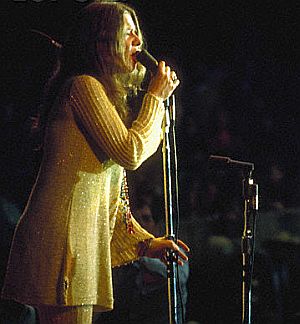
Throughout the history of recorded music, there are a handful of moments where one can say, "that" is the exact moment when the world became aware of the existence of a new band or singer. A majority of the time, by the time a band "makes it big," their early days have been forgotten, so these moments where, even decades later, one can experience these groundbreaking moments, are beyond precious. Case in point, when it came to completely silencing an audience due to sheer power and emotion, the likes of which had rarely been heard, one must point to June 17, 1967 as the exact day that the world became aware of a woman named Janis Lyn Joplin. As Joplin and her backing band, Big Brother And The Holding Company, were closing their set at the Monterey Pops Music Festival, they brought out their final number, a daring cover of Big Mama Thorton's classic, "Ball And Chain." For a relatively unknown act to attempt such a song was significant in itself; but the fact that a "white girl" was going to sing the vocals made the song even more intriguing. Though the festival may be best remembered for Jimi Hendrix's famous guitar burning, when it came to the musical highlights of the three days, there was simply nothing that compared to Joplin's stirring performance in her bands' final number. As video would later show, Joplin's performance quite literally left the crowd in awe, and it now serves as a preview of the greatness that she would bring over the next three years. Truth be told, it was this very performance that earned Joplin and the band their record deal, and she almost instantly become one of the most important people in all of music.

When one looks deeper into the situation, they will find that Joplin and the band actually performed twice at the festival. During their original time slot, the group refused to let the film crew record (a money dispute), but their set was so good, that they agreed to perform two more songs on camera the following day. It was on this second day that the group made their famous performance, as they played "Combination of The Two" and a solo-less version of "Ball And Chain." The rendition of "Ball And Chain" that was performed at the Monterey Pops Festival (linked above) was far different from the version that would be recorded on the bands' debut record, Cheap Thrill, and in many ways, it shows where the band was musically at the time. The song drops in with a wild, sedated, psychedelic lead, before moving into a deep, soulful blues progression. While both Sam Andrew and James Gurley play exceptionally during the brief moments that they take center stage, after the opening progression, there is little question as to "who" is the star of the band. As one would expect, as soon as it becomes clear that Joplin is "in the zone," the entire band takes a step back, and does their best to not let their playing interfere with what remains one of the most moving vocal performances in music history. One can clearly hear the difference after listening to the later, studio recording of the song, and there is a very stark contrast between the two.

While many have tried, there has simply never been another vocalist quite like Janis Joplin. Without question one of the true Queen's of soul singing, few artists from any era have brought as much soul-bearing honesty to their performances. The fact that Joplin would not only go after such a legendary song, but absolutely blow the song away is a testament to her musical prowess, as when one watches the performance, it is clear that she is completely overtaken and committed to the song. Joplin's vocals soar across the musical scale, as her deep, moody notes bring just as much power and emotion as her higher pitched wailing, as she channels the true emotion of the words which she sings. The performance is nothing short of mesmerizing, as there was and is truly nothing one can do during the song except sit in awe of the raw and unrestrained interpretation that Joplin gives. The song itself is as simple a blues song as one will find anywhere, and Joplin's performance proves that it is not so much "what" one sings, but more to the point "how" they are singing the words. Perfectly capturing every bit of feeling and emotion, the frustration, heartbreak, and general melancholy of the song are blazingly brought to life, and Joplin's performance remains the finest rendition of the song more than four decades later. Quickly staking her claim as not only one of the most talented soul singers in the world, but without question one of the greatest vocalists in history, one would be hard pressed to find a more moving or powerful vocal moment anywhere in history then one finds on this recording of "Ball And Chain."

When a musician has contributed so much to the shape of music that they can be referred to simply by one name, the woman they called "Janis" truly ranks among the most important. Serving as the blueprint for a new generation of soul singers, as well as an icon of the new breed of female vocalists, Janis Joplin remains one of the most uniquely powerful singers in history. Taking the stage in a completely fearless and almost unsettlingly aggressive manner, Joplin re-wrote the books on "what" a female singer could do on stage, and everyone from Patti Smith to Madonna to Chrissy Hynde owe their careers to the pioneering style of Janis Joplin. While her studio recordings are certinaly to be treasured, it is the existence of rare recordings such as her landmark performance at the 1967 Monterey Pops Festival that give a clear picture as to why the group was signed so quickly, as well as why their debut album later that year was one of the most highly anticipated releases in history. Joplin quickly grabs the crowd with her stirring and completely engrossing stage presence, and the few crowd images after the performance perfectly capture the moment, as one sees audience members sitting stunned and shaking their heads in amazement. Thankfully, "listenable" copies of this legendary performance exist, as it captures a truly special moment in music history: when with her unparalleled performance of "Ball And Chain," Janis Joplin was introduced to the world, and it would never be the same again.

Monday, January 18, 2010

January 18: Daily Guru, "Gurucast #3"

CLICK HERE TO LISTEN (will open in new tab)


(Left Click (PC) or Command-Click (Mac) to save it to your desktop...it's about 75MB)

One hour of amazing music and SOME commentary from "The Guru" himself.

TRACKLIST:
1. Grinderman, "Get It On" Grinderman
2. Beck, "Tropicalia" Mutations
3. Andrew Hill, "Cantarnos" Black Fire
4. Gogol Bordello, "60 Revolutions" Gypsy Punks: Underdog World Strike
5. Chuck Berry, "Maybellene" Chuck Berry Is On Top
6. The Clash, "Stay Free" Give 'em Enough Rope
7. Jerry Lee Lewis, "High School Confidential" Live At The Star Club, Hamburg
8. The Minutemen, "History Lesson Part II" Double Nickels On The Dime
9. Gangbé Brass Band, "Noubioto" Whendo
10. Roberta Flack, "Hey, That's No Way To Say Goodbye" First Take
11. DEVO, "S.I.B. (Swelling Itching Brain)" Duty Now For The Future
12. Red Hot Chili Peppers, "Coffee Shop" One Hot Minute
13. Tom Waits, "Little Drop Of Poison" Orphans: Brawlers, Bawlers & Bastards
14. Pearl Jam, "State Of Love And Trust" 1992/03/16, MTV Unplugged
15. Muddy Waters, "I've Got My Mojo Workin'" At Newport

Sunday, January 17, 2010

January 17: Ben E. King, "Stand By Me"

Artist: Ben E. King
Song: "Stand By Me"
Album: single (1961)/Don't Play That Song (1963)
Label: ATCO


CLICK HERE TO LISTEN (will open in new tab)


Throughout the long history of recorded music, there are an elite handful of songs that are so timeless, so perfect, that one simply cannot think of a time when the song did not exist. These truly special songs transcend generations, musical tastes, and all other barriers, becoming universally loved, and instantly recognizable across the world. Combining perfectly orchestrated music, moving, timeless lyrics, and one of the most honest and beautiful voices in history, there are few songs that are worthy of being mentioned in the same breath as Ben E. King's legendary 1961 single, "Stand By Me." The name of the song alone brings the vocals and musical hook to mind almost instantly, as in many ways, "Stand By Me" is just as relevant and widely played today as it was nearly fifty years ago. From commercials to internet memes to musical covers by modern day musicians, the song remains in the public eye, and this is perhaps all the evidence that one needs to argue that it is one of the truly special songs in music history. Though it has been covered by countless artists across nearly every genre over the decades, the fact that the original version is still so heavily played serves as a testament to the fact that it is without question still the definitive version, as well as proving that the combination of music and lyrics on that version are nothing short of extraordinary.

The evolution of how "Stand By Me" came to be a single for Ben E. King as a rather strange one, as the song itself had been written years earlier by King, along with the legendary writing team of Jerry Leiber and Mike Stoller. King had never intended on recording the song as a solo piece, but his previous group, The Drifters, passed on recording "Stand By Me," and the song "sat on the shelf" for a few years. Furthermore, King only decided to record the song because he found himself with some extra recording time after the sessions that produced his first solo hit, "Spanish Harlem." Clearly, if one thinks more about this, one can see that there was a very good chance that "Stand By Me" may never have seen the light of day, which in many ways makes the song even more impressive. King had originally played the song only on piano, but after Leiber and Stoller heard the song, they brought the "Spanish Harlem" musicians back to the studio, and they began to record "Stand By Me." These musicians excel brilliantly, and one cannot overlook the fact that the bassline is without question one of the most simple, yet absolutely perfect non-blues "walking" basslines that has ever been constructed. It is this progression, along with the equally fantastic, and equally simplistic chord changes that defined the sound of a generation, and in modern day, such musical progressions are often referred to as "Stand By Me Changes." One also cannot overlook that there are few songs of any popular genre that so perfectly involve one of the most underused instruments: the triangle. Keeping the music quiet and simple, the song is easily relatable, and it also leaves plenty of room for Ben E. King to stun listeners with his soulful, flawless vocal performance.

When one looks back on the history of music, there are truly few people who had as much impact and influence on the soul and R&B sounds than that of Ben E. King. From his earlier days, creating brilliant orchestrations with The Drifters, to his solo work, the way in which he approached his songs, as well as the sensational power of his voice remain virtually unrivaled. On "Stand By Me," his voice truly soars, overflowing with emotion, and creating what remains one of the most beautifully honest vocal tracks in music history. Never pushing too much, King gives every lyric on "Stand By Me" the perfect touch, and this subtle approach is one of the keys to the unparalleled mood and tone found on the song. Yet perhaps the most interesting and somewhat overlooked aspects of "Stand By Me" is the way in which the song feels like a love song, yet it is more about true friendship than anything else. In many ways, one can see this as one of the key reasons for the songs' success, and such a powerful underlying theme, presented in such a beautiful and moving manner surely touches the heart of all who have ever heard "Stand By Me." Again turning to the simplicity of this classic musical masterpiece, the lyrics are straightforward and simple, making them easy to learn and so universal that they can be applied in a countless array of situations. Combining all of these elements together, with the phenomenal vocal work of King, it is little surprise that "Stand By Me" has persevered over the decades and remains equally as relevant nearly fifty years after its initial release.

There is little question that "Stand By Me" is one of the most powerful and memorable songs in the history of recorded music, and nearly every aspect of the song remains unique to this day. Though the music and vocals cannot be ignored, the song is also significant for the fact that it reached the top ten on the singles charts on two different occasions, more than twenty-five years apart. Powered by the 1986 movie of the same name, "Stand By Me" cracked the top ten again, proving that, even in an dominated by hair metal and "new wave" music, classic sounds like that of "Stand By Me" were still as relevant, and an entirely new generation fell in love with the amazing song. This continual relevance is perhaps due to the fact that, while straightforward love songs may become outdated due to the style or lyrical content, "Stand By Me" is truly a song of the deepest friendship, and such a theme is unquestionably universal, and this is much the reason that the song is so well known all across the globe. Anchored by one of the most simple yet memorable basslines in history, and accentuated by a subtle, yet rich string section, the musical side of "Stand By Me" is appealing across the spectrum of musical tastes, as in many ways, "Stand By Me" is in a genre all its own. Capped off by the moving, soulful, yet steady vocal performance of Ben E. King, "Stand By Me" is without question one of the greatest songs in music history, and there is little doubt that it will continue to be relevant and emotionally move listeners for generations to come.