Tuesday, September 14, 2010

September 14: Spin Doctors, "Jimmy Olsen's Blues"

Artist: Spin Doctors
Song: "Jimmy Olsen's Blues"
Album: Pocket Full Of Kryptonite
Year: 1991


CLICK HERE TO LISTEN (will open in new tab)


Throughout the course of music history, one can make a strong case around the idea that a majority of hit songs come from one extreme in terms of mood.  In nearly every case, the song is either amazingly upbeat or very toned down and reflective, with very few hit songs representing the middle ground.  This is not to say that there are not a handful of exceptions, but it is clear that one of the key elements to a song finding success is a well established mood.  During the late 1980's and early 1990's, a majority of the songs at the top of the charts were either the gloomy, almost downtrodden songs of "grunge," or the aggressive sounds of "gangsta rap," with very few hit songs representing any other style.  Then, seemingly out of nowhere, a movement dubbed the "neo-hippies" sprang to life.  Bringing a strangely upbeat mood to their music, it was in many ways a breath of fresh air, and few bands represented this new sound as well as New York City's Spin Doctors.  Having honed their skills and built a decent fanbase from relentless touring, the group released their studio debut in the form of 1991's Pocket Full Of Kryptonite, and on the strength of this record, they were overnight sensations.  Presenting a high-energy, carefree feeling, the group stood in contrast to nearly everything else that was happening with the music scene.  Though they are perhaps best known for their surprise hit, "Two Princes," it is 1991's "Jimmy Olsen's Blues" that is truly the bands' finest musical achievement.

From the moment "Jimmy Olsen's Blues" begins, it seems to be standing in contrast to the title, as the song has an unusual energy, set into motion by the piercing guitar riff from Eric Schenkman.  This riff not only sets the tone for the song, but as the lead track on the album, it represents the spirit of the entire record.  Schenkman is quickly joined by the dual percussion of Aaron Comess and John Bush, and it is this element of the music that gives Spin Doctors a bit of a "jam band" sound.  Rounding out the musicians strong of the band is bassist Mark White, and he is far more prominent in the mix than a majority of bassists at the time.  Truth be told, few songs present a more balanced mix of instruments than one finds on "Jimmy Olsen's Blues," and it gives each band member a chance to prove that Spin Doctors were unquestionably some of the most talented players of their generation.  The song is also far more musically structured than a majority of the other songs being released at the time, as the bridge section features one of the more beautiful musical progressions of the era.  It is also during these non-verse sections that one can hear more ties to the "jam band" sound, as there is an exploratory spirit within them.  The creativity on "Jimmy Olsen's Blues" seems to be endless, and it is due to this diversity in sound that this song stands far above the rest of the bands work and remains one of the greatest songs of the entire decade.

While the music throughout "Jimmy Olsen's Blues" is nothing short of fantastic, it is the vocal work of Chris Barron that makes the song truly special.  Throughout the album, he proved to be one of the most powerful singers of his generation, and there is an unguarded joy within his singing that is rarely found elsewhere.  Easily able to work in any part of the musical spectrum, it is clear that Barron was letting the song take him where it wanted, as opposed to following a regimented singing pattern.  This again lends itself to the "jam band" style, and yet few singers of that genre even come close to the sheer power and beauty of the voice of Chris Barron.  As is the case with nearly every song on Pocket Full Of Kryptonite, the entire band takes writing credit for this song, so they all deserve a nod for composing one of the most truly enjoyable tracks ever.  Though many songs have been written about superheros, few have taken the unique perspective that is suggested by the title and words of "Jimmy Olsen's Blues."  Sung from the viewpoint of the young (fictional) photographer, the song paints a perfect picture of how jealous he could have been at the relationship of the two people he idolized.  Yet it is taking on this odd perspective that makes "Jimmy Olsen's Blues" one of the most unique love songs ever composed, and there is a brilliantly tragic feeling when Barron sings, "...I can't believe my dilemma is real, I am competing with The Man Of Steel..."

Whenever an artist presents a completely new perspective on an overly explored subject, it can often cause a great deal of controversy, and when if this subject is a positive icon, this can become quite heated.  However, the comic book geeks of the world seemed to take "Jimmy Olsen's Blues" in stride, and this was perhaps due to the fact that the tone of the song can be related to by nearly any person from any generation.  Truth bet old, few songs present the idea of longing for a woman who is in love with the "big, strong, good looking" man, as few men have ever been shown in the same light as Superman.  The fact that Spin Doctors were able to see through the eyes of the "lesser" Jimmy Olsen with such honesty serves as a testament to their amazing imaginations, as quite literally, this idea had never before been even remotely explored to such depths.  Furthermore, the power and conviction with which Chris Barron sings almost makes it feel as if it is Olsen himself, and this quality is what sets Barron far apart from his peers.  From the album's title to seemingly underhanded slights like, "...he's leaping buildings in a single bound, and I'm reading Shakespeare in my place downtown...," the band leaves no stone unturned in their almost vilifying attack of Superman, and yet the song moves far beyond "a song about a comic book."  In every aspect, Spin Doctors proved that they were unlike any other band of their generation, and their fantastic musical talents, as well as the phenomenal voice of Chris Barron can be enjoyed to the fullest on their 1991 song, "Jimmy Olsen's Blues."

Monday, September 13, 2010

September 13: Daily Guru, "Gurucast #37"

CLICK HERE TO LISTEN (will open in new tab)


(Left Click (PC) or Command-Click (Mac) to save it to your desktop...it's about 75MB)

One hour of amazing music and SOME commentary from "The Guru" himself.

Tracklist:
1. Grinderman, "Mickey Mouse And The Goodbye Man"  Grinderman 2
2. Johnny Cash, "Man In Black"  A Man In Black
3. Joe Strummer And The Mescelaros, "Ramshackle Day Parade"  Streecore
4. The Ramones, "Judy Is A Punk"  Ramones
5. Masshysteri, "Immun"  Masshysteri
6. Velvet Underground, "Who Loves The Sun"  Loaded
7. Rodrigo Y Gabriela, "Diablo Rojo"  Rodrigo Y Gabriela
8. The Cinematic Orchestra, "Familiar Ground"  Live At The Royal Albert Hall
9. Aerosmith, "Seasons Of Wither"  Get Your Wings
10. Tori Amos, "Marianne"  Boys For Pele
11. Little Walter, "Off The Wall"  The Best Of Little Walter
12. R.E.M., "Strange Currencies"  Monster
13. Santana, "Hope You're Feeling Better"  Abraxas
14. Dead Meadow, "Indian Bones"  Dead Meadow

Sunday, September 12, 2010

September 12: Dave Brubeck Quartet, "Blue Rondo à la Turk"

Artist: Dave Brubeck Quartet
Song: "Blue Rondo à la Turk"
Album: Time Out
Year: 1959


CLICK HERE TO LISTEN (will open in new tab)


Within every musical genre, there is the unexplainable phenomena of the handful of amazing artists who seem to be placed into the "second tier" of performers, though there is no question that their impact was on par with that of the most famous members of their particular genre.  In some cases, this was due to an overwhelming amount of talented artists during a particular era, while in other cases it was due to the artist in question simply being overshadowed by another artist at their peak.  Taking this in any way one wishes, it remains one of the more strange and almost tragic facts that Dave Brubeck is rarely mentioned in within the list of the greatest jazz musicians in history.  Looking back at his recorded catalog, he is without question worthy, as his compositions stand today as massively influential, and few artists worked in as wide a range of styles and time signatures as one finds within his work.  Furthermore, it was many of these songs written in odd time signatures that gained popular success, and a number of Brubeck compositions have become jazz standards.  Truth be told, by the time he gained international notoriety, he was already a decade into his career, and yet it was his 1959 masterpiece, Time Out, that remains today an absolute landmark within jazz history.  Filled with some of his most memorable and creative compositions, every song is a classic, and one can hear everything that made Dave Brubeck such a jazz giant within his 1959 single, "Blue Rondo à la Turk."

"Blue Rondo à la Turk" opens with a repeated opening musical phrase played by Brubeck on piano, and then echoed by Paul Desmond on alto saxophone.   The pair continue to trade off and counter one anothers' progressions throughout the song, and the interplay between these two performers is one of the keys that made The Dave Brubeck Quartet suck a hit.  When the two sync up at certain parts, it gives the song an almost entirely different feel, and it is also within this aspect of the music that "Blue Rondo à la Turk" gains a unique sense of movement.  The song seems to twist and float at different points, and due to the faster pace of the song, there are few other jazz compositions that sound even remotely similar.  It is also perhaps due to this unique sound that "Blue Rondo à la Turk" gained the following that it did, and as the opening tack on Time Out, the song certainly kept listeners engaged and wondering what would come next.  Furthermore, both Brubeck and Desmond perform brilliantly on "Blue Rondo à la Turk," and one cannot deny the amazing level of musicianship within all four members of the quartet.  Even after hearing only a single track from the group, due to both the style in which they play, as well as the fantastic interplay between them, one can easily make the case as The Dave Brubeck Quartet being one of the most elite musical groupings in history.  The manner with with Brubeck and Desmond dance across the track is one of the keys to this argument, and they are clearly in top form on "Blue Rondo à la Turk."

Beyond his amazing talents as a pianist, one can easily make the case that Dave Brubeck was one of, if not the most pioneering composer in terms of using unique time signatures.  While an overwhelming majority of jazz musicians played within a small handful of tempos, Brubeck not only used "new" time signatures, but he also showed an amazing talent for changing speeds, often within the same song.  This made the job of being his rhythm section perhaps the most challenging of his era, and drummer Joe Morello and bassist Eugene Wright were clearly up to the task.  Truth be told, "Blue Rondo à la Turk" begins in a 12/8 time signature and then moves into a 9/8 tempo during the song before shifting back to where it began.  While it may only be numbers to some, the fact that Brubeck was willing to explore such non-traditional styles gives "Blue Rondo à la Turk" an unparalleled sound and mood, and one can hear a strong Turkish influence throughout the song.  Morello keeps a light tone for the entire song, and yet it is also within his playing that one can grasp the true soul of the composition.  Similarly, Wright flys up and down his double-bass, giving "Blue Rondo à la Turk" one of the finest mixtures of the "hot" sound of the East Coast and the West Coast "cool."  This pairing of sounds and styles across the brilliant rhythmic changes placed "Blue Rondo à la Turk" into the most elite and revered jazz compositions in history.

One of the main reasons that "Blue Rondo à la Turk" is slightly overlooked by critics is the fact that it was the b-side to Brubeck's most well known song, "Take Five."  The pairing of the two songs makes the single one of the greatest ever released, and both sides show the amazing talent in playing and composition of Brubeck and his quartet.  However, while "Take Five" is legendary in its own right, the fact of the matter is, it is a rather tame and straightforward composition when compared to the sound and style found on "Blue Rondo à la Turk."  It is the b-side that shows off the full extent of the talent within Brubeck's quartet, and one can make the case that though they would release many other songs, their performance here stands as their finest recording.  Over the decades, "Blue Rondo à la Turk" has been covered and reinterpreted by a number of artists, but the fact remains that none of them even come close to the energy and style found on the original.  Whether it is the mesmerizing interplay between Brubeck and Desmond or the stunning style shown by Morello and Wright, few can argue that The Dave Brubeck Quartet knew any players of equal stature in 1959.  The manner with which the quartet pull together and then push out on their own in seamless fashion is nothing short of stunning, and it also shows the unmatched level of chemistry within the players.  Though it is often an afterthought to other jazz legends, one cannot deny the unparalleled style and performance found on The Dave Brubeck Quartet's 1959 classic, "Blue Rondo à la Turk."

Saturday, September 11, 2010

September 11: Cake, "Rock 'N' Roll Lifestyle"

Artist: Cake
Song: "Rock 'N' Roll Lifestyle"
Album: Motorcade Of Generosity
Year: 1994


CLICK HERE TO LISTEN (will open in new tab)


More than nearly any other period in musical history, the first half of the 1990's provided an environment where quite literally, there were no rules as to what constituted a pop hit.  From the bouncing bass of gangsta rap to the soft tones of singer-songwriters to the renamed punk of Seattle, it seemed that anything with a good hook and a solid authenticity would be appreciated by the collective public.  Taking this thought even further, this time period and odd set of circumstances allowed many acts to get national airplay that wouldn't have in nearly any other era.  Among the many bands that benefited from this reality was a quirky quintet from Sacramento, California who had clearly listened to quite a bit of DEVO and They Might Be Giants over the years.  While they are in no way copycats, one can hear the influence of these other bands within the unique sound that is the band Cake.  Taking the idea of "musical irony" to levels never before imagined, Cake stands as one of the distinctive bands of the decade, and one cannot mistake their sound for any other group.  Though they would find moderate success with a handful of singles on their later albums, it is the very first single that the band released that captures everything there is to love about Cake.  Filled with a brilliant musical arrangement, the vocal style that would become the bands' trademark, and some of the greatest lyrics in history, few songs can compare to Cake's 1994 single, "Rock 'N' Roll Lifestyle."

From the moment "Rock 'N' Roll Lifestyle" begins, it is clearly unlike anything else that came from the musical era, as it is sparse and almost jazzy from the onset.  The lone, simple guitar from Greg Brown that plays behind what sounds like someone lighting a cigarette immediately gives the song a strange type of "cool" feeling that cannot be found anywhere else in music history.  This unique tone is kept intact by the fact that as the verse begins, drummer Tood Roper enters the frey with only a shaker, and combined with the lyrical style, "Rock 'N' Roll Lifestyle" takes on an almost beat-poetry sound.  While this strange swing remains for the entire song, there are a number of moments where the band breaks from the sound, and it is in these spots that one quickly realizes the exceptional level of talent within each player.  Brown rips a few brief guitar solos, and the contrast of his two playing styles is nothing short of stunning.  The thump from bassist Victor Damiani plays an ideal counter to the drumming, and it is clear that the members of Cake were far more talented than a majority of their musical peers.  Making their sound even more unique, the presence and playing of trumpeter Vince Di Fiore is absolutely perfect, and it reinforces the jazz mood, yet there is a tone to his playing that gives it an edgy, modern feel.  Making a new genre all their own, Cake use "Rock 'N' Roll Lifestyle" to show that jazz and blues can be fused together in an entirely new fashion, and it is much the reason that the song found moderate commercial success.

If there is one aspect of the music of Cake that makes them completely unique, it is the vocal stylings of band founder, John McCrea.  One can easily make the case that he has perfected the "ironic singer" approach over the years, and even on their first single, his talent is abundantly clear.  Rarely pushing his voice beyond anything more than speaking, the idea of the beat-poetry style is further enforced, and it is also within this aspect that McCrea and push the brilliantly sardonic style that he excels in far beyond any of his peers.  Working all over the rhythm, McCrea shows his amazing talents as he often drops the lyrics with an alost Walken-like cadence, and it is his ability to find the odd down-beats that make "Rock 'N' Roll Lifestyle" such a fantastic song.  Though there are not many, "Rock 'N' Roll Lifestyle" stands high atop the songs that turn their pen on music fanatics, and though many of the shots are deep, they are all accurate in one way or another.  The song follows a character that might even be seen as a music snob over the decades, and McCrea's brutally honest depiction of such a person never gets old.  When he speaks, "...and how much did you pay for your rock'n'roll t-shirt, that proves you were there, that you heard of them first?" nearly every listener can picture the person being described, and it is cutting observations like this, and the manner with which McCrea delivers the lyrics that makes "Rock 'N' Roll Lifestyle" nothing short of a classic song.

However, while many are quick to write-off Cake as an almost silly, perhaps novelty act, along with the superior musical performance, there are lines within the song that show depth beyond that of nearly all of the bands' peers.  Though it is often overlooked, one would be hard pressed to find a deeper, more accurate take on the capitalist approach of music companies than when McCrea sings, "...excess ain't rebellion..."  In many ways, this perfectly captures the mindset and style of the early 1990's, as everyone from the neo-hippies to the goths to the Doc Marten-sporting "indie kids" were dropping tons of money on styles so that they could feel as if they were "fighting the man."  The statement also reflects the then-aging hippie population who were clearly enjoying the great economic times, and the lyric can certainly be seen as an attack on their own ideals versus their new realities.  Regardless of which way one chooses to read the line, it is not alone in the song insofar as deep thoughts are concerned, and the fact that Cake can place them so perfectly alongside more humorous lines is a testament to the greatness and high talent level of the band members.  From the almost dual guitar styles to the brilliant lyrics and delivery of McCrea to the perfectly utilized trumpet playing, due to its sheer uniqueness and stellar content, there are few songs that are even remotely similar to Cake's 1994 debut single, the amusingly unforgettable "Rock 'N' Roll Lifestyle."

Friday, September 10, 2010

September 10: The Blasters, "Marie, Marie"

Artist: The Blasters
Song: "Marie, Marie"
Album: American Music
Year: 1980


CLICK HERE TO LISTEN (will open in new tab)


Having been used so often over the decades, it is now almost cliché when an artist or band is referred to as being "ahead of their time."  However, it is beyond a rare occasion when the opposite is said, as few bands can be seen as "behind the times" and still come off as being an amazing group.  Truth be told, even after long thought, one might only be able to come up with three or four bands in all of history that fit such a statement, and yet each of these bands has had a large influence on the shaping of music.  Proving that the classic sound of rock and roll was not only alive and well, but clearly linked to the punk rock movement, few bands in history can compare to the awesome sound and energy from the Los Angeles "roots rock" band, The Blasters.  Coming out of a music scene that at the time was responsible for the likes of Black Flag, The Germs, and many other hardcore/punk legends, The Blasters stripped down their sound to the most basic of rock and roll, and yet there is a spirit underneath it all that reflects that of the punk style.  While a number of bands have tried this approach, no other has succeeded in the way that one finds on The Blasters' 1980 debut, American Music, and this is due both to the style which they play, but also to the unparalleled level of musicianship found within each of the band members.  Though there is not a bad not anywhere to be found on the record, there are few songs from any era that can compare to The Blasters' 1980 classic love song, "Marie, Marie."

From the moment "Marie, Marie" begins, everything that makes the music of The Blasters so fantastic is on display, as the perfectly toned guitar from Dave and Phil Alvin matches that of the great performers of the "roots rock" era.  In reality, the sound could have perfectly fit into the scene from 3 decades earlier, and the fact that it sounds of good serves as a testament to the undying attraction of this revolutionary musical approach.  Bassist John Bazz flies across the fretboard, and to this day, his performance on "Marie, Marie" represents one of the finest basslines ever recorded.  Rounding out the band is drummer Bill Bateman, and few will argue that he was anything less than the greatest drummer of his generation.  In reality, it is largely within the drums that the punk spirit comes through, as they are far more forward and faster than anything that was recorded during the 1950's, and where the true fusion of The Blasters lives.  The combined sound found on "Marie, Marie" is a hybrid like no other, as the band perfectly executes a sound that would have topped the charts in the 1950's, and yet they also inject a modern energy into the song, but not to the point where it alters the face of the song even in the slightest way.  The fact that the band is able to so perfectly walk this delicate line is clearly due to their phenomenal level of musical talent, and this is why "Marie, Marie" remains just as catchy today as it was upon its initial release.

Along with playing second guitar and the occasional harmonica, one would truly be hard pressed to find a more perfect voice for the music and style of The Blasters than the one that lives within Phil Alvin.  Displaying a clear understanding of how to do the "rock croon" as well to add a number of unique vocal modifications, few singers of any genre sound as good as he does on "Marie, Marie."  Again making the case that the song could have easily been a hit thirty years previous, Alvin's voice soars across the track, and the brief moments where he displays an almost country-style singing approach further add to the bands credit for having superior understanding of many musical genres.  Working in perfect harmony with his voice and the music over which he sings, the subject matter of "Marie, Marie" is as classic as one will find anywhere, and this serves as the ideal finishing touch to the songs' persona.  The opening lines of, "...Marie-Marie, playin' guitar on the back porch, I sit in my car..." superbly captures the mood of youth, and proves that this feeling and sentiment are truly timeless, as it fits just as perfectly today as it did when the song was released, or in any of the decades previous.  One would be hard pressed to find a more classic theme, as Phil Alvin sings of his girl, his car, and his frustration and one not being in the other.  While this idea has been explored countless times over the decades, few songs and singers made it sound better than The Blasters and their extraordinary song, "Marie, Marie."

Though at face value, the punk rock spirit may not be completely clear, after a handful of listenings, one cannot deny its presence.  Furthermore, if one looks at the following that both the band and song have gained over the decades, it becomes truly undeniable.  "Marie, Marie" has been covered over the years by everyone from Lars Fredrickson And The Bastards to MXPX, along with being a minor hit for Shakin' Stevens.  Powered by a fantastic melody and a tempo and energy that match, the fact of the matter remains that perhaps due to the sheer talent level, none of these covers have come close to the amazing sound found on The Blasters' original.  "Marie, Marie" stands as an unrivaled tribute to the early years of rock and roll, and with the punk spirit buried within the song, it is clear that even in an age when artificial musical means became the trend, the purity of "roots rock" was still alive and well.  From the phenomenal rhythm section of Bateman and Bazz to the unparalleled talent within the Alvin Brothers, it is nothing short of unexplainable when one ponders how The Blasters did not become the biggest band on the planet.  Bringing a high-energy, amazingly catchy, and superbly talented sound, no band of their day could even come close to The Blasters, and everything that makes them such a sensational band can be found within their unforgettable 1980 song, "Marie, Marie."

Thursday, September 9, 2010

September 9: Nine Inch Nails, "Something I Can Never Have"

Artist: Nine Inch Nails
Song: "Something I Can Never Have"
Album: Pretty Hate Machine
Year: 1989


CLICK HERE TO LISTEN (will open in new tab)


Though it is not an uncommon occurrence, in most cases, it is rather difficult for a band known for their aggression and volume to tone things down and record a more melodic, perhaps ballad-esque song.  In most cases, the resulting song becomes little more than a novelty for the bands' most devoted fans, and it is rarely pulled out for live performances.  As one pushes into the heavier and louder styles of music, such instances become more infrequent, and yet it is within these few musical moments that one can find some of the most stunning recordings ever made.  While many bands went for either sheer volume or pure theatrics to convey their moods, there was one performer who was able to master both, and in the process, he created an entirely new genre that remains to this day.  Taking a firm grasp on all of the technology that was available at the time, along with influence from bands like DEVO and Einstürzende Neubauten, the world was simply not prepared for the sonic assault that came courtesy of Trent Reznor and his most well-known project, Nine Inch Nails.  Coming out of seemingly nowhere, one would be hard pressed to find a more impressive debut than his 1989 release, Pretty Hate Machine, and to this day, the record still knows few, if any, equals.  From the crushing "Terrible Lie" to the rather surprising hit "Head Like A Hole," Pretty Hate Machine is a musical journey like no other, and yet one can easily make the case that the hidden gem of the album is the dark, reflective song, "Something I Can Never Have."

Though the entire persona behind the so-called "industrial" sound that Reznor brought into the mainstream is that of being loud and aggressive in a way far distant from heavy metal or punk rock.  Filled with sounds and energy that replicate those of large machinery with a uniquely futuristic feel, there is never mistaking the sound of industrial metal for any other style of music.  Furthermore, an ominous, darker mood tends to overshadow nearly every song in the history of the genre, and yet with "Something I Can Never Have," Reznor proves that the exact same mood and intensity can be achieved with a comparatively minimalist musical approach.  As the music fades into the track, there is an almost post-apocalyptic mood, and the lone piano remains today one of the most truly haunting melodies ever committed to tape.  It is this piano, played by Reznor, that is the only instrument to run throughout the course of "Something I Can Never Have,"and it keeps the somber, almost desperate tone of the song intact.  The more common industrial-style musical elements come into play as the programmed drums enter during the first bridge section.  Though they are just as aggressive as any other song from Nine Inch Nails, they somehow take on a more tragic quality due to the spirit that Reznor has given the song.  "Something I Can Never Have" never moves beyond a slow, almost lulling pace, and yet it is unquestionably one of the most powerful industrial tracks ever composed.

Proving that he is far and away one of the most talented musicians in history, Trent Reznor also handles the vocal and writing duties for nearly every song in the Nine Inch Nails catalog.  While in most cases, the vocals on industrial songs are shouted and often buried by the chaotic music, on "Something I Can Never Have," Reznor shows that he has a completely captivating and strangely beautiful voice.  Often singing in little more than a whisper, the moment he begins singing, Reznor completely captures the listeners attention, and it does not waver for a moment until the song ends.  On "Something I Can Never Have," Reznor seems to drop the entire overly-macho facade that pervades within the industrial genre and the pain in his voice is on par with the most moving soul singers in history.  Along with his stunning vocal performance, the words that Reznor sings express a universal pain to a level that has rarely been matched.  One would be hard pressed to find more tragic opening lines than when he sings, "...I still recall the taste of your tears, echoing your voice just like the ringing in my ears..."  As the song progresses, one can feel the downward spiral of Reznor's emotions and sanity, as he presents a completely raw and unguarded view into the true destructive nature of a lost love.  Touching on every aspect of loss and longing, Reznor sums up his feelings in tragic fashion when he speaks the line, "...Gray would be the color if I had a heart..."  Few songs in history have been able to balance power and emotion with the same stunning results that one finds on "Something I Can Never Have."

One of the biggest problems within the world of music is the manner in which so many people write off entire genres based on the forward persona presented by those artists.  While to a certain extent, this is understandable, it is often within the strangely unique moments of every genre that the true gems of those artists are hidden.  Creating strange melodies within the often brutal and hostile mood that is the industrial style of music, Trent Reznor has rarely backed off from his musical vision, and it is why he stands as one of the most revered performers in the entire history of music.  The 1989 debut from Nine Inch Nails stands today as an absolutely iconic record, and one cannot say enough about how much it changed the entire landscape of music.  Proving that computer and synthesizer technology could be used for far more than the so-called "new wave" sound, Reznor created one of the most brilliantly dark records in history with his phenomenal debut.  While the album may be best known for the three singles released, it was songs like "Something That I Can Never Have" that truly made the album something special, and the song remains one of the most overlooked musical masterpieces ever recorded.  From the extraordinary, yet delicate piano to the flawless manner in which Reznor brings in the programmed drums to the heartbreaking vocals and lyrics, few songs can compare to the mood and power that one finds in Nine Inch Nails' 1989 recording, "Something I Can Never Have."

Wednesday, September 8, 2010

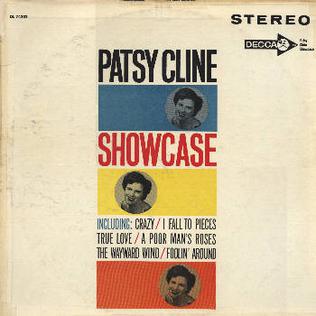
September 8: Patsy Cline, "Crazy"

Artist: Patsy Cline
Song: "Crazy"
Album: Showcase
Year: 1961


CLICK HERE TO LISTEN (will open in new tab)


While in most cases, the artists that cannot be classified by a single genre end up defining a style all their own, there remain a few solitary instances where there is simply no way at all to accurately define the sound of a performer.  Though this is often due to the fac that the artist in question works in so many different styles that no single term can encompass their career, there is at least one case where a performer worked in a few styles, but never really "fit" into any of them.  Unquestionably one of the most important influential singers to ever record, few artists fit this idea as perfectly as the late, great Patsy Cline.  While many simply write her off as a country performer, when compared to nearly any other singer of this style, she clearly does not fit the mold, and the same can be said for the rockabilly, jazz, or even the so-called "Nashville pop" sounds.  Perhaps this difficulty of identity is due to the fact that she died in a plane crash just as she was reaching the prime of her career, therefore never fully establishing her sound.  Regardless, the handful of albums and many singles she left behind remain today some of the most moving and truly beautiful songs ever recorded, and her efforts as a performer helped open many doors for female singers that followed.  Though she had her biggest commercial success with "I Fall To Pieces," one simply cannot discuss Patsy Cline without giving ample time to her standard-setting, heart-wrenching 1961 cover of Willie Nelson's classic ballad, "Crazy."

Though Willie Nelson's own version of the song would make the Patsy Cline cover seem fully orchestrated in comparison, on Cline's version, the musical arrangement is extremely soft and sparse, helping to heighten the overall mood of the song.  Looking at the entire history of recorded music, few songs have been able to present as minimalist a musical arrangement in as perfect a manner as one finds here, and the delicate piano work captures the mood of late-night longing in a way that has never been matched.  It is also in this aspect of the song that one can as easily hear it being performed in an empty bar, or a car in the middle of nowhere, and it is largely due to this universal nature in even the smallest aspect of the music that "Crazy" has remained so prominent over the decades.  The bass playing is almost awkwardly far forward in the mix of the song, but it is this move that gives "Crazy" its depth, and further enforces the somber, dusky feeling that prevails throughout the entire track.  The drums are almost completely absent, and one can easily make the case that they are unnecessary, yet it is within their quiet rhythm that "Crazy" gains its unique sense of movement, and one is left to wonder if all of this was planned or simply a brilliant case of chance.  Though it is phenomenal, the music does not help to categorize "Crazy," as it is somewhat jazzy, somewhat country, and there is even a bit of soul within the music, making it sound like nothing else ever recorded.

In many different ways, Patsy Cline's vocal performance on "Crazy" remains truly unparalleled almost fifty years after her tragic passing.  In reality, the vocal track that was released as the single was done in a single take, as she had recorded it the previous night, but was unhappy with that performance.  Adding to the stunning nature of the vocal, Cline was said to have great difficulty hitting some of the higher notes, as she was still recovering from a car accident that nearly took her life and left her with several broken ribs.  Even if she had been perfectly healthy and taken many days to record the vocals on "Crazy," it would have in no way detracted from the absolutely awe-inspiring results, as the power and emotion that she brings to the track remain in a class all their own.  From the soaring points within the verses to the way in which she brings out the most subtle nuances of the words, Cline's performance on "Crazy" grabs the listener from the start and never lets go.  The fact that her vocals have just as much impact after years and years of listening is a testament to how perfectly she sang and how well she understood the words and emotions that Willie Nelson had written.  It goes without saying that Cline's ability to adapt Nelson's words and make them her own is a feat rarely accomplished to the extent that she did on "Crazy," and it is much the reason that her version remains the standard by which all others are judged after decades of countless cover versions of the song.

Strangely enough, those who were present during the recording of "Crazy" all agree that when she was first presented with the song, Patsy Cline did not like the arrangement.  Feeling it was far too high-tempo for her style, her producer, Owen Bradley, re-worked the song into a more ballad-esque format, and it clearly fir perfectly with Cline's style.  Though it did not reach the same commercial success as "I Fall To Pieces," "Crazy" instantly became Cline's signature song, and legend says that the first time she performed the song live at Nashville's Grand Ole Opry, she received three standing ovations from the crowd.  This is not all that surprising, as Patsy Cline's performance on the studio version of the song remains one of the most moving and truly beautiful recordings ever made, and she perfectly emotes the universal feeling of longing that Willie Nelson had crafted with his words.  Coming off as a strangely laid-back, late night lament, regardless of age or musical preference, anyone can relate to the simple, yet powerful words which Cline sings, and one can picture the song being performed in a number of different venues, making it even more ubiquitous in nature.  While countless artists from nearly every genre have taken their turn at Willie Nelson's classic, "Crazy," none even come close to the truly uncategorizeable and unquestionably unmatched 1961 rendition from the late, great Patsy Cline.