Tuesday, June 15, 2010

June 15: Neil Young, "My My, Hey Hey"

Artist: Neil Young
Song: "My My, Hey Hey"
Album: Rust Never Sleeps
Year: 1979


CLICK HERE TO LISTEN (will open in new tab) ("Out Of The Blue")


CLICK HERE TO LISTEN (will open in new tab) ("Into The Black")


While it is easy to write songs of the past, or even of the present, one would be hard pressed to find a great number of songs that not only speak of the future, but are correct in retrospect.  Then, there is the small, strange group of songs that somehow reinvent themselves with every generation, and are able to take on new meanings as the decades pass.  Though there are a number of good examples of this musical phenomena, few are as clear or as moving as Neil Young and his iconic song, "My My, Hey Hey."  The song itself is split into two different versions, which bookend his 1979 record, Rust Never Sleeps.  The album opens with the acoustic, "My My, Hey Hey (Out Of The Blue)," and it closes with the loud and aggressive, "Hey Hey, My My (Into The Black)."  Aside from the difference in musical approach, there is a slight lyrical change, and the acoustic version, much like many of the songs on the album, was taken from a live performance.  Looking at the overall impact of the song, it is amazing to think that in the age of punk, Neil Young had managed to once again reinvent himself, and with both the song and album, he was able to prove that folk-based rock music could yet again survive within a changing musical trend.  It is this ability, among others, that make Neil Young perhaps the most important folk musician in history, as over the decades, few performers have been as successful at bridging the "classic" sound of a genre with the changing trends of the world.  Proving his amazing musical brilliance, and remaining one of the most powerful songs in his catalog, Neil Young achieves musical perfection with the 1979 pairing of songs, "My My, Hey Hey."

The "Out Of The Blue" version of "My My, Hey Hey" is about as "classic" a Neil Young sound as one will find anywhere.  Sporting little more than Young and his acoustic guitar, there is a certain purity and unquestionably honesty that comes through on the song.  Though he had his band, Crazy Horse, in tow at the time this live version was recorded, the stripped down nature of the song not only makes it more powerful, but certainly helped to keep Young's longtime fans satisfied.  This version of the song is also able to "bridge" the classic folk sound with the newer musical sensibilities, as one can clearly hear a more aggressive tone within the acoustic sound.  Recorded in an era when punk and louder sounds ruled the charts, this simple, softer number proved that great songwriting and performance would shine through, regardless of the trends of the time.  Conversely, the "Into The Black" version of the song shows just how much Neil Young understood the ideals behind the punk movement.  Leading off with the core riff being played with heavy distortion by Young, as well as guitarist Frank Sampedro and bassist Joe Osborn, the song becomes a murky mess that is oddly similar to the "grunge" sound that would explode more than a decade later.  Drummer Karl Himmel helps to further the songs' overall sense of urgency, and the hard-driving mood remains one of the most moving, and darkest moments in the entire catalog of Neil Young.  Through the style in which it is played is vastly different, the pairing of these two versions proves without question that one can get just as much emotion from a quieter arrangement as one can from a loud, "rock-style" instrumentation.

With the two musical performances being unique, the key to making the songs work as a duo lies within the vocals and writing of Neil Young.  More than four decades after his first recordings, Young still possesses one of the most instantly recognizable voices in music history, and one would be hard pressed to find a singer from any era that sings with more conviction and raw, open honestly more often than Young does.  Whether it is just him and his acoustic guitar, or he is rocking along with Crazy Horse, Young's voice carries easily over the music and asserts itself as the focal point of the song.  Having already proven over the years that he was one of the finest lyricists in history, "My My, Hey Hey" pushes Young into a class al his own, as at every turn, the song is eerily prophetic, and at times, nothing short of heartbreaking.  The two subtitles for the song actually come from a phrase used during the Vietnam War that referred to the effect of coming out of a tunnel on a battle front and into the darkness of war.  Both the music and lyrics push this mood home, and there are few songs in music history that are as dark, yet strangely, "My My, Hey Hey" is also one of the most brutal, and clearly accurate descriptions of the music industry that has ever been penned.  Young leaves no question as to the songs' inspiration, as on the "Into The Blue" version, he outright states, "...this is the story of Johnny Rotten..."  Taking a sharp shot at the former Sex Pistols frontman, Young was clearly questioning how he (Rotten) could so easily abandon his band and persona as he had done a few months earlier.  Though Young calls into question the overall integrity behind both musicians and the industry as a whole, there is one more statement within the song that rings with far more power and tragedy.

Though it would not come full circle for over a decade, one would be hard pressed to find a more moving and timeless line than when Neil Young sings, "...it's better to burn out, than to fade away..."  Within this line, Young sums up the entire beast that is the music industry, as it feeds on "flash in the pan" artists who expel all of their potential quickly and then disappear.  The duality in musical approaches found on "My My, Hey Hey" would go on to influence countless artists across musical styles, as everyone from System Of A Down to Dave Matthews to Nirvana have cited the record as a major influence.  It was the latter of these three where the song was tragically reborn, and the completely impact and meaning behind the words were revealed.  Regardless of the questionable circumstances behind the event itself, one cannot deny the devastating significance behind that chilling phrase being used verbatim within the suicide note of the late Kurt Cobain.  The presence of the phrase within the letter moved an entire generation, as well as disturbing Young so much that not only did he dedicate his 1994 record, Sleeps With Angels, to Cobain, but since the event, in live performances, he puts far more emphasis on the later line, "...and once you're gone, you can't come back..."  The fact that the "Into The Black" version sounds so similar to the "grunge" sound proves that Neil Young was an artist FAR ahead of his time, and the fact that his lyrics remain so revered to this day and still have as much impact serve as a testament to just how phenomenal a performer and musical visionary he was, and all his genius can be found in his iconic 1979 song, "My My, Hey Hey."

Monday, June 14, 2010

June 14: Daily Guru, "Gurucast #24"

CLICK HERE TO LISTEN (will open in new tab)


(Left Click (PC) or Command-Click (Mac) to save it to your desktop...it's about 75MB)

One hour of amazing music and SOME commentary from "The Guru" himself.

Tracklist:
1. The Dead Weather, "Blue Blood Blues"  Sea Of Cowards
2. The Pogues, "If I Should Fall From Grace With God"  If I Should Fall From Grace With God
3. Miriam Makeba, "Pata Pata"  Pata Pata
4. George Harrison, "Wah-Wah"  All Things Must Pass
5. Sonic's Rendezvous Band, "Heaven"  City Slang
6. The Clash, "Armageddon Time"  Black Market Clash
7. Neil Young, "Winterlong"  Decade
8 - 11. Nick Cave & The Bad Seeds, "O'Malley's Bar Parts 1-3 & Reprise"  B-Sides & Rarities, Volume II
12. Red Hot Chili Peppers, "Funky Monks"  Blood Sugar Sex Magik
13. David Byrne, "The Other Side Of This Life"  Grown Backwards
14. L7, "Everglade"  Bricks Are Heavy
15. The Mark Of Cain, "The Contender"  Ill At Ease

Sunday, June 13, 2010

June 13: Moist, "Push"

Artist: Moist
Song: "Push"
Album: Silver
Year: 1994


CLICK HERE TO LISTEN (will open in new tab)


Though the saying goes that "imitation is the finest form of flattery," within the world of music, such actions are often counter-productive and lead to bland, stale years in music history.  During the early 1990's, the strain of punk that was dubbed "grunge" ruled the charts and every rock band in the world was trying to cash in on the sound.  While a majority of these groups were little more than second-rate rip off artists, there were a handful of bands that were able to capture the spirit of the music and fuse it together with their own sound.  Whether it was in the vocal approach or within the power and tone of the music, the bands that showed "real" talent were able to seamlessly integrate this sound into their music, and these fusions resulted in some of the finest music of the decade.  One of the many bands that were able to accomplish this feat were an emerging rock band from British Columbia, and they found moderate success with a string of hits in 1994.  Backed by booming guitars and centered around one of the most underrated vocalists of the decade, Moist captured the raw, almost wild spirit of rock and roll, and combined it with the edge and anger of grunge in brilliant fashion.  Coming in at the tail end of the "grunge era," Moist stands as one of the many bands that helped in transitioning the face of popular music to a more melodic, yet darker place that would persevere for a number of years.  The bands' ability to create amazing moods was their strongest characteristic, and it is no more apparent than on their 1994 single, "Push."

The moment "Push" begins, it is clear that the band has a flare for the dramatic, as the opening guitar chord is almost amazingly loud, yet packs an amazing punch and sets a dark, yet aggressive tone for the entire song.  It is this and the rest of the guitar work from Mark Makoway that sets Moist far apart from the core of the "grunge" bands, as there is not the murky, almost lackadaisical tone present.  In its place is a far more angry, fast paced, and moody sound, and the rest of the band falls into line with his musical lead.  Another factor that sets Moist apart from their peers and a majority of what was happening musically at the time is the keyboard of Kevin Young.  This added layer gives their music a unique sound, and it also plays a central part in solidifying the gloomy, almost gothic tone that underscores all of "Push."  The rhythm section of bassist Jeff Pearce and drummer Paul Wilcox round out the instrumental portion of the band, and they prove to have a knack for bringing powerful emotion in their music without coming off as going overboard or cliché.  As a single unit, Moist moves perfectly on every step of the song, from the crashing choruses to the more mellow and melodic moments, they prove that they have a firm grasp on their sound and skills.  Truth be told, few bands of the time were able to create music that was simultaneously as heavy and dark as Moist, and this sound and emotion within the song are what propelled "Push" into regular radio rotation and a modest run of the singles chart.

Though the four musicians in Moist do their part to create a fantastic orchestration, without the stellar vocal work of David Usher, "Push" would simply fall flat.  In terms of both power and range, Usher seems to have no limitations, as he shows off his mesmerizing whisper as well as his soaring singing voice.  During the verses, when he brings a breathy, spoken style, the listener is immediately captivated, and a certain swagger and almost sinister style run through his entire performance.  Further adding to his uniqueness as a singer, regardless of how loud he is singing, there is a distinct pitch and flow to his voice that makes the vocals all the more interesting to experience.  The anger within his voice is powered not only by his emotions, but the angst-ridden and outright frustrated lyrics which he is singing.  Few songs of the 1990's capture the frustration of lost and unrequited love as one finds on "Push," and it is clear that the band were quite adept when it came to lyrics that had a "bite" to them.  From the first lines of, "...a little bit more than I ever wanted, a little bit more than you could ever say...," it is clear that the song is quite personal in nature, and from the passion within his voice, one can only assume that it is taken from Usher's own experiences.  Each verse gets deeper and deeper into the unbalanced relationship in question, and he hits the nail on the head when he sings, "...push just a little to late..."  The final refrain of, "...I expected more than this..." takes the listener on a wild ride as the song ends, as Usher leaves no guards up and his emotions almost overflow as he repeats the song until the track closes.

The history of music has shown that it doesn't take much to find success as a copycat band who does little more than follow the trends of the time.  Though in cases like these, the bands that do so rarely find longstanding success, and one must look to those bands that made the "trends" their own for the best music of any given era.  Primarily taking from the fading "grunge" sound, Canadian rockers Moist clearly also took a large part of their sound from the industrial and gothic metal bands of the late 1980's.  The manner with which the band mixes these influences together on "Push" is a true musical treat, as the heavy musical arrangements blend in brilliant fashion with the dark, angst-filled vocals and lyrics.  Truth be told, this trend runs for the entire length of their 1994 record, Silver, and the album remains one of the most overlooked moments of sonic accomplishment of the entire decade.  Each of the four musicians in the band play with superb feeling and tone on "Push," and the song still holds up nearly twenty years later.  However, there is little question that the true magic behind the song lies within the extraordinary vocal performance of David Usher, and his singing here represents not only the finest of his career, but one of the strongest vocal tracks of the entire decade.  Harnessing all of the enrgy and emotion of a jaded lover, there are few songs of the 1990's that have the same amount of anger, aggression, and shadowy mood as one finds in Moist's magnificent 1994 single, "Push."

Saturday, June 12, 2010

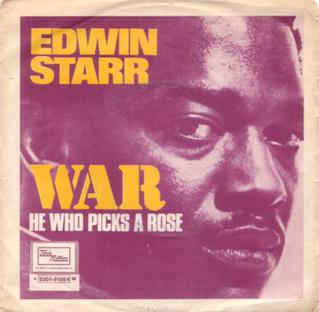
June 12: Edwin Starr, "War"

Artist: Edwin Starr
Song: "War"
Album: War (single)
Year: 1970


CLICK HERE TO LISTEN (will open in new tab)


For some artists, the most significant and important aspect of their music is the brilliant way in which they can turn a phrase or create the most beautiful sequence of words imaginable.  It is in such lyrics that one finds the true poetic value within music, and why so many musicians are considered to be among the finest writers of their generation.  Then again, there is nothing wrong with throwing subtlety to the side and laying out your thoughts in clear, blunt fashion.  When it comes to this direct lyrical approach, there are few artists who did it better than Cleveland, Ohio's own Edwin Starr.  Standing as one of the most prolific vocalist of the Motown era, Starr had a handful of hits in both the R&B and soul genres throughout the 1960's.  Powered by an almost preaching, yet unmistakable voice, Starr found success with songs like "Agent Double-O Soul" and "25 Miles," yet for some reason, he was never really given the credit for the early hits, and remains somewhat a "second tier" artist in the overall history of Motown Records.  As the 1970's began, Starr had become somewhat forgotten at Motown Records, and when he was finally given what would likely have been his "last shot," he had been out of the recording studio for more than six months.  This absence becomes clear on the song, as Edwin Starr delivered one of the most powerful and absolutely iconic vocal performances when he was given the chance to record what would become his 1970 classic, "War."

Truth be told, "War" is actually a cover song, as it was originally written for and recorded by The Temptations a few months before the Starr version was released.  The original version is far more "Motown-esque," and has does not have the grit and anger that comes through within Starr's cover.  This is by no fault of The Temptations, as their version fits within their sound perfectly, yet it simply does not carry the impact that the song gained from Starr.  Even the instrumentation is sightly different on Edwin Starr's version of the song, though both recordings feature The Funk Brothers playing an almost identical arrangement.  The latter version is more aggressive, somewhat more bleak in mood, yet strangely, it is also a bit of a brighter overall sound.  Much of this difference in sound is likely due to the presence of producer Norman Whitfield, who made the tambourine more prominent, and also had the band switch over to a "wah" pedal for the guitar pieces.  The urgency that comes through from the band stands as one of the greatest recordings from The Funk Brothers, and it is undoubtedly the best work the group did in the later years of Motown.  Along with Whitfield and The Funk Brothers, fellow Motown legend Barrett Strong played a part in the success of "War," as it is he who wrote the iconic lyrics for the song.  Responsible for many of the biggest hits in Motown history ("I Heard It Through The Grapevine," "Money (That's What I Want), etc), Strong clearly knew how to perfectly structure the direct lyrical approach, and "War" remains one of his finest accomplishments.

Perhaps being pushed by the aggressive instrumentation from The Funk Brothers, Edwin Starr became almost instantly a legend with his vocal performance on "War."  One can easily make the case that it is his confrontational vocals that turned "War" into one of the greatest protest songs in history, and to this day, one can feel the hostility towards the Vietnam War that rings so clearly within his voice.  In reality, "War" remains today the only anti-war song to reach the top spot on the charts, and one can argue both ways on whether it was due to the state of society at the time or if it was due to the extraordinary vocal and musical performance found on the track.  Starr is backed by a newly formed group of vocalists who were assembled by Whitfield, called The Undisputed Truth.  Comprised of Joe Harris, Billie Rae Calvin, and Brenda Joyce, the group never really found their own voice as lead performers, but their backing work on a number of songs helped those tunes to become far greater than they would have been without their contributions.  On "War," they present a fantastic vocal contrast to Starr's sound and approach, and it is largely due to their work that the song gains its "sing along" quality.  Lyrically, little is left to the imagination on "War," as the writing team of Whitfield and Strong pull no punches with their outright hatred of the ongoing Vietnam War.  The main refrain of, "War, huh, yeah...what is it good for? Absolutely nothing." remains one of the most iconic lines ever written, and it is still used and quoted for similar situations more than forty years after it was first released.  Touching every aspect of war, from the pain of the families of soldiers to the inherent futility of fighting, "War" leaves nothing on the table, and Starr's vocals make the words completely unforgettable.

Even all these decades later, "War" remains perhaps the finest anti-war song ever composed, and Starr's vocal work is instantly recognizable.  Rising all the way to number one upon its release, the song became an anthem for a generation of youth that had been jaded by the seemingly endless fighting in Vietnam.  As a song that rallied the youth of a generation, and defined what it meant to stand in protest in that time, few songs represent the defiance of youth so perfectly.  Ironically enough, in recent years, "War" was one of the many songs that was placed onto the "do not play" list for radio stations following the terrorist attacks in the U.S. in September of 2001.  Regardless, the song remains absolutely legendary, and one would be hard pressed to find a more powerful and confrontational musical performance from The Funk Brothers.  Clearly proving that they could bring beauty and soul as easily as anger and power, "War" stands as a bit of an anomaly within The Funk Brothers' recorded catalog, yet it simultaneously stands as one of the finest of their career.  Taking the structure from the original Temptations recording of the song, Edwin Starr quickly makes the song his own, and his highly emotional and incensed vocal delivery has become nothing short of iconic over the decades.  While the lyrics hold back nothing, neither does Starr, as there are moments on the song where his voice fails a bit, yet the emotion with which he sings was such that it would have been outright "wrong" to not use this vocal cut.  Unlike any other protest song ever recorded, there is true musical brilliance throughout Edwin Starr's iconic 1970 recording, "War."

Friday, June 11, 2010

June 11: Cream, "White Room"

Artist: Cream
Song: "White Room"
Album: Wheels Of Fire
Year: 1968


CLICK HERE TO LISTEN (will open in new tab)


Though there are many things that have been proven over the long history of recorded music, one of the most thought provoking is the idea that even if you put a group of amazingly talented musicians in the same room, it does not necessarily mean they will make music equal to the amount of talent.  History is littered with countless groups that had massive amounts of potential due to the high level of musicianship within the band, but for one reason or another, they fell far short of what they should have accomplished "on paper."  It is this fact that makes the successful "super groups" even more impressive, and one can make the case that the idea of the "super group" began with the late 1960's power trio, Cream.  Though none of the three were "big stars" when the group first formed, due to their extraordinary recordings, all three remain today as some of the most highly revered artists in music history.  Together for just over two years, the amount of impact they made on the entire world of music is immeasurable, and they accomplished more in this short period of time than most bands do with ten times the band life.  Releasing four albums during this time period, one can easily make the case that as a group, they never wrote a "bad" song, and each of these records is filled with a handful of Cream's many hit songs, most of which remain in heavy radio rotation to this day.  After setting the standard with their 1967 release, Disraeli Gears, the trio returned to the studio to further expand on the amazing sound that they had created throughout that record.  The resulting product, 1968's Wheels Of Fire, is also a superb musical accomplishment and the trio shows everything that makes them legends within the albums' lead single, the iconic song, "White Room."

In many respects, "White Room" stands as the peak of Cream's musical feats, as the song displays so many different styles and amazing musical progressions that it has rarely been equaled elsewhere in music history.  It is perhaps this fact that makes "White Room" the groups' most recognizable song, and there are multiple riffs and progressions from the song that have become true classics over the decades.  The entire song has a strangely ethereal feel to it, as the trio constructed the music in such a way that even though it is just the three instruments, it feels like an entire wall of music is pummeling the listener.  Largely due to this aspect, "White Room" can easily be seen as the epitome of the British psychedelic sound, as the group brilliantly blends together almost heavy metal style guitars with a core of classic blues-rock sound.  The song itself also presents an uncanny balance between the three instruments, though for a majority of the song, it is Jack Bruce and his bass playing that drive the song and are responsible for the hard groove that permeates all of "White Room."  The force with which Ginger Baker is playing the drums is where the more aggressive, almost heavy metal mood to the song comes from, and one can easily make the case that "White Room" represents his finest recording.  Yet once the song moves into the middle and final sections, it is guitar god Eric Clapton that takes over the spotlight, and his blistering solo on the song remains one of the most iconic guitar performances in all of music history.  As he proves his mastery of the "wah" pedal, it is this moment where one cannot deny the fusion of metal and psychedelia at play, and the overall sound that the trio creates is what makes "White Room" a song that knows no peers.

Along with the stunning musical performance of the group, one can make the case that "White Room" represents the finest of all of the collaborations between Jack Bruce and Cream's primary lyricist, Pete Brown.  Much like the musical arrangement, Bruce's vocals on "White Room" are based in blues, yet there is a certain more aggressive quality to them that sets them far apart from the rest of the Cream catalog.  With a bit of a growl and a fantastic amount of swagger, Bruce's singing pushes the song to an entirely new level, and "White Room" represents one of the most truly perfect fusions of vocals and music within a singular mood.  Furthermore, the almost choral sounding vocals that the band creates with their instruments almost adds an additional vocal to the song.  This can be heard in the songs' opening notes, as the powerful sounds sound more like a church chorus than they do like traditional instruments.  Though he is often overlooked, it is Brown's poetry that fuels nearly every one of Cream's biggest hits, and on "White Room," he outdoes himself with this amazing tale of a drug experience gone wrong.  With the distinctive four word phrasings, Brown paints a wild picture of a train station from the perspective of someone under the influence of heavy narcotics.  The mood that is created from the lyrics gives "White Room" a darker, almost haunting feel, and this makes the song rather unique within the psychedelic realm, and this contrast is highlighted by fantastic phrasings like, "... silver horses ran down moonbeams in your dark eyes..."  The line perfectly captures the brilliant wordplay that defined the psychedelic writing style, and yet there is something almost gothic in the phrase, and this opposition in mood is one of the keys that makes "White Room" such a fantastic musical masterpiece.

At nearly double the "standard" radio single length, "White Room" defied all odds at the time as it rose all the way to the top ten on the charts on both sides of the Atlantic.  With it's wild, rolling solos and unparalleled "wall of sound" instrumentation, the song remains one of the most powerful songs ever recorded, and it is almost stunning to consider that there are only three players performing on the track.  It is due to this ratio of band members vs. overall power that gives Cream the distinction as the first "power trio" or "super group," and there have been few acts of any numerical configuration that have been able to so brilliantly balance power and sonic precision.  Overall, the group pulled of something almost unimaginable, as "White Room" almost manages to completely overshadow their sensational efforts on Disraeli Gears, and it is this song that put the final piece into play for the group becoming true legends in the overall history of music.  All three of the band members give perhaps the finest performances of their respective careers, and one of the finest is that of Ginger Baker, as he and Jack Bruce drive the song, though it is based in a rather unorthodox 5/4 time signature, moving into contrasting triplets as the song moves into the center section.  Cream makes such transitions seem like child's play as they hop from tempo to tempo, pushing the tension to an uncanny level before absolutely decimating the listener with Clapton's iconic solo.  From the darker lyrics and singing to the almost joyous instrumentation, the three members that made up the "super group" Cream rarely sounded better or performed with more bravado than one finds on their monumental 1968 single, the iconic "White Room."

Thursday, June 10, 2010

June 10: The Fall, "Hip Priest"

Artist: The Fall
Song: "Hip Priest"
Album: Hex Enduction Hour
Year: 1982


CLICK HERE TO LISTEN (will open in new tab)


Throughout the course of music history, there has been avant music, the likes of which defied all possible description and brought into question exactly "what" constituted music.  Sometimes due to the strange musical compositions, other times due to the vocals or lyrics, these "oddball" bands and songs are in many ways what actually "pushed" music forward.  Then of course, there is The Fall.  Sporting more lineup changes than any band in history, and making music that refuses to be classified for more than three decades, there is perhaps no more difficult to understand band that has ever entered a recording studio.  Led by the notoriously disagreeable Mark E. Smith, there music often borders on little more than "noise," and yet even in these moments, there is something undeniably intriguing about every note they play.  Championed by the great John Peel, he once said of the band that, "...they are always different; they are always the same..." and this strange paradox fits the group perfectly.  With such a wide range of musical approaches, it is almost impossible to define the band by a single album, let alone a single song, and yet one can easily make the case that it is the earliest years of The Fall where they soared to their greatest musical heights.  By the time 1982 rolled around, The Fall had already gone through a handful of lineup changes, and released a string of absolutely fantastic records in the process.  That year, they dropped another stunning album with the artsy-industrial-avant Hex Enduction Hour.  With thirteen tracks clocking in at just over an hour, there is perhaps no more fitting an example of the strange, yet extraordinary musical chaos that is The Fall than one finds in their 1982 classic, "Hip Priest."

While each of the many lineups of The Fall has their own, unique sound that makes them distinguishable from the other lineups, the most significant difference on "Hip Priest" is that on the song, as well as the album as a whole, there are two drummers.  With Paul Hanley and Karl Burns spinning a sparse, yet dizzying rhythm around the song, there is a strange, almost spooky mood that runs throughout.  For a majority of the seven-plus minute run-time of "Hip Priest," there is little more than a ride cymbal, a slow, looping bassline from Steve Hanley, and brief guitar progressions from Craig Scanlon.  As the song moves into the center section, the guitar becomes more frantic, almost chaotic, and yet there is always a sense of order amidst what is almost pure musical chaos.  This, in many ways, is the "genius" behind the compositions of Mark E. Smith, as this small space that stands just to the side of disorder is where he has led his band for the entire career of the group.  Yet it is also this type of strange sonic composition that makes the music of The Fall very much an "acquired taste" and why a majority of listeners simply don't "get" the band.  "Hip Priest" is a bit more "accessible" than a majority of the catalog of The Fall, as the dark, almost haunting mood that the band develops is impossible to ignore, and one can easily make the case that few other groups have ever created as intense, unwavering mood of any type.  Furthermore, on "Hip Priest," one cannot deny the amazing tension that builds throughout the song, created by both the instrumentation, as well as the vocal work of Smith himself.

Though he is often seen as little more than a ranting and raving, clearly disagreeable nut, it is hard to make a case that Mark E. Smith is anything short of a musical genius.  Truth be told, for more than thirty years, n other musician has created music quite like Smith, and the sheer amount of material he has released further supports the argument for his unparalleled musical talent.  Though there are many performers who have gone the "spoken word" style vocal delivery route in their career, none sound anything like Smith, and the way that he uses odd rhythms and shouting for emphasis makes him one of the most intriguing vocalists in history.  Often times, Smith even mocks himself with his "fake singing," and one can find examples of each of his different lyrical approaches within his work on "Hip Priest," where smith drops one of his most direct, and brilliant lyrics of his entire career.  As anyone familiar with the music of The Fall knows, a majority of Smith's lyrics are clearly poems, which he delivers in much the same way as was done by the poets of the "Beat" era.  On "Hip Priest," Smith takes on the persona of a music critic, who he dubs the "Hip Priest," and clearly, Smith has much to say about what he thinks are the inner-thoughts of such people.  Revolving around the repeated line of, "...he is not appreciated...," one must wonder whether Smith is trying to portray the "Hip Priest" as feeling this way, or if the line is in reference to Smith himself, who rarely receives the accolades he deserves for his amazing performances.  Smith's vocals push the overall tension to an unbearable level, and it is his work on the track that makes it a truly extraordinary musical accomplishment.

While the world of "avant" or "art" music is filled with flashes in the pan and groups that simply "try too hard," the opposite side of the coin is occupied by The Fall, who have been making the most consistently unique and challenging music on the planet for more than three decades.  With only one constant member for this entire time, Mark E. Smith, it is amazing to think that he has been able to mold so many lineup configurations into a similar sound, proving the high level of musical aptitude and vision that he possesses.  Having already unleashed a number of stunning records, 1982's Hex Enduction Hour showed Smith and his band moving further into his musical exploration, as there are many points on the record where Smith seems to be challenging the entire notion of both rhythm and melody and their importance within a song.  Standing as the finest song on the album, and easily one of the greatest of his entire career, "Hip Priest" contains everything that makes the music of Mark E. Smith so fantastic, and the song is as sly as it is powerful, showing both Smith's boldness, as well as his cleverness.  The music is overall a minimalist affair, and yet even with this sparse arrangement, the group is able to build an unparalleled amount of tension, which crashes in glorious fashion as the song moves into its final stages.  Over this background, Smith delivers one of his most spectacular lyrical tirades, and one can easily make the case that his words here are far more cutting and powerful than any "anti-someone" song ever recorded.  This combination of unorthodox music and lyrics represent everything that makes The Fall who they are, and one would be hard pressed to find a better example of the sheer genius behind their music than the 1982 classic, "Hip Priest."

Wednesday, June 9, 2010

June 9: Young M.C., "Bust A Move"

Artist: Young M.C.
Song: "Bust A Move"
Album: Stone Cold Rhymin'
Year: 1989


CLICK HERE TO LISTEN (will open in new tab)


Throughout the history of recorded music, eras have been marked by iconic guitar riffs, amazing voices, and innovative musical creation.  Those responsible for these moments stand among the most idolized figures in music history, and one cannot picture a world in which they did not exist.  Often times, these musical achievements bled into society in general, and the song not only serves as a marker in music history, but in the overall history of music itself.  Whether it was the image of The Beatles, the urgency within the music of The Ramones, or the stunning progressions laid down by Coltrane, these musical giants ushered in new views on music, as well as showing that culture was evolving.  Yet in one case, an entire genre and perhaps a generation was defined in two simple words: "bust it."  Even more than twenty years after these words were captured in a Los Angeles studio, it remains beyond iconic, and the world of hip-hop would not have reached its current form had it not been for the work of the one and only, Young M.C.  Perfectly fusing together the rhyming power of hip-hop with a pop sensibility that had never before been heard, his entire 1989 debut, Stone Cold Rhymin', remains one of the high-water marks in the genre, and the album serves as proof that swear words and heavy bass are simply not needed in order to make a hip-hop classic.  Influencing nearly every artist in the history of the genre, the song contains a number of cameos from artists who would find later fame, and from the unforgettable lyrics to the infectious music over which they are delivered, there are few songs as iconic as Young M.C.'s 1989 hit single, "Bust A Move."

At its core, "Bust A Move" is as "basic" a hip-hop song as one will find anywhere.  Mixing together live instrumentation with a sampled break-beat, the amount of upbeat energy that comes from the track is truly unlike any other recording in the history of the genre.  Produced by Matt Dike and Michael Ross, the song revolves around a pair of samples from Ballin' Jack's, "Found A Child" and Dennis Coffey's, "Scorpio."  Truth be told, there is also a sample of Bette Midler's, "Daytime Hustler" at play on the track, and its inclusion shows the wide range of musical knowledge that the production team had at their disposal.  Remaining one of the best pieces of music trivia in history, the live bass that is on "Bust A Move" was in fact played by none other than Flea, and he also made a brief appearance in the music video for the song.  The manner with which the guitar hops across the track gives "Bust A Move" an unparalleled groove, and this aspect works in perfect harmony with the speed and style of Young M.C.'s rhyming cadence.  The beats hit just hard enough to keep the listeners' head bobbing, yet they never interfere with or overpower any other aspect of the track; a trait that seems to have been lost over the decades.  Though the song is moving into its third decade of existence, the music has rarely been topped in that time, as Young M.C. and his team managed to make an extraordinarily catchy musical composition, and the song cracked the top ten on the singles charts, quickly becoming a staple of dance clubs and parties across the globe. 

While the music of "Bust A Move" is absolutely unmistakable, it is easily surpassed in both sound and substance by the vocal work of the man known as Marvin Young, Young M.C.  Simply using his "normal" speaking voice, there has rarely been a recording that flows as smoothly or freely as one finds on "Bust A Move," and in many ways, his work here epitomizes the sound and approach of the "Golden Age" of hip-hop.  Yet as perfect as Young M.C.'s delivery style is on "Bust A Move," one would be remiss to try and claim that there is anything more memorable on the track than the amazing lyrical work.  In the overall history of the hip-hop genre, there are few songs that are as memorable in their entirety, as nearly every line of "Bust A Move" has become iconic within many cultures across the globe.  Truth be told, dropping nearly any part of the song within conversation will instantly create a bond between people, as even the mention of the song immediately brings out the upbeat, catchy nature of the song.  From "...your movie's showin, so your goin'..." to "...your best friend Harry has a brother Larry...," the verses to "Bust A Move" are beyond the term "iconic" and truly exist in a category all their own.  Each situation laid out within the verses represents such a common circumstance that nearly anyone in any culture can easily relate to it, and this further adds to the unforgettable nature of the song.  The phrase "Bust A Move" has been worked into countless other situations in nearly every form of media and entertainment, and one can easily make the case that the phrase itself has now come to represent something far beyond just a simple song hook.

From generation to generation, "Bust A Move" continues to find rebirth, and this is the true sign of an amazing musical feat, as one can easily label the track as a "timeless" song.  With its universal themes that run through the verses to the straightforward nature with which Young M.C. delivers them, the song was destined for crossover success, and it was this success that played a vital role in the "acceptance" of hip-hop within mainstream society.  Bringing a lighter, humorous mood to his lyrics, though most of the verses begin with a bit of an "underdog" character, by the end of the verse, the person in question triumphs over their situation by jumping into the party and living live to its fullest.  This, in many ways, can be seen as the "message" behind the song, as Young M.C. tries to show that regardless of what life throws at you, if you just "go with it" or "bust a move," you will find far greater happiness and benefit from the opportunities which you pursue. Backed by the fantastic singing of Crystal Blake, "Bust A Move" represents hip-hop perfection, as the beats keep the song moving, yet do not over-power, and the contrast between the singing and steady rhyming of Young M.C. create a fantastic musical juxtaposition.  Topped off by an unparalleled musical production, even after hundreds of listenings, "Bust A Move" still comes off as "fresh" and can instantly ignite any social gathering.  Standing far above nearly every other song in the history of hip-hop, one would be hard pressed to find a more perfect representation of the "power" of the style than one finds in Young M.C.'s magnificent 1989 hip-hop classic, "Bust A Move."