Sunday, March 11, 2012

March 11: King Sunny Adé, "Ma Jaiye Oni"

Artist: King Sunny Adé
Song: "Ma Jaiye Oni"
Album: Juju Music
Year: 1982


CLICK HERE TO LISTEN (will open in new tab)


Though one can find them across every style of music, there is no question that even if one is not familiar with that particular sound, the presence of a truly great performer can never be mistaken.  With this in mind, sparsely spread throughout genres and the overall history of music, there are a handful of artists who so thoroughly dominate their particular genre, that nearly every other artist in the style seems quite pale in comparison. These elite artists perform in their genre with such precision and perfection that in many ways, their music actually becomes the definition of the genre itself over time. Though he was nowhere near the first or the last in the genre of “juju” music, there are almost no artists who are worthy of even being mentioned in the same breath as the great King Sunny Adé. Though he has worked with a number of groups, it is his solo records, as well as his albums with The African Beats that stand above the rest of his recordings. While he did not start releasing formal, full-length records until the early 1980's, since that time, he has released a staggering amount of albums, with the current count well over one hundred and twenty records. As is often the case, the first release of an artist represents their finest, and most true to form sound, and this is certainly the case with King Sunny Adé. His 1982 full-length debut, Juju Music, lives up to the direct title, and few songs better highlight his extraordinary talent than the track, "Ma Jaiye Oni."

While an overwhelming majority of African-based music centers around elements like speed, volume, and large group chants, the juju style is far more subdued and relaxed approach to musical creation. King Sunny Adé's music is truly blissful, and while the music is certainly mellower in sound that the more stereotypical “African” music, it is not slow or lulling as is the case with most over "mellow" music. In fact, the mood on the album is quite the opposite, as the music is so perfectly crafted, that the relaxed vibe, yet more upbeat rhythms and sounds is nothing short of soul rejuvenating. It is this ability to have a laid back mood, yet create irresistible grooves that makes the music on Juju Music so mesmerizing and fantastic, to the point that some might simply label the sound as “cool.”  The African Beats, Adé's backing band on Juju Music, is comprised of a number of percussionists, using instruments ranging from clavé and shekere's, to more widely known instruments like congas, bongos, as well as a standard drum kit. Throughout "Ma Jaiye Oni," this group of players creates a completely immersible sound and groove, and it is almost impossible to not get lost in their performances.  The track has a unique sway that is strangely danceable, and time has done nothing but make this overall mood even better.  The manner in which all of these percussionists play with one another is breathtaking, as not a beat is off anywhere on the album, and the multi-layred textures are truly amazing to experience. The amazing compositions that Adé created for Juju Music are truly like nothing else ever recorded, and there is no doubt that "Ma Jaiye Oni" is the highlight of the collection.

Composing every song on Juju Music, as well as leading the vocals and playing guitar and keyboards, King Sunny Adé proves to be one of the most talented musicians that the world has ever heard. His low, soothing voice blends perfectly with the overall textures of the instrumentations, and it adds an amazing element to the overall flow and feel of "Ma Jaiye Oni."  Along with his superb voice, Adé's guitar perfectly punctuates the songs, and while it is not the primary focus often, when it is, such as on "Ma Jaiye Oni," the manner in which he navigates the music is nothing short of sensational. This ability to perform stunningly subtle, brilliant guitar pieces is what has made Adé an inspiration for countless guitar players, with one of his most public fans being Phish's Trey Anastasio. The keyboard and sound effects that lace the sounds is equally as amazing, and it is the element that makes this song sound almost futuristic while being simultaneously traditional. The almost spacy, ethereal sound that Adé creates on "Ma Jaiye Oni" is truly revolutionary, and it is a sound that remains unparalleled to this day. Whether it is Adé the actual tone of his voice, or the mood that he sets with his sound, the vocals are always equally as superb as the music, and it adds another amazing layer to the music. Though he is singing in his native tongue, the spirit behind the lyrics comes through clearly, and this is a testament to the amazing sounds and moods that King Sunny Adé was able to create throughout Juju Music.

While one can see throughout history that the fusion of various musical genres can often be a complete disaster, as it is a very difficult task to do so without having musical chaos, when one succeeds in such a question, the results are rarely anything short of stunning. Brilliantly blending together sounds from all around the world with the traditional African style of juju, King Sunny Adé proves to be one of the most talented musicians and composers in the history of music. The fact that he has recorded more than one hundred records in only thirty years clearly shows that he has a musical mind that knows no boundaries, and he obviously has a deeper connection to music than nearly all of his contemporaries. Though he remains one of the many "lesser known" influences, one can find traces of his sound all over the past three decades of popular music. His live performances are legendary for their length, energy, and the unparalleled grooves that are created by his band. This energy and ability to form grooves like no other are perfectly captured on his studio albums, and the fact is, one simply cannot find a bad recording anywhere in Adé's massive recorded catalog. By far one of the most talented musicians in history, King Sunny Adé is undoubtedly the King of juju music, and one needs to look no further than his extraordinary 1982 full length debut, Juju Music, to experience everything that makes him such a phenomenal musician and his music some of the most enjoyable ever recorded, and there are few tracks that better represent his brilliance than "Ma Jaiye Oni."

Saturday, March 10, 2012

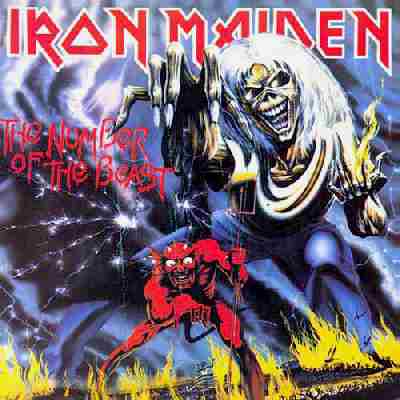
March 10: Iron Maiden, "Number Of The Beast"

Artist: Iron Maiden
Album: Number Of The Beast
Year: 1982
Label: Sony


Though genres shift and change as time progresses, it is almost ways the initial, pure form of the style that endures the longest, as it is this to which the initial fans were drawn.  It is also within this pioneering sound where one can find the links between bands that existed decades apart, as this form serves as a common thread across time.  In both of these cases, it is rarely more true than one finds within the genre of heavy metal, and even four decades after the term was first being widely used, the core form of the style remains largely the same.  However, there are also few genres of music that have been subject to as much criticism over the years, and yet even as this continues, heavy metal continues to be the sound of choice for countless music fans across the globe.  Though there have been many iconic names in heavy metal throughout its existence, few command the respect and status across the generations as one finds in a band that almost perfectly defines the style: Iron Maiden.  For more than thirty years, the band has been one of the most powerful, wildest groups on the planet, and yet that have done so without very much radio support.  Reaching what is without question their creative apex in 1982, Iron Maiden released onto the world what remains one of the greatest heavy metal records in history: Number Of The Beast.  Filled with some of the most memorable songs in the history of the genre, Iron Maiden perfectly captures everything it means to “be” heavy metal within every moment of the entire record.

Though it is often mistaken, the opening reading from The Book Of Revelation found on the albums' title track that precedes the music was NOT performed by Vincent Price, but by a man named Barry Clayton, who the band asked to read it in a “Vincent Price” style.  As soon as he completes the reading, “Number Of The Beast” formally begins with what has become one of the most iconic guitar riffs in music history, and is easily the stand-out moment of the entire album  The energy that can be felt throughout all of Number Of The Beast is largely due to the power of the duo of Dave Murray and Adrian Smith; and their sound remains unparalleled to this day, and in both the speed and tone, Number Of The Beast quickly establishes itself as a true heavy metal masterpiece.  Along with their progressions, once the rest of the band joins in, i is the full power of Iron Maiden that is nothing short of stunning, and their mastery as a band becomes abundantly clear.  The rhythm section of bassist Steve Harris and drummer Clive Burr have rarely sounded better, and they help to build an overwhelming sense of tension and grandeur as the songs progress.  Harris is able to even give the songs a distinctive groove, and the fast repetition of his playing is one of the keys to the overall tone on a number of the tracks.  Similarly, it is the force and emotion with which Burr approaches the arrangements that embodies the sound every metal drummer strives to achieve.  It is the way in which he seems to almost bounce across the songs that makes it so significant, and yet the sheer power in his performances cannot be ignored.

However, while the musical performances throughout are absolutely that of legend, there may be no other vocalist in the entire history of heavy metal that can compete with the singing here by the one and only Bruce Dickinson.  Utilizing the entire vocal scale in a way unmatched by any other singer, the drawn-out wail that he supplies at the top of the songs is without question one of the most memorable moments in all of music history.  Following this, Dickinson delivers what stands as one of the most impassioned and absolutely mesmerizing vocal performances of all time, and even those that are not huge heavy metal fans must give ample respect to his vocals on “Number Of The Beast.”  Easily keeping pace, if not surpassing his bandmates in terms of pure energy, Dickinson is clearly letting the music take him as it wants, and this leads to some of the most stunning vocal progressions ever recorded.  Whether it is in the powerful, aggressive verses, or the soaring bridge and chorus sections, throughout the album, he gives what is clearly “the” performance of his career, and on many levels, it is these vocal tracks that define the heavy metal singing approach.  Yet it is also within the lyrical content of Number Of The Beast where one can find the projected definition of “heavy metal,” and it is Iron Maiden’s unrestrained, unsubtle words that not only fueled their fans, but loads of controversy at the same time.  As if the albums’ title was not clear enough, the lyrics to the songs spin a dark tale of nightmarish run-ins with The Devil among other similar themes, and yet there is an almost upbeat tone to the song that never ceases.  It is the fact that Bruce Dickinson is able to take this subject and make it so much more powerful through his vocals that pushes Number Of The Beast into a musical category all its own.

Yet it was also the subject matter of “Number Of The Beast” that incited the ire of countless “music watchdog” groups across the globe.  Easily painting the group as worshipers of Satan, this fact alone personifies much of the image of heavy metal in general, and yet at the same time, it was this same aspect that made their fans even more dedicated.  While these “watchdog groups” soon had a wide range of bands to harass, it was Iron Maiden that took the brunt of their hate-speech throughout the early 1980’s, and yet even in the face of this, the song continued to find success.  This, in many ways, is the most obvious evidence of the songs’ greatness, as the truly special songs in history will find a way to rise, regardless of the circumstances it is given.  As the decades have passed, Number Of The Beast has continued to grow in stature, and it stands today as one of the most highly revered albums in the entire history of heavy metal, with new bands spinning their own covers.  The songs have also found its way into many parts of popular culture, and in the current day, the subject matter has become almost ignored due to the sheer force and talent put forth within the musical performance.  Each of the band members is in top form on Number Of The Beast, and yet one can also sense that they were having quite a good time during the recording session.  Whether it is this uniquely positive feeling, the masterfully executed musical arrangements, or the breathtaking vocal performance, there is perhaps no other song in history that better defines the term “heavy metal,” than one can experience on Iron Maiden’s monumental 1982 album, Number Of The Beast.

Friday, March 9, 2012

March 9: Daily Guru, "Something Old, Something New #58"

It’s Friday, and that means another dose of “Something Old, Something New” with The Daily Guru. Share and enjoy.

Thursday, March 8, 2012

March 8: Daily Guru, "This Week In Music History"

Check out the premiere of my new weekly video segment, "This Week In Music History." Share and enjoy.

March 8: John Hammond, Sr.

During the "early days" of popular and recorded music, almost everyone involved in any aspect of the "music industry" had to, as they say, wear a number of different hats.  Whether it was artists serving as their own booking and publishing agents, label owners also taking on recording and engineering duties, or a wide range of other necessary combinations, the first half of the last century presents a rather stark contrast to the more modern sense of "how" the business of music is conducted.  Yet among so many individuals who found themselves handling a number of different jobs within music, there was one man who stood far above the rest; and one can argue that to this day, he remains the greatest talent scout in history, along with a number of other unsurpassed accolades.  Whether it was his ability to find new artists, his work as a producer or concert promoter, or perhaps even his own musical talents, there has never been another figure in music that quite measures up to the great John Hammond, Sr.  As the United States dug its way out of "The Great Depression," it was Hammond who was one of the most integral figures in re-energizing the world of music, and over the course of the next five decades, he would touch almost every possible aspect of the music industry, making the impact of John Hammond, Sr. far beyond that of anyone else in music history.

Even from a young age, Hammond's interest in music was beyond apparent, as he took up studies on both the piano and the violin.  It was also during these early years that his true intentions began to manifest themselves, as even though his parents pushed him towards classical music, he was far more interested in the sounds which he heard being sung by the servants and staff of his home in New York City.  To this end, the legend goes that a then-seventeen year old John Hammond Sr. attended a concert in Harlem where he witnessed a performance by none other than Bessie Smith, and that this forever altered the course of his life.  However, Hammond soon found himself a student at Yale University, though he dropped out in 1931, and became the first ever U.S. correspondent for the iconic Melody Maker newspaper.  This passion for music quickly led to Hammond recording jazz players in New York City, and founded one of the first "live" jazz programs.  Though many do not consider such a reality in modern times, Hammond was very much a pioneer in terms of desegregation, as his work within the music industry often blurred the "color lines" which were very much present during this time period.  In many ways, this gave Hammond more "credibility" within the world of jazz, and he soon became one of the most sought after producers and concert organizers in the country.

Over the next few years, John Hammond Sr. would play a key role in the configuration of Benny Goodman's band, and then in 1933, it was Hammond who arranged for the first recording sessions for an up-and-coming singer named Billie Holiday.  In fact, her first recording was made on a Benny Goodman track, and her work on this song would vault her to the iconic status she enjoys to this day.  Throughout the remainder of the 1930's, it was Hammond who brought jazz to the forefront in many ways, and almost every one of the most important figures of this movement was in some way connected to Hammond.  Yet after World War II, Hammond found little to his liking in the "bop" sound of jazz, and his interests began to move to the world of folk and soul music.  It was John Hammond Sr. who signed both Pete Seeger and Aretha Franklin to Columbia Records; but it was in 1961 that he would sign the man that the label would refer to as "Hammond's Folly."  Though the label protested to his signing from the beginning, Hammond insisted that the individual in question would be famous, and only a few months later, the man in question would make his name with a single titled, "Blowin' In The Wind."  Whether it was his signing of Bob Dylan, or his work in the early jazz scene, for more than five decades John Hammond Sr. was on the bleeding edge of musical creation, and there has never been a figure as important to the development of music as he proved to be over his lifetime.

Wednesday, March 7, 2012

March 7: Daily Guru, "Gabbing With The Guru: Zed Never"

In today's installment of "Gabbing With The Guru," I sit down and chat with the band Zed Never…later, they play one of their songs. Share an enjoy.

Tuesday, March 6, 2012

March 6: "Daily Guru Music School: Blues Basics"

Today is the premiere edition of my new segment, "Music School." Time to get your musical learn on! Share and enjoy.