Tuesday, March 6, 2012

March 6: Daily Guru, "Gurucast #114"

CLICK HERE TO LISTEN (will open in new tab)


(Left Click (PC) or Command-Click (Mac) to save it to your desktop...it's about 75MB)

One hour of amazing music and commentary from "The Guru" himself.

Tracklist (all links are to MY reviews/video of that artist, song, or album):
1. Cake, "Rock N' Roll LifestyleMotorcade Of Generosity
2. Frankie Rose, "Interstellar"  Interstellar
3. G Love & Special Sauce, "Garbage Man"  G Love & Special Sauce
4. Mendelssohn, "Symphony #4, 1st Movement"
5. Velvet Underground, "Rock And RollLoaded
6. Art Tatum, "I Ain't Got Nobody"  1932-1934
7. The Cramps, "TV Set"  Songs The Lord Taught Us
8. Hanni El Khatib, "Fuck It, You Win"  Will The Guns Come Out
9. Joe Strummer & The Mescalaros, "I Fought The Law"  2002/11/15
10. Mac Lethal, "Tell Me Goodbye"  11:11
11. The Fall, "Two Librans"  The Unutterable
12. Television, "Elevation"  Marquee Moon

Monday, March 5, 2012

March 5: Daily Guru, "Something Old, Something New #57"

It’s Monday, and that means another edition of “Something Old, Something New.” Share and enjoy.

Sunday, March 4, 2012

March 4: Leo Kottke, "Eight Miles High"

Artist: Leo Kottke
Song: "Eight Miles High"
Album: Mudlark
Year: 1971


CLICK HERE TO LISTEN (will open in new tab)


Throughout the course of music history, there are a handful of figures who, for a wide range of reasons, completely altered the way that a number of genres and instruments were approached.  Whether it was their particular tone, or the presence that they had on records, their sounds cannot be mistaken for that of any other, and such performers have countless songs in their catalog that have achieved a level nothing short of "timeless."  Among such legends, there stands a man whose life is in many was as intriguing as the music he creates; as Leo Kottke is truly a "one of a kind" performer.  Without question one of the most versatile and imaginative guitarists in history, Kottke is perhaps the most unexpected musician in history, as he lost an overwhelming majority of his sense of hearing following a pair of incidents early on in his life.  However, he quickly made a name for himself in the folk scene of Minneapolis, Minnesota, and his 1969 debut album, Six And Twelve String Guitar, remain one of the most dazzling and outright beautiful records ever released.  More than four decades later, Kottke continues to create and innovate all across the music spectrum, and one would be hard pressed to single out just one of his songs as his finest in any sense of the word.  However, to fully appreciate both his guitar skills, as well as his unique voice, one need look no further than Leo Kottke's superb 1971 rendition of the song, "Eight Miles High."

Within only a few moments of the song beginning, it is clear that Leo Kottke possesses a control and technical ability that is far beyond that of almost any other guitarist in history.  The layering of the guitars is nothing short of stunning, and there is a complexity and intricacy to the song that is instantly captivating.  At the same time, it is the tone with which he plays that pulls the listener deep into "Eight Miles High," and it easily transcends any genre classification, as one can hear everything from folk to psychedelia within the musical arrangement.  It is this distinctive ability to create a totally unique sound and mood within his playing that is in may ways the definition of the music of Leo Kottke, and even after more than four decades, the patterns and melodies to "Eight Miles High" are just as inviting and intriguing.  Yet at the same time, it is the way that the rhythm section works almost quietly behind the guitars that creates such an amazing mood, as there is a fragility to the song that exudes a warmth unlike any other recording in history.  The almost gentle, yet somehow dramatic bassline is in a class all its own, and the way the drums seem to skip quickly around the entire arrangement lends a perfect level of tension.  As all of the instruments move as a single unit, it becomes impossible to not be completely immersed in the overall tone and mood of the song, and this is the key to the appeal of "Eight Miles High."

Along with his wonderfully distinctive sound on guitar, Leo Kottke's voice is just as welcoming and recognizable.  Truth be told, though he once described his own voice as, "geese farts on a muggy day," Kottke's voice throughout "Eight Miles High" is absolutely perfect.  Much like his guitar work, there is a gentleness that lies underneath each word he sings, and yet his voice has a great deal of power and style that sets his further beyond any of his peers.  Also similar to the music over which he sings, the vocal sound Kottke presents does not quite fit into any conventional musical categorization, as it is perhaps a bit too dark or mysterious for folk, and finds no similarities in any other genre.  In many ways, the sound of Leo Kottke simply "is" Leo Kottke, and his singing on "Eight Miles High" is easily one of the finest vocal performances of his entire career.  It is also the way that Kottke is able to convey the lyrics, as he perfectly captures the somewhat mysterious, perhaps cryptic spirit behind the words.  It is the words to "Eight Miles High" that further reinforce the idea of a connection to the psychedelic movement, as the lyrics are rather philosophical and poetic, with one of the finest lines coming when Kottke sings, "...nowhere is there hope to be found, among those afraid of losing their ground..."  The combination of Kottke's distinctive voice and such thought-provoking words serve as the ideal finishing touch to a truly spectacular musical experience.

When one steps back and further inspects the intricate guitar patterns that are found throughout "Eight Miles High," one can find countless later artists that either lifted these riffs in their entirety, or clearly took a strong influence from the sound and arrangement.  Even after hearing the sound countless times, it is the fact that the guitar work never fails to hypnotize the listener that is perhaps the most revealing of what a unique orchestration and performance that can be found on "Eight Miles High," and it is this reality that sets it amongst the finest recordings in the entire career of Leo Kottke.  Yet at the same time, it is the fact that Kottke sings on this track which enables listeners to appreciate the entirety of his artistry, as a majority of his recordings to this point had been entirely instrumental affairs.  Kottke's voice is as strong as ever on "Eight Miles High," and yet it is the welcoming, gentle, yet unquestionably secretive way that he approaches singing that makes this song a musical journey unlike any other in history.  The combination of all of this is on all levels a comprehensive definition of just why Leo Kottke remains such an icon of music to this day, as there has never been another artist that has been able to achieve similar sounds or moods within their music.  Boasting a massive recorded catalog that includes countless songs that have never been matched, few of his own recordings can match the overall sound and presence found on Leo Kottle's extraordinary 1971 song, "Eight Miles High."

Saturday, March 3, 2012

CONTEST TIME!

At the beginning of April, I will be launching a completely revamped website, and I need a "tag line" for The Daily Guru.  It should be only a few words (6 at the most), and capture everything that the site and content "means" to you.  Whoever submits the "winning" entry will recieve a FREE copy of my book when it is released next month.  Submit your entries on my Facebook Wall, or email them to thedailyguru@gmail.com 

Contest ends on March 20.

March 3: Erykah Badu, "Baduizm"

Artist: Erykah Badu
Album: Baduizm
Year: 1997
Label: Universal


In an era when music was quickly becoming overly artificial, the few artists that had “real” talent and made a point of making music their own way became all the more precious.  To bring a fresh, uncompromising sound was strangely a revolutionary idea, and this is much the reason for the decline of record sales as the 1990’s came to a close.  It is perhaps due to these musically grim circumstances that the achievements of some artists have been overplayed, and yet there is at least one performer that proved that even in an overly-digital age, the “old school” sounds could not only thrive, but overshadow the more modern music.  Among the handful of artists who personified this idea, there is none more accomplished or outright stunning than one finds within the music of Erykah Badu.  Bringing together elements of soul, funk, r&b, and hip-hop, her organic, emotional sound is able to reach fans of every style, and this is much the reason she remains such a highly respected artist across the globe.  Though her later records are not to be missed, it is her debut album that serves as her most complete and outright stunning musical work.  Perfectly fusing together head bobbing beats with her absolutely beautiful voice, and bringing more soul than had been heard in decades, it is impossible not to be completely captivated by the entire record, and Erykah Badu's 1997 debut, Baduizm, is nothing short of phenomenal.

The instant that Baduizm begins, it is completely clear just how many styles and influences are going to be intermixed across the album, as the bouncing beats to "On & On" is as good as a hip-hop fan could want, and yet there is a smooth, almost sultry nod that gives the song a far wider appeal.  The way in which the jazzy, smoky piano plays against the knocking beat transports the listener into a dim nightclub, and yet the production team was able to create this mood without overdoing it.  As the album progresses, countless other musical ventures are taken, proving that Badu truly has no musical limitations.  This, in many ways, defines everything that Erykah Badu seems to strive to achieve, finding balance in every sense of the word, and it is her unique approach found on Baduizm that eventually garnered a Grammy Award for one of the songs.  The way in which the various sounds soar across the tracks, yet the mellow, almost reflective moods are never lost, enables the album to become one of the finest "chill out" releases ever recorded.  Yet at the same time, the arrangements almost seems sparse at places, allowing for the focus to remain on Badu's voice.  It was due to this distinctive combination of sounds and styles that the phrase "neo soul" was coined, and there are few better examples of its meaning than one finds on Baduizm.

While the music throughout this album is nothing short of captivating, it is the voice of Erykah Badu that leaves one completely stunned, and there has never been another performer that even came remotely close to the sound and style within her vocal delivery.  Whether she is singing a deeper, more reflective style, or letting her voice soar in an unrestrained manner, Badu is never anything short of perfect throughout the song, and one cannot help but compare her sound to the greatest soul and jazz singers from decades earlier.  Yet there is a sorrow and grit to the voice of Erykah Badu that separates her from all her peers, and itis in her singing that one can make a close tie to the blues.  Taken as a whole, few artists from any style of any era have been able to inject as much emotion into their music as one can experience on Baduizm, and even those not familiar with jazz or soul cannot help but be completely drawn into the album.  This is largely due to the fact that along with her phenomenal vocal performance, the lyrics to the songs are just as alluring, and they can be interpreted on a number of different levels.  Whether one is looking for brilliantly phrased, hip-hop style visuals, or smooth, introspective blues and jazz lyrics, there is something for everyone within the words to Baduizm, proving that in every sense of the word, Erykah Badu completely defines the entirety of the word "artist."

Without question, Erykah Badu remains one of the most impossible to define artists in all of music history.  Somewhat hip-hop, somewhat jazz, somewhat blues, she is perhaps the most truly unique performer of her generation.  The way in which she seamlessly blends together all of her influences into something that is a perfect balance of all these elements shows her understanding of musical structure, as well as her commitment to her own sound.  Bringing musical arrangements that fuse together the best of blues, jazz, and soul, all inter-twined with beats that fit perfectly within the hip-hop sound of the time, Badu served as a reminder that there was nothing better than truly unique and personal music.  This is perhaps the key to her sound, as one can clearly hear a proximity to every song, and there is also a sense of enjoyment that one can detect within Badu's singing.  The way in which she works all over the vocal spectrum in terms of style and note was beyond refreshing at the time, and more than a decade since its first release, her 1997 debut record still knows very few peers.  Though there had been a handful of artists who had already experimented with what would be termed "neo soul," it was Badu that truly put the sound on the map and gave it its finest definition.  Combining a wide range of influences with what stands as one of the most distinguished and truly beautiful voices in all of music history, one must experience firsthand the stunning sound on Erykah Badu's 1997 debut, Baduizm, to properly understand why she remains such a highly revered figured within the current music scene.

Friday, March 2, 2012

March 2: Daily Guru, "Something Old, Something New #56"

It’s Friday, and that means another dose of “Something Old, Something New” with The Daily Guru. Share and enjoy.

Thursday, March 1, 2012

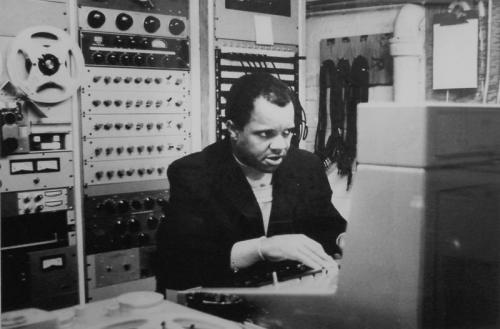
March 1: Berry Gordy Jr.

Though there have been a large number of individuals throughout history without whom music would have failed to progress into its current form, there are one or two that stand far above the others for different reasons.  Whether it was due to the time that they were conducting business, or simply the way they went about fostering certain talents, their names often rank beyond those of the actual musicians in terms of importance, and their impact is truly immeasurable.  While the contributions that these icons had on the world of music, there was one man who had an equally significant impact on culture in general, as the work of Berry Gordy Jr. forever changed society as we know it.  Though some may not recognize the name at first, there is not a person on the planet who does not instantly have a number of musical hooks and vocals in their head as soon as they hear the words "Motown Records."  Churning out an unsurpassed string of hit singles, many do not consider the fact that it was many of these songs that cemented the place of the "black musician" within the still predominantly white music business, as well as bringing the more modern form of "pop" music into existence.  From Marvin Gaye to The Jackson 5 to the seemingly endless creativity of The Funk Brothers, it was the vision and dedication of Berry Gordy Jr. that unquestionably altered the entire landscape of music forever.

In many ways, the life of Berry Gordy Jr. and how he found his way to musical success is almost cliché, as the story has been "redone" in so many ways since his time.  Growing up in Detroit, Michigan, Gordy dropped out of high school, and began pursuing his passion not only in the world of music, but boxing as well.  Though he was becoming rather successful in the boxing ring, around his twentieth birthday, Gordy realized that he was more likely to have more longstanding and "distinguished" a career within the music industry, so he began to concentrate on this path fully.  After spending a few years in the Army, Gordy attempted to operate a record store, but it failed somewhat quickly, and he was forced to split his time between working at a car factory during the day, and writing songs in the evenings for local groups.  During this period, Gordy met a local music manager named Al Green and would soon provide the song "Reet Petite" for none other than Jackie Wilson.  This was all the foothold that Gordy needed, as within a few years, he was churning out a number of hit songs for a wide range of artists.  However, Gordy soon began heading in a different direction, and this was the period where he met another young singer, William "Smokey" Robinson, and the two would form one of the greatest musical partnerships in the entire history of recorded music.

Soon after his meeting, Berry Gordy Jr. purchased a the home that sits at 2648 West Grand Street in Detroit, and dubbed the place "Hitsville USA."  The first label to operate out of this home was Talma Records, and it soon began releasing now-classic songs from the likes of Eddie Holland, Barrett Strong, and of course, Robinson and his group, The Miracles.  These successes led to a wide range of local artists, like Marvin Gaye, The Supremes, and The Four Tops to come to Talma, and within a short period of time, the label was "combined" with its parent label, Motown Records.  For nearly a decade, Motown Records would be the home to many of the most famous artists of the era, and with well over one hundred hit singles, the now-famous name of the recording studio proved to be more than fitting.  However, it is the fact that so many of these songs found massive success well beyond "just" the "black audiences" that were measured at the time that prove the true impact and importance of the label, and one can easily make the argument that Motown Records played a critical role in the overall Civil Rights movement of the 1960's.  Though Gordy would eventually relocate to Los Angeles, the fact remains that his work in Detroit yielded some of the most timeless and outright important recordings in all of history, and one cannot overstate the impact that Berry Gordy Jr. had on both the music industry, as well as society as a whole.