Thursday, April 7, 2011

April 7: Santana, "Soul Sacrifice"

Artist: Santana
Song: "Soul Sacrifice"
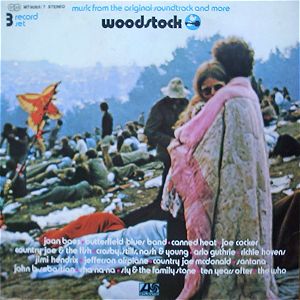
Album: Woodstock
Year: 1969


CLICK HERE TO LISTEN (will open in new tab)


In nearly every case, when a new artist or band comes along with a unique blend of sounds, within a few months, there are other groups who have managed to imitate the style, though most times not to the same degree of impact.  This is a nature trend within music, and yet there are a small handful of situations where a sound was so distinctive, so perfectly balanced, that no other group was able to force themselves into comparison with the originators.  While one can find a number of these instances, no other is as clear and unquestionable as the sound that was "created" when the world was first introduced to a guitar player named Carlos Santana.  Fronting the band that shared his last name, throughout the latter part of the 1960's and early 1970's, the band was responsible for some of the most exciting and original blends of psychedelic rock and Latin percussion that the world has ever heard.  Furthermore, within their first few records, Santana found a way to fuse together all these sounds without stepping too far into any single one, resulting in a musical style that simply cannot be defined.  This can be clearly heard across the bands' self-titled 1969 debut record, and yet there is one element still missing from that recording.  It would not be until mid-August of that year that this would become clear, and it is the power and presence of the bands' live performance that proves to be the missing piece.  Thankfully, this can still be experienced to this day, and there may not be another live recording that is as smoldering and absolutely invigorating as one can hear and feel on Santana's legendary performance of "Soul Sacrifice" from the Woodstock Music And Arts Fair.

At the time of the performance, Santana was still relatively unknown, as their debut record preceded the event by only a few weeks.  It is perhaps this status that allowed the band to be completely free on stage, as there were no expectations in any way.  While there were a number of phenomenal performances at the festival, Santana's stands out, as the band slides into the song, syncing their rhythm with the chanting of the crowd.  This is led by the deep groove from bassist David Brown, and throughout the song, it is his playing that drives the song.  It is within his playing that the bands' jazz influences become apparent, and he easily works different tempos and rhythms through the various sections of "Soul Sacrifice."  The other part of the rhythm section, drummer Michael Shrieve and percussionists Michael Carabello and Jose Areas bring Santana's Latin roots to the forefront, and it is the way in which they so seamlessly blend them into the rock sound that makes the song so amazing.  One can easily feel how the musicians have given themselves completely to the "will" of the song from a very early stage, and they seem to be pushing one another as the song progresses.  Yet one cannot deny how Shrieve stands out from his bandmates, and the drum solo he lets loose on "Soul Sacrifice" was not only a highlight of the festival, but remains one of the greatest drum solos in all of music history.

However, while the rhythm section of Santana quickly made their case as one of the most talented of all time, it is the final two members of the band that push "Soul Sacrifice" to a truly legendary status.  The tone found within the keyboards of Gregg Rolie is nothing short of perfect, and there is also an aggression within his playing that gives the band a far more "rock" sound.  It is also within his playing that the clear kinship to the psychedelic movement is most evident, and yet there remains a "sting" to his sound that is completely unique.  The way in which his playing wind in and around the guitar of Carlos Santana is perhaps the most memorable, almost dramatic aspect of the song, and it is clear that both performers were in rare form during this performance.  Truth be told, there are few guitar players in history that have as instantly recognizable a sound as Carlos Santana, and though many have tried to duplicate this tone, none have even come close.  On the Woodstock version of "Soul Sacrifice," Santana lets loose some of his most brilliant playing, and when one considers the term "inspired performance," there are few others that are worth of such a title.  Though in later years, Santana would comment that there may have been some "chemical forces" that pushed him to another level, the sheer talent and masterful soloing he displays almost instantly solidified him as a guitar legend, and even after repeated listenings, his performance is just as stunning.

Taking all of the top-notch performances found on Santana's "Soul Sacrifice," perhaps the most telling element of the song is the fact that no band member tries to "dominate" the song, and it is this shared effort that makes the song so distinctive.  This is another nod to the jazz ethos, as each player is given space to fully explore the songs' theme as they see fit, and it is this combination of different musical perspectives that makes it impossible to duplicate Santana's sound.  The bouncing, almost hollow sound of the timbales and congas gives "Soul Sacrifice" more depth than the music of their peers, and it is the continuous balance that Santana achieves that makes it understandable why this performance turned the group into "overnight legends."  While the studio version of "Soul Sacrifice" that was released on their debut album is certainly an exceptional recording, the edge and fire that lived within the band does not come across nearly as well as it does on their iconic performance from Woodstock.  Furthermore, though they were closely linked with the psychedelic movement of their native San Francisco, it is easy to understand why they were so far apart from their peers.  Bringing an aggression and "freedom" to their music that was largely absent from other psychedelic bands of the era, one must experience Santana's mastery firsthand, and to quickly understand the iconic status which they hold to this day, one need look no further than their performance of "Soul Sacrifice" from the 1969 Woodstock Music And Arts Fair.

Wednesday, April 6, 2011

April 6: Clifford Brown, "Joy Spring"

Artist: Clifford Brown
Song: "Joy Spring"
Album: Clifford Brown & Max Roach
Year: 1954


CLICK HERE TO LISTEN (will open in new tab)


One of the biggest hurdles within the world of jazz music is the ability of listeners to move past the two or three "big" names, and give ample time and listening to the large group of performers who were just as important developmentally, but for one reason or another, have not achieved the same name recognition.  Within every jazz style and on every instrument, one can find a number of such musicians, and perhaps understandably, it is rarely more obvious than when one looks at the great jazz trumpet players.  Most are content to stop after the names of Davis and Gillespie, and yet it is impossible to deny the massive amount of talent and impact that was achieved in just a few short years by the great Clifford Brown.  Though many are unfamiliar with his work, there is no question that he was one of the masters of the "hard bop" style, and he was already on pace to surpass the other names, as he had a reputation for avoiding many of the vices that plagued his peers.  Having honed his skills with some of the finest band leaders in history, in the mid-1950's, Brown teamed up with fellow legend Max Roach, and they formed one of the finest jazz ensembles in history.  Though this group would only record a handful of times before Brown's tragic passing in a car accident in June of 1956, they were able to record what remains an absolute standard of jazz, and one can quickly appreciate the sheer genius of Clifford Brown within his 1954 composition, "Joy Spring."

Truth be told, there are actually two "major" recordings of this piece, both featuring Brown on trumpet, but the later recording is nearly twice the length of the first.  The central musical theme is the same, and the second, longer version is the one in question, as it fully explores every facet and is musically superior to its predecessor.  Furthermore, just looking at the lineup on the longer recording makes it clear just how well respected Brown was, as he was able to pull some of the finest musicians of his day for these sessions.  The core of the sound on this recording of "Joy Spring" comes from the superb rhythm section of the great Max Roach, alongside bassist Georges Morrow.  The way these two seem to almost predict where Brown is going to go musically is a testament not only to their exceptional talents, but to the chemistry within the group.  Both are given ample space to show their own talents, and the drum solo in the latter stages of the song remains one of Roach's most sensational recorded moments.  The addition of pianist Richie Powell is one of the key aspects to the overall sound, and the way in which he seems to duel with the horn players is what helps the song to quickly become one of the finest hard-bop recordings in history.  There is a flow and finesse that runs throughout the entire song, and it is this uniquely loose sound that leaves one wondering just "what could have been" had this group had more time to work with one another.

Yet even though this trio cannot be overlooked on "Joy Spring," it is the two horns that retain the spotlight for a majority of the composition.  Working in perfect harmony, tenor sax master Harold Ladd rarely sounded as amazing as he does here, and in terms of both speed and tone, he seems to match Brown note for note throughout the first section of the song.  There is a certainly spring and bounce within his solo in the early stages of the song that pushes the overall mood even higher, and one can argue that without this performance, the rest of the song would not have taken the shape that it did.  This solo leads into one of the handful of moments on the track where Clifford Brown and his trumpet step forward, and one can almost instantly feel just how distinctive and captivating his sound was, and one can easily argue that it is this recording that was his definitive moment.  Though Brown works all over the musical scale, clearly letting the song and mood dictate his sound, he never gets too far away from his bandmates, and it is this proximity that helps the entire composition to attain such an impact.  It is the way in which the lead on the song is so seamlessly handed from one musician to the next that shows just what a fantastic band leader Brown was, as it is often passed mid-bar, and the fact that there is not a missed beat anywhere is a testament to the concentration and exceptional skills of each of the players.

Over the decades, there have been a vast number of recordings of Clifford Brown's "Joy Spring," and yet none have been able to attain the level of mood or musicianship found on the original 1954 version.  This is almost entirely due to the presence of Brown on the track, and even after only hearing it once, one can quickly understand just why his passing was so tragic to the world of jazz.  Even at only twenty-six years old, it is clear that he was already equaling the skills of the biggest names in jazz, and the fact that he was known for avoiding the vices that brought down so many jazz greats only adds to the "what could have been" discussion.  Yet it is likely due to his early demise that relegated him to a more cult-like status, even though one can hear such brilliance within nearly ever piece he recorded.  Within his catalog, it is easy to argue that it was his work with Max Roach that was his finest, and the interplay between these two musicians easily makes them one of the greatest jazz duos in history.  Filled with seemingly endless twists and turns, Brown's "Joy Spring" is without question one of the most enjoyable jazz compositions of all time, and his ability to bring out the best in the musicians around him was clearly the key to the song quickly becoming one of the most iconic pieces in jazz history.  Though the other players on the recording are absolutely at in top form, it is the stunning trumpet work of Clifford Brown that stands out most, and there are few moments in jazz that remain as powerful and beautiful as his 1954 recording, "Joy Spring."

Tuesday, April 5, 2011

April 5: Urge Overkill, "Positive Bleeding"

Artist: Urge Overkill
Song: "Positive Bleeding"
Album: Saturation
Year: 1993


CLICK HERE TO LISTEN (will open in new tab)


While many bands and dedicated fans may try and make it seem untrue, it is hard to argue that the "point" of making music is anything less than sharing sounds and songs with the masses.  Or, to put it another way, bands are trying to get famous.  Yet over the course of music history, many groups have tried to "play it cool" when they achieved commercial success, and this attitude often puts off those who helped them to that place.  Then of course, there are the handful of bands that make no excuses for their want of fame, and this sense of honest often brings with it some of the finest music, and in many cases, brilliant satire.  It was the combination of these two elements that, along with the ideal amount of attitude that set Urge Overkill far apart from their peers, and one can experience their unique musical mastery within their magnificent 1993 release, Saturation.  As their "major label" debut, the album makes no excuses, and while the persona's of the band members are hard to forget, the group does a fantastic job of ensuring that this image in no way impacts the actual music.  Filled with heavy riffs and an similarly aggressive tone, Urge Overkill manages to find a way to infuse an undeniably pop feel into almost every song, and it is this element that helps the songs to endure nearly two decades later.  Though it was largely overshadowed by the albums' surprise single, there is no other song that better defines the unique brilliance that is Urge Overkill than what one can experience within their 1993 track, "Positive Bleeding."

From the moment that "Positive Bleeding" begins, the song grabs the listener and refuses to let them go.  The moody, powerful opening chords of the song set a perfect stage for the classic sound that will follow, and yet there is also a clear punk feel within the riff played by Nash Kato.  Yet it is the moments that follow the opening riff that highlight the true talents of Urge Overkill, as they quickly change the mood to a more pop-centric, almost retrained sound.  However, this tone that the group finds also manages to fit perfectly with the "grunge" sound that was beginning to dominate the musical landscape, and yet can easily argue that their sound was far more "classic rock" than punk.  As the song veers through the various stages, Kato's guitar seems to fluctuate in tone, and it is this aspect that clearly displays the true power of the instrument, as it is this sound alone that pushes the mood up and down.  It is also the way in which Kato's guitar progressions and solos interlock with the bassline from Eddie "King" Roeser that push "Positive Bleeding" into a class all its own, and the bass is far more forward in the mix than on most songs.  Rounding out the band is drummer Johnny "Blackie Onassis" Rowan, and it is within his playing that the more aggressive side of the song lives.  There is a unique balance between the more modern, more aggressive style, and the classic sound of rock and roll that can be found on "Positive Bleeding," and it is this interplay that highlights the distinctive sound of Urge Overkill.

Yet as catchy and powerful as the music is on "Positive Bleeding," it is hard to find any Urge Overkill song where the focus moves far from the vocals of Nash Kato.  Possessing one of the most instantly recognizable voices in all of music history, both in terms of tone as well as vocal range, Kato knows few equals.  While he is perhaps best known for his bass-level vocals on the bands' biggest hit, throughout "Positive Bleeding," he shows his complete range, and the energy within his voice is impossible to ignore.  It is also this energy that drives the mood of the song, and as his voice soars during the chorus sections, the more upbeat, light-hearted side of the band becomes more apparent.  Yet when Kato returns to his meandering, almost nervous sound on the verses, a completely different mood can be felt, and this ability to present such varied emotions on a song is a rare occurrence within music.  Furthermore, there is not a moment where any of Kato's singing seems forced or disingenuous, and the straightforward, unapologetic lyrics on "Positive Bleeding" highlight this aspect of the song.  Though many artists have made similar observations, there is a simple brilliance when Kato sings, "...look around today...everything don't need to be the same..."  Not only does this lyric speak directly to the nature of society, but it also points out Urge Overkill's purposeful attempt at being unique, and Kato's vocals express this perfectly in every way throughout the entire song.

Strangely enough, "Positive Bleeding" would become one of the bands' best known songs, and yet it was almost "lost" behind the surprise hit single from the album, "Sister Havana," as well as the groups' cover of Neil Diamond that was featured in the film, Pulp Fiction.  Yet even with these two realities, there is no question that it is "Positive Bleeding" which best captures everything that makes Urge Overkill such a superb band, and few groups since have been able to match their sound or attitude.  It is the way in which the band is able to fuse together the punk attitude with the musical freedom of "classic rock" that makes their songs so unforgettable, and the "no filler" approach from punk also helps to keep their sound quite focused.  There is a steady, smooth flow to all of "Positive Bleeding," and the ease with which the band seems to be playing is only equaled by the enjoyment that one can feel within their sound.  In many ways, it is this element that was missing from a majority of other bands at the time, making a case that these other groups had missed the "point" of being in a rock band.  However, while Urge Overkill are quite direct in their want for a song with popular appeal, it in no way compromises their sound, and one can quickly understand and appreciate their unique ability to strike this balance within their phenomenal 1993 song, "Positive Bleeding."

Monday, April 4, 2011

April 4: Daily Guru, "Gurucast #66"

CLICK HERE TO LISTEN (will open in new tab)


(Left Click (PC) or Command-Click (Mac) to save it to your desktop...it's about 75MB)

One hour of amazing music and commentary from "The Guru" himself. 

Tracklist (all links are to MY write-up of that band, song, or artist) :
1. The Lemonheads, "Bit Part"  It's A Shame About Ray
2. The Roots, "Adrenaline"  Things Fall Apart
3. The Psycho Surgeons, "Wild Weekend"  Murder Punk: Volume 1
4. Guitar Welch, "61 Highway"  Angola Prisoner's Blues
5. Body Count, "Cop Killer"  Body Count
6. L7, "Shitlist"  Bricks Are Heavy
7. Boston Baroque Orchestra, "Concerto No 4 In G Minor"  Brandenberg Concerts (Telarc)
8. The Clash, "Brand New Cadillac"  London Calling
9. Reflection Eternal, "Move Somethin'"  Reflection Eternal
10. John Coltrane, "Impressions"  The Complete 1961 Village Vanguard Recordings
11. Hüsker Dü, "Makes No Sense At All"  7 Inch Wonders Of The World
12. Steve Poltz, "I Love What You've Done With This Place"  2011/03/27
13. S.C.I.R.I.N., "Anthem"
14. Chuck Ragan, "Rotterdam"  Gold Country
15. Less Than Jake, "Scott Farcas Takes It On The Chin"  Hello Rockview
16. Grateful Dead, "Ripple"  American Beauty

Sunday, April 3, 2011

April 3: Frank Zappa, "City Of Tiny Lites"

Artist: Frank Zappa
Song: "City Of Tiny Lites"
Album: Sheik Yerbouti
Year: 1979


CLICK HERE TO LISTEN (will open in new tab)


There is perhaps no term more frequently used in an incorrect manner within the world of music than when fans and critics so quickly toss out the work "genius" in reference to an artist or band.  Though there are certainly a few cases where such a description is fitting, it seems that the standard for such drops drastically with each passing year, and in modern times, anyone who doesn't auto-tune is worthy of this praise.  Yet when one looks back on the entire history of recorded music, there are three, perhaps four individuals who truly embody what it means to be a musical genius, and it is these few who show that along with exceptional instrumental talent, there must be a completely unique vision and approach to set them aside from their peers.  It is with this in mind that one can argue that it would be quite difficult to find any musician in history more deserving of the label of "genius" than the great Frank Zappa.  For nearly three decades, Zappa was able to define his music by only his name, pushing the boundaries on what could be accomplished musically, and in the process paving the way for thousands of later performers.  Due to his massive accomplishments, it is impossible to even narrow his catalog down to five or six songs to be considered his "best," so in many ways, it comes down to personal taste.  With this in mind, to quickly understand why Frank Zappa is held in such a revered status, one need look no further than his mind-blowing 1979 recording, "City Of Tiny Lites."

Coming off of his nearly flawless Sheik Yerbouti album, "City Of Tiny Lites" went somewhat unnoticed upon its initial release due to the high controversy of some of the albums' other tracks.  However, in retrospect, the song offers everything that makes Zappa's music so fantastic, as well as one of his most brilliant musical compositions ever.  After a noise-filled opening, the song moves into a fast-paced groove, led by the dancing bassline of Patrick O'Hearn.  Behind his playing, the almost sci-fi keyboards from Peter Wolf and Tommy Mars add a completely unique feel to the song, and the offbeat pacing that they find is likely due to the "conducting" of Zappa himself.  This in itself is where Frank Zappa sets himself apart from his peers, as often times, he would not play on a track, but "lead" his band through his complex arrangements, making changes on the spot.  Terry Bozzio's drumming seems to be pushing closer and closer to sheer chaos with every passing moment, and it is in his performance where the soul of "City Of Tiny Lites" lives.  Yet one cannot overlook the absolutely mind-blowing guitar solo, and on this song, it is a dual-solo from Zappa himself, along with the legendary Adrian Belew.  The guitars seem to take on an uncanny sense of movement, as one can feel them veering around tight corners and cresting with an amazing sense of drama.  It is in this solo that any questions of Zappa's musical ability come to an abrupt end, and there are few more impressive musical pieces than one finds across all of "City Of Tiny Lites."

However, while one can make the case that many of Frank Zappa's most impressive moments live within his instrumentals, it is impossible to deny the brilliance he showed through his singing and lyrics all across his career.  While he certainly recorded a number of very controversial and amusing songs, "City Of Tiny Lites" takes a different approach in many ways.  First off, Zappa himself only performs a small part of the vocals, with Belew handing a majority of the singing.  Working across the entire vocal scale, there is a very unique sound within the singing, and it perfectly mirrors the tone and mood set by the music.  Right before the solo, Zappa jumps in, and there are few voices that can even remotely compare to his deep, almost hollow voice, and it is in this moment that his distinctively light-hearted mood is most clear.  Yet following the solo, Belew jumps back in with full energy, and there is a raw, almost unhinged tone in his voice that gives "City Of Tiny Lites" an attitude like no other song in the Zappa catalog.  Along with the music and vocals, the lyrics here fit in perfectly with the rest of the song, though they are not nearly as confrontational or lewd as a majority of the Zappa catalog.  Showing his more imaginative side, as the words paint an amazing picture of a town in the distance, and one can feel the storm clouds overhead.  It is in this moment where one can understand the inspiration for the music, as the lyrics point out why there is such a sense of movement throughout the entire song.

The combined effort that is "City Of Tiny Lites" is so far beyond anything else being recorded at the time, and in the thirty years since its initial release, it has yet to be matched in any way.  The way in which Frank Zappa was able to spin together so many different sounds and tempos, whilst keeping things tight and together is what defines his career in many ways, and it was rarely more obvious than one finds on "City Of Tiny Lites."  Furthermore, one can argue that the lineup of musicians on Sheik Yerbouti was the finest that Zappa ever surrounded himself with, and it is their amazing abilities that make the entire album such an iconic musical achievement.  It is on songs like "City Of Tiny Lites" that one can gain a full understanding of the need to "listen" to your fellow musician on stage, as it is clear that the song is an exceptional exercise in both musicianship, as well as group chemistry.  Aside from the solos, there is no point where any musician is "playing over" another, and the way in which they move as a single unit is truly uncanny.  It is this selfless approach to song that one can find across the entire Zappa catalog, and it is yet another way in which one can explain just why he is so deserving of all of the praise he has garnered over the decades.  Truth be told, if one gives the title of "genius" to Frank Zappa, then it is not right to give it to any other, as his musical approach was so unique and mind-blowing, that no other performer in history has even come close to his level of musical mastery.  Scattering dozens of legendary songs across his career, it is truly impossible to cite a single track as his "best," but one can quickly understand and appreciate the status he holds to this day by experiencing Frank Zappa's masterful 1979 recording, "City Of Tiny Lites."

Saturday, April 2, 2011

April 2: The Avett Brothers, "Ten Thousand Words"

Artist: The Avett Brothers
Song: "Ten Thousand Words"
Album: I And Love And You
Year: 2009


CLICK HERE TO LISTEN (will open in new tab)


Though there have been many peaks and valleys in terms of the amount of good, original music being created over the entire history of recorded music, one can easily argue that the current music scene is perhaps the most uninspiring and bland of any point in the past century.  Perhaps due to the overuse of technology in studios, perhaps due to the general public being apparently satisfied with low to mediocre talent, there seems to be no end in sight.  Thankfully, there are a small handful of groups that carry the torch for "real" music with authentic talent, and over the past decade, few bands have released as beautiful and moving a brand of music as one finds within the catalog of The Avett Brothers.  Fusing together folk and bluegrass into a soulful sound that often finds its way into some of the finest rock attitude in recent years, The Avett Brothers seem to make a point to not get pigeon-holed into a particular sound, and it is this quest for making music with no boundaries that has earned them one of the most devoted followings in the current music scene.  After releasing a number of albums on smaller labels, the group found themselves in the studio under the watch of mega-label Columbia Records, and thankfully, they managed to avoid the trappings of such an environment.  The resulting album, 2009's I And Love And You, is without question one of the most stunning and absolutely beautiful records of all time, and few songs better represent everything that makes The Avett Brothers so fantastic than the musical brilliance one can experience in their 2009 song, "Ten Thousand Words."

Within the opening moments of "Ten Thousand Words," it becomes evident that while the group may be based around a traditional folk sound, there is something underneath that separates them from this lone classification.  The way in which the guitars of Scott and Seth Avett quickly intertwine with one another is perhaps the most beautiful aspect of the entire song, and the level of soul the two are able to convey through their instruments is truly uncanny.  The passion with which the duo play gives the song such a sense of honesty and authenticity that one cannot help but be drawn in by the sound, and it is this simple, straightforward approach that enables the song to play just as well alone on a quiet evening as it does in a field full of thousands.  As the rest of the band joins in, The Avett Brothers manage to strike the perfect balance, as even with the more full sound, the delicate mood of "Ten Thousand Words" is never damaged.  Bassist Bob Crawford gives the song a very mellow groove, and yet the true perfection on "Ten Thousand Words" can be felt when organ player Jacob Edwards joins in on the song.  It is his contributions that lift the song to an entirely new level, as the swelling chords he plays lend an almost gospel feel to the song, and also give "Ten Thousand Words" a classic sound that has rarely been achieved in recent years.  The way in which the entire band is able to navigate this fragile sense of mood is one of the main reasons they stand so superior to their peers, as few groups from any point in history have been able to match the sound and emotion found on "Ten Thousand Words."

As if their amazing dual-guitar sound was not enough, Scott and Seth Avett are able to make their voices harmonize with similar musical beauty.  Though Seth handles a majority of the leads on "Ten Thousand Words," the harmonies that the two create are without question the finest recorded in decades, and the raw, unaltered feel that can be found in their vocals proves the bliss that can only be found within truly talented musicians.  Much like the music, one can hear the vocals being sung around a campfire as easily as they can be heard in an arena, and this ability to give such an intimate feel to their singing is one of the key factors to the overall impact of "Ten Thousand Words."  Yet it is the final element, the lyrics, that serve as the ideal finishing touch to a song that listeners cannot help but be completely captivated by, even after repeated listenings.  In a similar fashion to the music and singing, the lyrics have a very universal feel to them, and one cannot help but feel the inner struggle that is displayed throughout the song.  It is the fact that the lyrics are so open and unguarded that make them so intriguing, and the artistic trap that haunts so many can be heard when Seth sings, "...and I know ya need me in the next room over, but I am stuck in here all paralyzed...for months I got myself in ruts, too much time spent in mirrors framed in yellow walls..."  Turning the pen on many of the exterior forces of his own world, one would be hard pressed to find a more personal lyric, or absolutely beautiful vocal performance than one finds on "Ten Thousand Words."

Strangely enough, those who knew The Avett Brothers before the release of I And Love And You were likely a bit nervous to hear the resulting album, as it was produced by music legend, Rick Rubin.  Though many may have been concerned that Rubin would alter the delicate sound that defines the band, Rubin did quite the opposite, and helped this sound and mood to be more focused than ever.  One can hear traces of the sound he brought to his previous work with Johnny Cash within the production, and it is albums such as this that show that Rubin understands when to keep his "hands off" a sound that is already perfect.  Quite literally every song on I And Love And You is a fantastic musical accomplishment in its own right, and it has a classic feel to it that sounds as if it could have been just as powerful and fitting if it were released decades earlier.  It is the ability to transcend both musical genres and generations that make The Avett Brothers such a spectacular band, and the unmatched musical beauty they so consistently create is what sets them worlds apart from nearly all of their peers.  Displaying a clear understanding of both their own talents and abilities, as well as how to convey heavy emotion without compromising sonic quality is the key to the sound on I And Love And You, and one can experience everything that makes The Avett Brothers such a phenomenal band within their 2009 masterpiece, "Ten Thousand Words."

Friday, April 1, 2011

April 1: Del Shannon, "Runaway"

Artist: Del Shannon
Song: "Runaway"
Album: Runaway (single)
Year: 1961


CLICK HERE TO LISTEN (will open in new tab)


In every generation, in every style of music, there are always those performers that while falling into a certain category, also manage to stand out as rebels against the norms within that sound.  Such examples can be found from even the earliest days of recorded music, yet as the years pass, many of the reasons that the label of "rebel" was given seem to be forgotten.  This is often due to changes in society that are more accepting of these rebellious qualities, or music moving to a point where such sounds seem tame in comparison.  Yet there are some cases where an artist has moved from one extreme to another, and this is perhaps no more clear than when looks at the career of the great Del Shannon.  Though even in his day, he was considered a "teen idol," the fact of the matter is, due to the style and sound he presented, he was a far cry from his peers on many levels.  Bringing a far darker and often brooding sound to his songs, it is strange to consider how well he sold when stacked up against the "friendlier" sound of the other icons of his era.  Regardless, one can see his influences across all of popular music, and a number of his songs remain in regular radio rotation, more than half a century after they were first released.  Though he is responsible for a number of classic songs, there are few recordings of Del Shannon that better represent his sound than his unmistakable 1961 single, "Runaway."

From the first moments on "Runaway," one can quickly deduce that this song will not be like the other pop hits of the era, as even the guitar has a swagger and tone that is darker than the usual, bright sound found in the big pop hits of the early 1960's.  This element quickly gives the song a great deal of intrigue, and the fact that it was performed by session musician Al Caiola, as opposed to someone who had been playing the song for years, makes this accomplishment even more impressive.  Combined with Shannon's guitar, the duo created one of the most unforgettable guitar riffs in all of music history.  The way in which the drums seem to lightly dance in a completely unique manner further sets the song aside from others, and it is much the reason that "Runaway" has found its way into many seemingly unrelated films.  Yet one can easily argue that the most impressive element of "Runaway" lives within the keyboard playing of Max Crook, and it is in both the progression as well as the tone of his sound that the "magic" of the song resides.  Truth be told, he is actually playing a clavioline-based electric keyboard which he created himself, and it is due to the presence of this sound that later covers of the song simply cannot compare.  It is also within Crook's performance that the almost haunting feel of the song becomes the most clear, and the way in which these elements all fuse together is what makes "Runaway" such a special moment in music history.

Though some may argue that it is the vocals of Del Shannon that link him to the sound of his peers, one can also quite easily make a case for the other side, as much like the music, there is a darker, almost more aggressive element at play.  While there is no question that Shannon can easily work the entire vocal scale, as he does throughout "Runaway," there is a frustrated, almost desperate sound within his voice that gives the song a completely distinctive attitude.  The growl that comes through at points in his voice is surely what helped the song to become such a hit, and even all these decades later, it retains the attitude that it did upon first release, cementing the songs' status as iconic.  Yet it may very well be the unmistakable falsetto progression during the bridge section that remains the most memorable, and it is the contrast between these two extremes that show just how unique an artist lived within Del Shannon.  Furthermore, the lyrics on "Runaway" are able to make the overall mood even deeper, as one can sense the protagonist almost going mad as he walks the rainy streets at night.  While there is certainly a sense of deep love at some level, one can also feel a certain amount of paranoia within the singing, and this feeling of a near nervous breakdown is conveyed perfectly within Del Shannon's amazing voice.

Since its initial release, there have been dozens of recorded covers of "Runaway," with artists ranging from Bonnie Raitt to The Traveling Wilburys to The Misfits all taking their own spin on the song.  It is the latter of these covers that shows just how far the influence of the song reached, and though many may overlook it, the fact of the matter is, one can easily make a direct connection between "Runaway" and the darker, more aggressive bands that would emerge nearly two decades after the song was first released.  For a song that often is placed into the "golden age" category to have such impact is nearly impossible to find in any other song, and this fact alone makes "Runaway" a classic unlike anything else in history.  Furthermore, one can hear the influence of the brilliant keyboard solo all across the psychedelic movement, and one cannot help but cite it as the source for the equally legendary work of The Zombies.  Yet even without all of these clear lines of impact, "Runaway" easily stands on its own, as it represents everything that there is to love about the early rock and roll sound.  From the swinging sound to the heavy attitude within the vocals and the universal theme of the lyrics, few songs have achieved such a level of musical perfection, and it is much the reason that more than half a century later, there are few songs that can compare to the overall superiority of Del Shannon's magnificent 1961 single, "Runaway."