Tuesday, March 22, 2011

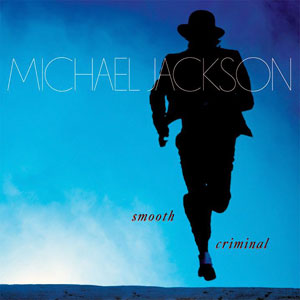
March 22: Michael Jackson, "Smooth Criminal"

Artist: Michael Jackson
Song: "Smooth Criminal"
Album: Bad
Year: 1988


CLICK HERE TO LISTEN (will open in new tab)


Representing the smallest group of musical artists, there are a select handful who have had such long and distinguished careers, that it is impossible to find a proper place to begin or end a discussion of the career in general.  With these elite performers, they went through so many changes, and shaped popular music for so long, that it is difficult to even consider a world in which their music did not exist.  Then of course, there is Michael Jackson.  His name alone demands the utmost respect in all circles of music, as there may not be another performer in the entire history of music who has had as much impact across the entire world of music for such a lengthy time as Michael Jackson.  From his early days in The Jackson 5 to his distinguished, if not legendary solo career, there is a reason that few argue with his title of "The King Of Pop."  Over the course of more than three decades, Michael Jackson was a part of so many great songs, ranging from Motown to disco to hard rock to pop classics, that one can argue more than a dozen recordings as his "best," and thus, one is almost forced to find a song that is not only one of his best, but represents this massive range in style.  It is with this thought in mind, that one can quickly understand the entire allure behind Michael Jackson by hearing his genre-bending 1988 classic, "Smooth Criminal."

While it is a song that is not often cited as his "definitive" tune, on nearly every level, "Smooth Criminal" captures the essence of Michael Jackson, and even more than twenty years after its release, the song remains just as fresh and captivating.  Released as the mind-blowing seventh single from his phenomenal 1988 record, Bad, the song separates itself from the other songs in Jackson's catalog in that it does not feel as if he is "trying" to put on a persona, and "Smooth Criminal" seems to flow effortlessly.  This is even more impressive due to the fact that there is so much going on both musically and emotionally, and the theatrical sense this yields is far beyond that of nearly any other song in the Jackson catalog.  The song itself fuses together elements of funk, soul, disco, electronica, and even hard rock, and the fact that they work together so perfectly is a miracle in itself.  The way in which the bassline seems to almost "stalk" Jackson, following his vocals in both tone and rhythm, is completely unique, and it seems to add a second vocalist to the song.  It is also the manner with which the keyboards bounce that makes "Smooth Criminal" so catchy, and though they were heavily used across every genre by 1988, there is simply no other song that utilizes them in quite this style.  The addition of the inter-locked guitar patterns serves as the ideal finishing touch, and the combined fast-paced, yet nervous feeling that they all created as whole a true musical masterpiece.

However, though the musical arrangement on "Smooth Criminal" is nothing short of perfect, it goes without saying that the song would have gone nowhere without the vocal performance from Michael Jackson.  Having already long established himself as the pinnacle of a pop superstar, in terms of both the vocal range, as well as the attitude and emotion within his singing, there is no parallel to the performance he gives on "Smooth Criminal."  Throughout the song, he works every single part of the vocal scale, from the deep, almost sinister and spoken verses to the soaring chorus sections, the song leaves no doubt whatsoever that even after nearly twenty-five years in the business, his vocal talents were still unrivaled.  Furthermore, the energy that be brings to every word on "Smooth Criminal" is far beyond that of anything else being recoded at the time, and it is on songs like this that one can hear just how much Jackson was able to get "in character" for his songs.  Heightening the uneasy, dark undertones of the music, "Smooth Criminal" helps to drive home the overall image that Jackson was trying to build on Bad, as he seems to show very little sympathy for the protagonist of this song.  Yet even in the face of these rather grim lyrics, and the high-tension mood, one can feel that Jackson is bursting with joy and energy at every word, and it is this element that sets him miles apart from any of his peers.

Though the song may not have the "name appeal" that many of Michael Jackson's other hits carry, when one steps back and looks at his entire catalog, it is difficult to find a song therein that better represents everything he was as an artist.  Bringing together elements of dance, funk, rock, and electronica, "Smooth Criminal" is as perfect a pop song as one can find anywhere, and it much the reason that it remains as powerful and fresh more than twenty years after its first release.  Adding further support to the songs' place within the Jackson catalog, it was "Smooth Criminal" that served as the inspiration for Jackson's legendary Moonwalker film, and the music-video/short film that was created for "Smooth Criminal" also remains one of the most treasured pieces in the long history of "The King Of Pop."  As if all this wasn't enough, though it was following some of the most successful singles of Jackson's career, "Smooth Criminal" easily cracked the top five on the charts in more than ten countries, proving that at the end of the day, though non-traditional, it was as much a pop single as any other in his catalog.  Whether it is the winding keyboard riff, the mesmerizing bassline, or the absolutely irresistible "break down" section of the song, "Smooth Criminal" stands as a complete unique work of art, and this fact alone makes it easy to argue the song as an ideal representation of everything that makes Michael Jackson the absolute icon of music that he remains to this day.

Monday, March 21, 2011

March 21: Daily Guru, "Gurucast #64"

CLICK HERE TO LISTEN (will open in new tab)


(Left Click (PC) or Command-Click (Mac) to save it to your desktop...it's about 75MB)

One hour of amazing music and commentary from "The Guru" himself. 

Tracklist (all links are to MY review of that artist, song, or album) :
1. Edwin Starr, "War"  War & Peace
2. Sha-Na-Na, "At The Hop"  Woodstock
3. Blue Scholars, "Bruise Brothers"  Blue Scholars
4. Björk, "Pagan Poetry"  Vespertine
5. Joe Strummer & The Mescaleros, "Johnny Appleseed"  Global A Go-Go
6. Shaun Freidman, "Levitate"  Space/Time Continuum
7. Wirepony, "Hold Onto Me"  Right Hook Of Love
8. The Specials, "A Message To You Rudy"  The Specials
9. Cypress Hill, "Pigs"  Cypress Hill
10. Johnny Cash, "The Legend Of John Henry's Hammer"  At Folsom Prison
11. Del McCoury Band, "Just Because"  2002/06/22, Bonnaroo Festival
12. Tinariwen, "Tamatant Tilay"  Aman Iman: Water Is Life
13. Eddie Vedder, "End Of The Road"  Into The Wild
14. Shock G, "Who's Clean"  Fear Of A Mixed Planet
15. Charles Mingus, "Invisible Lady"  Oh Year
16. Tom Araya, "Revenge"  Rise Above: 24 Black Flag Songs To Benefit The West Memphis Three

Sunday, March 20, 2011

March 20: Little Richard, "Tutti Frutti"

Artist: Little Richard
Song: "Tutti Frutti"
Album: Tutti Frutti (single)
Year: 1955


CLICK HERE TO LISTEN (will open in new tab)


One of the most frustrating trends that links nearly all of the "greatest" songs ever recorded is the fact that, over time, these songs are often so over-played that the reason they are held in such a category is often lost.  Whether it is due to appearances in movies, television, or simply one of the songs that seems to "always" be on the radio, when the impact of a song becomes compromised in any way, it is important to go back and remember just why the song in question was so significant.  This is perhaps no more true than in the unforgettable recordings of one of the most uniquely original rock and roll pioneers: Little Richard.  Bringing together the sounds of soul, gospel, and r&b, and pushing them into his piano with almost reckless abandon, it was this energy and combination that served as the blueprint for nearly every other early rock artist.  Furthermore, it is amazing to consider just how many of Little Richard's singles and lines have become landmarks of culture, with many of them standing just as tall today as when they were first recorded.  Many of these timeless songs were brought together on his debut full length, 1957's Here's Little Richard, and yet by that point, his legend had already been cemented by the song that leads off that album.  While there are a number of songs from Little Richard that are deserving of the label of "essential," there is simply no other song in history that can compare on any level to his monumental 1955 single, "Tutti Frutti."

If there was ever a song that perfectly presented the fusion of blues and r&b that became rock and roll, it is"Tutti Frutti," as one can easily hear both of these influences coming together in harmony to create the new sound.  However, "Tutti Frutti" represents the ultimate "song that almost never was" situation, and it all began during a recording session in February of 1955, with Little Richard being backed by Fats Domino's band.  As the legend goes, the band was in the studio for another song, and during a break, Little Richard was so frustrated with the session that he began to pound away at the piano and sing a song he had been working on in clubs for the preceding months.  Hearing a truly revolutionary sound, producer Robert Blackwell contacted Dorothy LaBostrie to rewrite parts of the lyric, and a few months later, Little Richard recorded the song in just under fifteen minutes.  The backing musicians for the session remain largely unknown, but there is no question that the best chemistry is between the drummer and Little Richard.  The two seem to play off of one another and yet it is the aggressive, almost chaotic way in which Little Richard approaches his piano that separates "Tutti Frutti" from every other song of the time.  It is the fact that he manages to retain a swing in the song that shows the true "bridge" into rock music, and in both the sonically appealing, as well as historical sense, "Tutti Frutti" knows no equal.

Furthering his case as the most important figure in the founding of rock and roll, Little Richard delivers a vocal performance to match the energy and attitude one finds in his piano.  Working the entire vocal scale, it is the power and absolute passion with which he sings that makes "Tutti Frutti" so unforgettable, and few songs boast as unforgettable a lyric and mood as one finds here.  Furthermore, the opening shout of, "wop-bop-a-loo-bop-a-lop-bop-bop!" has itself taken on a place in history, and while there are many interpretations as to what it "meant," it was in fact Little Richard making the "sound" of the drums in a vocal sense.  This shout sets the perfect tone for the song, and the song drops into what is largely a blues-based lyrical progression, again providing the link between the old and new styles.  Yet when one considers the time in which the song was recorded, the lyrical content on "Tutti Frutti" is unquestionably risqué, and Little Richard leaves very little to the imagination.  As he rocks the words back and forth, he paints pictures of the two of the women in his life, and the various "benefits" that each has to offer.  Looking across all of music history, there are few other songs of young love and lust that are as perfect as "Tutti Frutti," and even after more than fifty years, the sentiments that Little Richard expresses here are still just as relevant and powerful, solidifying the timeless nature of the song.

On so many levels, Little Richard's "Tutti Frutti" stands far apart from its peers, and it is impossible to deny just how pivotal a moment in music history the song represents.  In modern times, one must look past the fact that the song has been used in nearly every media-based reference to the time period, and this has caused the impact of the song to become somewhat diluted.  However, when one steps back and listens with "fresh" ears to the musical mayhem on the song, it is impossible to deny just how much the song shaped the entire history of rock music, and few songs can boast a similar level of impact.  Furthermore, if one looks at the range of covers that have been recorded over the years, with everyone from Elvis Presley to Queen to The MC5 making their own versions, the lasting impact of the song is quite clear.  However, even with these other legendary artists taking a turn at the song, there is no question that none of them even come remotely close to the spirit and sound found on the Little Richard original.  It is the energy and attitude that he brings to the vocals, combined with the absolutely blazing piano work that makes his version superior, and it was these two elements that would define a majority of his other hits.  Though there were a handful of songs that shaped what would become "rock and roll," there was simply no other song more jarring or essential to this development than Little Richard's groundbreaking 1955 single, "Tutti Frutti."

Saturday, March 19, 2011

March 19: Magazine, "Definitive Gaze"

Artist: Magazine
Song: "Definitive Gaze"
Album: Real Life
Year: 1978


CLICK HERE TO LISTEN (will open in new tab)


There are a number of instances throughout the course of music history that make little sense in their time, but after a few years pass, they prove to be nothing short of prophetic genius.  This has perhaps been no more clear than in a handful of situations that surrounded the "punk explosion" of 1977.  While few could have predicted it would have taken off as it did, there was one performer who managed to have massive success on both sides of the year, but was largely invisible during the "actual moment."  Having parted ways with The Buzzcocks, Howard Devoto slowly pieced together a group for fitting to his musical needs, and this second band would become equally as legendary as his first band.  Though they were only around for a few short years, only a small handful of groups are worthy of being mention in the same breath as post-punk pioneers, Magazine.  Standing in stark contrast to the mindless, copycat sounds that were already beginning to dominate the punk scene, Magazine fused together a number of different influences, and their 1978 debut, Real Life, remains one of the most mind-blowing albums ever recorded.  Often taking a darker, more musically complex approach, the band was able to retain the nervous energy that served as the base of punk, yet expand the sonic possibilities into previously untouched territory.  Though their entire debut is absolutely brilliant, there are few songs more important to the development of music, or more defining of Magazine as a band than one finds in their 1978 song, "Definitive Gaze."

While most would point to the bands' first single, "Shot By Both Sides," as their definitive work, the truth of the matter is, looking at their entire body of work, that song stands as a bit of an anomaly, while "Definitive Gaze" is far more representative of their overall musical approach.  As the song opens, the uneasy, rather dark sound created by bassist Barry Adamson and keyboard player Dave Formula completely captivates the listener, and considering it in the time in which it was released, one can easily argue that there was simply nothing similar being created anywhere.  It is in fact the work of Formula that drives a majority of the song, as it gives "Definitive Gaze" a completely unique tone that largely defines the group.  Whether it is the almost haunting chords or the soaring progressions, one cannot fully understand just how brilliant Formula's playing is without experiencing it firsthand.  The sound with which his performance smashes into the guitar of John McGeoch is absolutely amazing, and the two manage to highlight both sides of the punk sound, whilst simultaneously blazing a completely new musical path.  However, perhaps moreso than any of his peers, drummer Martin Jackson proves the overall importance of the rhythm section, and the way in which he heightens the overall mood through his various fills and the steady, nervous cadence is the key to "Definitive Gaze" rising so far above every other band recording at the time.

However, while the music is certainly the focal point of the mastery behind "Definitive Gaze," the song would not be complete without the fantastic vocal performance from Howard Devoto.  As soon as he begins singing, the close ties with the sound of his former band are instantly clear, and yet they are slightly darker, perhaps more angry, and manage to become an entity onto themselves.  Throughout the entire song, Devoto sounds as "on edge" as one can find anywhere, and it often sounds as if he may unravel into madness at any point.  This unique tension is one of the most mesmerizing aspects of the entire song, and one can quickly appreciate how much more this lends to the song than the usual sneering, detached vocals that were already dominating the punk scene.  Along with his fantastic vocal approach, one of the most overlooked elements of almost all of Devoto's song is the fact that he is without question one of the finest lyricists of his generation.  Completely ignoring all of the norms and trends within the punk scene, one cannot deny the poetic quality found on "Definitive Gaze," and this enables the song to be far deeper and groundbreaking than nearly anything else at the time.  Even in the opening lines of, "...I've got this bird's eye view, and it's in my brain, clarity has reared, its ugly head again...," one can feel the somber, almost hopeless feeling, and the way in which Devoto conveys these moods proves to be the ideal finishing touch on "Definitive Gaze."

While many bands may have been bridges between the original, pure sound of punk rock, and the post-punk movement that quickly followed, one can easily argue that no band was more important than Magazine.  The way in which the group was able to incorporate the "art rock" sounds of bands like Roxy Music and even pulling elements from the likes of Pink Floyd is absolutely unprecedented, and without their pioneering efforts, music may never have expanded in the manner that it did over the following years.  Led by the sonic vision of Howard Devoto, it is almost impossible to fathom that he was able to craft as flawless and truly brilliant a record as one finds in Real Life, in less than a single year of work.  Even putting together such a perfect band could have taken this time, and yet there is no question that the five band members share an absolutely uncanny chemistry within the recording studio.  Quite literally every song on Real Life is true musical perfection, and after hearing the record, one can easily point out its influence on a countless number of later groups.  Yet in modern times, Magazine rarely receives the credit they deserve for being such an integral part of music history, being largely overshadowed by the more commercially successful punk bands of their era.  However, after hearing Real Life, one simply cannot deny their groundbreaking sound, and there are few songs in the history of music that are as truly stunning in every sense as one finds in Magazine's monumental 1978 recording, "Definitive Gaze."

Friday, March 18, 2011

March 18: U-Roy, "Chalice In The Palace"

Artist: U-Roy
Song: "Chalice In The Palace"
Album: Dread In A Babylon
Year: 1975


CLICK HERE TO LISTEN (will open in new tab)


While many see the "special" titles given to the most elite artists in history as insignificant or even over the top, the fact of the matter is, there is a reason why these performers were singled out from their peers.  Whether it was "The Genius," "The Teacher," or even "The King," such labels have become synonymous with the performer in question, and few can argue their right to such a title.  However, when artists of this caliber are discussed, there is always one that seems to be left out, and it was he who earned the title of "The Originator," the one and only U-Roy.  Hailing from Jamaica, he was not the "first" DJ, nor was he the first to put his talents on record; yet he was without question the first such performer to expand his sound beyond "the islands," and bring international recognition to the style of "toasting."  Having already spent more than a decade honing his craft, when U-Roy released his major debut in the form of 1975's Dread In A Babylon, the sound was nothing short of stunning, and it forever changed the landscape of the music of his home land.  Bringing a brilliant combination of amazing lyrics, largely rapped over some of the finest reggae and dub ever recorded, U-Roy perfectly captured all of the energy of the sound systems of his native land, and few songs better define his sound or the genre as the sound found in his 1975 classic, "Chalice In The Palace."

The instant that "Chalice In The Palace" begins one can only imagine how much it would have "set off" a sound system, as U-Roy sets himself to perform over one of the most famous rocksteady songs in history.  Using a tweaked interpretation of The Techniques' iconic song, "Queen Majesty," the tone and groove set into place is nothing short of perfect.  The way in which producer Prince Tony Robinson adds more of a dubstep feel to the song is exactly what the song needed to provide the ideal background for U-Roy's vocals, and yet the emotional beauty of the original version is not in the least bit lost.  The smooth, steady bounce to the song is easily able to draw in listeners from every musical persuasion, and one can easily argue that this ability to quickly and simply cross musical boundaries is one of the most defining aspects of all "island" music.  From the light keyboard progression to the way in which the guitar bounces along with the drums, "Chalice In The Palace" is without question one of the most catchy songs ever recorded, and this is highlighted by the way in which the bass seems to almost be dueling with the brief, but bright horn sections on the song.  The combination of all these sounds gives "Chalice In The Palace" a uniquely upbeat feel, and the mood of the song stays as strong as ever, even after repeated listenings.  This is the element that sets the music of U-Roy apart from his peers, as the song never "gets old," proving just how perfectly arranged and balanced every element of the song was crafted.

However, even with this amazing musical creation, there is no arguing that the focus of the song is entirely on that of the vocal performance of U-Roy himself, and his work on "Chalice In The Palace" is without question one of, if not his finest work.  Perhaps moreso than any other vocal recording in history, throughout the entire track, it is clear that U-Roy is completely letting the music dictate how and where he lets his delivers his words.  From singing to shouting, he gives into the power and groove of the song, and this raw, unrestrained sound develops into one of the most stunning vocal performances in history.  Furthermore, the subject of which he sings is one to which so many can relate, as he works a story of the classic "rich versus poor" love frustration, setting himself opposite a Queen with whom he yearns to be.  Yet U-Roy is certainly not taking the traditional approach within his lyrics, as all he seems to want to do is, "...really, really, really want to have a chat with you..." and, "...come out of the palace to lick of my chalice..."  Though this local slang may be lost on many listeners, the term "chalice" is a reference to his smoking pipe, and this gives the entire song a fantastically honest and strangely endearing feel, and this is one of the many reasons why U-Roy was able to rise above his peers.

Though the combination of the music and U-Roy's vocals are absolutely stunning, one can argue that due to the power and style of his voice, many of the songs found on Dread In A Babylon would have been hits even without the music.  U-Roy's voice is rarely less than completely captivating, and regardless of personal music taste, one cannot help but get completely caught up in his performances.  The sheer joy and relaxed mood found in most of his songs is honest and pure in a way unlike any other performance in history, and it is much the reason that the songs of U-Roy are perfect for any mood or situation.  Perhaps due to the way that he completely gives himself to the music, U-Roy's influence would quickly spread across the world, with an influence that can be heard in everything from hip-hop to soul, and even within the sound of legendary  punk bands like The Clash.  The way in which U-Roy paints the classic idea of love attempting to overcome class is absolutely fantastic, and there are few lines in his catalog that are more memorable than when he sings, "...seeing that you wear the crown, and I wear the dread, I'm feeling kind of red and I wanna have a chat with ya..."  This is a feeling to which all can easily relate, and it is this completely honest and universal approach that earned U-Roy the iconic status he holds to this day, as well as what helped his 1975 song, "Chalice In The Palace" rise to an equally legendary place in the overall history of recorded music.

Thursday, March 17, 2011

March 17: The Pogues, "If I Should Fall From Grace With God"

Artist: The Pogues
Song: "If I Should Fall From Grace With God"
Album: If I Should Fall From Grace With God
Year: 1988


CLICK HERE TO LISTEN (will open in new tab)


Though it does not happen nearly as often as one might want, when two seemingly opposite sounds are able to be fused together in perfect balance, it almost always yields the most exciting and original music that one can find.  Across the decades, there are scattered artists who find ways to blend sounds together that nobody else would dream of, and there is simply no denying the massive influence that such artists have on the world around them.  Among these musical visionaries, few are as often overlooked as Shane MacGowan, and the way in which he brought harmony to a combination of punk and Irish folk music with his band, The Pogues.  Throughout the 1980's, The Pogues offered some of the most original and energetic music of any band on the planet, and they were able to excel in everything from beautiful ballads to somewhat dark humor to high-octane anthems.  After recording a pair of impressive albums, the group entered the studio again, under the watchful eye of Steve Lillywhite, and the resulting record, 1988's If I Should Fall From Grace With God, remains one of the most passionate and outright beautiful albums ever recorded.  Showcasing all of the bands' diverse sounds and talents, the record is an unprecedented journey through musical experimentation, and there are few songs that better define The Pogues than the albums' magnificent title track.

Released as the albums' second single, it presents a stark contrast to the bands' now-legendary, "Fairytale Of New York."  However, one can easily argue that"If I Should Fall From Grace With God" is far more accurate a representation of the sound of The Pogues, as it brings a far greater tempo and more jovial mood.  This, in many ways, is the secret to the music of The Pogues, as the manner with which they blend together the feelings and tones of traditional Irish folk music with the energy and spirit of punk rock is unlike any other band in history.  Incorporating a cavalcade of instruments, the wall of sounds that comes forth on "If I Should Fall From Grace With God" makes it one of the most irresistibly enjoyable songs, regardless of ones' musical preference.  From the accordion of James Fearnley to the array of banjos, whistles, and guitars from the remainder of the band, it is impossible not to get caught up in the mood, and the enjoyment The Pogues had recording this song comes through quite clearly.  Drummer Andrew Ranken gives the song a fantastic bounce, and the entire band seems to careen around every corner with stunning speed, yet not a moment on the song seems forced or out of place.  Furthermore, the production is far cleaner than their previous efforts, and "If I Should Fall From Grace With God" proves that this more "proper" recording sound can be achieved without sacrificing any of the bite and edge that define the sound of The Pogues.

Along with the full, joyous sound of the entire band, The Pogues are simply not The Pogues without the presence of frontman and founder, Shane MacGowan.  After hearing his voice for only a few moments, one can easily hear just how many later artists he influenced with his distinctive vocal approach.  Often slurring his words, and spitting them with a power that often overshadowed his amazing poetic talents, MacGowan set the standard for nearly every Irish-punk crossover band that followed.  Yet on "If I Should Fall From Grace With God," his words are more comprehensible than most of his songs, and one can easily feel the roots-based tone within each line.  Though the music and his singing are rather spirited, the song itself is rather dark, and this downtrodden, almost hopeless view found in his lyrics perfectly present how brilliant a writer there is within MacGowan.  Setting the tone for the song with the opening lines, of, "If I should fall from grace with God, where no doctor can relieve me, if I'm buried 'neath the sod, but the angels won't receive me, let me go, boys, let me go, boys, let me go down in the mud, where the rivers all run dry," there is a strange, but clear "every man" quality to the song.  It is this attitude that endeared the band to so many, gaining them one of the most loyal followings in history, as there are few singers that can be as easily related with as MacGowan, and the sentiments he presents, as well as the way he sings here give all the proof one needs to understand why he was such a pivotal performer in the overall history of music.

Strangely enough, The Pogues rarely receive the credit they so richly deserve for their unrelenting pursuit of unique musical perfection, as well as the fact that, simply put, before their time, there was no other group attempting to create similar music.  Their superb fusion of Irish folk music with the power and energy of punk rock is unlike anything else, and this delicate balance is one of the few sounds that can truly be enjoyed by music fans of any age or musical persuasion.  In every aspect of their music, there is a "working class" feel to the song, and one can easily imagine any of their recordings being played in a small pub for the enjoyment of the locals.  The fact that The Pogues were able to keep such a sound, even in a large studio is a testament to their talents, and they never sounded better than the songs on If I Should Fall From Grace With God.  The fact that the songs sound so clean, yet do not sacrifice any of the grit or sweat that can be felt on their earlier recordings is what makes the album so special, and it is a record that quickly works its way into the heart of every listener.  From the stunning ballads to the more politically charged songs, the record features every side of The Pogues, and few bands of any genre have shown as much diversity within their sound as one can hear here.  Yet it is the title track of If I Should Fall From Grace With God that stands out the most, summing up the energy, talent, and sheer musical genius of The Pogues, and there is simply no other song in history that can even remotely compare to the musical bliss found within this groundbreaking track.

Wednesday, March 16, 2011

March 16: The Lurkers, "Ain't Got A Clue"

Artist: The Lurkers
Song: "Ain't Got A Clue"
Album: Fulham Fallout
Year: 1978


CLICK HERE TO LISTEN (will open in new tab)


One of the biggest traps that both a band and listener can fall into is when comparison between artists comes into play.  When someone claims a group is "the next so and so" or "a response to this other band," it can unjustly classify a group or even downplay the talents or significance of the latter of the compared bands.  The fact of the matter is, every band is different, as they pull from different influences and life experiences, and to make such strong ties between groups does far more damage than good.  With this in mind, it is understandable that, in large part due to the band to which they were compared, The Lurkers have never received the credit they deserve for their music.  At the time, the group was called "Britain's answer to The Ramones," and while the two bands do share a similar sound, there is no question that The Lurkers easily stood on the merit of their own talents.  Bringing a fast-paced, punk sound that was as pure and enjoyable as any other band, the band was one of the few bands in the late 1970's punk explosion that stayed true to the roots of the genre.  Due to this, it is not surprising that The Lurkers 1978 debut, Fulham Fallout, remains one of the most potent and influential albums of the era, and the songs retain their punch and power even more than thirty years later.  Though there are a number of stand-out tracks on the album, it is the lead song, 1978's "Ain't Got A Clue," that quickly proves why The Lurkers were one of the most important bands in music history.

Few songs provide a better "opening" feel than one can experience on "Ain't Got A Clue," as the way in which the song "rolls" in is nothing short of perfect.  After the almost chaotic opening, the song quickly moves into a simple, yet powerful musical progression, and few songs serve as better proof of the brilliance that can be found in simplicity.  The guitar from Pete Stride is perfect in every sense of the word, as it has the edge that defines the punk sound, yet at the same time it is restrained enough to have a unique pop appeal.  The fact that the band decided not to turn the volume all the way up is one of the many aspects that separates them from their peers, and "Ain't Got A Clue" quickly proves that such a move usually turns out of the better.  Bassist Nigel Moore is equally impressive, and he quickly deploys a deep, winding groove that persists for the entire song.  Perhaps due to the fact that the volume is not overwhelming, his playing takes on a far more prominent place in the music, and it is within this element that The Lurkers were able to make themselves completely distinctive.  Rounding out the band was drummer, Esso, and he injects a quick march into the song, and again supports the idea that there can be great benefits to showing restraint and balance within an overall sound.  The way in which the three musicians move as a single unit is as good as music gets, and yet the key to "Ain't Got A Clue" is the fantastic mood and melody that dominates the entire song.

Furthering this purposeful concentration on the melody and construction of the song, the vocals from Howard Wall are clearly where the band ends up being compared to other groups.  In both his tone, as well as the style with which he delivers the lyrics, the similarity to Joey Ramone is almost unavoidable, and yet one can easily argue that Wall stands on his own.  There is a unique, nervous tension that runs throughout the song, and this mood is most apparent during the spoken "break down" section in the middle of the song.  The way that this part of the song gives way to the music is one of the greatest moments in all of music history, and one can easily feel this "drop" even after repeated listenings.  Yet even with the fast-paced lyrical delivery, Wall never sacrifices the musicality of the lyrics, and it is from this aspect that "Ain't Got A Clue" derives it's unquestionably pop personality.  Simply put, the combination of the bounce of the music and the melody put forth by the entire band at times makes the song sound more pop than punk, and after hearing it only once, it is almost impossible to forget this hook.  Yet even with this clear pop sense, it does not sound as if this was a purposeful mission, as the overall feeling is one of an uncompromising, straightforward group simply playing their songs in the style they wish.  This contrast is no better displayed than in Howard Wall's vocals, as he seems unconcerned with how they are perceived, and this mood provides the ideal finishing touch to the song.

Taking Fulham Fallout as a complete work of art, perhaps the most distinguishing aspect comes in the cleanliness and tone of every song.  While many other bands were going for a rough, almost sloppy sound, The Lurkers kept things tight and balanced, and this helps to put far more focus on their musical abilities and the overall sound of the song.  To this point, "Ain't Got A Clue" is as potent and powerful a song as one will find anywhere, and there are no gimmicks or overwhelming production tricks to get in the way of the sound.  This, in many ways, is the true essence of punk rock, as the band simply puts their music out there, and makes no implication that they care whether or not the listener enjoys their sound.  Yet it is impossible not to get into the music that the band plays, as the melodies which they deploy are easily on par with the finest pop songs of the day.  The fact that both the music and lyrics are so unforgettable is a testament to the talents of the band, and yet this aspect also separates them from the traditional perception of punk rock.  It is also this aspect that linked the band to The Ramones, and yet one can easily hear The Lurkers as a brilliant band in their own right.  Whether it is the perfectly formed musical hooks or the almost anthemic lyrics and singing, there are few songs that remain as powerful and musically perfect as one finds in The Lurkers' classic 1978 single, "Ain't Got A Clue."