Friday, January 7, 2011

January 7: The Pop Group, "We Are All Prostitutes"

Artist: The Pop Group
Song: "We Are All Prostitutes"
Album: We Are All Prostitutes (single)
Year: 1979


CLICK HERE TO LISTEN (will open in new tab)


While one cannot overlook the importance of the bands that found moderate to great commercial success throughout music history, it was often the lesser-known bands that were truly revolutionary, and were able to make radical changes in music due to the lack of constraints from record labels, the media, or a larger fanbase.  It is with this in mind that one can easily make the case that along with the slightly more obvious influences, there are in nearly every case, a handful of smaller bands that can be found as links between various eras and styles of music.  When one looks into how punk rock transitioned into the hardcore sound that appeared during the early 1980's, there are a few better known bands that can be cited, and yet perhaps the most stunning, and earliest trace of this change can be found in the band that may very well be the winner for the "most ironic name" in music history.  Calling themselves The Pop Group, this quintet of musicians are responsible for some of the most vicious and aggressive music in history, and along with this mood, their songs stand as some of the most creative and impossible to categorize.  Taking their own influence by artists ranging from Captain Beefheart to James Brown to Can, there are simply no words that can to justice to the uniqueness of the group, and there are few songs in their catalog that better define them in every way than one finds in The Pop Group's 1979 single, "We Are All Prostitutes."

At times, "We Are All Prostitutes" may seem to border on pure noise, but one cannot deny the fact that throughout the entire song, The Pop Group are able to keep an odd, yet unquestionably funky groove going.  It is this implementation of the funk sound that separates them from all of their peers, and there are few hybrids of punk or hardcore that meld so perfectly with funk.  This funky mood also enables the song to perhaps become a bit more palatable to a wider range of audiences, as the overall sound is the type that would put off many.  However, it is the musicality of the song that makes it so influential, and it is led by the brilliant guitar work of both John Waddington and Gareth Sager.  The guitars are panned to opposite sides throughout "We Are All Prostitutes," and when listened to in proper stereo balance and separation, this creates a musical experience that truly defies words.  Often taking an almost blues-like approach, the guitarists clearly have an understanding of the idea of where "not" to play being just as important as when they rip across the song.  Bassist Dan Catsis keeps the groove ever-present throughout the song, and taken out of context, this is without question one of the most creative basslines ever recorded.  The way in which drummer Bruce Smith uses his entire kit, as well as a few other percussive pieces is where one can find the link to jazz music, and one can also hear the work of cello legend, Tristan Honsinger.  The fact that there is such a wide range of sounds on "We Are All Prostitutes" would alone set it into its own category, but the fact that The Pop Group are able to mold these instruments into an unparalleled aggression, yet keep the funk intact pushes it far beyond words.

Showing just as much ferocity and creativity as the musicians, vocalist Mark Stewart would use The Pop Group as his introduction to the world.  Over the decades, he has pushed his experimental and avant sound to the limits, and yet one can also make the case that his best work was done within the confines of The Pop Group.  Clearly possessing one of the most instantly recognizable voices in history, there is a sense of drama, if not pure musical anarchy within his voice, and he is able to convey this feeling without ever sounding even the most bit cliché or inauthentic.  Often sounding like a crazed combination of Iggy Pop and Captain Beefheart, it is the unrelenting energy in Stewart's delivery that makes "We Are All Prostitutes" nothing short of captivating, and his equally unwavering social criticism that runs throughout almost all of the bands songs proves that they were far more than "just a noisy punk band."  On "We Are All Prostitutes," Stewart offers a scathing indictment of nearly every corner of society, yet he does so using vast generalizations that are amazingly accurate.  Revolving around the idea of "...everyone has their price...," Stewart takes a full-on attack at the idea of capitalism, stating that, "...department stores are our new cathedrals..."  Bringing a very dark mood to the song, the sense of urgency in his voice is absolutely perfect, and the way in which his vocals blend into the complex musical arrangement is the key to making "We Are All Prostitutes" such a fantastic and massively influential song.

However, Mark Stewart goes even further with his lyrical idea, as he takes an idea that had been made many times before, but on "We Are All Prostitutes," he offers one of the first traces of a lyricist completing the thought.  While many had said that there was a need to "preserve" certain aspects of society for the younger generation, Stewart makes a far darker finish to the thought when he states, "...our children shall rise up against us, because we are the ones to blame..."  The fact that he is able to call himself just as guilty as anyone else is one of the keys to the power of "We Are All Prostitutes," and it proves that to him, absolutely nobody was "safe" from his warnings or criticisms.  In both the vocal work and the musical arrangement, it is the fierce, almost dangerous sound and mood tha the band conveys, as well as the unquestionably pressing nature of the music that makes "We Are All Prostitutes" such an extraordinary work.  Furthermore, after experiencing the musical mastery on this song, one can clearly hear how much influence the song surely had on groups like Fugazi and Rage Against The Machine among many others.  The clarity of this link makes one wonder why bands like The Pop Group have not been given a more prominent space in music history, as without question, they played just as vital a role in the development of the hardcore sound as any other band.  Though every song they recorded shares the unique blend of punk, blues, and funk, there is no song in history that can compare to The Pop Group's stunning 1979 single, "We Are All Prostitutes."

Thursday, January 6, 2011

January 6: The Lemonheads, "Confetti"

Artist: The Lemonheads
Song: "Confetti"
Album: It's A Shame About Ray
Year: 1992


CLICK HERE TO LISTEN (will open in new tab)


It seems that with every passing year, the term "pop music" seems to garner a more and more negative implication.  Perhaps this is due to the overly-artificial sound and image that it has taken over the past decade, but even in the not too far removed history, the term "pop music" had quite a different face.  Case in point: as the musical quagmire that was the early 1990's began to take shape, some of the most stunning and unforgettable pop-style songs were emerging.  While many point to the rise of "gangsta rap" and "grunge," there was a sound developing at the same time which can be traced back to the pioneering sounds of bands like Hüsker Dü and R.E.M.  Among these groups that were perhaps unintentionally bridging these sounds to that of pop music was one that stood far apart from the rest, and it is their unmistakable sound that makes The Lemonheads the alternative icons that they remain to this day.  While almost every album the band made is a stunning work in its own right, they found themselves in the rare territory of "musical perfection" with their monumental 1992 record, It's A Shame About Ray.  Without an off moment anywhere across the compact, yet musically brilliant half-hour of songs, there is perhaps no better definition of the beautiful, yet catchy sound that is The Lemonheads than what one finds in their 1992 song, "Confetti."

From the moment that "Confetti" begins, a number of different contrasts are quite clear, as at its core, the song has almost no relation to the popular music of the time, yet there is no question that it is far more catchy that any of those same songs.  The light, yet high energy sound that The Lemonheads deploy here is without question the most unforgettable of the entire album, and yet it highlights their ability to deploy such a sound with a wonderfully simplistic arrangement.  "Confetti" is built around the perfectly toned acoustic guitar of the bands' founder, Evan Dando, and when an electric guitar is dubbed over later in the song, it both fits perfectly, as well as creates a clear connection to the bands musical roots.  Particularly in the final part of the song, the powerful, slightly distorted solo shows why The Lemonheads can be seen in the same category as the likes of Dinosaur Jr, and it also makes their love for simple, three-chord punk quite obvious.  While the band went through a number of lineup changes over the years, drummer David Ryan fits in perfectly here, and it is the small fills that he lends to the song that keep the energy high.  Perhaps the most interesting note on this lineup of The Lemonheads is the fact that the bass throughout the album is played by none other than Juliana Hatfield, and her contributions here offer the ideal finish to a fantastic song and record.  Though "Confetti" can be seen as a rather distant sound from their earlier, heavier sounds, through the same sound, one can hear the song as the culmination of Dando's work as a composer, and it remains one of the bands finest songs.

Along with being a solid guitarist and having one of the most unique takes on musical hooks in history, there is little argument that Evan Dando possesses one of the most simple, yet purely beautiful voices in all of music history.  In terms of both his vocal range, as well as the mood he conveys through his singing, Dando knew very few (if any) peers, and even in the time that has passed since the release of "Confetti," there are not many performances that come close.  It is the honesty and lack of want or need for any studio sheen that makes Dando's voice so captivating, and the straightforward manner with which he sings gives him an ability to appeal to a wider range of music fans, as this tone can be related to far easier than nearly any other singer of the era.  The way in which Dando puts forth his amazing talent, whilst keeping a consistent feeling of disconnect or almost listlessness is also what makes his sound so fantastic, and it also provides a perfect mirror for the general mood of the population during that time period.  Taking this a step further, one can easily make the case that it is songs like "Confetti" that prove that Dando knew no peers when it came to writing love songs that had an odd sense of almost lethargic concern, and yet the beauty of the words that he sings are easily on par with the most sincere love songs ever written.  Throwing as many juxtapositions in his singing as one finds in the music, Evan Dando completes the perfect musical picture, and it is the reason "Confetti" is such an important part of music history.

When one looks at the musical landscape of 1992, "Confetti" is significant in the fact that while it fits in perfectly with the sound of that time, it can also be seen as an outlier.  With the "grunge" sound having already taken over the airwaves, it was bands like The Lemonheads that truly defined the idea of "alternative" music, as it had a starkly different sound, yet presented a pop appeal that was impossible to ignore.  It is this contrast of musical ideas that helped both the band and the album to gain an extremely devoted fanbase, and much the reason It's A Shame About Ray remains one of the most treasured albums of the decade to those that know its unparalleled beauty and musicianship.  While the band can be seen as having very similar musical roots to the sounds that dominated the early 1990's, it is their unique approach that sets them far apart from their would-be peers.  The way in which the trio come off as almost detached from the music is a rare trait found anywhere in music history, and the odd sense of melancholy that comes across on many of the songs makes them all the more unique.  In many ways, it is these characteristics, along with the superb musical talents shown that catapulted Evan Dando to his almost cult-like status, and even almost twenty years later, all of It's A Shame About Ray can still easily hold its own with any other music being released.  Without question one of the most impressive and essential albums of the 1990's, there is simply no other song that presents pop music in quite the same way as one finds in The Lemonheads magnificent 1992 song, "Confetti."

Wednesday, January 5, 2011

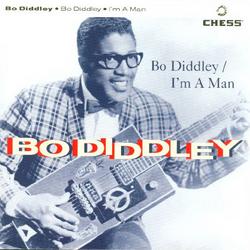
January 5: Bo Diddley, "Bo Diddley"

Artist: Bo Diddley
Song: "Bo Diddley"
Album: Bo Diddley (single)
Year: 1955


CLICK HERE TO LISTEN (will open in new tab)


During the early years of rock and roll, as the blues style was morphing into something fresh, exciting, and new, there were a number of artists that played important roles in the development of the sound that would dominate the next half of a century.  The overall importance of these artists cannot be overstated, and many of them were even given nicknames that have endured over the years which signify their part in this historical change.  These names had various implications, and while there was one who was called "The King," there was only one man worthy of the most distinguished title of all, at it is Bo Diddley whom people refer to as "The Originator."  This title is extremely fitting as it was Diddley's musical approach and innovations that set in motion nearly every other artist of the "rock era," and even today, his sounds can still light up a room and hold their own with anything else being recorded.  It is this timeless feel to his songs that prove what a revolutionary, yet completely developed sound he was playing, and his songs are also proof of the amazing impact that one can find in the most simplistic of musical arrangements.  Due to his massive influence on the entire "rock and roll" sound, it is impossible to cite a single song as his finest, yet one can easily make the case that his most important contribution was his first, Bo Diddley's monumental 1955 single, "Bo Diddley."

When critics write about "the songs that started it all," it is unfathomable to think that there is any other song that can be spoken of before "Bo Diddley," as in nearly every sense, it knows no predecessor.  The rhythm that is set forth on "Bo Diddley" may seem "normal" within a modern context, but the winding, almost sultry sound that it pounds out was nothing short of a renegade sound when it was first released.  The way in which drummer Frank Kirkland made the rhythm shake and groove with this simple arrangement remains largely unparalleled, and it is again the simplicity that makes the sound all the more impressive.  The sound of the drums lend a unique bounce and echo to the song, and the addition of Jerome Green on maracas gives "Bo Diddley" a darker mood, and there is a feeling of something almost sinister throughout the song.  It is this "edge" from the rhythm section that makes the song even more appealing, and the perfect finishing touch to the music comes from the guitar of the songs' namesake, Bo Diddley.  Bringing a wide range of sounds and styles, one can hear everything from blues to ska to the sounds of surf rock in his playing, and it is this instantly recognizable sound that catapulted him into the most elite group of musicians.  Though each band member sounds amazing on their own, it is the way in which they came together as a group on "Bo Diddley" that defines what would later be called "the Bo Diddley beat," and serve as the template for rock and roll.

While many point to his guitar as the most defining aspect of the music of Bo Diddley, one can also make the case that his voice and vocal approach was equally important to the overall impact of his music.  Though over the years, he would develop a legendary grit and growl within his music, on his early songs, it is clear that his voice is just as powerful and wide-ranged as nearly any other artist at the time.  However, one of the key differences in his voice was the level of raw authenticity one can experience, and there was also a proximity to the lyrics that one can always hear in his music.  Much like the music, Bo Diddley was able to do a brilliant job of keeping things simple in his lyrics, yet they are consistently just as good as the most cryptic words one can find.  Truth be told, the original lyrics for "Bo Diddley" were censored by Chess Records, and it was Ellas McDaniels that re-wrote them for the version which can be found on the early single releases and most "Best Of" collections.  The lyrics are an odd play on the nursery rhyme "Hush Little Baby," and yet even with this clear source, the edge and mood of the song are not in the least way impacted, and this is largely due to the manner in which Bo Diddley delivers the lyrics.  Though some artists may have had more powerful or more "tuned" voices, there is no other singer that sounds quite like Bo Diddley, and it is his sound on "Bo Diddley" that countless artists copied, proving why he was worthy of the title "The Originator."

In an era when music has become overly complex and almost embarrassingly artificial, there is perhaps no better time to take a long look at the roots of rock music, and recall why it was that the style caught on in the first place.  Taking the song "Bo Diddley" as the beginning of the rock movement, it is clear that simple, honest music will always survive and appeal to wide audiences, as the song sounds just as fresh today as it did nearly sixty years ago.  The way in which Bo Diddley and his band made the song shake and sway makes it clear why it was such a hit at the time, but the fact of the matter is, one can still hear the spirit behind the song in the music of today.  This clear connection cannot be found in many other artists from any point in music history, and one can argue that it is absent from the music of many of the most commercially successful musicians of the "early rock" era.  This fact alone is perhaps the most telling of just how revolutionary and influential a musician lived in Bo Diddley, and even on his first single, his impact is clear.  Making the vocal contributions to the song just as staggered, yet irresistibly dancable as the music, Bo Diddley's iconic 1955 single, "Bo Diddley," is as close to "rock perfection" as one will find anywhere, and it is the reason that the song stands as "the" pivotal moment in the development of rock music.

Tuesday, January 4, 2011

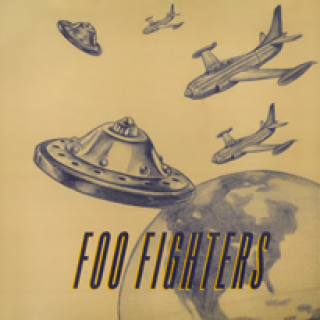
January 4: Foo Fighters, "This Is A Call"

Artist: Foo Fighters
Song: "This Is A Call"
Album: Foo Fighters
Year: 1995


CLICK HERE TO LISTEN (will open in new tab)


While walking away from any band is a difficult task, when that band is one of the most famous in history, it is almost unfathomable.  Furthermore, it is almost impossible to distance oneself enough from such a group to give a new band a "fair" shot at establishing themselves.  However, though it is an extremely rare occurrence, it seems that once in a generation, an artist with exceptional talent is able to pull off such a feat.  In the 1990's, after completely altering the shape of music forever, Nirvana's career came to an abrupt end with the still-controversial loss of Kurt Cobain.  Even in the period preceding this event, Nirvana's drummer, Dave Grohl, had been giving hints that he may have already been moving on to new projects.  The band he would form would go on to establish themselves as one of the greatest rock bands in history, and to this day, few groups command the world-wide respect and draw that one finds in the music of Foo Fighters.  While it is very difficult to argue any drummer of that era having more impact than Grohl, the fact of the matter is, his work within Foo Fighters showed that he knew no musical boundaries, and this is cemented by the fact that he plays every instrument, as well as singing on the bands' 1995 self-titled debut.  Remaining today one of the most powerful and potent rock albums ever recorded, everything that makes Foo Fighters so phenomenal can be experienced in the first single released by the band, 1995's "This Is A Call."

In nearly any case, a sound that is as instantly captivating and unforgettable as one finds throughout Foo Fighters is worth commendation, but the fact that every instrument (minus one on one song) on the entire album is played by Dave Grohl sets the album into its own category, as well as placing Grohl into an elite group of musicians.  With the talent that he displays here, one can only wonder what a number of songs from his previous band may have sounded like had his talents been used to their full potential.  Regardless, the arrangement on "This Is A Call" brings to the forefront everything that makes rock and roll so fantastic, and the bright, unrestrained sound presents an amazing contrast to the sound for which Grohl had been known to that point.  Even the opening feedback that is clearly a disconnected guitar cable somehow manages to work perfectly, setting a superb mood and tension that the remainder of the song pushes to amazing heights.  Clearly having a great understanding of musical timing and mood, the way in which Grohl draws in the listener with the softer opening guitar passage before dropping full-speed into the core of the song remains one of the most memorable moments of the decade, and the energy which he brings through both the guitar and drums throughout the rest of "This Is A Call" stands as proof that though many claimed it was at the time, rock and roll was still alive and well.

Along with the surprise to most that he could play seemingly any instrument with an exceptional level of skill, it was his performance on "This Is A Call" that also showed the world that Dave Grohl was a top-notch singer and lyricist.  Again showing an amazing range of ability, throughout "This Is A Call," Grohl uses both a more restrained approach during the verses, while the full force bridge and chorus sections are as good as one will find anywhere.  In many ways, his singing during the verses presented an odd contrast to the perception that most had of Grohl at the time, and it was largely due to the success of "This Is A Call" that Grohl was able to add this new definition of his abilities to his image.  However, the grit and growl that "is" rock and roll, as well as served as the basis for his previous band is still very present, and it is the way in which Grohl keeps this intact, whilst ensuring a high level of musica quality that makes all the songs of Foo Fighters so fantastic.  Even lyrically there is a deeper, yet universal appeal, as Grohl seamlessly fuses together his own cryptic words with amazing phrases that remain just as powerful to this day.  There is perhaps no more fitting a line that would describe the position Grohl was in at the time then when he sings, "...this is a call to all my past resignations..."  The song clearly serves as a nod to all those in his past in every aspect, and yet one can also see the line as almost a "warning" of the great things to come, and it is the way in which Dave Grohl sings this and every other line on the song that makes "This Is A Call" such an important moment in rock history.

To say that the world was in no way ready for Foo Fighters is a massive understatement, as it remains one of the most powerful, yet completely unexpected albums ever released.  In nearly every way, the album completely defied description at the time, and when people later learned that it is in essence a set of home recordings made completely by Grohl, the overall stature of the record grew even greater.  Even nearly two decades later, few records can compare to the power and appeal of the album, and it is this fact alone that proves the impact, appeal and exceptional level of talent shown throughout the record.  Though many bands have had great songs that kicked off their career, none are quite on par with the first single ever released under the name Foo Fighters, "This Is A Call."  Within weeks of its release, the song had rocketed into the top five on the charts across the globe, and the fact that it stayed there and remains such a memorable songs proves that this was more than just a generation attempting to "hold on" to a former band.  Almost instantly, Grohl had separated himself from his previous band and proved that his own musical abilities went far beyond anything he had previously shown.  Though one can connect the two groups through the sense of urgency in their music, as well as the tone of their songs, Foo Fighters seem to be able to convey these moods with a bit of a lighter feel, as well as with far more catchy songs and almost more majestic musical arrangements.  Unquestionably one of the most stunning debut records in history, there remain few songs from any point in music that can compare to the sonic power and almost mesmerizing presence that one finds in Foo Fighters first single, 1995's unforgettable, "This Is A Call."

Monday, January 3, 2011

January 3: Daily Guru, "Gurucast #53"

CLICK HERE TO LISTEN (will open in new tab)


(Left Click (PC) or Command-Click (Mac) to save it to your desktop...it's about 75MB)

One hour of amazing music and SOME commentary from "The Guru" himself.

Tracklist:
1. The Clash, "Guns On The Roof"  Give 'em Enough Rope
2. Polar Bear Club, "Heart Attack At Thirty"  Sometimes Things Just Disappear
3. Junior Brown, "Semi-Crazy"  Semi Crazy
4. Deadboy And The Elephantmen, "No Rainbow"  We Are Night Sky
5. Bad Brains, "Black Dots"  Black Dots
6. King Khan And The Shrines, "Land Of The Freak"  The Supreme Genius Of King Khan And The Shrines
7. The Specials, "Monkey Man"  Specials
8. Pearl Jam, "Last Kiss"  1998 Christmas Single
9. Michelle Vargas, "Pieces Of Me" Home Recording
10. Joey Ramone, "What A Wonderful World"  Don't Worry About Me
11. Cake, "Frank Sinatra"  Fashion Nugget
12. Beasts Of Bourbon, "The Beast I Came To Be"  Little Animals
13. P.O.S., "Savion Glover"  Never Better
14. J. Mascis, "Freak ScenePeel Sessions
15. Television, "See No Evil"  Marquee Moon
16. Björk, "Come To Me"  Debut
17. Woody Guthrie, "Going Down The Road Feeling Bad"  This Land Is Your Land: The Asch Recordings

Sunday, January 2, 2011

January 2: Chuck Ragan, "California Burritos"

Artist: Chuck Ragan
Song: "California Burritos"
Album: Feast Or Famine
Year: 2007


CLICK HERE TO LISTEN (will open in new tab)


Though one can make the case that the roots of punk rock can offer the easiest and most direct route to convey ones feelings, there are times when this style is simply not enough for some artists.  There are a handful of cases where a member of a punk-style band needed to find another outlet for the full expression of both their emotions and talents, and few of these projects have proved to be as mesmerizing and completely moving as one finds in the solo work of Chuck Ragan.  Having made his name as the frontman in the post-punk/hardcore band, Hot Water Music, it was in the waning years of that band that his talents as a singular performer began to become obvious.  With his gritty voice and unforgiving lyrics, few have shown as wide a range of talent as Ragan, and he was unquestionably at his best throughout his 2007 solo album, Feast Or Famine.  Each song on the album has its own personality, from scathing social criticisms to some of the more beautiful love-type songs that have been recorded in recent memory.  His ability to completely bare his soul and quickly connect with the listener is what makes this album so fantastic, and it is without question one of the finest albums of the past decade.  With each song having a different appeal, it is difficult to cite a single track as his "best" work, but one can experience everything that makes Chuck Ragan so superb within his 2007 song, "California Burritos."

While many may be quick to try and write-off Ragan as another "punk gone folk" act, the fact of the matter is, there is so much more going on within his musical arrangements, that he is far beyond such a simple classification.  From the soaring harmonica to the touches of violin and organ, the overall mood of the song moves into a unique category all its own.  It is this seemingly odd blend of the styles of punk, folk, and almost gypsy sounds that makes Chuck Ragan's music so refreshing, as there is a sound of purity and authenticity that is rarely found elsewhere in music.  Yet there is also an urgency that runs underneath the entire song, and it is there that Ragan's connection to his old band becomes most clear.  The way in which the mood seems to shift back and forth throughout "California Burritos" is one of the keys that keeps the listener completely mesmerized, as the combination of the complex arrangement and straightforward sound makes the song impossible to ignore or forget.  There is a very present "family" feel to the song, and yet there is also a sense of pain and frustration running through the song that further sets it apart from anything else being recorded at the time.  Though at its core, the sound found on "California Burritos" may be seen as folk, there is far too much going on around this simple guitar to leave it with only a single definition, and it is this same fact that pushes the song into an uncategorizable, yet extraordinary musical experience.

However, while one cannot deny the brilliant musical arrangement found on "California Burritos," there is no denying that for any moment anywhere on Feast Or Famine, the focus is anywhere but the completely captivating voice and lyrics of Chuck Ragan.  Within his previous band, both of these elements were a bit hidden behind the much louder musical structures, yet it is clear that when given the chance, he knows few equals in either area.  Bringing a gruff, yet completely honest sound, one cannot help but be drawn in by Ragan's singing, and the words which he sings are so perfect that they can easily be related to by anyone.  It is this almost universal quality that makes all of his songs so fantastic, and on "California Burritos," he turns the pen on himself and unleashes one of the most unforgiving and emotional critiques that can be found anywhere in music history.  With verses that dig deep into the th idea of wasted time and how we interact with one another, it is the chorus of the song that is nothing short of a rallying cry.  Even for those who may not be a fan of the style, there is an almost adversarial, confrontational, yet uplifting mood that can be felt when Ragan shouts, "...I can’t stand standing for nothing, when standing up is all I know..."  It is sentiments such as this, as well as the straightforward, honest way that he delivers them that makes songs like "California Burritos" stand so tall in an era when truly great music has become a rare occurrence.

While his previous band, Hot Water Music, was rather easy to place into a genre, when he released his 2007 solo album, Feast Or Famine, Chuck Ragan made it clear that his own talents went far beyond that band or any possibility of being placed into a single style.  Bringing elements of punk, folk, Americana, and even sounds of the gypsy style, the way in which he crafts the simple, yet rather full musical arrangements throughout this album are nothing short of superb.  Furthermore, he brings a diversity in the styles and sounds within these arrangements that proves just how talented a writer and composer he is, and the album remains one of the finest of the entire decade.  Leaving all "studio magic" aside, the album is full of deeply emotional, perfectly constructed songs, and it is the type of record which can easily be enjoyed by fans of any musical background.  It is this ability to have such a wide appeal that serves as a testament to his talents, and few songs on the record pack a similar sonic and lyrical punch to that found on "California Burritos."  In many ways, Ragan seems to be trying to make sense of the world and the state it is in, and through this unrelenting critique, the song becomes one of the finest, yet overlooked rallying cries for a generation that may have forgotten what it means to stand up and be counted.  Carrying the torch for everything that makes "real" music so fantastic and impossible to ignore, there are few artists in modern music that can bring a similar amount of emotion and musical creativity that one can find within Chuck Ragan's phenomenal 2007 song, "California Burritos.'"

Saturday, January 1, 2011

January 1: Albert Ayler, "Ghosts"

Artist: Albert Ayler
Song: "Ghosts"
Album: Spiritual Unity
Year: 1964


CLICK HERE TO LISTEN (First Variation) (will open in new tab)

CLICK HERE TO LISTEN (Second Variation) (will open in new tab)


Though many terms are often misused, there is perhaps no title that is given more freely, and more incorrectly than when an artist is referred to as "avant."  In most cases, such a title is given to any performer whose sound goes against the grain in even the slightest bit, though it should be reserved for the few that truly personify the idea.  While there are a handful of examples of the avant style within the rock genres, it is far easier to spot within the world of jazz.  Yet even within jazz music, there are almost "levels" of avant that one can find, and one can easily make the case that far off in his own category, representing the very essence of the term "avant jazz" is Cleveland, Ohio's own Albert Ayler.  Call his sound "free jazz" or "avant jazz," but whatever one uses to describe his unique sound, that instantly becomes a term by which no other artist can be categorized due to the fact that Ayler's sound is so impossible to define or duplicate.  Leaving all notions of structure or modes behind, Ayler pushed the boundaries on "what" could be considered jazz music, reaching his high-point with his monumental 1964 album, Spiritual Unity.  Remaining to day "the" essential jazz recording for those who wish to understand "free jazz," the complete genius of Albert Ayler can be experienced in the two variations on his song "Ghosts" that bookend this landmark recording.

The main difference that sets all of Spiritual Unity apart from the rest of Ayler's work is the fact that on this album, he has clearly found a pair of musicians who see and understand music in the same way that he does.  Though one may assume that this is not difficult to find, the fact of the matter is, there were virtually no other musicians in history that understood Ayler's approach to his compositions, and drummer Sunny Murray and bassist Gary Peacock prove to be just what he needed to fully achieve his musical vision.  Throughout both versions of "Ghosts," the trio take amazing liberties in how they play, often sounding as if they are each playing to a different song.  Though at times, it may seem as if the three musicians are not even in the same room, when one listens to the more delicate nuances of the song, it is stunning to hear how "in sync" they are with one another, as they are able to add fills and harmonies to one anothers' parts seemingly out of nowhere.  It is this fact alone that serves as a testament to the unparalleled level of talent within the trio.  Furthermore, Murray utilizes his drum kit in a manner that was rarely done at the time, as he makes full use of hi cymbals, often neglecting the more traditional styles of playing.  With Peacock pounding out an almost odd groove on his bass, these two prove to be a formidable pair for Ayler's vision, and it is their inclusion on the track that makes "Ghosts" so extraordinary.

Yet as great as the trio sound throughout both variations of "Ghosts," there is not a moment on either that the focus moves from the phenomenal, visionary performance of Albert Ayler.  Though there were many great saxophone players during that time, none come close to the presence or style of playing that Ayler shows here, and it is much the reason he remains such a respected, yet somewhat controversial player.  Ayler himself perhaps best summed up his sound and approach when he famously stated that he felt music was far more about feeling than it was actual notes, and this can be clearly and easily understood in both variations of "Ghosts."  Especially during the first variation of the song, Ayler seems to be playing with reckless abandon, and the actual "form" of the song is difficult to find once the group is out of the first movement.  However, it is this scattered, almost wild sound that makes the song so unforgettable, and with a closer listen, the true genius of Ayler's playing becomes clear.  There are many points on both variations where Ayler seems to be taking his musical direction from some other-worldly source, and this is far more present on the second variation, and completely defines the idea of letting music take the player where it wants.  Through both variations on "Ghosts," Albert Ayler pushes the limits on what "was" jazz, and though many attempted to follow his lead, none could even come close to the revolutionary performance he gives here.

While in the case of nearly every great jazz album, the focus comes down to the work of the band leader, throughout both variations of "Ghosts," it is clear that the key to the performances is the fact that all three musicians share the same musical vision, and they are able to push one another to greater heights.  Though Albert Ayler is without question leading this charge, without Murray and Peacock playing behind him, there is no question his vision would not have been fully realized.  It is with this in mind that one can point to the trio as one of the most important groupings in the development of jazz music, and also see all of Spiritual Unity as one of the most significant musical achievements in all of history.  The way in which the three players refuse to conform to any musical norms of the time is nothing short of stunning, as they blaze a completely new path for jazz that pushed the boundaries more than any other artist had previously done.  It is this complete effort by the group that makes the second half of the albums' title so fitting, and the way in which each player follows the music in their soul more than on the page is what defines the other half of Spiritual Unity.  Though when it was first released, many did not quite "get" Ayler's musical approach, as the years passed, most players and critics were able to understand his concept of playing a feeling as opposed to a note, and it is his perfect deployment of this idea that makes Albert Ayler's 1964 variations on his song "Ghosts" such essential parts of the development of all of jazz music.