Tuesday, December 14, 2010

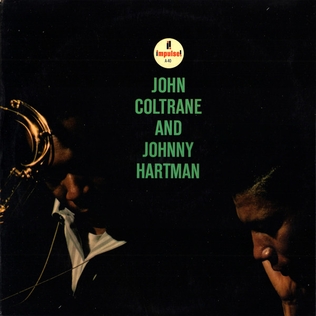
December 14: John Coltrane And Johnny Hartman, "My One And Only Love"

Artist: John Coltrane And Johnny Hartman
Song: "My One And Only Love"
Album: John Coltrane And Johnny Hartman
Year: 1963


CLICK HERE TO LISTEN (will open in new tab)


Though it happens very rarely, there have been a few instances in music history where two of the greatest performers of their generation came together for more than just a "one off" recording.  While many do this for benefit records or to attempt to jump-start one of the players' careers, the most amazing work comes when both artists enter the studio simply wanting to record alongside one another.  If in such a situation, the performers in question are true legends, it is hard for a spectacular album NOT to be the result.  Every piece of this can be seen as clear fact with just a brief listen to the sonic bliss that is the aptly titled 1963 release, John Coltrane And Johnny Hartman.  As the story goes, the pair knew one another from their time as part of Dizzy Gillespie's band in the 1940's, though Hartman was initially hesitant to be a part of the project, as he did not feel his style would fit well with Coltrane's playing.  After seeing Coltrane play live, the two set a date, and six of the seven songs found on the album were recorded in single takes.  The only song that required a second take, "You Are Too Beautiful," only needed it because drummer Elvin Jones dropped a stick on the first attempt.  Such perfection is almost understandable considering the monumental level of talent in the room, and the stunning chemistry between the pair can be summed up in John Coltrane and Johnny Hartman's 1963 rendition of, "My One And Only Love."

The entire album boasts one of the most impressive lineups of players ever in the same studio, and it largely due to the fact that the band is comprised of Coltrane's backing band at the time.  The rhythm section of bassist Jimmy Garrison and Elvin Jones are without question one of, if not the finest rhythm section in history, and pianist McCoy Tyner adds brilliant touches to play in contrast to Coltrane's sound.  On the record, Coltrane only plays tenor saxophone, and though he recorded a number o unforgettable moments, his performances here are without question some of his most inspired and beautiful.  From the moment "My One And Only Love" begins, Coltrane sets a soft, intimate mood, and few players have ever been able to achieve such expression of emotion as one finds here.  Working the melody as he sees fit, and it is performances such as this that prove just how brilliant he was at playing more structured pieces, as opposed to the more free style with which he built his legendary status.  Coltrane's playing on "My One And Only Love" has a vocal quality unlike any other instrumental performance in history, and in the latter parts of the song, this becomes most clear, as the pair seem to almost have a duet going.  Though he is best known for his revolutionary work in mode and tone, one cannot overstate the sheer beauty and brilliance that John Coltrane brings to "My One And Only Love."

For a number of reasons, it is mind-boggling that before this date with Coltrane, Johnny Hartman had not recorded for the better part of a decade.  Yet even with this fact in play, as well as the "single take" nature of the recordings, Hartman never sounded better than he does throughout the entire John Coltrane And Johnny Hartman album, and one would be hard pressed to find a more moving and striking voice anywhere in music history.  Easily able to work the entire vocal range, there is a sorrow that is ever-present in Hartman's voice, and it brings a distinct beauty and mood to every song that he sings.  On "My One And Only Love," Hartman perfectly matches the tone of the band behind him, and lets the mood they set carry his vocals.  At no point on the song does Hartman sound anything short of completely honest, and it is the combination of his immense talent and vocal heartbreak that proves how superior he was not nearly all of his peers.  It is with this idea in mind that one is left to wonder why Hartman does not receive the accolades that others of this era do, as there is little argument that he remains among the greatest vocalists in history.  Rarely has a vocalist meshed so seamlessly with a backing band, especially one that was not their own, and it is this amazing fusion that makes this version of "My One And Only Love" the definitive recording of the song.

While Hartman is far forward in the overall mix of the song, the balance that is achieved between the different musicians is absolutely perfect, and this is largely due to the production of the great Bob Theile.  Legend has it that along with Theile, Hartman's vocal idol, Billy Eckstine, oversaw the albums' recording, and this only adds more to the overall iconic status of the lineup present for the session.  Theile manages to give each instrument its own place in the music, and each musician clearly understands the exact nature of their role, resulting in harmony, as opposed to any single player attempting to take the spotlight.  This unselfish performance from all of the musicians proves that whenever this is honestly done, the greatest of musical results will be achieved.  Yet there is not a moment where either Coltrane or Hartman are not the center of attention, and they both manage to give "career performances," perhaps pushing one another to greater heights.  Truth be told, in his entire career, Coltrane only worked with one vocalist in the studio, and it may be due to the high level of musical achievement that can be found on John Coltrane And Johnny Hartman.  Later releases of the album contain both the original mono mixes, as well as stereo mixes, and the record remains one of the most impressive in all of music history.  Though some have tried to top their perfection, there is not another recording that even holds a flame to John Coltrane and Johnny Hartman's 1963 take on "My One And Only Love."

Monday, December 13, 2010

December 13: Daily Guru, "Gurucast #50"

CLICK HERE TO LISTEN (will open in new tab)


(Left Click (PC) or Command-Click (Mac) to save it to your desktop...it's about 75MB)

One hour of amazing music and SOME commentary from "The Guru" himself. 

Tracklist (all links are to my reviews of that band, song, or album) :
1. G. Love And Special Sauce, "Astronaut"  The Hustle
2. The Misfits, "All Hell Breaks Loose"  Walk Among Us
3. Ween, "Help Me Scrape The Mucus Off My Brain"  12 Golden Country Greats
4. Miriam Makeba, "A Piece Of Ground"  Pata Pata
5. Digital Underground, "Flowin' On The D-Line"  Sons Of The P
6. X-Ray Spex, "I Am A Poseur"  Germ Free Adolescents
7. Del McCoury Band, "Recovering Pharisee"  Del And The Boys
8. The Clash, "Jimmy Jazz"  London Calling
9. North Mississippi Allstars, "Drinking Muddy Water"  Shake Hands With Shorty
10. Tom "T-Bone" Stankus, "Existential Blues"  Dr. Demento 20th Anniversary Collection
11. Lucero, "Drink 'Till We're Gone"  Lucero
12. Tinariwen, "Chet Boghassa"  Amassakoul
13. Tom Petty, "Time To Move On"  Wildflowers
14. Minor Threat, "Minor Threat"  Dischord 1981: The Year In Seven Inches
15. Led Zeppelin, "Good Times Bad Times"  Led Zeppelin I
16. Sublime, "Ebin"  40 Oz. To Freedom
17. Primus, "Mrs. Blaileen"  Tales From The Punchbowl

Sunday, December 12, 2010

December 12: Funkadelic, "Maggot Brain"

Artist: Funkadelic
Song: "Maggot Brain
Album: Maggot Brain
Year: 1971


CLICK HERE TO LISTEN (will open in new tab)


Though it is perhaps the most rare occurrence in the entire history of recorded music, there are a few cases where a song is able to completely eclipse a band.  In every one of these cases, the band in question has a number of other songs that are well known, yet this single song becomes so iconic, so special, that nearly every music fan knows the song, many are not aware of the band by which it is performed.  Add in the fact that in at least one of these cases, the band in question was being overshadowed by one of the band members' other projects, and the uniquely mythical status that is the band Funkadelic was born.  Without question, Funkadelic represented the pinnacle of psychedelic funk, yet for a majority of the years they recorded, they were almost seen as "secondary" to George Clinton's other project, Parliament.  The bands had Clinton and a revolutionary approach to funk music in common, yet while Parliament was more upbeat, it was Funkadelic that explored the deeper, often more somber sounds.  Though Funkadelic released a number of brilliant albums, it is impossible to argue any of their records as more significant than their landmark 1971 album, Maggot Brain.  Completely destroying every norm and notion as to what could be achieved through the sounds of rock, funk, and psychedelia, there is not another song in history that can compare to the majesty that one finds in Funkadelic's 1971 classic, "Maggot Brain."

While a number of bands had attempted to bridge funk and psychedelia before this recording, such as Jimi Hendrix's "Machine Gun" and Frank Zappa's, "Black Napkins," neither come close to the perfection that Funkadelic achieves on "Maggot Brain."  The impact of the song simply cannot be measured, and there are many critics who have compared the song on many levels to John Coltrane's A Love Supreme.  While such accolades may seem a bit much, "Maggot Brain" is worthy of such comparisons, as it begins as an odd spoken piece from Clinton, followed by a rather unassuming, reflective bass progression from Billy "Bass" Nelson.   The bassline rarely deviates during the ten-plus minute run of the song, and yet it somehow manages to get deeper and deeper as "Maggot Brain" progresses.  There are also light touches that can be heard from drummer Tiki Fulwood, but they are mixed perfectly so as not to detract from the unparalleled mood and tension that defines the song.  Truth be told, during the session in which the song was recorded, the entire band contributed parts, but after hearing the interplay between the guitar and bass, Clinton mixed the other tracks mostly or completely out of the song, leaving the stripped down, yet absolutely stunning musical landscape that "is" "Maggot Brain."

Instantly cementing his name as one of the greatest guitarists in history, there is no other performance ever recorded that even comes close to the brilliance that Eddie Hazel displays on "Maggot Brain."  As stated, the song was originally meant to be played by the entire band, but Hazel's performance was so moving and emotive, that it demanded the complete spotlight for the entire run of the song.  Recorded in a single take, legend has it that Clinton told Hazel to "play like yo’ mama just died" in hopes of being able to capture the strong emotion on the song without having to speak a word on the track.  Clearly, Hazel achieved this goal and then some, as the song stands today as one of the most iconic and most highly revered pieces of guitar work in history.  Hazel works the entire fret-board with stunning precision, and it is clear that he is simply letting the music guide him, as opposed to following a previously decided musical path.  This manner in which he lets the music completely control him is the sign of true musical brilliance, and it embodies the idea of how powerful a song can be, even without a vocal track.  Often working in double and triple time to the tempo set by the rhythm section, Hazel uses few effects on the track, featuring only a bit of wah pedal and fuzz from time to time.  Hazel never lets the listener go at any point during the ten-plus minutes of the song, and the way in which he is able to give a complete musical journey through his guitar is what makes both him and the song absolute legends.

Though it did not "start" the psychedelic-funk sound, there is no arguing that it was "Maggot Brain" which set the standard for what could be achieved through the style.  Pulling elements from a number of artists, as well as other George Clinton projects, the song is sad and soulful in a way unlike any other recording in history.  As Eddie Hazel's finest moment, he fuses together this psychedelic-funk sound with elements of blues, jazz, and even heavy metal, resulting in what is arguably the greatest guitar performance in music history.  Through the raw, honest performance Hazel delivers, "Maggot Brain" was able to transcend all musical boundaries, as any fan of any type of music cannot help but stand in awe of this extraordinary display of talent.  Furthermore, the fact that the song found regular radio rotation even at nearly four times the "standard" song length serves as a testament to the undeniable majesty that the song provides.  Yet there is one aspect of the song that remains a question nearly four decades later, and that is from where the song title was derived.  While some claim that "Maggot Brain" was Eddie Hazel's nickname, there are others who argue that the title was taken from when Clinton found his brothers' dead body in a Chicago apartment.  Regardless of the songs' source, it has gone on to completely define guitar greatness and in many ways, part of the counter-culture of the time, and to this day, no song can even come close to the overall impact and presence that is Funkadelic's monumental 1971 recording, "Maggot Brain."

Saturday, December 11, 2010

December 11: Sam Cooke, "A Change Is Gonna Come"

Artist: Sam Cooke
Song: "A Change Is Gonna Come"
Album: Ain't That Good News
Year: 1964


CLICK HERE TO LISTEN (will open in new tab)


Bringing fans of different musical styles together is one of the more daunting tasks that a musician can tackle, as it is often a matter of structuring ones music to that it speaks to a wide group, yet at the same time stays true to that performers original sound so their core fan-base does not feel alienated.  While this is how it operates in a modern sense, there have been a few performers throughout the history of music whose music was so beautiful, so revolutionary, that it managed to speak to all people without sacrificing anything at all.  Though some genres have multiple people who can be seen as the "founder" of that style of music, there is no question that the sound of soul music began with any other than the late, great Sam Cooke.  Bringing stunning musical arrangements alongside his unparalleled voice, Cooke's sound reached audiences of every race, social status, and age group across the globe with a similar impact, and this is a feat that can rarely be seen elsewhere in music history.  Furthermore, the fact that Cooke never backed down from writing about "hot button" topics, especially civil rights, enabled his music to move beyond "just a song," and many of his recordings remain today as rallying cries for the disenfranchised across the world.  Though he had a number of amazing songs, there is simply no other recording in history that even comes close to the power and presence that one finds in his unforgettable 1964 classic, "A Change Is Gonna Come."

One of the most stunning aspects of "A Change Is Gonna Come" lives in the grand, orchestral musical arrangement, and the fact of the matter is, sounds like those found here are simply not found elsewhere in popular music.  The fact that with the deep sounds of the string section, sorrowful french horns, and the lone, marching snare drum are all that keep this song moving makes it almost impossible to explain how this song became a hit in any way, as it defies every norm of pop music.  However, this is also the genius that was René Hall, as he was the individual that put together the arrangement on "A Change Is Gonna Come," as legend has it that Sam Cooke gave Hall free reign to compose the song as he saw fit.  Obviously, this worked in amazing fashion, and the opening musical slide stands as one of the most memorable moments in all of music history.  Hall's arrangement also sets the stage perfectly for Cooke's vocals, as there is a sense of deep sorrow and reflection that comes through clearly in the music.  The pain that the instruments are able to convey are truly unparalleled, and it is this aspect that gives the song an almost religious feeling.  There are points when the strings seem to be singing a duet with Cooke, and at these moments, "A Change Is Gonna Come" moves into a musical category all its own, as no other song in history ever achieved this sense of the dramatic through the instrumentation alone.

However, while the music on "A Change Is Gonna Come" is nothing short of extraordinary, there are simply not enough words that one can say that would do justice to the voice and performance that Sam Cooke brings to "A Change Is Gonna Come."  Without question, Cooke has one of, if not the greatest voice in history, as both in terms of pitch as well as emotion, there is never anything short of musical perfection.  Easily able to work the entire vocal spectrum, Cooke's voice often soars with a sound and energy that defines the idea of gospel music, as his singing is nothing short of a spiritual experience for the listener, and one can feel that he himself had a similar feeling during the actual recording.  On "A Change Is Gonna Come," Cooke holds absolutely nothing back, and the raw pain that one can hear in his singing is a result of both his exceptional talent, as well as the fact that the lyrics he wrote can largely be seen as referring to painful incidents he had experienced the same year the song was recorded.  Only a few months before the recording of "A Change Is Gonna Come," Cooke lost his eighteen-month-old son in a tragic drowning accident, and the pain that this brought Cooke can clearly be heard in both the lyrics and his voice when he sings lines like, "...there been times that I thought I wouldn't last for long, now think I'm able to carry on..."  In this simple lyric, one can understand the cathartic power of music, yet the pain he felt is something that clearly has not left him in the least.  The song also speaks to the still-present racism Cooke dealt with, and it is much the reason that "A Change Is Gonna Come" remains one of the most powerful and often used songs of civil rights across the world.

In quite literally every aspect, Sam Cooke's, "A Change Is Gonna Come" is a song that knows no equal or even any other song that comes remotely close.  From the phenomenal orchestral arrangement to the absolutely brilliant vocals from Cooke himself, the song transcends every social boundary, and it retains all of its power after countless listenings as well retaining its impact nearly fifty years later.  However, "A Change Is Gonna Come" is also notorious for being one of the most eerily prophetic songs ever released.  Truth be told, the song was not released as a single until ten days after Sam Cooke's tragic murder on December 11, 1964.  Serving as the "b-side" to his "Shake" single, the song began to take on a life of its own, and many see the song as Cooke's finest recording.  Though it was the b-side on the single, "A Change Is Gonna Come" found great success in the charts, and it is without question the stand-out track on the album.  As the decades have passed, many other artists have made their own version of the song, yet for a number of reasons, none of these covers even come remotely close to the overall power that one finds on the original.  This, in many ways, is the most clear sign of the genius that was Sam Cooke, as the power and pain one can feel in his voice are the true definition of what soul music was meant to be.  Though he had other songs that were more commercially successful, there is no other song in his catalog or anywhere else in music history that even comes close to the overall impact and influence that one finds in Sam Cooke's monumental 1964 song, "A Change Is Gonna Come."

Friday, December 10, 2010

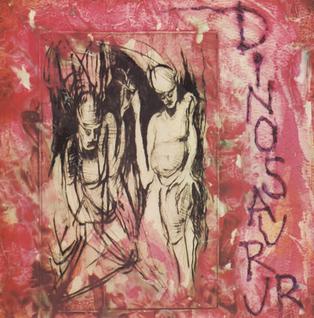
December 10: Dinosaur Jr., "Freak Scene"

Artist: Dinosaur Jr.
Song: "Freak Scene"
Album: Bug
Year: 1987


CLICK HERE TO LISTEN (will open in new tab)


One can easily make the case that perhaps the biggest misconception in music over the past thirty years is the idea that the "grunge" sound "came out of nowhere."  While many critics and fans alike prefer to think that these bands were so revolutionary and "fed up" with the sound of the prebious decade that it was their collective frustrations that led to this sound, it is simply not the case.  Though it does not sound as exciting, the fact of the matter is, a number of bands were recording this so-called "grunge" sound many years before it broke though into the mainstream.  Bands like The Pixies and Hüsker Dü had been making a point of bringing heavy emotion and loud guitars back into rock, yet there was no other band that pushed music forward quite like Dinosaur Jr.  Largely the brain-child of the brilliant J. Mascis, the music of Dinosaur Jr. brought a distorted fuzz and power to music that can clearly be seen as the blueprint for the Seattle-based bands that would become famous for the sound.  While the bands' 1987 album, You're Living All Over Me, was nothing short of a landmark recording, it was their next release, 1988's Bug, that remains one of the most stunning moments in all of music history.  Released on the equally legendary SST label, the album brings together a strange combination of metal, sludge, and noise that somehow manages to fit perfectly with the almost folk-like writing of Mascis.  Without an off moment anywhere to be found, one can point to Dinosaur Jr.'s  1987 song, "Freak Scene," as one of the most overlooked, yet truly monumental recordings ever made.

The instant that "Freak Scene" begins, the crushing three-chord progression grabs the listener, and in this distorted twang, one can hear the formula for bands ranging from Nirvana to The Lemonheads, and nearly every other "alternative" or "indie" band that appeared over the next few years.  Furthermore, the simple hook is amazingly catchy, and Mascis brilliantly bounces back and forth between a heavy metal style aggression and a strangely poppy, clean riff.  During the mid-section of "Freak Scene," Mascis makes his case as one of the most talented and creative guitarists of his generation, and the manner in which his pulverizing solo turns on a dime back into a more mellow progression is nothing short of stunning.  It is the way in which Mascis seems to move effortlessly through the different tempos and moods on "Freak Scene" that in many ways embodies his generation, and it is this element that later bands would attempt to replicate.  Along with Mascis, "Freak Scene" would be one of the final recordings that bassist Lou Barlow would make with Dinosaur Jr. for nearly two decades.  His work here is superb, and it is the oddly upbeat, winding groove that he brings that gives "Freak Scene" its signature groove.  Rounding out the band is the man simply known as "Murph" (real name: Emmett Murphy) on drums, and the aggression with which he plays would be the defining sound of the "grunge" movement.  The way in which the trio comes together on "Freak Scene" is truly beyond words, and it is their combined effort that turns the song into an unquestionably pivotal moment in music history.

Along with being a top-notch guitarist and music writer, J. Mascis also stands as one of the most unique vocal talents, as well as a lyricist whose words are some of the most moving of his generation.  Making no attempts to "hide" his voice, Mascis' sound is completely unique, and the raw nature of his singing helps to add an uncanny level of emotion to every song which he sings.  There is an odd beauty to Mascis' voice, and many later bands would also attempt (unsuccessfully) to replicate this sound.  The level of honesty in his voice also remains unrivaled, and one can feel the close connection he has to every lyric which he sings.  On "Freak Scene," Mascis recalls a rather muddled relationship, yet he does so with a clear grin, and it is this odd brightness that largely defines the music of Dinosaur Jr.  There is a simple beauty to the words of J. Mascis, and one would be hard pressed to find a more universally relatable lyric than when he sings, "...sometimes I don't thrill you, sometimes I think I'll kill you...just don't let me fuck up will you, 'cause when I need a friend it's still you..."  Such a sentiment can be found across all of music history, yet the style and words he chooses here make this version nothing short of perfect for the generation that was "on the rise" during the tail end of the 1980's.  Though it is about as non-traditional as it gets, there is a rare beauty in the voice of J. Mascis, and it is this aspect that defines Dinosaur Jr. as a band.

While the frank, yet profound writing is largely what makes Dinosaur Jr's songs so phenomenal, there are also moments when one can see the true genius of J. Mascis.  This has rarely been more clear than on "Freak Scene," when as the song progresses, it almost seems as if Mascis' words are beginning to fail him.  This does not seem to throw Mascis even for a moment, as he breaks into a guitar solo, and it is here that one can experience emotive playing on a truly unrivaled level.  The amount of feeling that Mascis is able to convey via his guitar is nothing short of stunning, and one can make the case that it is this performance that defines the idea of music being able to communicate feelings that cannot be described through words.  Buried in the heavier, slightly aggressive music, there is a magnificence that knows no peer, and it is due to "Freak Scene" excelling on so many different levels that it can be seen as the catalyst for so many later bands and movements.  Though the song did not achieve the type of success that many of the bands contemporaries and followers would find, it is impossible to deny the overall importance of the song, as it is unquestionably the precursor to the musical explosion that followed a few years later.  Somehow, Dinosaur Jr. manages to get better and more impressive as the years pass, yet one cannot deny the historical significance, massive influence, and remarkably moving achievement that is their 1988 song, "Freak Scene."

Thursday, December 9, 2010

December 9: Alice Cooper, "Under My Wheels"

Artist: Alice Cooper
Song: "Under My Wheels"
Album: Killer
Year: 1971


CLICK HERE TO LISTEN (will open in new tab)


Though there are many elements that are difficult to properly add into music, there are few that are as tricky to balance as that of bringing a "theatrical" element to a song.  In nearly every case in music history, when an artist attempts to do this, they go too far, and the song ends up coming off as cliché or over-done.  This is usually because the artist in question does not normally perform in such a manner, and it is in these sorts of "miscues" that one realizes what a difficult task it is to properly convey this mood.  However, there are a few musicians who have made their name off of being able to deploy such moods in perfect style, and there has never been another performer than can compare to the great Alice Cooper.  Bringing a unique style of dark, if not macabre rock that often bordered on heavy metal, Cooper is responsible for for some of the most iconic songs of the 1970's, and no artist since has even come close to matching his sound or style.  Releasing a trio of extraordinary records in the early-1970's, few albums of the era can compare on any level to his 1971 masterpiece, Killer.  The album was his second in the same year, and it remains one of the most brilliant works of hard rock ever recorded.  Though nearly every song in the album is flawless, few songs from anywhere in the Alice Cooper catalog personify the band as perfectly as one finds in his 1971 song, "Under My Wheels."

While in modern times, the idea of "hard rock" and "heavy metal" come with a certain set of assumptions, in the early 1970's, it was still a relatively "open" style, and on "Under My Wheels," Cooper blends together blues, funk, and psychedelia, creating a sound like none other ever recorded.  The song opens with a ripping guitar riff, and it is this progression and tone that drives the mood for the entire song.  The riff, courtesy of the great Glen Buxton, is one of his finest in his career, and it is made even more impressive by the presence of none other than Rick Derringer on the track.  Capping off the guitar sound with rhythm guitar player Michael Bruce, "Under My Wheels" brings a menacing groove that is completely unique.  Later in the song, the guitars drop into a dual solo in which one guitar is heavily distorted while the other shreds over-top, and it is this dual sound that makes the song truly unforgettable.  The rhythm section of bassist Dennis Dunaway and drummer Neal Smith are also in top form, as they inject a groove that is rarely found elsewhere in the harder rock sound.  Serving as the perfect finishing touch, keyboard player Bob Ezrin almost duets with a set of horns, and this is yet another way in which "Under My Wheels" knows no peers, as it is almost impossible to find another song where a horn section fits in so perfectly alongside such an aggressive sound.

With his band performing at their peak, on "Under My Wheels," Alice Cooper himself (real name: Vincent Damon Furnier) is clearly up to the task, as he delivers one of his most impressive studio recordings.  Easily capable of working anywhere in the vocal spectrum, Cooper finds the ideal balance between singing and growling, and it is this grit and swagger that makes his vocals so unique and ultimately perfect.  It is almost impossible to describe just how seamlessly his vocals blend with the music and mood, and it is almost has if he has found a middle-ground between the traditional rock and roll scream and a strange, almost Vegas-like strut.  Due to how captivating his vocal performance is on "Under My Wheels," the true meaning behind the song is often lost, and it is the words to the song that serve as the perfect definition of the bands' overall intent.  Though it is slightly disguised under the music, "Under My Wheels" is one of the most unsubtle cries against a nagging spouse as has ever been recorded.  Cooper leaves little to the imagination when he sings, "...I'm driving right up to you, babe
I guess that you couldn't see...but you under my wheels, why don't you let me be..."  There is absolutely no relenting or apology in the mood and aim of the song, and it is the fact that such a dark, violent theme can come off as so upbeat and enjoyable that cements the unique brilliance that "is" Alice Cooper.

Though in its time, "Under My Wheels" did not gain a great deal of commercial success, in the decades that passed, it has become one of the most iconic songs in the entire history of hard rock.  The song has been covered a number of times, with Cooper himself re-recording it alongside Guns N' Roses in 1988.  Yet as is almost always the case, none of the later versions even remotely compare to the original, and even Cooper himself rarely created as perfect a song as one finds on "Under My Wheels."  As the opening track on Killer, the song set the bar quite high and gives the album a kick-start unlike any other album, and yet as the album continues, Cooper and his band keep the mood intact, turning Killer into a classic in its own right.  The way in which the band flawlessly blends together elements of blues, funk, and psychedelia into the hard rock style has never been matched, and this serves as a testament to the exceptional level of talent within each member of the band.  It was albums such as this, along with efforts from groups like The Stooges and Mitch Ryder And The Detroit Wheels that defined the distinctive style of hard rock that emerged from Detriot, Michigan, and it is Cooper's efforts on this record that cemented the band as one of the most impressive and often misunderstood groups in history.  Achieving true musical perfection, along with bringing a sense of drama and darkness without coming off as "too theatrical," there is simply no other song in history that can compare to Alice Cooper's classic 1971 song, "Under My Wheels."

Wednesday, December 8, 2010

December 8: Pantera, "Walk"

Artist: Pantera
Song: "Walk"
Album: Vulgar Display Of Power
Year: 1992


CLICK HERE TO LISTEN (will open in new tab)


For many fans of heavy metal, the 1980's were a frustrating and often embarrassing period, as the so-called "hair metal" bands took center stage and did an impressively poor job of representing a sound and style that they did not deserve to personify.  Due to these image-conscious, often laughably pompous bands, the overall genre of heavy metal gained a rather unwanted reputation, and there was a brief time when it looked like the genre might fade away completely.  Thankfully, there was the band Pantera.  Though there were a few other groups making similar music at the time, one can make the case that it was almost entirely due to the existence and music of Pantera that heavy metal returned to its roots and regained its fitting reputation.  With their fierce music and amazing groove the permeates nearly every one of their songs, Pantera even managed some mainstream breakthrough, and they remain today one of the most highly revered bands in the entire history of heavy metal and hardcore.  Though they released a number of superb albums before the tragic murder of guitarist "Dimebag" Darrell Abbott on December 8, 2004, there are few albums of the heavier persuasion that can compare to their 1992 classic, Vulgar Display Of Power.  Bringing a rage and raw sound that is fitting of the name, Pantera unleashed an absolutely hardcore classic in the form of their 1992 single, "Walk."

From the moment that "Walk" begins, it is immediately clear exactly what type of band Pantera is, and the musical assault never lets up for even a moment.  The heavy, repeated guitar pattern from Abbott gives the song an amazing sense of movement, and it is almost instantly one of the most intimidating songs ever recorded.  As the song moves into the opening verse, the "doubled" sounds makes the overall impact even more aggressive, and the amount of emotion that comes through in the music is truly uncanny.  Bassist Rex Brown adds to this mood and power, and he also injects the bands' trademark "groove" into the song.  It is this aspect that set Pantera apart from their peers for much of their career, as they are able to make their songs "more" than "standard" heavy metal music.  The performance on "Walk" from drummer Vinnie Paul (AKA Vincent Abbott) is nothing short of stunning, as few drummers have ever sounded as intent on destroying their drum kit as he does on this song.  The way in which all three musicians are able to make "Walk" seem to sway is a characteristic that is quite literally found nowhere else in heavy metal, and it is this odd hybrid of metal, blues, and elements of funk that make Pantera so unique.  Yet the band is able to bring together these different sounds without compromising any of the intensity of their music, and "Walk" exemplifies this unmatched musical mixture.

Serving as a perfect compliment to the music both in terms of sound and attitude, Pantera's frontman, Phil Anselmo, stands today as one of the most important figures in the entire history of heavy metal.  Rarely even attempting to sing in the traditional sense of the word, the gritty and aggressive nature of his vocals are often nothing short of mesmerizing.  Almost always choosing to shout his lyrics, Anselmo demands the complete attention of the listener to each line in the song, and this often moves to the point where one cannot help but sing along.  Furthermore, the vocal style of Anselmo brings in equally intimidating and overbearing mood as one finds in the music, and this ideal "fit" is yet another reason that Pantera excelled far beyond their peers.  Truth be told, one would be hard pressed to find a more straightforward, yet perfectly fitting lyric for a heavy metal song as one finds on "Walk," and the lyrics provide the ideal final piece to the songs' overall impact.  There is perhaps no better musical representation of the idea that "life is tough for everyone," as well as the idea of simply "being who you are," and the lyrics often play in brilliant contrast to one another.  When Anselmo delivers lines like, "... you cry to weak friends that sympathize...," one might see it as heartless, but later in the song, he speaks of how those same "friends" turn on the protagonist, and the overall theme of the "power of the one" becomes completely clear.  There are no subtleties or holding back on "Walk," and the brutal manner with which Phil Anselmo delivers the lyrics helps to make the song nothing short of a heavy metal classic.

Throughout the history of music, countless bands have made attempts at creating songs of self-pride and handling ones' own problems.  However, while many valiant attempts were made, none even come close to the overall sentiment and impact that one finds on Pantera's "Walk."  Quite literally every aspect of the song feels as if it is doing all it can to intimidate the listener, but once one gets past this aspect, the theme of taking pride in self becomes far more clear.  It is due to the overall sound and impact of the song that "Walk" has become a true classic, and it has been given a massive number of cover versions over the years, with the likes of Trivium and even Alice In Chains putting their own spin on the song.  Yet as is the case with most songs, none of the cover versions bring a similar energy or ferocity as the original, and this further proves just how unique a band one finds in the music of Pantera.  The way in which "Dimebag" Darrell creates the songs' deep grooves, whilst rarely using more than four chords on a song is nothing short of stunning, and few artists in history have ever been able to make "so much from so little" as one finds in his compositions.  This aspect, as well as the sheer attitude with which he played is what cemented him as an icon of guitar playing, and he gives one of his finest performances on Pantera's unforgettable 1992 anthem of self respect and self preservation, "Walk."