Saturday, May 22, 2010

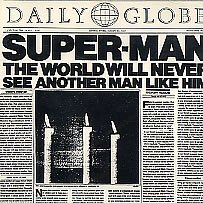
May 22: Crash Test Dummies, "Superman's Song"

Artist: Crash Test Dummies
Song: "Superman's Song"
Album: The Ghosts That Haunt Me
Year: 1991


CLICK HERE TO LISTEN (will open in new tab)


While breaking into the mainstream and finding commercial success is a daunting task in itself, when a band attempts to do this is a sound that is truly unique, the difficultly level becomes almost immeasurable.  This is not implying that the general public are not open minded enough to enjoy new sounds; but the music industry as a whole has proven over the decades that it is very resistant to change of any sort.  Yet there remain a few pockets in music history where the "rule book" was thrown out and countless new styles and musical approaches were able to flourish simultaneously, marking the most creative points along the musical timeline.  While the late 1960's certainly stands as an example of this idea, the truth of the matter is, the early 1990's was also an environment that encouraged great musical experimentation.  While gangsta rap and grunge were getting their footholds, there were a number of groups releasing music that defied categorization, and one can find a truly undefinable sound within the music of the Canadian pop-folk band, Crash Test Dummies.  While the band is perhaps best known for their unlikely 1993 hit single, "Mmm Mmm Mmm Mmm," the fact remains that it was their 1991 debut, The Ghosts That Haunt Me, that contains the groups' finest music.  Bringing together almost classical musical arrangements alongside one of the most distinctive voices of his generation, the group truly made music unlike anything else ever recorded, and their true brilliance can be found one the amazing, somber dirge, "Superman's Song."

While countless artists have composed laments during their career, very few have so perfectly captured the mood of a funeral as is found on "Superman's Song."  The crying cello from Lynn Selwood is truly beautiful, and the fact that the group is able to bring this melancholy mood into the pop genre is a feat that in itself defies description.  Overlain with a equally gorgeous piano progression from Ellen Reid and acoustic guitar from Brad Roberts, the spirit of the song soars and "Superman's Song" is nothing short of blissful, regardless of the subject matter.  At times, the music seems to echo, furthering the feeling that the song is supposed to be "funeral-esque," and the fact that this is something that is heard, but does not actually happen serves as a testament to the amazing musicianship on the record, as well as the brilliant production work of the great Steve Berlin.  This mood never lets up, and the fact that these three non-traditional instruments were able to carry the song to moderate success within the pop world is nothing short of shocking, as well as a feat that has never been accomplished since.  The entire song features little more than these instruments, and as they wind through each section of the song, the listener is pulled further and further into a true emotional attachment with the music, as well as the subject matter.  The fact that this overall tone and mood was able to make headway in commercial sense is a massive achievement, as at the time, "hair metal" was on its way out, and there seemed to be very little, if any space in mainstream music for quieter, more mellow sounds. 

The soft, refined music of "Superman's Song" is brilliantly offset by the deep, baritone voice of one of the most instantly recognizable singers in history: Brad Roberts.  With a voice that is perhaps only comparable to the late Peter Steele, the way in which his rich, powerful singing contrasts the music is nothing short of stunning.  This contrast in sound, as well as the natural elements of Roberts' voice further reinforce the "church" feel of the song, and "Superman's Song" easily makes its case as one of the finest laments ever recorded.  Yet as impressive as both the music and singing are, the fact remains that the song was able to succeed whilst making commentary on two of the most famous figures in history.  The title gives away the theme, as the song is a lament for the fallen "Man Of Steel," and yet Roberts spins an amazing amount of social commentary within the words of "Superman's Song."  Spending most of the song contrasting Superman with the uncivilized ways of Tarzan, it is truly stunning that such a "silly" premise was accepted and remains such a truly touching song.  The true depth of Roberts' thoughts on this icon become clear when he brings up the fact that though Superman, "...could have smashed through any bank in the United States, he had the strength, but he would not..."  It is mall points like these where the song becomes more than just a comic fans' fiction, and Roberts begins to paint a picture of a truly great man, showing that even with great power, one must still have solid morals.  Furthering this idea, there are few lines anywhere in music history that are as heartbreaking, yet profound as when Roberts sings, "...and sometimes I despair the world will never see another man like him..."

Though they are often relegated into the label of "one hit wonders," the fact of the matter is, Crash Test Dummies had already released an entire album of amazing material before the world caught onto them with their surprise 1993 hit single.  Though this single does capture their strange, alterna-folk sound, it truly cannot compare to their debut single, 1991's "Superman's Song."  Bringing together the perfect combination of musical beauty, lyrical perfection, and a voice that cannot be forgotten, the song remains the groups' finest work, and unquestionably one of the greatest songs of their generation. The fact that the group was able to gain radio play with nothing more than piano, cello, and acoustic guitar may have been understandable twenty years earlier, but the fact that they were able to do so in the waning days of "hair metal" and the rise of grunge is nothing short of baffling.  Yet it becomes understandable once one experiences the song and realizes that there is true sonic beauty within the song, and few songs this somber have withstood the test of time.  Furthermore, the fact that comic book fans across the world were able to "accept" this take on one of the most treasured superheroes in history serves as proof that Crash Test Dummies were able to walk the line and create a truly special song.  The voice of Brad Roberts is perhaps the key to the greatness of this song, as he is able to deliver this eulogy whilst simultaneously making the words ring true across all generations and all walks of life.  Though often forgotten behind their runaway single, the fact of the matter is, there are few songs as beautiful as Crash Test Dummies 1991 single, "Superman's Song."

Friday, May 21, 2010

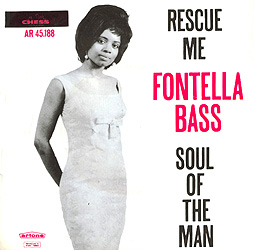
May 21: Fontella Bass, "Rescue Me"

Artist: Fontella Bass
Song: "Rescue Me"
Album: Rescue Me (single)
Year: 1965


CLICK HERE TO LISTEN (will open in new tab)


While most people look to the mid-1960's as the era when rock music came into its own, the fact of the matter is, there were many other genres that were churning out their best music during the same time period.  The reality was, with recording costs plummeting and personal music players becoming far more common, the entire decade represents a massive change in how music was made, as well as how it was experienced by the listener.  This time period is also well known for the "beginning of the end" of the rivalry between Chess Records and Motown Records.  While both labels were releasing some of the most memorable songs in history, there happened to be one artist and a single that may very well be the most commonly mistaken song ever recorded.  Having already spent many years working her way up the ranks within the music industry, Fontella Bass had gained a name for herself thanks to a handful of respectable hits throughout the early 1960's.  Constantly being uncredited on these recordings, she moved to Chess Records in 1964 where her debut single, "Don't Mess Up A Good Thing" was a top ten hit.  With a powerful, soaring, soulful sound, Fontella Bass had a voice that refused to be ignored, and it would be her next single that would permanently solidify her name as one of the greatest singers in history.  However, in an almost tragic turn of events, history has taken much of the credit from her, as many believe it is another famous soul singer that performs the vocals on Fontella Bass' monumental 1965 single, "Rescue Me."

Remaining today as one of the most powerful and irresistible dance songs ever recorded, Fontella Bass finds herself backed by some of the most talented musicians of her generation.  There is really no single musical aspect that stands out from the others, as the musicians move as a single unit, creating one of the greatest arrangements ever captured on tape.  Bringing one of the most instantly recognizable, "walking" basslines ever, Louis Satterfield instantly catapults his name up to the status of the finest Motown players, and it is this deep groove that drives much of the song.  This groove is present from the onset of the song, and the way in which the other instruments work around it is the key to making "Rescue Me" such a classic.  The bright, powerful sound of tenor sax master Gene Barge almost singlehandedly carries the song, as his playing stands far in front of the rest of the brass section.  However, even with these two playing in top form, one simply cannot ignore the presence of drummer extraordinaire, Maurice White.  Though he would eventually go on to found Earth, Wind, and Fire, it is his work on this track that clearly sets the stage for his later work.  Bringing countless creative fills and giving the song its signature swing, "Rescue Me" represents one of the finest drum performances ever captured on tape.  Upon its release, the song shot up the charts, spending more than a month in the top ten and selling enough copies to make it Chess Records' first "million seller" since Chuck Berry a decade earlier.

Though the music on "Rescue Me" is absolutely fantastic, there is never any doubt at any point on the song that it is all about the vocal performance of Fontella Bass.  Tragically, most people believe that it is fellow power-soul singer Aretha Franklin who performed the song, and this plays a large part in Bass' "loss of legacy."  Able to bring just as much feeling and energy to the vocals, Fontella Bass is nothing short of stunning in her performance on "Rescue Me," as she runs the gamut from softer humming to all out yelling, all with equally perfect results.  Bringing an uncanny beauty to her singing, Bass makes the song swing with her vocals, and one can quickly understand why the song was such a massive hit.  The way in which the entire song comes together elevates it beyond "just soul," as one can hear heavy elements of both pop and Motown within "Rescue Me," and this hybrid of styles also played a large part in the songs' success.  Adding to this, the lyrics were extremely straightforward, and spoke to a universal subject matter, making the song easily relatable by nearly every listener.  Structured as a "simple" song called out by a lonely lover, another interesting aspect of "Rescue Me" is how Bass is able to deliver these almost pained lyrics with a bright, hopeful feeling.  Though the protagonist is clearly "lonely and blue," there is an undeniable feeling that their love will be returning soon, and it is perhaps this upbeat sense of hope that was able to futher add to the songs' overall success.

Though quite regularly attributed to Aretha Franklin, after giving the song a bit of a closer listen, anyone familiar with Franklin's sound can quickly hear the many differences in the voice of the equally magnificent Fontella Bass.  The fact that Bass is also in the same company as Chuck Berry insofar as sales are concerned further adds to the fact that the lack of credit she has received over the decades is one of the greatest injustices in the history of the music business.  Using the entire vocal scale as well as countless different vocal approaches, Bass almost instantly solidifies herself as one of the most dynamic performers in history, and nearly fifty years later, her singing on "Rescue Me" remains largely unrivaled in the realm of "power soul" singers.  Backed by some of the most talented musicians in history, the songs' groove also remains intact, as the winding bass and brilliant drumming stand together as one of the finest rhythm section performances ever captured. Adding in a bright horn section and a guitar piece that at times almost seems to be playing a ska-style pattern, there is simply no other recording in music history that quite compares to "Rescue Me," and it remains a timeless classic five decades later.  Covered by artists ranging from Pat Benatar to Tom Jones to John Lennon, Franklin also performed part of the song for a commercial nearly thirty years after Bass first recorded the tune.  The wide range of later covers, combined with the staggering sales achieved by the single serves as proof as to what a truly special song lives within "Rescue Me," as well as a testament to the stunning, soulful sound of its performer, Fontella Bass.

Thursday, May 20, 2010

May 20: Filter, "Hey Man, Nice Shot"

Artist: Filter
Song: "Hey Man, Nice Shot"
Album: Short Bus
Year: 1995


CLICK HERE TO LISTEN (will open in new tab)


Across every genre and every era of music, there is perhaps no more difficult a line to walk than that between "heavy" and cliché.  The history of music is scattered with countless bands who attempted to deliver heavy or hardcore style music, but only ended up coming off as silly due to either sounding too much like a band that came earlier, or simply falling into one of the many traps that made them come off as "trying too hard."  Obviously though, within this haystack of bands that missed the point, there are a handful of needles that kept the genres moving forward.  From early influences like Black Sabbath to the hardcore innovations of Fugazi and Black Flag, the more aggressive styles of music kept branching off into different areas, and as the 1980's began to wind down, a new sound was emerging.  The so-called "industrial" sound took this aggressive, in-your-face approach, and made it far darker, giving it a rhythm and mood like nothing else.  Though a majority of the successful acts of this style relied heavily on computer-based sounds, in the mid-1990's, a band arrived that was able to take this uniquely aggressive sound and merge it in an uncanny way with the sounds of hardcore.  Rising from the depressed, downtrodden, and deteriorating city of Cleveland, OH, the bands' first single almost instantly catapulted Filter to the top of the mainstream charts.  Bringing an amazingly dark, yet mesmerizing sound, with enough power to hook even the most hardcore listener, Filter's 1995 debut single, "Hey Man, Nice Shot" remains one of the most impressive and memorable songs of the entire decade.

Like so many songs in music history, the true meaning behind "Hey Man, Nice Shot" is largely unknown to a majority of listeners, and while lacking this knowledge does not really detract from the overall impact of the song, understanding the true meaning behind it can make "Hey Man, Nice Shot" an even more intense musical experience.  In truth, the song speaks to a very specific event: the public suicide of Pennsylvania State Treasurer Budd Dwyer on January 22, 1987.  Having been convicted of taking bribes, the day before his sentencing, Dwyer called a press conference where he re-stated his innocence before taking out a gun and killing himself, an episode that was captured and aired by countless television stations.  Filter's song, "Hey Man, Nice Shot" perfectly captures this dark, almost helpless mood, and one can easily "feel" the connection to this tragic event.  Taking a note from Nine Inch Nails, the programmed and live drums are the brainchild of the core of the group, Richard Patrick and Brian Liesegang.  At times the drums bounce, giving the song a great amount of depth, while at other times the drums his rapid-fire, almost sounding like a machine gun.  In nearly every aspect, "Hey Man, Nice Shot" plays on both sides, with the deep, gloomy verses standing in stunning contrast to the unrestrained choral sections.  The other notable aspect of the music is the fact that the core guitar riff is exactly the same as one will find on Stabbing Westward's song, "Ungod."  This is due to the fact that guitarist Stuart Zechman played with both bands, and the fact that the riff can exist in such different ways on these two songs makes it unlike any other piece ever written.

Pushing the overall mood of the song to the limit, Richard Patrick proves to be one of the most unique vocalists of his generation.  Again, the similarity to Nine Inch Nails emerges again, as the strange distortion that come with his vocals bear a striking resemblance.  This is not necessarily a bad thing, as even though they share a sound, there is never a question of copying, as the vocals on "Hey Man, Nice Shot" are clearly in a class all their own.  Patrick further distances himself from other vocalists on the choruses of the song, as he is able to pull off screaming vocals without overdoing them or sounding cliché.  In many ways, this is the most difficult aspect in all of hardcore music, yet Patrick seems very much at home within this sound and vocal approach.  The contrast between the calmer verses and the almost unhinged chorus sections in many ways reflect the tragic incident itself, as Dwyer was strangely calm during the statement that led up to his suicide.  Though the lyrics can easily stand on their own, once one takes into consideration the truth behind their inspiration, they become far more powerful and eerie.  It is largely the songs' second verse that becomes more powerful, as the lines of, "Now that the smoke's gone, and the air is all clear...those who were right there, had a new kind of fear..." are suddenly far more vivid and suggestive.  It is well documented that many of the people in attendance during the tragedy, as well as the viewers who saw the unedited video suffered mental disturbances, and such a blatant, traumatic event has rarely been captured by news cameras.

It is a very rare occasion when any sort of art form can capture the true intensity of a real life situation, yet somehow the band Filter was able to do so with their 1995 song, "Hey Man, Nice Shot."  Perfectly reflecting the docile, almost reflective nature that was shown during the final speech of Budd Dwyer, before the press conference spiraled into chaos as he took his own life, the contrast between the tone on the verses and chorus is equally sharp.  Taking the dark, yet menacing sound that defined the "industrial" style of music, Filter was able to fuse it together with the "classic" sound of hardcore music, and the two styles have rarely been blended in such brilliant fashion.  The imposing bass and guitar lines that run throughout the song keep it firmly rooted in a shadowy, almost haunting space, and the distorted vocals make it a song like no other.  The fact that the song became a hit during a time when more upbeat, carefree songs were dominating the airwaves serves as further testament to what an amazing song lives within "Hey Man, Nice Shot," and the fact that it remains in regular radio rotation solidifies its long term greatness.  The lasting impact of the song was also proven when, following the tragic events of "9/11," the song was one of many that was placed on a national radio "do not play" list, though in recent years, the song has re-emerged.  Perfectly merging together the sounds of hardcore and industrial music in a way that has never been done before or since, there is simply no other song that can compare to the amazing power of Filter's 1995 single, "Hey Man, Nice Shot."

Wednesday, May 19, 2010

May 19: Roxy Music, "Mother Of Pearl"

Artist: Roxy Music
Song: "Mother Of Pearl"
Album: Stranded
Year: 1973


CLICK HERE TO LISTEN (will open in new tab)


In nearly every band in history, there is at least one, sometimes two members that are so essential to the band that if they left, one could safely assume that the bands' career would be over.  Whether due to their creative control over the band, their stage presence, or simply some intangible element that they provided, one can see examples of this idea all over music history.  Yet there are also a small group of bands that have managed to persevere after such a departure, though in most cases, the band had to alter their sound somewhat to compensate for the departed member.  Having already established themselves as one of the most innovative and unique groups on the planet with their first two albums, it would be Roxy Music's third record, 1973's Stranded, that would prove to be the turning point of their career.  Following the release of their previous album, For Your Pleasure, the band was forced to deal with the departure of one of music's greatest minds, Brian Eno.  Due to increasing artistic differences with Bryan Ferry, Eno left the group and was replaced with classically trained pianist and violinist, Eddie Jobson.  Though many feared that the loss of Eno would spell the end for Roxy Music's brilliantly unique sound, the group answered the doubters by releasing back to back records that one can easily argue as just as good as their two records with Eno.  As listeners experienced Stranded, through the first half of the album, it is certainly high quality music, yet there is nothing that really stands out.  It is not until the albums' second-to-last track that Roxy Music showed that they were still one of the finest bands on the planet, when they unleashed one of their most stunning compositions in the form of 1973's "Mother Of Pearl."

In nearly every sense, one can easily label "Mother Of Pearl" as an "epic" song, as it contains a number of very distinct musical passages, all combining together in uncanny fashion.  The song opens at full speed, with Ferry spinning a strangely sinister vocal over the fast-paced drums and winding guitar loop. After a brilliantly brief guitar solo from Phil Manzanera, the song drops into a stunningly soft, almost jazzy piano-based movement, and the beauty of this shift has never been duplicated.  It is at this point that it becomes clear that though they had lost an amazing mind in the form of Eno, the group is as creative as ever, and it is much the reason that "Mother Of Pearl" remains one of the most impressive moments in the Roxy Music catalog.  During this middle section, bassist John Gustafson drops a uniquely groovy bassline, and the entire song seems to slide from jazz to swing to an almost hip-hop feel at some points, giving it a mood unlike anything else ever recorded.  Using layered guitars and keyboard pieces, Roxy Music creates one of the deepest and most sonically adventurous songs of their career, and it is often the lighter, more subtle sounds that make "Mother Of Pearl" just an amazing musical experience.  The song slowly builds both speed and tension as it moves to an unparalleled "drop out" as the song ends with one of the most perfect moods ever captured on tape.  Truth be told, this unique musical arrangement would be blatantly copied years later on Simple Minds' "Chelsea Girl," and though that song is good in its on right, there is simply nothing that can compare to the sonic beauty of "Mother Of Pearl."

No longer having to deal with the artistic constraints of Brian Eno, on "Mother Of Pearl," the full brilliance of Bryan Ferry shines, and it becomes instantly clear that he is one of the most uniquely talented vocalists in the entire history of recorded music.  Sticking to his almost rap-style vocals for the entire song, it is moments like "Mother Of Pearl" that one realizes what a massive influence his performance style was on later artists like David Byrne and Ian Curtis among many others.  Throughout the song, Ferry seems to experiment with different vocal inflections, and the song remains one of the most amazing musical experiences from any era or any genre.  The other aspect that makes the vocals on "Mother Of Pearl" so unique is the groups' use of panning, as at times, Ferry seems to "ask" a question on on side of the track, and he "answers" from the other.  Though a simple "studio trick," it has rarely been used in this manner or carried out with such a fantastic effect, and this is one of many small things that pushes the song into a class all its own.  The song then moves into a brilliant word-play that runs through a majority of the song, the only constant being a return to the phrasing, "...oh, mother of pearl, I wouldn't trade you for another girl..."  As Ferry weaves in a wide range of allusions and metaphors, the song takes on a life unlike any other in history, and there are so many different pieces to the song that each listener is able to find their own, unique moment in the song to "call their own."

Making a significant lineup change can set any band back a few years, as they are forced to adjust to the new sounds and musical restraints of this new member.  Losing a member with the reputation of Brian Eno, one could have easily understood of Roxy Music had folded or never made another decent studio recording.  Yet quite the opposite happened, and the first few albums following Eno's departure from the band stand as some of the greatest recordings in music history.  Clearly only needing a short amount of time to understand how Eddie Jobson would fit into the bands' sound, the group took less than a year to record Stranded, with the highlight of the album being the unparalleled song, "Mother Of Pearl."  Taking on an almost classical form, with distinct sonic transitions, the song soars and dives seemingly at will, making it a musical experience unlike anything else ever recorded.  Bryan Ferry delivers one of his finest performances, as his sometimes detached, sometimes sarcastic, yet unquestionably distinctive vocal approach has rarely sounded better, and "Mother Of Pearl" remains a song that you simply "cannot turn off."  The band finds a way to inject a groove into the extremely unorthodox musical arrangement, and this proves to be one of the most important aspects of the song, as it is not quite rock, not quite jazz; it is simply a sound and style that can only be defined by the name of the song itself.  Taking all this into account, while Roxy Music certainly made two stunning records with Brian Eno, it was not until his departure that the group was able to find their "true" sound, and it is perfectly captured in their stunning 1973 song, "Mother Of Pearl."

Tuesday, May 18, 2010

May 18: LL Cool J, "Around The Way Girl"

Artist: LL Cool J
Song: "Around The Way Girl"
Album: Mama Said Knock You Out
Year: 1990


CLICK HERE TO LISTEN (will open in new tab)


Within the world of music, when an artist finds themselves faced with adversity, it can push them in one of two directions.  While in many cases, it causes the artist in question to fold or seek a completely new sound, there are a few instances where this situation drives an artist to deliver the finest material of their career.  Though he had already established himself as a major force within the hip-hop world, by the time 1990 rolled around, LL Cool J was reeling from his critically panned 1989 release, Walking With The Panther.  While in retrospect, the record is quite good, at the time, the world of hip-hop was changing, and LL Cool J needed to change along with the times.  What would follow stands as not only his finest release of his long career, but a record that remains one of the greatest albums in the history of the hip-hop genre, as well as one of the defining records of the decade.  Boasting one of the most memorable title tracks in history, LL Cool J's 1990 release, Mama Said Knock You Out, permanently cemented his name as a hip-hop legend, and in many ways became the final support in establishing the genre as a mainstream sound.  The album boasts a wide variety of musical approaches both in terms of production, as well as delivery sound, and it is largely due to this diversity that the album was such a success.  Though the title track was a runaway success, one can easily make the case that the true gem of Mama Said Knock You Out lives on in the form of LL Cool J's 1990 single, "Around The Way Girl."

Though he had made his career to that point by bringing some of the most "in your face," harder beats and sounds, on "Around The Way Girl," LL Cool J delivers with a far more laid back, almost restrained sound.  However, this in no way means that the song is "soft," it simply has a wider reaching appeal as it is more musically sound than anything he had previously released.  Produced by the legendary Marley Marl, the song revolves around a sample of Mary Jane Girls' "All Night Long" as well as a piece from Keni Burke's "Risin' To The Top."  While these two pieces work brilliantly on the song, the core of the music is lifted from Honey Dipper's "Impeach The President," and it is from this track that the song gets its signature "high pitched" wail.  The samples work perfectly together, creating one of the warmest, head-bobbing moods ever composed, and it is this element that would make "Around The Way Girl" LL Cool J's first top ten hit,and the single would be the best charting song off of the record.  This deep groove also showed the clear interplay between the hip-hop and R&B sounds, and also proved that hip-hop could be less aggressive in sound while not losing any of its impact or "street cred."  The fact of the matter is, though it is far more relaxed than almost anything that had been released to that point, the song remains an irresistible groove and keeps the listener moving whether being listened to on a stereo, in a car, or on headphones.  The fact that the catchiness of the song remains more than twenty years later serves as a testament to just what an amazing and perfect composition lives within "Around The Way Girl."

Along with the more mellow, laid back music, LL Cool J alters his vocal approach on "Around The Way Girl," yet proves that even in a more "chilled out" delivery style, his swagger and impact come through as powerful as ever.  Delivering his vocals with a measured, clear sound, not a word is lost, and yet LL Cool J's smooth, distinctive sound give the song an edge that ensures that even the most "hardcore" hip-hop heads could proudly blast the song without feeling that it was "soft" track.  In fact, his overall performance here paved the way for countless other rappers to be able to express a bit of a more reflective side without being seen as "whack" or losing any of their "street cred."  Though he had already established himself as a "ladies man" within the hip-hop world, one can easily make the case that it was on "Around The Way Girl" that LL Cool J firmly established his persona, as the song is unquestionably one of the finest "hip-hop odes" that has ever been released.  The entire song extols the virtues of the rougher, independent women that LL Cool J loves, and there are few songs of the time that even remotely resemble his performance or the subject matter.  Touching on everything from fashion to fighting, LL Cool J comes off as completely fearless as he paints the picture of his ideal woman, punctuating the song with the lines, "...to all the cuties in the neighborhood, 'cause if I didn't tell you than another brother would..."  His approach throughout the entire song stands in stark contrast to the misogynistic image of hip-hop, and this is one of the many aspects that makes "Around The Way Girl" such a distinctive hip-hop classic.

Kicking off with one of the most memorable lines in history, LL Cool J's rhyme of, "I want a girl with extensions in her hair, bamboo earrings, at least two pair..." immediately sets a tone like no other song that had been previously recorded. He spends the next four minutes bringing up everything that makes up his ideal woman, and this honest, upfront ode remains an absolute hip-hop classic.  Whether he is encouraging women to become more independent or creating a brilliantly vivid image of his "dream girl" shaking her hips on the street, there are truly few songs of any genre that can compare insofar as paying tribute to a "real" woman for more than her looks alone.  Also using the song to set himself apart as far superior to the others who "pop that game all day," LL Cool J is sure to make it clear to the listener that not only is this his ideal woman, but he remains the ideal man for all women.  His ability to infuse this idea and keep his "ladies man" swagger on a song, whilst working with a far more relaxed and almost restrained beat than anything previously found in recorded music proves just how talented LL Cool J was at the time, and the song remains a massive influence on the entire world of hip-hop.  Marley Marl crafts an absolutely perfect groove for LL Cool J to work with, and the song remains unrivaled in terms of presenting the balance between more melodic backing music and vocals that speak to even the most hardcore hip-hop head.  Remaining today one of the most perfect, enjoyable, and enduring hip-hop songs in history, there is simply no other track that compares to LL Cool J's 1990 classic, "Around The Way Girl."

Monday, May 17, 2010

May 17: Daily Guru, "Gurucast #20"

CLICK HERE TO LISTEN (will open in new tab)


(Left Click (PC) or Command-Click (Mac) to save it to your desktop...it's about 75MB)

One hour of amazing music and SOME commentary from "The Guru" himself.

Tracklist:
1. Bob Dylan, "Maggie's Farm"  Bringing It All Back Home
2. Dozer, "The Flood"  Beyond Colossal
3. The Evens, "Around The Corner"  The Evens
4. Nas, "N.Y. State Of Mind"  Illmatic
5. Arthur Brown, "Fire"  The Crazy World Of Arthur Brown
6. Wirepony, "Morphine After"  Right Hook Of Love
7. King Sunny Adé And His African Beats, "Ma Jaiye Oni"  Juju Music
8. AC/DC, "The Jack"  High Voltage
9. The Clash, "Rock The Casbah"  Combat Rock
10. Johnny Cash, "Thirteen"  American Recordings
11. PJ Harvey, "50 Ft. Queenie"  Rid Of Me
12. The Doors, "Riders On The Storm"  L.A. Woman
13. The Rugburns, "Dick's Automotive"  Mommy I'm Sorry

Sunday, May 16, 2010

May 16: The Beach Boys, "Good Vibrations"

Artist: The Beach Boys
Song: "Good Vibrations"
Album: Good Vibrations (single)
Year: 1966


CLICK HERE TO LISTEN (will open in new tab)


When a band finds themselves in a "zone," when literally everything they are creating musically is amazing, the door is often open for the most strange and surprising things to occur.  Whether it is some sort of musical "breakthrough" that ushers in a new era of music, or simply something inexplicable, it is often within these times that the most exciting musical events are to be found.  Then of course, if you add a certain level of "genius" into the equation, all bets are off, and in one case, the complete idea of "how" one records music was completely rewritten.  The year was 1965 and The Beach Boys were putting together a musical masterpiece that would become their album, Pet Sounds.  With Brian Wilson clearly overflowing with new ideas on music and harmonics, he spend much of 1965 and 1966 in the studio, and it is his unique vision that would lead not only to the sheer brilliance of Pet Sounds, but to a strange, album-less single that followed.  With Pet Sounds released in May of 1966, Wilson went back to a composition that he had been working with on and off again in different studios for many months.  The track, which in early 1966 was simply labeled "#1 Untitled" could not be completed in time for Pet Sounds, and strangely enough, once completed, it would be almost immediately released, pre-dating the groups' next full length album.  The fact that by this point, The Beach Boys were already a household name, and the "singles era" was largely over, the fact that the song was released without a full length record is a true anomaly.  Regardless, it only takes a second of listening to understand how truly special a song lives within The Beach Boys monumental 1966 single, "Good Vibrations."

Simply put, there has never been another song anywhere else in music history that even remotely sounds like or compares to the amazing sonic presence of "Good Vibrations."  In some ways, this is understandable, as Brian Wilson made his reputation as a musical perfectionist around this song.  Taking a few hundred hours and more than 50 different takes, as well as parts being recorded in a  number of different studios, it is "Good Vibrations" that solidified the idea of using the recording studio itself as an instrument, as Wilson used the different sounds that each studio brought to create deeper textures within the music.  This "sonic collage" of the different sessions was unlike anything else previously recorded, and The Beatles cited the sound of "Good Vibrations" as a massive influence on songs of theirs such as "Strawberry Fields Forever" and "A Day In The Life," which employ the same musical approach.  Perhaps the most unique aspect of the music on "Good Vibrations" is the prominent use of an electronic theramin.  There have been claims that this single part of the song alone cose upwards of $15,000 to record, yet it gives the song such an amazing mood and in many ways can be seen as one of the most important innovations of the psychedelic music movement.  The quivering sound of the theramin, combined with the perfectly toned, bouncing keyboards play a brilliant compliment to one another, and there has truly never been another song that sounded quite like "Good Vibrations."

As was their signature aspect throughout their entire career, one simply cannot overlook that on "Good Vibrations," the harmonies from The Beach Boys are nothing short of stunning.  It is due to songs like this that one can make the case that The Beach Boys were the finest and most creative group when it came to harmonies, and to this day, few groups have even come close to the blissful sound of their shared vocals.  The way in which the vocals echo and soar across the song make this easily the greatest song in The Beach Boys' amazing recorded catalog, and Wilson himself often described the song as a "pocket symphony."  With Wilson and Mike Love handling the lead vocals, "Good Vibrations" perfectly sums up everything that makes The Beach Boys so fantastic, as the song works just as well in getting a listener up and moving as it functions as a relaxing song.  Along with the gorgeous vocal work on "Good Vibrations," the song also happens to contain some of the most beautiful lyrics ever penned.  Moving far beyond the love songs that had been written to that point, it is the way in which Wilson and Love created such vivid imagery through their words that made the song so special.  The songs' opening verse, punctuated by the lines, "...I hear the sound of a gentle word, on the wind that lifts her perfume through the air..." remains one of the most beautiful yet simple lines ever composed, and the way in which it is presented, the listener can almost smell this scent coming from the record.  Simply put, the absolutely phenomenal vocal work that The Beach Boys placed overtop the extraordinary musical arrangement places "Good Vibrations" high atop the list of the greatest songs ever recorded.

In many ways, "Good Vibrations" has a history like no other, from the lengthy recording process, to the fact that it was not released as part of an album, to the fact that during its first week of release, it sold at a rate of more than 100,000 copies per day.  While in modern times, it remains a radio staple and easily one of the most recognizable songs in the world, it is a bit odd, as the song itself is about as "free form" a composition as has ever been recorded, and the loose nature of the music and vocals defy any type of categorization.  The song is not rock, it is not folk; it simply is "The Beach Boys."  It is this aspect that makes the song all the more impressive, as in many ways, Brian Wilson was "creating from scratch" on "Good Vibrations," and it is also much the reason that there has not been a similar song since.  Also from this fact, one can make the argument that The Beach Boys were the most "forward thinking" and innovative group of the 1960's, though this is a title that is often given to a number of other bands of the era.  Whether it was using the theramin on record or "turning" the studio spaces into actual "parts" of the music, one cannot say enough about how much "Good Vibrations" forced other musicians to reconsider how they approached their musical creation.  Adding the unparalleled vocal dexterity for which The Beach Boys are best known, and one must remember that although they have certainly heard the song countless times, there has simply never been another song quite like The Beach Boys' monumental 1966 single, "Good Vibrations."