Tuesday, October 27, 2009

October 27: Stevie Wonder, "Songs In The Key Of Life"

Artist: Stevie Wonder
Album: Songs In The Key Of Life
Year: 1976
Label: Motown


Regardless of the artistic endeavor, an overwhelming majority of "child stars" have extreme difficulty finding similar success later in life. Whether due to loss of a particular image, or the passing of a certain style, it is rare that these performers have long-standing careers. Having scored a massive hit single at only thirteen years old with the classic, "Fingertips (Part 2)," Stevie Wonder was poised to fall into this group of "child stars." However, following the success of the single, he went on to score nearly twenty more top five singles, as well as create some of the most influential and stunning recordings in the history of music. Truly an icon of epic proportions, Stevie Wonder helped shape music for decades, from his Motown roots, to the rise of funk and soul, as well as forays into pop and rock music. Creating some of the most vibrant and original sounds, Stevie Wonder continually pushed music forward, fusing together elements that had previously been thought to be too diverse to combine. With this brilliant experimentation, Stevie Wonder has released countless albums that are considered "classic," and it is therefore exceptionally difficult to single out his "greatest" work. However, there is one record, that due do both content and size, stands apart from the rest of his recorded catalog. Defining the word "ambitious" in every way, Stevie Wonder's 1976 album, Songs In The Key Of Life, is nothing short of a landmark record, and remains today one of the most treasured and unrivaled efforts in the entire history of music.

Songs In The Key Of Life represents in many ways the end of an era, and the apex of musical achievement for Stevie Wonder. As the final of his five "classic" albums, Songs In The Key Of Life perfectly sums up everything he had been playing for much of the previous decade. While his 1971 album, Talking Book, was the beginning of his foray into more experimental sounds, it is on Songs In The Key Of Life where his vision comes to fruition. Presenting a massively diverse group of musical approaches, the album, which was initially released as a double LP combined with an additional EP, is easily one of the most ambitious musical efforts in history. From the ironic Baroque backing of "Village Ghetto Land" to the classic funk of "I Wish," there is truly something for everyone on Songs In The Key Of Life. There is also a bit of a musically odd moment, where on the song, "Contusion," there are many melodies and progressions that are exceptionally similar to those found on Rush's 1975 masterpiece, 2112. However, it is impossible to overstate the importance and impact of Songs In The Key Of Life, and the songs found therein have been covered and manipulated countless times over the years. Perhaps the most famous re-working of one of the songs was when in 1995, rapper Coolio took the hook to "Pastime Paradise" for his chart-topping single, "Gangsta's Paradise." This massive diversity in sound and style represents everything that made Stevie Wonder so great, as he never found a sound he couldn't, in some way, make his own. Though somewhat imposing due tot the sheer amount of music within, Songs In The Key Of Life was a massive success, spawning a number of hit singles, as well as earning Stevie Wonder his third "Album Of The Year" Grammy Award in four years. This commercial success serves as a testament to the amazing sound within the record, as well as to the flawless performance of the musicians therein.

Truth be told, there are well over one hundred and twenty individuals who contribute instrumentation or vocals of Songs In The Key Of Life, and this alone makes the album beyond unique. However, amongst this massive group of contributors, there is a small group that truly make the album the amazing musical experience that it remains to this day. Though throughout Songs In The Key Of Life, Stevie himself plays a majority of the instruments, ranging from piano and harmonica to a wide assortment of percussive instruments, it is often the magic that occurs with the others in the studio that makes the songs go from "good" to "great." Handling guitar throughout the album is Michael Sembello, who is perhaps best known for his 1983 hit single, "Maniac." Co-writing song with Stevie Wonder, as well as assisting with a great deal of the musical arrangements, Sembello's contributions to Songs In The Key Of Life are absolutely essential to the albums' success. Bassist Nathan Watts proves to be another vital asset to the album, as the moods and textures he creates, from smooth R&B to deep, funky grooves enable Stevie Wonder to achieve his musical vision on every song. Also appearing on Songs In The Key Of Life is flute and saxophone master, Jim Horn. Having played on Pet Sounds as well as alongside the likes of Elvis Presley and George Harrison among many others, there are few musicians who can boast as stunning a musical resumé as Horn. Though Stevie Wonder himself handles an overwhelming majority of the instrumentation throughout Songs In The Key Of Life, it is the contributions of his co-musicians that truly make the songs so fantastic.

Representing the true musical "triple threat," along with being an unrivaled musician, Stevie Wonder is also one of the greatest lyricists in history, as well as possessing one of the finest voices the world has ever heard. Whether he is singing a smooth, timeless love ballad like "Isn't She Lovely," an almost spoken poem like "If It's Magic," or a more upbeat piece like "Sir Duke," the voice of Stevie Wonder is never anything less than superb. Filled with emotion and soul, his voice is capable of simultaneously being calming and invigorating. Furthermore, the way in which he expresses his frustration and pain with the struggle of the inner city on "Village Ghetto Land" is easily one of the most moving and stunning musical works in history. It is this ability to beautifully convey his messages that enabled Songs In The Key Of Life to spawn a pair of number one singles with "I Wish" and "Sir Duke." Containing one of the most famous basslines in history, "I Wish" recounts Wonder's childhood, and it has been covered and reworked countless times over the years. In what is unquestionably one of the greatest musical "send-ups" ever written, "Sir Duke" is primarily a tribute to Duke Ellington, who had passed away in 1974. Though the song also references Ella Fitzgerald and Louis Armstrong among others, the song is simply Stevie thanking The Duke for his influence, and the song was a massive success on both sides of the Atlantic. Whether he was writing, singing, or simply creating the perfect musical mood, there are very few artists who can come remotely close to the vast creative talent that lives within Stevie Wonder, and each song on Songs In The Key Of Life serves as a testament to his ability.

To call Stevie Wonder a musical "legend" in many ways does not due justice to the tremendous amount that he has contributed to the world of music. Influencing nearly every genre of music imaginable, his vision and creativity surpass that of nearly any other musician in history. From his days of "wow'ing" audiences as a teenager of the Motown era, to his later works of personal and social criticism, Stevie Wonder possesses one of the most stunning and diverse musical catalogs of any artist ever. Throughout the 1970's, Wonder fearlessly explored every possible permutation of his musical visions, from psychedelic soul to politically charged pop songs to the funkiest grooves ever written, and even early signs of what would become the hip-hop genre. His ability to write equally brilliant songs in each of these styles is a testament to his unrivaled level of talent, and scores of his songs remain "classics" and are just as moving and relevant today as they were when they were first released. In what still stands today as one of the most awe-inspiring musical feats ever, Songs In The Key Of Life, with four LP sides and two EP sides is by far one of the largest "single" releases of any artist ever. The fact that, with more than twenty songs, and nearly two hours of music, there is not a dull moment to be found, is what makes this accomplishment so extraordinary. Though there is not a bad song or album anywhere in Stevie Wonder's massive recorded catalog, it is his 1976 record, Songs In The Key Of Life, that perfectly captures everything that makes him a music icon, and the album remains one of the most pivotal and influential records ever made.


Standout tracks: "Village Ghetto Land," "Sir Duke," and "I Wish."

Monday, October 26, 2009

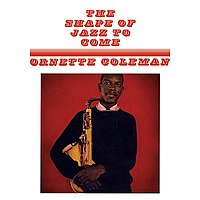
October 26: Ornette Coleman, "The Shape Of Jazz To Come"

Artist: Ornette Coleman
Album: The Shape Of Jazz To Come
Year: 1959
Label: Atlantic


The idea of being unique, innovative, or "free" within the confines of the jazz genre are often rather subjective, and are usually only so in reference to other performers and albums. This is due to the fact that, for the most part, even the most open and free jazz compositions still follow a handful of structural rules formats. Whenever an artist attempted to break from these constraints, it was either a chaotic failure, or they were shunned by the masses due to their extremely unorthodox sound. Clearly, many of these performers were some of the most innovative and important figures in jazz, and at the top of this list of elite musicians stands the legendary Ornette Coleman. Making more roads in "free jazz" and constantly labeled as "avant," there are few artists of any genre who have re-shaped a style and brought into question every rule that was considered "unbreakable." With brilliant experimentation in both structure and style, the music of Ornette Coleman remains some of the most exciting and original recordings in the history of music. Having recorded over five decades, Coleman's catalog is beyond massive in terms of both size, as well as musical content, and it is nearly impossible to find any Coleman recording that is anything short of phenomenal. Though there may have been a few albums before it that were considered "avant," it was Coleman's watershed 1959 recording, the appropriately titled The Shape Of Jazz To Come, that is widely considered as the "breakthrough" avant album, and the record that completely re-wrote every rule on jazz music.

After releasing a pair of stunning records for the Contemporary/OJC label, Coleman was offered a multi-record contract, and he and his quartet quickly entered the studio to record what would become one of the most important albums ever made. With Atlantic Records executive Nesuhi Ertegun working as the producer on the album, the musicians were given all the freedom they desired to craft and shape the album in any way they wished. Upon its release, The Shape Of Jazz To Come was extremely controversial across the jazz scene due to its non-traditional sound and structural approach. Making the album massively important, as well as outright enraging many members of the jazz community, The Shape Of Jazz To Come is the first major jazz record to be recorded without a pianist. This purposeful lack of piano, as well as any other instrument to guide the chord changes leaves the musicians completely free to explore the musical theme, and the songs are as open and unique as anything ever written. The fact that all of the musicians are improvising simultaneously stands as one of the most courageous and innovative approaches, and this reality also did not sit well with many jazz critics. By throwing all of the traditions of every jazz style to the side, The Shape Of Jazz To Come is beyond a pivotal album, and the unsettling and polarizing nature of the exploration is still controversial to this day.

As innovative and visionary as Ornette Coleman was, without the aid and playing of his phenomenal backing band, the album simply would not have existed. Without question, the key element to the success of The Shape Of Jazz To Come is Coleman's partnership with pocket trumpet/cornet master, Don Cherry. Having recorded with the likes of Archie Shepp and Albert Ayler, there are few performers as respected and revered as Cherry. The way in which the two interact is truly stunning, as both musicians freely explore each composition, often completely ignoring the tonal and melodic structure. This freedom was the key to the controversial nature of the album, yet Coleman and Cherry are clearly pushing one another to greater heights on each track, and the results remain among the greatest and most important moments in jazz history. Along with Cherry, on The Shape Of Jazz To Come, Ornette Coleman finally found a rhythm section that was open and talented enough to stick with the free nature of the lead instruments. Double-bass legend Charlie Haden, known for his almost lyrical basslines, stands today as one of the most important and well respected bassists in history. Throughout the album, most notably on "Focus On Sanity," Haden is absolutely fantastic, and his work here represents the finest of his career. Rounding out the quartet is free jazz and bop drummer extraordinaire, Billy Higgins. With well over seven hundred sessions to his name, Higgins stands as one of the most recorded artists in history, and his ability to understand and keep up with Coleman's wild experimentation serves as a testament to his unrivaled playing ability. While Ornette Coleman wrote and leads each piece on The Shape Of Jazz To Come, the reality is, the backing musicians he has with him are the key element that makes the album so legendary.

In the long line of jazz saxophone legends, Ornette Coleman stands alone due to his constant innovation and completely unique musical approach. Often painted as an iconoclast, Ornette Coleman was far more exploratory then his bop-based peers, and his seemingly unbounded nature led him and his music to be largely misunderstood at the time. In retrospect, it is almost amusing that The Shape Of Jazz To Come was so controversial, as throughout the following years, jazz would get so "out there," that one can now see Coleman's album as a swinging, and easily accessible jazz album. Constantly concentrating on playing "what he heard and felt," as opposed to the "proper" harmonic structure of the songs, Coleman often had difficulty finding musicians who could understand and execute his signature sound. His playing was not only more free any open, but far more lyrical and raw than than of his contemporaries, and his sound remains instantly recognizable to this day. The Shape Of Jazz To Come presents every aspect that makes the music of Ornette Coleman so fantastic. From the dark, mesmerizing "Lonely Woman," which is a true jazz classic in its own right, to the more upbeat, smooth and swinging sound of "Congeniality," Coleman proves that, regardless of tempo or mood, his approach is simply stunning. The constant improvisation throughout The Shape Of Jazz To Come is like nothing else one can experience, and the fact that there is not a note out of place serves as a testament to both the musicianship of the band members, as well as the unparalleled writing and leading ability to Ornette Coleman.

Though over time, most albums that were considered "controversial" upon their initial release end up being seen as less "offensive" and become iconic. However, in the case of Ornette Coleman's The Shape Of Jazz To Come, more than fifty years after it appeared, many still argue it is too free and unstructured to be considered "jazz." Clearly, when placed next to some of the most "out there" records that came out in the wake of The Shape Of Jazz To Come, it is far more structured, and easily accessible by even the most casual jazz fan. Yet at the time of its release, the album truly smashed every barrier and tradition of the jazz style, as Coleman did away with any need for a tonal or melodic structure. Proving that one could be just as successful and musically brilliant by almost constant improvisation, the lack of structure put far more pressure on the musicians to deliver, and on every song on The Shape Of Jazz To Come, the quartet delivers in unparalleled fashion. Re-writing the books on how to function as a jazz rhythm section, Haden and Higgins stand today as true innovators of style, and their work on the record is nothing short of awe-inspiring. Making their claim as one of the greatest pairings ever recorded, Cherry and Coleman are clearly musical soulmates, and the flawless way in which they interact with one another remains absolutely unrivaled anywhere else in music history. Serving as the catalyst for the wild, unconstrained, free-jazz exploration that would follow over the next two decades, there are few musicians who have had as much courage and vision as Ornette Coleman, and his 1959 album, The Shape Of Jazz To Come, remains one of the most pivotal, iconic, and truly amazing albums ever recorded.


Standout tracks: "Lonely Woman," "Focus On Sanity," and "Congeniality."

Sunday, October 25, 2009

October 25: Stiff Little Fingers, "Inflammable Material"

Artist: Stiff Little Fingers
Album: Inflammable Material
Year: 1979
Label: Rough Trade


In the early days of the punk rock movement, regardless of the country of origin, the music was almost always driven by either oppressive authorities, or bleak realities of living conditions. From the "SUS" laws of late 1970's England to the harsh living environment of New York City at the same time, as it always tends to do, drastic living conditions led to some of the most amazing and world changing art in history. It goes without saying that for a majority of the last century, one of the most intense cities on the planet was Belfast, Ireland. From the intense violence and civil disorder emerged oe of the most hard hitting and brilliant bands of the entire punk explosion, Stiff Little Fingers. Though they are often referred to as "The Irish Clash," the title is both misleading and damaging, as Stiff Little Fingers have their own, unique sound, and never cared to explore the range of sounds as The Clash. Bringing an amazing fusion of stripped down instrumentation and unrelenting, in-your-face vocals, Stiff Little Fingers laid the groundwork for later bands like Street Dogs, River City Rebels, and Swingin' Utters among countless other groups. Only playing for a few years before disbanding and then reforming with new lineups, Stiff Little Fingers' sensational 1979 debut record, Inflammable Material, is easily one of the most perfect punk records ever made, as well as one of the most phenomenal recordings in history.

As was the case with many punk albums of the late 1970's, the release of Inflammable Material has a rather strange story, and it almost never saw the light of day. After agreeing to a contract with Island Records, the group recorded the album, but were then told that the label changed their mind, and the group was left to release and distribute the record on their own. After going to a number of labels, the band found an upstart record label called Rough Trade Records. Truth be told, Inflammable Material was the first ever release from Rough Trade, and it quickly sold well over fifty thousand copies. The sales of the album helped the record to crack the top fifteen in album sales on the UK charts, and Inflammable Material was the first ever independent record to chart anywhere on the charts. Stiff Little Fingers took these sales as a sign to move to London (which would lead to the first of many lineup changes), and their live performances, as well as the record itself, remain among the finest and most influential of their generation. The album itself is filled with powerful, yet fun angst-ridden anthems, yet the group has a bit more of a "friendly" approach then say, The Sex Pistols. Clearly bringing a slightly more musical approach to their album, Inflammable Materials lives on a testament to the fantastic group of musicians that made up the original lineup of Stiff Little Fingers.

Raw, straightforward, and without any distortion, the music found throughout Inflammable Material is truly as pure as the punk sound can get. From military style cadences to all out speed assaults, Stiff Little Fingers present the entire gamut of the punk ethos in brilliant fashion. Though he left the band instead of moving to London, drummer Brian Faloon is absolutely phenomenal throughout all of Inflammable Material. Setting himself aside from a majority of his peers, Faloon is easily one of the most technically gifted drummer of the punk genre, and constantly pushes beyond "just bashing for speed." The rhythmic textures that he is able to create enables the band to have a great amount of diversity in the style and sound of their songs. Helping this along is the other half of the rhythm section, bassist Ali McMordie. Though he would later play with everyone from Sinead O'Connor to Moby, it is his work with Stiff Little Fingers that stands as his finest. Winding in and around the drums and guitar, McMordie changed the image on the role of the bass within the punk lineup. Guitarist Henry Cluney is equally as fantastic as his bandmates, destroying every song, whether it be a simple SKA-based riff or a crushing punk chord-fest. Though the band had a number of other guitarists over th years, there was never another with the power and tone of Cluney, and it is one of the key reasons that Inflammable Material is so fantastic.

Supplying lead vocals, as well as a second guitar is punk rock icon, Jake Burns. With a voice that lands somewhere between Johnny Rotten and Joe Strummer, Burns brings all of the attitude that one could want, yet is always clear and concise with his vocal work. Burns delivers brilliant vocal performances on every track, easily transitioning between singing and screaming. In what is by far one of the most iconic and most famous songs ever written, Stiff Little Fingers perfectly describe the everyday life of the war-torn Belfast in their classic, "Alternative Ulster." However, though the fury of the punk ethos is clearly present, lyrically, the band is NOT rallying against the "powers that be," but instead encouraging the "change" that is needed to come from within each individual. This almost positive mood and approach is yet another way in which Stiff Little Fingers set themselves far apart from their peers. Proving their wide range of influences, as well as perhaps causing the comparisons to The Clash, Inflammable Material contains a unique and fantastic cover of the Bob Marley classic, "Johnny Was." The group spins the song brilliantly, and it is easily one of the most beautiful and almost non-punk songs one will ever find. Clocking in at just over eight minutes, the song proves that there was much more to Stiff Little Fingers then a simple "punk" label. After listening to the cover, one can clearly hear where the SKA/punk fusion bands of the late 1980's drew much of their inspiration. Everything that makes Stiff Little Fingers great, from the musicianship to the vocals, are on display on this cover, and it remains one of the most brilliant moments in the history of punk rock.

Though they are often placed in the "second" wave of punk icons, after experiencing their debut record, one cannot argue the importance and brilliance of Stiff Little Fingers. As unique as any of their contemporaries, whilst still subscribing to the punk ethos, the band created some of the most high energy, yet universally appealing music of their generation. The combination of flawless musicianship and fantastic lyrics enable Inflammable Material to stand the test of time, and the truth is, the record still beats an overwhelming majority of the albums released since it first appeared in 1979. The rhythm section of Faloon and McMordie are easily one of the beast of the time, and the way in which the two interact is a truly special sound to experience. With the dueling guitars of Cluney and Burns rounding out the bands' sound, there are few other groups who presented as much sheer sound, yet were able to keep it from becoming overpowering or distracting. This ability to find the ideal balance in power and volume is yet another aspect that makes Stiff Little Fingers so unique, and the unmatched vocal talents of Burns pushes them into the most elite group of bands of their era. Proving that even without a major label behind them, great music would still sell, Stiff Little Fingers remain today one of the most important and influential bands in history, and their 1979 debut, Inflammable Material similarly stands as a true classic an inspiration for countless bands since its initial release.


Standout tracks: "Suspect Device," "Johnny Was," and "Alternative Ulster."

Saturday, October 24, 2009

October 24: Masshysteri, "Vår Del Av Stan"

Artist: Masshysteri
Album: Vår Del Av Stan
Year: 2009
Label: Unsigned


While many incorrectly assume that a majority of musical innovation comes from the two most dominant countries in terms of world-wide music sales (the U.S. and U.K), the reality is, all over the planet, people are constantly attempting new takes on time-honored styles. Whether it was Björk and her wildly eclectic vocals and backing sounds or the mesmerizing chants of Huun-Huur-Tu, every day there is another musician attempting to pull popular music from its tragically stagnant state. Furthermore, while it is difficult to claim that they will stand the test of time, there are a small handful of very recent releases of these types of artists that are simply so fantastic, that they cannot be overlooked. Among this elite group of current artists that are presenting new and exciting musical approaches is a group that fuses together the sounds and style of surf rock with the urgency and energy of the early 1980's punk scene. Hailing from the surprisingly vibrant music community of Umeå, Sweden, and standing as one of the most intriguing new artists, and most likely the only UNSIGNED band that will appear in this blog, Masshysteri. With only a pair of 7" albums and an LP to their name, the latter is one of the most stunning full length debuts in history, and easily the greatest album of 2009, standing as the most recently recorded "must own" album, Masshysteri's Vår Del Av Stan.

Discovering new bands of this nature is usually only done by one process: going to the source and "accidentally" finding their music. In my own case, this was true as Vår Del Av Stan was handed to me at Sound Pollution Records in Stockholm when, in March, I asked the manager for "the best current Swedish rock band." When I first experienced the album a few hours later in my hotel room, I was absolutely floored. The energy and technical brilliance of Masshysteri is like nothing else in music today, and they are a band that truly has "something for everyone." Having since experienced their live performance, it is clear that this band is not one of "studio magic," and they are by far one of the most original and exciting bands in the current music scene. Forming out of the band, The Vicious, and coming from the same town as International Noise Conspiracy and Cult Of Luna, it is clear that Umeå is a breeding ground for top-notch, original music. The fact that the album title roughly translates to "our part of town," is a perfect choice, as the band display to the world the best of what Umeå has to offer musically. The trio that makes up Masshysteri present some of the most honest and straightforward, high energy rock to be heard in decades, and there is not a moment anywhere on Vår Del Av Stan that is anything short of phenomenal. Regardless of whether you speak Swedish or not, the power and spirit of the music and vocals transcends language, and once again proves that music has no barriers.

In many ways, Masshysteri is an all-star band of Umeå musicians. Although they formed out of The Vicious, the reality is, each band member has a very impressive musical resumé. Drummer Erik (whose last name I simply cannot find) is also the singer for the band Insurgent Kid, and his playing throughout Vår Del Av Stan is truly phenomenal. Easily able t0 slide from slower, more menacing playing to outright explosive cadences, his amazing talents are spotlighted on the song, "Istiden." Coming from her work with International Noise Conspiracy, singer and bassist, Sara Almgren truly finds the perfect vehicle for her abilities with Masshysteri. Easily changing between winding basslines, like that found on "Lule" and more aggressive, almost sinister sounds like on "Falsk," Almgren proves that she is in a class all her own. Rounding out the band is singer and guitarist, Robert Patterson. Having honed his skills with bands like Regulations and The Lost Patrol Band, he has never sounded as good as he does throughout Vår Dev Al Stan. With absolutely blistering guitar progressions all over the record, there has simply never been as perfect a blend of surf guitar with a punk ethos. Able to bring power chords as well as truly stunning patterns, like that found on "Liv Och Död," Patterson is truly a one-of-a-kind talent, and is easily one of the most creative players in modern music.

The music itself is easily one of the most unique and fantastic sounds to emerge from anywhere in the last few years. Taking influence from everyone from Chuck Berry (whom they often cover live) to Black Flag to Dick Dale, this is a group of musicians who are clearly well versed in a wide range of musical styles. With songs like "Hatkärlek" and "Monoton Tid" screaming with the vibe of huge waves and beaches, the speed and attitude that the trio puts behind it makes it an entirely new, wonderful musical experience. It is very much due to the amazing vocal performances that run throughout all of Vår Del Av Stan that the album is absolutely addicting. Though Patterson handles nearly all of the lead vocals, the regular harmonies from Almgren take their vocal sound to another level. Their voices blend perfectly, whether they are both singing or screaming, and one would be hard pressed to find a finer vocal duo in today's music scene. As they share and dual the vocal sections, one can quickly feel the attitude behind the words, and there are countless sing-along anthems on the album. Again, even if one does not understand any Swedish at all, the spirit behind the vocals are never lost, and are absolutely just as enjoyable as they are to native speakers. Though the music throughout Vår Del Av Stan is extraordinary, the vocals from Patterson and Almgren are the perfect finishing touch, and make the album a truly special experience.

The age old saying that music can transcend any barrier has rarely been more true then in the case of Swedish rockers, Masshysteri. With a completely unique and captivating sound that fuses together surf rock and punk rock, the band has created a sound that will certainly prove to be timeless. Currently unsigned, but distributed by small labels throughout the world, the group are unquestionably the most exciting and original band to come out in years, and after experiencing Vår Del Av Stan, one can only wait impatiently for their next full length release. With flawless musicianship and all of the authentic energy and attitude that one could want, Masshysteri are poised to be the band that finally proves that Umeå, Sweden is one of the hotbeds within the current music scene. Topping off their sensational music with the stunning vocal combination of Robert Patterson and Sara Almgren, Masshysteri can easily hold their own with any band anywhere on the planet. Perhaps the ultimate "DIY" band in the current music scene, their raw and stripped down sound is everything one could want in high energy, original rock music, and the way in which they infuse the sound and spirit of surf-rock is nothing short of phenomenal. Though only released in early 2009, the debut full length album from Masshysteri, Vår Del Av Stan, is truly an "instant classic" and absolutely the most original and exciting album to come out in years, making it an absolutely essential album to own.


Standout tracks: "Vår Del Av Stan," "Begrav Mig," and "Monoton Tid."

Friday, October 23, 2009

October 23: Circle Jerks, "Golden Shower Of Hits"

Artist: Circle Jerks
Album: Golden Shower Of Hits
Year: 1983
Label: Allegiance


Though the hardcore movement unquestionably began on the East coast of the U.S., there is similarly little doubt that a majority of the most intense and often violent hardcore bands came from the opposite side of the country. For whatever reason, the beach towns of southern California were able to yield a brand of hardcore music that took the aggression and rebellion of the genre and pushed it to a level never before heard. While groups like Black Flag and The Germs definitely had their share of anger in their music, there was one band that was in their own universe when it came to rage and violence within their music and crowd, Circle Jerks. Taking the attitude of The Sex Pistols and the speed and sparse arrangements of The Ramones and then fusing it with the pure aggression and fury of the local surf/skate scene, the intensity behind the music of Circle Jerks truly remains unrivaled to this day. Paving the way for later bands like Dropkick Murphys, Pennywise, and even The Offspring, Circle Jerks remain one of the most highly respected bands on their generation. Releasing three phenomenal records before changing their lineup, easily their finest work was the final release of this trio, Circle Jerks' magnificent 1983 record, Golden Shower Of Hits.

Circle Jerks formed in late 1979 after singer Keith Morris abruptly left Black Flag and founded the new group with later Bad Religion guitarist, Greg Heston. Bringing a bit more musicality to the sound, as well as making the songs slightly longer, Morris kept the same attitude and ferocity of his previous band. While Golden Shower Of Hits is easily the most musical Circle Jerks album, it is perhaps best known for the simultaneously strange and sensational title track. While at first listen, "Golden Shower of Hits (Jerks on 45)" may seem just nothing more than a silly grouping of covers of different songs, the six different songs that are played on the track actually form a completely new song. Covering The Association, The Carpenters, Starland Vocal Band, Paul Anka, Captain & Tennille, and Tammy Wynette, the song is easily one of the most unique compositions in the history of music. The "new" song that Circle Jerks create becomes a tale of young love, teen pregnancy, a shotgun wedding, and a divorce and there has simply never been anything similar ever recorded. In many ways, this is the true genius behind Circle Jerks, as they can take some of the most cheesy songs ever, and turn them into something new and dark. Truthfully, "Golden Shower of Hits (Jerks on 45)" is such a fantastic moment in music history, that it must be experienced firsthand to be properly appreciated.

While the attitude and overall musical approach of Morris' previous band is intact, the new musicians by whom he is surrounded have their own unique style, and each band member is a legend in his own right. Easily one of the most legendary punk guitarists in history, Greg Heston alternated between Redd Kross and Circle Jerks throughout a majority of the 1980's. Later founding punk supergroup, Black President, his style and tone have been mimicked, but unequaled for decades. Playing with a stunning amount of energy and style, bassist Roger Rogerson redefined the position in many ways. From his playful solo that closes, "When The Shit Hits The Fan," to his grinding and often menacing playing throughout the rest of the album, Rogerson remains one of hardcore and punks' elite musicians. Rounding out the band is drummer extraordinaire, John Ingram. Having worked with everyone from Ben Harper to Patti LaBelle, one would be hard pressed to find a musician with a more diverse recorded catalog. The combination of Rogerson and Ingram create easily one of the most powerful rhythm sections in history, and it is very much their sound that is credited as the birthplace of the "slam" style of punk rock. Even when the band members sound slightly disjointed, it is quickly apparent that this was pruposeful, and it fits perfectly on every song.

At the core of the sound of Circle Jerks lies the unparalleled vocal style of Keith Morris. Having already solidified himself as a legend on Black Flag's Nervous Breakdown EP, Morris has one of the most distinctive and mesmerizing voices in music history. Pushing the limits on the spoken-singing style, the power and emotion behind Morris' vocals are truly unrivaled. With his voice landing somewhere between Jello Bifara and Mike Muir, there has never been another vocalist with the attitude and pure vocal brilliance of Keith Morris. From only a quick listen to any of the songs found on Golden Shower Of Hits, it is immediately apparent why Circle Jerks' shows were notorious for the level of mayhem, as Morris has the perfect vocal approach for whipping a crowd into a frenzy. Much like his vocals, the song titles and lyrics therein leave nothing to question, as like many punk and hardcore bands, "subtlety" was of no use to Circle Jerks. With titles like "Parade Of The Horribles" and "Product Of My Environment," the songs are straight to the point and completely devoid of filler in any sense of the world. In one of the greatest and most high-octane rally cries ever, the group gets slightly political when on "Coup d' Etat," Morris preaches, "...the government can't stop a throng, struck strong...let us through, pulverize...new comes in..." With to the point lyrics delivered in a forceful and captivating manner by Keith Morris, much like his previous band, Circle Jerks compose the perfect soundtrack for a full-scale riot.

Whether it is a rapid, hard hitting song like "In Your Eyes" or a heavy metal, Sabbath-esque track like "Rats Of Reality," Circle Jerks completely re-wrote the books on both the punk and hardcore genre. Easily one of the most intense and fierce groups in music history, their music is unapologetic and unrelenting, as the band pummels the listener over and over throughout every one of their albums. With the phenomenal rhythm section of Rogerson and Ingram, the group is all over the place with the song tempo, moving from deep grooves to out of hand, lightning fast punk classic. Greg Heston's guitar playing has rarely sounded more authentic, and there is not a moment anywhere on Golden Shower Of Hits where his playing is anything short of extraordinary. Rounded out by the absolutely tremendous vocal stylings of Keith Morris, Circle Jerks remain one of the most highly respected and unequaled bands of their generation. With song themes ranging from the simplistic ideas of "Junk Mail" to cutting social critiques and angst-ridden anthems, Circle Jerks present everything that makes punk and hardcore so enjoyable. Though the lineup would go through many changes in the years to come, the quartet featured on Circle Jerks' 1983 album, Golden Shower Of Hits, is by far their finest, and the resulting album stands today as one of the most pivotal and awe-inspiring records ever recorded.


Standout tracks: "Parade Of The Horribles," "Coup d' Etat," and "Golden Shower of Hits (Jerks on 45)."

Thursday, October 22, 2009

October 22: LL Cool J, "Radio"

Artist: LL Cool J
Album: Radio
Year: 1985
Label: Def Jam


While writing original rhymes and creating new, interesting beats are certainly the most important elements of a successful hip hop song, there is one aspect that is even more difficult to attain within the genre: longevity. There is perhaps no other genre with more "flash in the pan" artists then hip hop, and performers whose careers last even a decade are very few and far between. Standing in strong opposition to this trend, and remaining one of the most highly respected and influential artists to ever pick up a microphone is the man who continues to reinvent himself, and easily one of the longest running "ladies men" in history, Mr. Smith himself, LL Cool J. From his humble beginnings as a teenager in New York City, to his worldwide success in music, film, and television, there are few artists of any genre who have been as fortunate as LL Cool J, and he stands today as a true innovator of style within hip hop, with his contributions perfecting a movement that remains to this day. With his flawless lyrical delivery, and his somehow endearing, yet overly cocky content, LL Cool J is truly a one-of-a-kind talent, and his songs easily stand the test of time and are as enjoyable today as they were when they were first released. Though he would find greater commercial success with his later records, there is no question that it is LL Cool J's phenomenal 1985 debut record, Radio, that stands as not only his greatest work as an artist, by easily one of the most pivotal records in the history of recorded music.

Though many may not realize it, along with Run-D.M.C. and Beastie Boys, LL Cool J was the third of the key artists that helped Def Jam Records get off the ground. After sending Rick Rubin his homemade demo when he was only sixteen, LL Cool J dropped out of high school after he was signed to the up and coming label. After releasing the single, "I Need A Beat," Def Jam secured a distribution deal with Columbia Records, and LL Cool J was rewarded with the opportunity to record and entire album. Much of the success of Radio lies within the work of Def Jam founder and now-super producer, Rick Rubin. Credited on the back cover of the album as "Reduced By Rick Rubin," it is a fitting statement, as the minimalist production found throughout the album was a major break from the trends of the time. In many ways, the production and sound on Radio perfectly reflects Rubin's punk rock upbringing, as the minimalist beats and rough, edgy sound is very much the same approach as that of the greatest punk bands in history. This is another aspect that set LL Cool J aside from his peers, as using few samples and sparse beats, it put the primary focus on the lyrics and delivery, which still stand as some of the greatest ever.

The combination of the production of Rubin and the DJ work of Cut Creator create a truly classic hip hop sound. Relying on deep bass downbeats and simple record scratching, Radio proves that one need not get overly elaborate to create a musical masterpiece. While there are traditional samples from James Brown and Incredible Bongo Band's "Apache," DJ Cut Creator also shows off his creativity and diverse knowledge of music. Mixing in samples from AC/DC and Yes among others, as well as a brilliant use of go-go funk masters Trouble Funk, Radio shows that often times, less is more, as the lack of samples help to highlight the true skills of the artists on the album. It is also the sparse nature of the music that gives Radio, a hard-hitting, and authentic "street" feel, as well as helping to foster the more aggressive and powerful mood of LL Cool J's delivery. Even on the more "ballad-based" songs, the hard, punching beats keep the energy high, and it truly pushes the limits on what one can consider a "ballad." However, even though the backing beats and music are minimalist in nature, they also manage to match the energy and force of the vocals, and this juxtaposition is part of the true genius behind both Rick Rubin's production, as well as Radio as a whole.

Unlike the other early Def Jam artists, LL Cool J was unique for a number of reasons, most importantly, his swagger and the fact that he was a solo artist. Even if the beats and music were far more prominent than they are on Radio, there is no question that the amazing emcee skills and style of LL Cool J would still have been the focus of the record. Possessing one of the most clear, cal, yet powerful deliveries in hip hop history, even after more than twenty years, LL Cool J's rhyming remains largely unrivaled. Crafting brilliant rhymes and some of the greatest visuals ever, there are few artists who rap with as much force and energy, whilst not becoming cliché. Also pushing into more risqué, more sensual rhymes at times, Radio, features a small peek into the true "ladies man" image that LL Cool J would perfect throughout the 1990's. It is on Radio that LL Cool J takes the art of "b-boying" to an entirely new level, and his brilliant, bragging rhymes took the idea of self-promotion set the stage for the self-indulgence that still dominates the genre to this day. Whether he is extolling the virtues of his prized boom box ("I Can't Live Without My Radio") or how amazing and romantic a lover he is ("I Can Give You More"), there had simply never been another emcee with the bravado of LL Cool J. Yet, even with this extraordinary swagger, if he was not delivering quality lyrics, he would never have found success. Without any other group members, the lyrical content well completely on LL Cool J, and his ability to write amazing rhymes remains largely unrivaled to this day.

From television and film star to hip hop pioneer to international sex symbol, LL Cool J is truly a one-of-a-kind artist, and is easily one of the most influential performers in history. With an inner drive that is like no other, as a teenager, LL Cool J fought his way to the top of the hip hop scene, and in the process, became one of the most well respected and most talented artists in the history of the genre. Bringing as much aggressive energy as anyone else, with clear, original rhymes, LL Cool J exploded onto the music scene and never looked back. From his signature Kangol hat to his gold chains and impeccable physique, LL Cool J was truly the "total package," and all of this contributed to him completely re-writing the books on hip hop style and substance. Presenting the energy and grit of "the street," with some of the most outrageous, yet endearing self-proclaiming rhymes in history, LL Cool J bragged about his talents, and delivered on every single claim. Yet one of the most amazing aspects is that, within these overly boisterous rhymes, he rarely finds the need to swear, an art that has truly become lost within the current generation of rappers. Still making records more than twenty years after he first burst onto the scene, LL Cool J transcends the term "icon," and stands as one of the most important and revered performers in music history. Similarly standing as one of the most iconic and truly landmark moments in music history, LL Cool J's 1985 debut album, Radio, represents everything that makes hip hop music great, and is still as fresh, powerful, and enjoyable today as it was more than two decades ago.


Standout tracks: "I Can't Live Without My Radio," "Rock The Bells," and "I Need A Beat."

Wednesday, October 21, 2009

October 21: Blind Willie Johnson, "Dark Was The Night"

Artist: Blind Willie Johnson
Album: Dark Was The Night
Year: 1927 - 1930 (recorded), 1998 (released)
Label: Columbia/Legacy


Though many look to Robert Johnson as perhaps the most important blues musician of all time, the reality is, there were a large number of equally brilliant blues players that pre-date his history recordings. Artists like George Washington Phillips and Barbecue Bob helped to lay much of the groundwork for the blues style that is still played to this day. However, if one considers Johnson as the father of the Delta Blues style, then one must give the title of father of gospel/spiritual blues to a performer of equal merit, who pre-dates Johnson's recordings by nearly a decade: Blind Willie Johnson. With one of the most distinctive voices of any performer in history, and a powerful singing style that perfectly blends slow, sorrowful blues with the conviction and emotion of traditional gospel, it is nearly impossible to find any musician who came after him that was not in some way influenced by the music of Blind Willie Johnson. With all of his recordings taking place before 1930, a majority of his music was largely unavailable until the birth of the compact disc, when a few record labels began releasing compilations of his music. Now there are more than a dozen collections from which to choose, each of which is absolutely fantastic. However, standing far above all of the collections is the 1998 release, Dark Was The Night, which with its brilliant mastering and track listing, represents one of the most uniquely stunning albums one can experience.

From his simple "guy and guitar" approach to his songs, to the truth behind his painfully sad life, there are few artists in history that can boast as much "authenticity" as Blind Willie Johnson. While many blind artists were born with the condition, Willie Johnson lost his vision at the age of seven...when his step-mother, to get revenge on his father, threw a handful of lye into young Willie's face. Though Johnson would never see again, it was after this horrific incident that he taught himself how to play piano, as well as to play guitar in standard tunings, as well as his signature slide guitar style. However, this would hardly be the end of his heartbreaking story, as Johnson would remain poor his entire life, and aside from a handful of larger performances, he lived his life playing for spare change on the streets of Texas. These street performances were a mixture of music and gospel preaching, and this combination is reflected in every song found on Dark Was The Night. Though he eventually bought a home, in 1945, it burned to the ground, and with nowhere else to go, Blind Willie Johnson was forced to sleep in a wet bed in the remains of his former home. It is believed that these conditions are what led to him contracting pneumonia, and after being denied hospital treatment due to his race, Johnson died less than two weeks after the fire. Like every legendary bluesman, the spot of his grave is in question, yet one cannot argue that, when it comes to singing the blues, few have as much "street cred" as Blind Willie Johnson.

While he may not receive as much attention as other early blues masters, the truth of the matter is, his songs are just as powerful and have been re-worked and covered just as much over the years. From Led Zeppelin's modified version of "Nobody's Fault But Mine" to Mississippi Fred McDowell's cover of "Keep Your Lamp Trimmed and Burning" to Peter, Paul, and Mary playing "If I Had My Way I'd Tear the Building Down" (retitled as "Samson And Delilah") , the influence of Blind Willie Johnson can be seen all across the musical spectrum. All of the homage paid to Blind Willie Johnson is undoubtedly due to the raw and honest sound of his voice, as well as the heartfelt, straightforward style with which he wrote. Every song found on Dark Was The Night easily transcends all boundaries of humanity, and is very much a presentation of music in it's most simple and pure form. Yet even with this simplicity, the power and style with which Blind Willie Johnson plays is absolutely unequaled. The mixture of country styles, gospel, and pure blues is like nothing else ever recorded, and Johnson's ability to almost have three distinct vocal styles is yet another reason why he remains in a class all his own. Whether gruff and gritty or a more relaxed, softer approach is used, there is truly something for everyone within the music of Blind Willie Johnson, and it is also why such diverse artists have drawn from his recordings.

Throughout the entire history of blues music, there is simply no other voice that even remotely compares to that of Blind Willie Johnson. With more gruff and deeper emotion than nearly any other performer in history, the voice of Blind Willie Johnson is truly one of a kind. Often almost growling the lyrics, it is clear that Johnson simply lets the spirit of the song flow directly through him, and the results are rarely anything short of extraordinary. Even when he is slightly more relaxed, such as on "Bye And Bye I'm Goin' To See The King," Johnson's voice is still overflowing with conviction and emotion. Nearly every song found on Dark Was The Night is some sort of spiritual, many of which are modified traditional songs. This is largely due to the fact that, since a young age, Johnson had always aspired to be a preacher. From the beautiful, slower, "Let Your Light Shine On Me" to the more fast paced, dirtier sound of "Mother's Children Have A Hard Time," Blind Willie Johnson is truly mesmerizing on every track. Also joining Johnson for a handful of the songs found on Dark Was The Night is a female vocalists whose identity is slightly in question. While Johnson's second wife, Angeline Johnson sang with him often in his later years, many records seem to indicate that the person featured on the actual recordings was in fact Johnson's first wife, Willie Harris. Regardless of which of his wives it is, her performances are absolutely phenomenal, and her soft, light voice provides a fantastic contrast to Johnson's rough growl. The contrast in styles is perhaps no more apparent or beautiful then one finds on the "John The Revelator," a song that would later become a regular part of Nick Cave's live sets, as well as the inspiration for the Bad Seed's song, "City Of Refuge."

The idea of "just because you sell lots of records, doesn't mean you're talented" is perhaps no more true then in the case of Blind Willie Johnson. A performer who could not even sell enough records to keep from busking for change on the streets, there are few artists who have had such long running and widespread influence as Johnson. Fusing together the power and conviction of gospel songs with the raw emotion of blues music, the music of Blind Willie Johnson is truly a sound that must be experienced firsthand to be completely understood. With his sorrowful, often gravely voice singing simply, yet passionately over his stellar slide-guitar playing, Dark Was The Night features more than half of the thirty stunning tracks he recorded in his career. From the tragic cause of his blindness, to his death being caused by him being forced to live in the rubble of his burned-down home, there are also few artists anywhere in history who are as "real" as Blind Willie Johnson. A man who knows heartbreak in every sense of the word, his experiences and pain come through clearly in every song, and it makes his music some of the most captivating and breathtaking ever recorded. Though one cannot go wrong with any of the compilations that are available, for the finest package of the recordings of the legendary Blind Willie Johnson, seek out 1998's Dark Was The Night for a truly essential and absolutely stunning musical experience.


NOTE: There is a 2003 release from Deep Sea Records which is also called Dark Was The Night, but it is, in fact, a tribute CD of other artists covering Blind Willie Johnson's songs.


Standout tracks: "If I Had My Way I'd Tear The Building Down," "John The Revelator," and "It's Nobody's Fault But Mine."