Tuesday, June 14, 2011

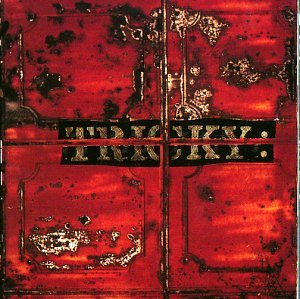
June 14: Tricky, "Hell Is Around The Corner"

Artist: Tricky
Song: “Hell Is Around The Corner”
Album: Maxinquaye
Year: 1995


CLICK HERE TO LISTEN (will open in new tab)


While one can easily make the case that “no genre is easy,” there are certainly a handful of musical styles that seem to be more difficult to execute properly when compared to others.  As the decades have passed, it is clear that anything based on artificial or electronic sounds has an extreme learning curve, and though “anyone with a computer” can make such compositions, only a select few have proven to be able to do so with true expertise.  Yet it is from these handful of “electronic visionaries” where some of the most uniquely brilliant music of the past two decades has emerged, and when done properly, few of the sub-styles of the electronic sound are more breathtaking than so-called “trip hop.”  While some artists of this style firmly root themselves in one of the two core sounds, it is those few who are able to strike the perfect balance that yield the finest results.  Among those elite musicians, there are none that bring the sound and mood that one finds within the sonic bliss from the artist known as Tricky.  After appearing on parts of Massive Attack's 1991 album, Blue Lines, Tricky began working on his solo debut, and the resulting album, 1995's Maxinquaye, remains the high-water mark for the "trip-hop" genre.  Perfectly balancing smooth, slow rhyming with some of the most hypnotic beats and soundscapes ever created, there is no single song that better defines the entire trip-hop genre than what one can experience on Tricky's monumental 1995 single, "Hell Is Around The Corner."

The moment that "Hell Is Around The Corner" begins, both old and newer music fans of the time will be drawn to a rather familiar sample which provides the backbone for the song.  The sample itself is from Curtis Mayfield's song, "Ike's Rap II," and it was first introduced to the wider audience of trip-hop and electronic music a few months earlier when it served a similar purpose on Portishead's equally brilliant "Glory Box."  The smooth, soaring strings and deep, meandering bassline provide one of the most mellow, yet mesmerizing musical combinations in history, and it is nothing short of stunning to consider how perfectly it works in each incarnation.  However, on "Hell Is Around The Corner," the sample is given a bit of an edge with the additional drum beats that accentuate every other note, and when the sample drops out, it is this cadence that provides a stark, almost unnerving tone.  This somewhat dangerous tone matches the songs' title masterfully, and it is the way in which the overall production gives it a "dark alley" feel that makes it such a unique musical experience.  Even in the sampled "record crackle," there are moments where it almost sounds like rain hitting the pavement, and this is yet another way which one can hear just how far Tricky pushed the sonic limitations throughout "Hell Is Around The Corner."

Along with the flawless production of the song, Tricky's vocals are just as enthralling, both in terms of sonic quality, as well as the mood of the lyrics.  In complete contrast to the trend of the time, Tricky makes a point on "Hell Is Around The Corner" to perform his rhymes at a staggeringly slow pace, and yet it is this tempo that also enables each word to hit with maximum impact.  This speed also allows his slightly raspy voice to blend perfectly with the music over which he performs, and the slight echoes that are placed at random times enhance the hazy, almost ghostly tone of the song.  It is also the rhythm he uses, as well as the almost lulling emphasis that brings out the darker feeling, reflecting this same tone in the music.  The way in which his vocals push the overall mood of the song to this extent even surpasses his predecessors on many levels, and though one can clearly hear connections to the acts he worked with previously, there is no question that "Hell Is Around The Corner" is an entirely unique musical vessel.  Yet the link to Massive Attack is not hidden at all within the lyrics, as they are the exact same that were used on their song "Eurochild."  However, one cannot overstate the sense of "cool" that Tricky injects into the lyrics on this take, and whether he is name-checking clothing brands or dealing with his inner demons, "Hell Is Around The Corner" is without question the finest vocal performance of his career.

To find perfection within any genre of electronic-based music is quite a task, as there are scores of under-talented and over-egoed tracks cluttering up the scene.  Yet when one does find one of those truly special recordings, it quickly puts the others into proper perspective, and there is also an instant appreciation for the balance and technique of the artist in question.  Having clearly learned a great deal about mixing moods and styles, as well as how to push a song to its fullest potential from working with other seminal artists of the genre, it is perhaps a bit less surprising that Tricky's 1995 debut has stood the test of time.  Even after almost two decades, it remains unmatched on many levels, and the songs are just as captivating now as they were when the album was first released.  It is the way in which each track is able to reinvent the idea of "trip-hop" in a fresh way that separates Maxinquaye from its peers, and it is also Tricky's brilliant vocal work that set the standard for the genre.  Every necessary element is perfectly balanced on "Hell Is Around The Corner," and though many other tracks on the album are absolutely stunning, it is this performance that manages to rise slightly above the rest.  Though it is often quickly linked to other songs that use the same sample, it is certainly worthy of that company, and manages to retain its individuality in this circumstance.  From the execution of this distinct take to the uniquely sedative vocal work, there are few tracks from any form of electronic music that can hold their own alongside Tricky's superb 1995 song, "Hell Is Around The Corner."

Monday, June 13, 2011

June 13: Daily Guru, "Gurucast #76"

CLICK HERE TO LISTEN (will open in new tab)


(Left Click (PC) or Command-Click (Mac) to save it to your desktop...it's about 75MB)

One hour of amazing music and commentary from "The Guru" himself.

Tracklist (all links are to MY review of that artist, song, or album):
1. The Ramones, "Judy Is A Punk"  1977/03/31, CBGB's
2. Blonde Redhead, "Melody Of A Certain Three"  Melody Of Certain Damaged Lemons
3. Public Enemy, "Shut 'em Down"  Apocalypse 91: The Enemy Strikes Black
4. The Animals, "Don't Let Me Be Misunderstood"  Animal Tracks
5. EMA, "California"  Past Life Martyred Saints
6. Mick Harvey, "Frankie T & Frankie C"  Sketches From The Book Of The Dead
7. Boxcutter, "Panama"  The Dissolve
8. Madonna, "Borderline"  Madonna
9. This Bike Is A Pipe Bomb, "The Arguement"  Front Seat Solidarity
10. The Clash, "Career Opportunities"  Live At Shea Stadium, October 1982
11. Vic Ruggiero, "Emelia"  Living In Sin
12. Charlie Parker, "Chasin' The Bird"  The Complete Savoy Sessions
13. Notorious BIG, "The What"  Ready To Die
14. Ros Sereysothea, "Tonight, Dance"  Groove Club Volume 2: Cambodia Rock Spectacular
15. UK Subs, "500 Cc"  Brand New Age
16. Lou Reed, "Real Good Time Together"  Street Hassle

Sunday, June 12, 2011

June 12: Big Star, "September Gurls"

Artist: Big Star
Song: "September Gurls"
Album: Radio City
Year: 1974


CLICK HERE TO LISTEN (will open in new tab)


Within every genre, there are clear turning points that have helped to define that style of music as it stands today.  While some of them are quite obvious, there are a handful of such moments that have manged to somewhat slide into the periphery of music history, and yet as soon as one hears these songs, their influence is quite clear.  This is especially true within so-called "pop music," as its form as shifted so drastically with each decade that in many ways, one can argue it has no actual shape.  However, underneath every pop song, regardless of its face, are a handful of common threads, and it is these elements that make it possible to link nearly every modern pop song back to a few essential groups.  Among the bands that shaped what rock-based pop music would sound like, few were more important that Big Star, and yet they remain one of the most tragically overlooked groups in history.  Taking the drive and grind of the "arena rock" bands of the early 1970's and blending them together with some of the most beautiful melodies and harmonies in history, it is Big Star who largely innovated the idea of "power pop."  Though they had a few significant lineup changes during their comparatively short career, each of their three albums is brilliant in its own right, yet one can quickly understand just why they are such an important band by hearing their timeless 1974 single, "September Gurls."

From the first notes of "September Gurls," the pop perfection that the song boasts from end to end is instantly clear, and the tone from the guitar of Alex Chilton is able to touch both the music from previous generations, as well as future sounds in a single piece.  Though many artists of the era were certainly innovating, it was this element from "September Gurls" that was one of the most significant, as the exact sound can be heard in more modern singles, and it is this moment that serves as the bridge.  There is a slightly bluesy undertone to the guitar work, and there is also a bit of attitude, and it is the way in which Chilton is able to bridge these sounds with the light and captivating mood that makes the song so unique.  Bassist Andy Hummel adds a fantastic bounce to the song, and it also enables "September Gurls" to achieve a very smooth, light groove that has rarely been matched since.  Adding to this is drummer Jody Stephens, and one would be hard pressed to find a better example of the "classic" 1950's drum sound on any other track of the era.  It is the way that the song sways back and forth that makes it the quintessential pop song, and there are moments where the overall level of perfection becomes almost cliché.  Furthermore, the fact that the song sounds just as relevant and fresh today as it did more than thirty years ago proves the brilliant uniqueness and influence that lives within "September Gurls."

Along with his superb guitar work, Alex Chilton also handles the vocals on "September Gurls," and they are equally as good, if not better than his guitar tone.  Much like the rest of the song, there is a driving brightness to his performance, and Chilton clearly possesses one of the most beautiful voices in music history.  It is the way in which Chilton's voice is able to completely captivate the listener, drawing them into his upbeat, sunny world that further separates the song from others of the era, and it would be this element that would drive popular music for the next few decades.  Yet there is also a subtle sense of vulnerability to Chilton's vocals, and when one gets past the sheer beauty of his voice, the reality that the lyrics are on a slightly different path becomes clear.  At its core, "September Gurls" is a love song, and while Chilton's voice sounds as if it is all about the glory of such love, the lyrics offer a colder, more pained vision.  One cannot deny the underlying angst that runs throughout the song, and yet the end offers an odd sense of resolve when Chilton claims that though "she" always made things right, it seems the love was never meant to be.  It is all of these juxtapositions in both lyric and vocal approach that help "September Gurls" to become such a complex song, and it is the sheer sonic brilliance that would make it the blueprint for almost every pop song that has been recorded since.

Though over time, "September Gurls" was never much of a commercial success, its impact cannot be denied, as the elements it contains are still relevant in today's music scene.  While it may have gone largely unnoticed, the mega-hit 2010 single, "California Gurls" was in fact spelled that way as a tribute to Big Star, as part of the management behind the artist was a large fan of the group.  "September Gurls" has also been covered a handful of times since, most notably by The Bangles and Superdrag.  Yet even without these tributes, the fact of the matter is, "September Gurls" easily stands on its own, as it contains literally everything that one needs to create the perfect pop song.  Whether it is the perfectly toned guitars or the absolutely gorgeous vocal work from Alex Chilton, "September Gurls" can appeal to modern audiences just as easily as it would have when it was first released.  Perhaps the song never realized its full potential due to it being so far ahead of its time, as there were no elements of psychedelia, hard rock, or other popular sounds of the mid-1970's to be found within the arrangement.  However, one simply cannot deny just how perfectly crafted the song is, and it remains one of the few songs in history that "never gets old," even after hearing it countless times.  From the trio of musicians to the breathtaking, yet heartbreaking vocals, there may be no more perfect a pop song than one can experience on Big Star's 1974 single, "September Gurls."

Saturday, June 11, 2011

June 11: Los Lobos, "Don't Worry Baby"

Artist: Los Lobos
Song: "Don't Worry Baby"
Album: How Will The Wolf Survive?
Year: 1984


CLICK HERE TO LISTEN (will open in new tab)


While many rightfully point to the 1980's as one of the more disappointing and uncreative eras in music history, there were a number of exceptions to this rule.  Though the overall scene was one of copycat personas and countless songs of excess, it was the few bans that dug deep into the roots of music and found new combinations where one can find some of the most uniquely brilliant moments in all of music history.  Among the bands that were able to rise from this rather uninspiring era, few brought a similar beauty and musical creativity similar to that of Los Angeles Latin and roots rockers, Los Lobos.  Boasting an amazing fusion of a number of different styles, they quickly transitioned from a widely regarded "bar band" to become one of the most revered bands across the globe with the release of their truly phenomenal 1984 debut, How Will The Wolf Survive?  The record is filled with presentations of every side of the bands' wide-ranging musical personalities, as there are songs based in folk, Latin, and rock that can be found on the album.  It is the fact that even while they push their sound so far out, there is never a loss of continuity, that makes Los Lobos so fantastic, and it is much the reason that more than two decades later, the album remains fresh and exciting.  However, while many regard them as a bit more on the mellow side of rock and roll, few songs can compare to the drive and power found within Los Lobos' 1984 song, "Don't Worry Baby."

From the moment that "Don't Worry Baby" begins, almost every preconceived notion that one might have about Los Lobos is eliminated, as the listener is treated to one of the most high-energy, captivating guitar riffs ever recorded.  As guitarists David Hidalgo and Cesar Rosas split from one another, the contrast in sounds is absolutely fantastic, and the way in which one guitar seems to ring across the track behind the other is nothing short of stunning.  It is this ringing to slight sting to the song that gives it a "Tex-Mex" feel, and such perfection in tone is rarely found elsewhere.  In contrast, the lead guitar brings to mind the spirit of the 1950's, and yet there is unquesitonably a modern feel that runs throughout "Don't Worry Baby."  This bluesy sound is almost overwhelming in its perfection, and one cannot overlook the value of having the great T-Bone Burnett as the producer.  Yet the guitars are also balanced by one of the finest rhythms of the era, as drummer Louie Peréz brings a bounce and freedom to the song.  It is this open feeling that gives the listener a truly joyful sensation, and yet the way in which bassist Conrad Lozano moves across the track gives it a bit of a sense of danger or malice.  Such fusion of tone, mood, and the balance between old and new sounds are rarely anything short of spectacular on recordings, and few have achieved results as magnificently as one can experience on "Don't Worry Baby."

Adding the ideal finishing touch to the song in terms of both tone and content, the vocals from David Hidalgo are without question the finest of his entire career.  While on a majority of the songs of Los Lobos, Hidalgo lets his beautiful voice soar, on "Don't Worry Baby," he brings a passion and growl that are absolutely superb.  This slight variation in my voice perfectly matches the upbeat music over which he sings, and it reinforces the classic 50's sound, but never loses the unique twist which Los Lobos provides.  However, it is within the vocals that the slightly dark, if not haunting character of "Don't Worry Baby" comes into better focus, though one must listen closely to fully appreciate this aspect.  While the music itself, as well as the inflection in Hidalgo's voice never moves from the upbeat, spirited tone, the words themselves are some of the most paranoid and nervous ever penned, and it is this juxtaposition that becomes one of the most enjoyable aspects of "Don't Worry Baby."  Even from the first lines, it becomes clear that the protagonist is a bit "off," and it is highlighted later when Hidalgo sings, "...you hear the sound of footsteps, stealing 'cross the floor, you picked up the receiver, you didn't know what for..."  The lyrics work perfectly in their own unique way, and yet it is more in the way which David Hidalgo sings that helps the vocal track to serve as the perfect final element to "Don't Worry Baby."

In many ways, "Don't Worry Baby" represents one of the extremes of the sound of Los Lobos, as it is without question one of, if not their hardest rocking recorded track.  It is this song which shows their ability to easily hold their own with any other band, as well as displays a large number of their own musical influences.  The way in which the group is able to seamlessly fuse together blues, soul, and even a bit of psychobilly into this unique rock formula is just one of the reasons the band is held in such high esteem to this day.  Yet it is also the fact that within the greater context of How Will The Wolf Survive?, the song is completely on its own n comparison, yet manages to fit perfectly with all of the other musical faces of Los Lobos.  In short, there are few groups in history that have shown such skill at taking on so many different musical personalities, and due to this fact alone, one cannot overstate the importance of Los Lobos within the larger context to the 1980's music scene.  There were virtually no other groups that were making music with the level of creativity and confidence that one can experience on the album, and it is a testament to just how well the band had honed their skills in the years leading up to this unprecedented debut.  Even on the album, there are a number of tracks which represent the best of other sides of the band, but there is simply no other song in their catalog that brings the unique rock fusion that is Los Lobos than what one can experience on their 1984 track, "Don't Worry Baby."

Friday, June 10, 2011

June 10: Ministry, "Jesus Built My Hotrod"

Artist: Ministry
Song: “Jesus Built My Hotrod”
Album: Psalm 69: The Way To Succeed And The Way To Suck Eggs
Year: 1991


CLICK HERE TO LISTEN (will open in new tab)


One of the biggest “traps” within the world of music is when one makes a pre-judgment on a bands’ sound simply based on their name or reputation.  This surely leads to many would-be fans missing out on some of the most amazingly unique bands in music history, and this has rarely been more true than in the case of the band Ministry.  Largely considered to be either “heavy metal” or “death metal,” the truth of the matter is, Ministry remain one of the most influential and innovative industrial-style rock bands in history.  Within their music, one can find traces of everything from rockabilly to punk to dance and pop, and it is this unique combination of sounds that makes them a group truly like no other.  In many ways a predecessor to the way in which other industrial acts were able to cross into the mainstream, there was a certain “fun evil” or mischief to their songs,  and to this day, many of their records remain just as exciting and fresh as they were upon their initial release.  Yet it was their 1992 release, Psalm 69: The Way To Succeed And The Way To Suck Eggs, that was not only their most anticipated able, but perhaps their best and most focused effort.  Bringing a brutal, yet controlled brand of high-octane rock and roll, the band proves just how perfectly that style fits with the rising “industrial” sound.  For good reason, most point to Ministry’s 1991 single, “Jesus Built My Hotrod” as their finest moment, as it displays the power and creativity that gave the status they retain to this day.

The moment that the music kicks in on “Jesus Built My Hotrod,” a number of more modern bands come instantly to mind, and one can quickly hear where groups like White Zombie took a great deal of influence.  The sheer amount of sound that comes forth throughout nearly all of Ministry’s music is absolutely shocking when one considers that in most cases, it is the product of just two musicians.  On “Jesus Built My Hotrod,” Al Jourgensen delivers one of his most punishing guitar lines, and it is the grinding aggression that it brings which makes it almost an overbearing sound.  Along with him, Mike Scaccia adds a second guitar to the mix, and the combined sound is without question one of the most unforgettable moments of heavy metal mastery to every be recorded.  Handling the entire rhythm section of the song, Paul Barker provides both bass guitar, as well as the mind-blowing programmed drums that run throughout “Jesus Built My Hotrod.”  It is the way in which he seamlessly blends together the rough and dark sounds of the drums with the guitar work that shows a brilliant balance between the industrial sound and psychobilly, and while other bands have attempted such a combination, none have done so with similar success.  The fact that so many different styles are at play throughout the song, as well as the almost overwhelming amount of energy, are the keys to making "Jesus Built My Hotrod" a truly special moment in the history of music.

However, while it is impossible to forget the sound of "Jesus Built My Hotrod," it is the vocal side of the song that not only separates it from other recordings, but from the rest of the Ministry catalog as well.  While in most cases, the vocals are provided solely by Al Jourgensen, on "Jesus Built My Hotrod," is actually performed by Butthole Surfers' frontman, Gibby Haynes.  It is his rather distinctive vocal style that pushes the song to an entirely new level, as the overall "mad" feel from the music is perfectly matched my the almost deranged sound of his voice.  The slight distortion placed over the vocal track only adds to the somewhat unsettling nature of Haynes' singing, and it is also the speed with which he sings that brings the entire song to the border of pure chaos.  As the finishing touch to this psychobilly masterpiece, the speed with which he delivers the lyrics give such a sense of movement that in some ways, the song is exhausting even to the listener.  Switching between almost scat-style singing and somewhat rap-style vocals, the lyrics on "Jesus Built My Hotrod" jump quickly between nonsense, somewhat dark, and outright lewd.  It is the way in which these varied themes and structures come together that enable Haynes' vocal track to become truly captivating, and it is his attitude that helps the song cross over into so many other audiences.

On so many levels, "Jesus Built My Hotrod" is a song that must be experienced firsthand to be properly appreciated.  There is so much going on both musically and lyrically, that it must be heard a number of times before all of the different elements can be balanced in the ear, and the entire work of art taken as a whole.  In many ways, the hardcore and industrial styles upon which the band was built almost take a secondary role on "Jesus Built My Hotrod," as it is the guitar of Al Jourgenson and Mike Scaccia that really steal the focus.  As they tear across the track, the destruction they leave in their path is unlike any other song in history, and it is the exchange between these sounds and the equally speedy programmed drums that make the song such a mind-blowing experience.  The almost looming thump of Paul Barkers bass, though slightly lost in the frenzied sound, adds the ideal backbone to the track, and one would be hard pressed to find another song that is even remotely similar in any aspect.  The fact that Gibby Haynes is able to seamlessly move into the bands' sound and appear as if he'd been a part of Ministry from the start is a testament to the talents of the entire musical team, and one can easily argue that it is the change in vocal sounds that enabled the song to rise so far above the rest of the bands' catalog.  Whether it is these vocals, or any of the wild music, there is simply no getting around the fact that Ministry achieved a completely unique level of musical brilliance on their 1991 single, "Jesus Built My Hotrod."

Thursday, June 9, 2011

June 9: Bobby Hutcherson, "Components"

Artist: Bobby Hutcherson
Song: “Components”
Album: Components
Year: 1965


CLICK HERE TO LISTEN (will open in new tab)


When one considers the so-called “greats” of jazz music, for the most part, they are geniuses of various brass instruments.  This is perhaps due to the ease with which such an instrument can dominate the overall sound within a group setting, but it goes without saying that some of the most important figures in all of jazz history made their name without the need for such positioning.  It is often in these slightly more harmonious, relaxed sounds where the most important steps in jazz occurred, and few performers represent this idea as perfectly as Bobby Hutcherson.  Without question one of the greatest vibraphonists to ever record, there seemed to be no territory or style that was “off limits” to his talents, and it is often the way in which he blended his own take on the “hard bop” style with avant guarde movements that made his sound so unique.  It was also the way with which he generously shared the musical space with his backing bands that enabled his compositions to become so sonically brilliant.  This was perhaps never shown better than on his absolutely phenomenal 1965 album, Components, where the first side consists of his own compositions, while the entire second side features songs penned by drummer Joe Chambers.  This gives Components a duality unlike any other jazz recording in history, and it also features Hutcherson surrounded by perhaps his finest backing band.  Though each track on both sides of Components is superb in its own right, few songs better represent the endless talents of Bobby Hutcherson better than the title track.

Perhaps moreso than any other jazz record in history, the flashy drum intro that kicks off “Components” instantly lights up the song and injects an amazing amount of energy.  Though Joe Chambers certainly played behind his fair share of jazz giants, this is without question one of his finest performances, and there is a loose, but focused tone to his playing.  Even after the rest of the band joins in, Chambers makes the most of his place, playing some of the most invigorating fills that have ever been captured on record.  He is joined in the rhythm section by fellow jazz icon, Ron Carter, and the two intertwine to form what is certainly one of the finest jazz pairings of all time.  Carter keeps a deep, steady groove, and he manages to slide seamlessly both forward and back in the mix.  However, one of the first points of focus is the winding, powerful solo from alto saxophone master, James Spaulding.  Though he is often overlooked for other saxophone greats, his performance on “Components” cements his place as a true titan of style and sound.  Yet one cannot dismiss the fact that he is both complimented and countered by an equally sensational trumpet performance from none other than Freddie Hubbard.  It is the way that Hubbard seems to almost be dancing alongside the other players that makes his performance here so unique, and his ability to fit so seamlessly with these other giants of style proves his exceptional level of talent.  The fact that all of these “big time” names of jazz were able to share a space so unselfishly enables “Components” to grow to massive proportions, and yet it was the final two members of the ensemble that make the song legendary.

Though there are some similarities, one cannot assume that if there is a vibraphone player, there is no need for a pianist, and vice versa.  On “Components,” it is the presence of both of these instruments that add an unmatched level of depth to the composition, and it is led by Bobby Hutrcherson.  There is an almost ethereal tone to his playing, and even though this light feeling existsts, there is a power and speedy brilliance to his solos that would become the blueprint for nearly every player that followed.  When one considers the instrument which he is playing, the speed and accuracy he delivers become all the more impressive, and it is also how he manages to blend together the hard-bop style with transitions and movements that perfectly represent the idea of “avant.”  Yet it is the way with which he is able to duet with the piano of none other than Herbie Hancock that is perhaps the defining aspect of “Components,” and it is he who rounds out this unimaginable group of jazz superstars.  On this recording, Hancock shows an amazing level of flare and delicacy in his playing, and one can hear traces of the brilliance that he would show on his later recordings as a band leader.  Concentrating a bit more on the hard bop sound, it is Hancock’s playing that pushes the recording outward, almost surrounding the listener.  With both Hutcherson and Hancock in top form, it is sheer joy to experience the way in which they seamlessly pass the lead back and forth, and then hand it off to the rest of the band as if they were reading the notes off of paper.

Simply put, there are few other jazz recordings that as a whole, can compare to the sound and energy found on “Components.”  Though there is no question that Bobby Hutcherson is leading the direction of the band, it is this recording which represents the idea of “equal players’ moreso than any other song.  It is this unspoken commitment to being unselfish that enables the song to achieve this greatness, as each band member is given plenty of space to flex their own musical muscles.  There is a level of “cool” that runs throughout the track, and one simply cannot overstate just how talented a band leader Hutcherson was to bring so many different jazz approaches together in a single sound.  The way in which each musician takes the central theme and explores it both in terms of octave, but tempo as well makes “Components” exciting each and every time,   Furthermore, it is this reality that enables listeners to discover new nuances of “Components” even after hearing it countless times.  There is a joyful and intelligent feel to the song as well, and one can argue that the performances are carried out with such perfection that many do not realize just how progression a work lives within “Components.”  This also enables the recording to be one of the most accessible from anything representing “avant jazz,” and this again points to the brilliance of Bobby Hutcherson.  Though there is not a “bad” moment anywhere on the able, there are few jazz recordings that can hold their own alongside the magnificent title track to Bobby Hutcherson’s outstanding 1965 able, Components.

Wednesday, June 8, 2011

June 8: The Yardbirds, "Heart Full Of Soul"

Artist: The Yardbirds
Song: "Heart Full Of Soul"
Album: Heart Full Of Soul (single)
Year: 1965


CLICK HERE TO LISTEN (will open in new tab)


Although there were many other points in history were music seemed to splinter off in a number of new directions, it almost goes without saying that the mid to late 1960's were the highpoint of such experimentation.  With the advances in technology, as well as the movement of culture at the time, it is almost impossible to keep track of all the musical innovations and pioneering efforts that were occurring simultaneously.  Within this era, there were few trends that shaped modern music more than the so-called "British Invasion," and while one band receives a majority of the credit for this phenomenon, there were a number of other bands without whom it would not have lasted.  Though it was this movement that redefined what it meant to have a pop hit, one can easily argue that it was The Yardbirds that pushed music into the psychedelic era.  The group has one of the most well documented shifts from r&b to more rock and pop based music, and the list of guitar players for the band reads like a "who's who" of guitar legends.  It was during the "second" phase of the existence of The Yardbirds found their ideal musical balance, and in many ways, where they began to work "ahead" of their peers.  Though they had already had a handful of hit singles on both sides of the Atlantic, The Yardbirds delivered their full power and potential with their monumental 1965 single, "Heart Full Of Soul."

While many may not know the name of the song, the screaming guitar riff that opens "Heart Full Of Soul" stands as one of the most iconic progressions in all of music history.  Played by the great Jeff Beck, the fuzzy, rather majestic chords ring across the track in stunning fashion, and one can make the case that it is this riff that defines the psychedelic movement itself.  Though many point to the riff on The Rolling Stones "(I Can't Get No) Satisfaction" as "the" moment that rock guitar changed, the same sound found here preceded that recording by more than two months.  The fact that Jeff Beck was able to take musical charge so quickly (this is his first recording with The Yardbirds) is a testament to his talent, and yet it is the way in which he locks in with the rest of the group that makes "Heart Full Of Soul" so amazing.  There is an almost eerie echo to the rhythm guitar of Chris Dreja, and the way in which it seems to pulse across the track sets the perfect mood for this blueprint to the psychedelic sound.  It is also the way in which Beck's electric leads are balanced with the acoustic rhythm that makes the song so special, and there are few other recordings that share such a flawless blend.  The unique movement within the guitars is matched perfectly by the rhythm section of bassist Paul Samwall-Smith and drummer Jim McCarty, and there is an energy coming forth from the entire band that separates "Heart Full Of Soul" from almost all of the previous recordings of The Yardbirds.

Adding the ideal finishing touch to the song, the vocals from Keith Relf found on "Heart Full Of Soul" do their part to define the psychedelic sound just as perfectly as one finds within the music over which he sings.  Much like the music, there is a slightly dark echo to this vocals, and it is the depth that this echo adds which would be copied by countless later artists.  However, while his performance would certainly have a wide-reaching influence, there is also a great deal of the "classic" sound within his singing, and it is again the ability of The Yardbirds to find balance that makes their music so fantastic.  Throughout the song, Relf works a large portion of the musical scale, and whether he is singing at full strength or delivering the words in a spoken swagger, it is without question one of his finest performances.  There is a slight "twang" within his voice that plays in brilliant contrast to the hard rock of the music, and also makes the overall mood of the lyrics hit at full strength.  Though it is sometimes lost behind the musical performance, the words on "Heart Full Of Soul" stand as some of the most pained and sorrowful ever recorded.  Leaving nothing to subtlety, the song becomes a lament unlike anything else, and even from the first lines of, "Sick at heart and lonely, deep in dark despair," the pain within the author's heart is abundantly clear.  This tone is heightened as the song progresses, and Keith Relf does a fantastic job of contrasting the mood in his delivery with the heart-wrenching realities of the words which he sings.

As the decades have passed, the lasting significance of "Heart Full Of Soul" has become more clear, has it has been covered by a large number of artists, ranging from Rush to Chris Isaak to Dokken.  The fact that it remains in regular radio rotation to this day cements its place as one of the greatest songs in history, and there are few recordings which hit so perfectly on every level.  In each aspect of the song, The Yardbirds show off their unrivaled musical talents, and it is most evident in the fact that each element works in perfect harmony with the others.  While the guitar riff is clearly the highlight of the song, it does not overpower any other aspect, and it is the fact that the guitar is able to manage such poise that enables the song to become so unforgettable.  Strangely enough, the guitar riff in question was never supposed to happen, as the band had originally intended on it being played on a sitar to enhance the "Eastern" tone of the song.  However, the sitar player was unable to play the arrangement in time with the rest of the band, so Jeff Beck adjusted his guitar amp to duplicate the intended sound as much as possible.  It is this random instance that would go on to influence countless other recordings, and one can argue that every later appearance of such a sound has it's roots in "Heart Full Of Soul."  Riding the wave of the "British Invasion," "Heart Full Of Soul" cracked the top ten in more than half a dozen countries, and solidified the bands' place amongst the most elite groups of the day.  Though the band had a number of iconic guitar players and amazing songs throughout their career, there is no more accurate a definition of everything that made The Yardbirds such legends than the true musical perfection one can experience on their 1965 single, "Heart Full Of Soul."