Sunday, August 15, 2010

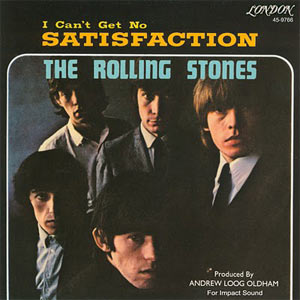
August 15: The Rolling Stones, "(I Can't Get No) Satisfaction"

Artist: The Rolling Stones
Song: "(I Can't Get No) Satisfaction"
Album: Out Of Our Heads
Year: 1965


CLICK HERE TO LISTEN (will open in new tab)


By the time any great band puts out their second record, it becomes difficult to make a case that any single song defines the band or stands as their greatest achievement.  In most cases, each new album brings with it a unique take on the bands' style and one can watch their talents progress as the years go by.  Both of these ideas are made all the more complicated when a band has an extended career, and there are few groups that have a more wide-ranging and overall massive catalog than the iconic rock band, The Rolling Stones.  Scoring their first it all the way back in 1963, the group continues to be one of the biggest concert draws across the globe, and a large number of their songs have become integral parts of cultures throughout the generations.  Like many of the bands that emerged in the early 1960's, The Rolling Stones built their sound around a more aggressive style of music that clearly came from a mixture of the blues and r&b styles, yet it was this band that added a sense of mischief and attitude that no other group had at the time.  While their early singles had followed very closely with this blues influence, 1965 not only changed the band, but the entire world, as they released their pivotal album, Out Of Our Heads.  It was on this record that the guitar work became more of a focus of the music, and this change in approach yielded what may very well be the most recognized rock song in history, The Rolling Stones' classic single, "(I Can't Get No) Satisfaction."

Quite literally, everything about this song is rock and roll perfection, and this would be proven by the fact that it was the first Rolling Stones song to top the charts in the U.S., and it accomplished this same feat in more than a dozen different countries.  The reason for this worldwide success is apparent the moment the song begins, as the blaring guitar riff from Keith Richards found on "(I Can't Get No) Satisfaction" may very well be the most famous guitar progression in history.  Within these three simple notes, one can find everything there is to love about simple, honest rock and roll, and it not only instantly cemented the band as rock legends, but Richards as a guitar god as well.  However, "(I Can't Get No) Satisfaction" is certainly not a one man show, as the rhythm section of bassist Bill Wyman and drummer Charlie Watts give the song a groove and tempo that makes it all the more irresistible.  In many ways, if one strips down the music to only the rhythm section, the influence of r&b can easily be heard, as their playing is almost reminiscent of The Funk Brothers in terms of speed and style.  Rounding out the musical assault on "(I Can't Get No) Satisfaction" is the second guitar of Brian Jones, and his pairing with Richards remains one of the greatest guitar duos in history.  The creation of an unforgettable, crunching riff with one of the finest foot-stomping grooves ever recorded instantly proved what superb musicians comprised The Rolling Stones, and it is much the reason that "(I Can't Get No) Satisfaction" remains so iconic more than four decades later.

While there is no getting away from the fact that the music on "(I Can't Get No) Satisfaction" is nothing short of extraordinary, the song simply would not have the status that it does without the perfectly executed vocals from Mick Jagger.  At the time perhaps only rivaled by "The Fab Four" in terms of finest and most famous vocalist on the planet, it is on this song that Jagger sets the style and tone that would define his career, as there is a swagger and sound found here that was unlike anything else being recorded at the time.  While to that point in history, most artists had largely left the sexual innuendos of their music to subtlety, Jagger ignored this trend and in both his vocal approach as well as the way he carried himself on stage, and in many ways, he created the image that nearly every other rock frontman would follow.  Over the decades, "(I Can't Get No) Satisfaction" has become seen as a song largely about the frustration of gaining the attention of the opposite sex, and yet if one actually listens to the words being sung, the meaning behind the song is far deeper.  While this idea is referenced (and certainly caused a great deal of controversy), a majority of the words on "(I Can't Get No) Satisfaction" are cries against a society to which Jagger does not want to conform.  Whether he is standing against "...a man comes on to tell me how white my shirts can be..." and this is an idea that certainly has not faded over the decades.  The song can also be seen as a precursor to the punk movement, as Jagger puts his boredom out for all to hear with the lines, "...he's tellin' me more and more about some useless information, supposed to fire my imagination..."  Easily equaling the power of the amazing music, Mick Jagger set the stage for his entire career both vocally and lyrically with this brilliant performance on "(I Can't Get No) Satisfaction."

Over the decades, countless bands have covered "(I Can't Get No) Satisfaction," proving how many musical boundaries the song has crossed over time.  From hip-hop to blues to everything in between, it is impossible to name all the bands who have recorded the song as their own, and the 1976 version recorded by DEVO is perhaps the most unique and telling of how influential a song lives within "(I Can't Get No) Satisfaction."  Centered around the iconic guitar riff from Keith Richards, the song is yet another piece of proof that supports the "less is more" idea, as the song stands along with, if not above the most complex musical arrangements in music history.  While the musical arrangement and the vocals can be stripped down even more to show their blues roots, one can see this song as the final bridge of the blues and r&b styles into what is seen as the rock and roll sound.  Furthermore, it is "(I Can't Get No) Satisfaction" which set the stage for the more modern idea of rock and roll, as it is far more racy and sexually infused than nearly anything recorded previously.  Granted, much of this was due to the visual work of Mick Jagger, but one can make the case that had it not been for this song, the image that "is" Jagger would have never emerged.  Though they would go on to nearly one hundred singles over five decades, one would be hard pressed to find a finer song in their catalog or a more important song in the development of rock and roll than one finds in The Rolling Stones monumental 1965 single, "(I Can't Get No) Satisfaction."

Saturday, August 14, 2010

August 14: Suzanne Vega, "Tom's Diner"

Artist: Suzanne Vega
Song: "Tom's Diner"
Album: Solitude Standing
Year: 1987


CLICK HERE TO LISTEN (ORIGINAL VERSION) (will open in new tab)


CLICK HERE TO LISTEN (ALBUM REPRISE) (will open in new tab)


CLICK HERE TO LISTEN (DNA REMIX) (will open in new tab)


Looking at the overall history of recorded music, there are two distinct categories: mainstream and underground.  While certain songs and artists have been able to transition from one to the other, there are only a few elite performers that have managed to secure a foothold in each simultaneously.  These few performers, or more accurately, the few songs that they have unknowingly placed into this dual state of existence, stand as pivotal and unforgettable moments in music history, and they are often the most puzzling pieces of music ever recorded.  On many levels, standing high atop this list of musical anomalies is singer-songwriter Suzanne Vega, and in retrospect, she was easily one of the most important performers of her entire generation.  Though she may not be seen in the same light as the more pop-styled singers of the 1980's, there are few that can challenge her status as the beginning of the large group of female singer-songwriters that emerged as the 1980's transitioned into the 1990's, and her musical approach remains stunningly unique.  Pulling as much influence from artists like Janis Ian as much as she did from the likes of Lou Reed, Vega brought a sound and presence unlike anything else in the 1980's, and there were few records of the decade that were as impressive as her 1987 masterpiece, Solitude Standing.  While it was not released as a single, and most are unfamiliar with the original version, one cannot ignore the fact that Suzanne Vega's single from that record, "Tom's Diner," remains one of the most treasured songs of the past thirty years.

While there are countless remixes of "Tom's Diner," there are three "main" versions that have been released.  The first two booked Solitude Standing, the latter being a quirky instrumental version of the song.  The original version of "Tom's Diner" opens the album, and it is without question the most sparse, yet completely captivating recording in music history.  Quite literally, there is nothing more to this version of "Tom's Diner" than the voice of Suzanne Vega.  There are no instruments, and she takes oddly timed pauses throughout which give the song an amazing sense of drama. The song sounds like little more than a recorded piece of beat-style poetry, yet there is something in the voice of Vega that made the song unforgettable.  This fact was proven when in 1990, a pair of British producers took the vocal track and added a dance beat underneath, creating one of the most successful singles of the year.  However, the pair kept their identities hidden, as they had created this unexpected hit without the permission from Vega to use the song, yet instead of suing the pair, Vega's record company bought the remixed version and released it as a "formal" single.  The song shot up into the top ten on both sides of the Atlantic, and it led to Vega releasing an entire album of different remixed titled Tom's Album.  While many of these remixes are quite brilliant in their own right, they all owe their entire success to the original, a capella recording on Suzanne Vega's Solitude Standing.

The fact that so many artists felt compelled to put their own spin on the simple vocal that Vega recorded serves as a testament to the inexplicable, yet hypnotizing performance she gave.  Truth be told, when Vega originally composed "Tom's Diner," it was to be performed by a singer with the accompaniment of a piano.  However, Vega could not play piano, so she decided to simply make the song a sung-spoken piece, void of any instrumentation or vocal effects.  In many ways, one can see this as a very punk-rock thing to do, as she has quite literally stripped the song of everything unnecessary to convey the theme of the song, and her unaccompanied vocal helps to create an unparalleled feeling of solitude and loneliness.  This is further aided by the songs' story-style lyrics, which seem at first to be little more than a simple telling of what is happening as Vega sits in Tom's Diner (in reality, Tom's Diner is located on the upper East side in New York City).  From the moment Vega brings the listener into her world, she is conveys this mood, highlighted by the strangely sad lines, "...and he fills it only halfway, and before I even argue, he is looking out the window at somebody coming in..."  She darkens the mood even more as the rain begins to fall in the song, closing with the bells from a Cathedral reminding her of a lost memory of love.  There is not a moment in the lyrics were Vega does not command the listeners' complete attention, and this is the strange magic that makes "Tom's Diner" unlike any other recording in history.

The original version of "Tom's Diner" took yet another odd turn during the early days of development of the computer compression format that would become known as "mp3."  Though it is not all that well known, the creator of the mp3 format, German engineer Karlheinz Brandenburg used "Tom's Diner" as the track to fine-tune the scheme.  As Brandenburg himself stated, "I knew it would be nearly impossible to compress this warm a capella voice..." and the constant use of her song in this process has earned Vega the underground nickname of "The Mother of the MP3."  The fact that so many different products have been yielded by what appears to be little more than a spoken piece of poetry proves over and over that, though largely unexplainable, there is something about Suzanne Vega's vocal performance on "Tom's Diner" that is unlike anything else ever recorded.  With her soft, yet captivating voice, she evokes the spirit of the sober songs of Leonard Cohen, and yet there is a very modern feel within her voice.  The fact that she was able to find success by "playing the game" exactly how she wanted to can be seen as a massive influence on the wave of female singer-songwriters that flourished throughout the 1990's, and it is a true tragedy of music history that she is rarely given this credit that she so richly deserves.  Without question one of the most important songs in history that has had much of its history overlooked, there are few recordings that are as simple, yet critical to the development of music as one finds in Suzanne Vega's iconic 1987 song, "Tom's Diner."

Friday, August 13, 2010

August 13: John Scofield, "Hottentot"

Artist: John Scofield
Song: "Hottentot"
Album: A Go Go
Year: 1998


CLICK HERE TO LISTEN (will open in new tab)


In what is either an attempt to do away with the genre, or little more than intellectual laziness, it seems like every few months, some music magazine that claims knowledge and integrity attempts to put forth the idea that "jazz is dead."  While the genre certainly does not have the mainstream appeal that it did half-a-century ago, one would be remiss to buy into such baseless statements, as jazz music is unquestionably alive and well.  In fact, is has been over the past decade or two that some of the most unique and inventive jazz has appeared, and among the giants of the "modern jazz" scene is a player who has been recording as a solo artist since the late 1970's.  Having recorded with many jazz greats, including Charles Mingus and Miles Davis, few performers within the current jazz scene can boast as illustrious, long-lasting, and groundbreaking a career as jazz-guitar icon, John Scofield.  As one of an elite group of musicians who seem to get better and more musically imaginative as the years pass, during the late 1990's, Scofield managed to find himself in a studio with the amazing trio of Medeski, Martin, and Wood, and the resulting record, 1998's A Go Go, stands as one of the high-points of the past few decades of jazz recordings.  The quartet explore nearly every emotion possible, and their raw talent is at times nothing short of stunning, making each song a uniquely superb musical experience.  From dark, deep, almost haunting moods to some of the brightest, upbeat grooves, A Go Go is nothing short of musical perfection, and the full scale of the power of the quartet can be heard on John Scofield's 1998 composition, "Hottentot."

The quartet move through the arrangement with stunning precision, and it quickly becomes clear that Medeski, Martin, and Wood are not a "backing band" on this record, but full contributors to the overall musical picture.  While the quartet foudn here would go on to record other albums together, one can easily make the case that it is the songs on A Go Go that remain their finest work.  As "Hottentot" opens, the first of a handful of moods is instantly deployed, as organ player John Medeski and drummer Billy Martin begin a simple, tight, and amazingly "cool" riff.  It is within this opening phrasing that the groove that carries through the entire song is also introduced, and the quick addition of the bass of Chris Wood gives the song a unique feel for both the A Go Go record, as well as the overall jazz genre.  It is this ability to quickly and effectively deploy multiple moods that has made the trio of Medeski, Martin, and Wood famous in their own right, and their teaming with John Scofield has proved to be one of the most fantastic groupings in music history.  While all three members of Medeski, Martin, and Wood are in top form on "Hottentot," it is Medeski who soars highest, as his light touches and fills behind Scofield's guitar stand as some of the funkiest, and most subtlety brilliant fills and progressions ever recorded.  Bringing the sound and energy that makes their own albums fantastic, one would be hard pressed to find a better backing band than the work of Medeski, Martin, and Wood throughout A Go Go.

Though he is being backed by some of the most talented musicians of their generation, there is never a moment on "Hottentot" when the focus really moves from the stunning guitar performance of John Scofield himself.  Working all over the fret board, and within many different rhythmic patterns, it is songs like "Hottentot" that cement Scofield's name as one of the most innovative and talented guitarists in history.  Yet on "Hottentot," one can detect a difference within Scofield's playing that truly makes it different from a vast majority of other jazz recordings: fun.  Throughout the song, there is a sense of upbeat happiness, and not only the order in which the notes are being played, but the mood which they create stand as one of the brightest and almost euphoric jazz recordings ever.  Scofield's guitar seems to almost bounce off of the track, creating an amazing sense of depth and movement on "Hottentot," and yet he never loses sight of the main musical phrasing from which he is working.  The long solo progressions, as well as the quick fills he drops stand as some of the finest work of his long career, and the fact that the groove persists in the manner that it does, as well as the overall feel, give "Hottentot" a strangely modern sound.  It is Scofield's ability to take the "classic" sound and style of jazz guitar and spin it into a more contemporary sound that makes him such a musical icon, and the perfect with which he achieves this ideal can be found in its clearest form on "Hottentot."

It is nothing short of a massive understatement to say that the teaming of John Scofield with Medeski, Martin, and Wood is a "super-group" it it's most obvious form.  Though such a term is normally used for more rock-based acts, this quartet represent the most talented and imaginative jazz players of their generation, and the resulting albums that they have created together stand as some of the greatest in music history.  While in most cases, the players that are not the person who gets credit for the album tend to stay in the background, but the fact that John Scofield has no problem completely sharing he spotlight with the other three not only proves his confidence as a musician, but also allows each song on A Go Go to be fully realized in every possible way.  With all four musicians playing in top form, each song on the record has its own, uniquely brilliant tone, and yet songs like "Hottentot" still manage to stand out in the company of some of the most creative and perfectly executed arrangements ever committed to tape.  It is this interplay between the four members that epitomizes the idea of the group being greater than the sum of its parts, and in an era of seemingly selfish musicians, it is records like this that once again cement the endless possibilities when a true group effort is employed.  Kicking off what has gone on to become one of the most exciting jazz partnerships in history, Medeski, Martin, and Wood's role as "backing band" for John Scofield continues to yeild some of the greatest jazz ever recorded, and their amazing chemistry can be found within Scofield's 1998 arrangement, "Hottentot."

Thursday, August 12, 2010

August 12: Pearl Jam, "Spin The Black Circle"

Artist: Pearl Jam
Song: "Spin The Black Circle"
Album: Vitalogy
Year: 1994


CLICK HERE TO LISTEN (will open in new tab)


While the key to the success of an overwhelming majority if bands can be summed up by the thought of perfecting a single sound and deploying it in a handful of different ways, there is certainly something to be said for bands that have proven an ability to excel in a number of different musical formats.  However, if a band is seen as one of the pioneers of a specific sound, it can make it virtually impossible for the band in question to successfully expand their musical horizons, as their fanbase if often unwilling to "follow" them on such musical exploration.  Then of course, there is the one band that has seemed to do nothing but break musical rules their entire career, and it is much the reason why they remain one of the most highly respected bands in the world.  From fighting the greed of ticketing agencies to refusing to compromise their musical vision on behalf of their record label or fans, few bands have shown more artistic integrity over the past two decades than Seattle legends, Pearl Jam.  Making their name as one of the most important bands of the "grunge explosion," in many ways, they almost immediately began attempting to distance themselves from this single-genre classification, as musically, their sophomore record was far more a rock affair, and in many ways, the band proved early on that they were going to make the records they wanted to, regardless of sales or external pressure.  It is due to this ethos that Pearl Jam was able to create their misunderstood masterpiece of a third record, 1994's Vitalogy, and one can easily see the album as the transition from their "old" sound to the various styles they would explore over the next decade.  Though the record is packed with phenomenal songs, few define the true essence of the band on all fronts better than the albums' lead single, 1994's raging rocker, "Spin The Black Circle."

When it comes to songs that set the tone early, few songs in history can compare to "Spin The Black Circle," as the track opens with a high-speed riff that crashes into an all out guitar assault from the team of Stone Gossard and Mike McCready.  Over the decades, the duo have proven to be one of the most talented musical pairings in history, and on this track, their power and precision is brilliantly highlighted.  The way they play off one another on "Spin The Black Circle" is nothing short of stunning, as they trade-off leads and then when playing together, bring a sound that is wonderfully intimidating as well as inviting.  Within seconds, drummer Dave Abbruzzese crashes in, and the spirit and energy that is quickly present on the song instantly places it in a unique spot between hard rock and punk rock.  In many ways, it is this element that captures the essence of Pearl Jam, pulling from their wide range of influences, and it is also their ability to pull of songs like this that proved they were far more than "just a grunge band."  Rounding out the bands' sound on "Spin The Black Circle" is the lightning-fast bass work of Jeff Ament, and it is his performance here that gives the song a slightly dark mood, as the bassline is rapid-fire and very hostile in nature.  The sense of urgency found within the music on this track was slightly alluded to on their previous records' song, "Go," and yet it is "Spin The Black Circle" that comes off as a far more complete and absolutely mesmerizing musical creation.

While it is easy to make the case that it is impossible to match the overall energy that is created by Pearl Jam on "Spin The Black Circle," as he has proven throughout his career, there is no style or sound in which singer Eddie Vedder cannot perform and excel.  Much like his band-mates, on this track, Vedder completely cuts loose, and the full power and range of his voice are on brilliant display throughout the entire song.  Overflowing with emotion and energy, Vedder's performance on "Spin The Black Circle" remains one of the most impressive of his entire career, and it is his ability to walk the line of vocal chaos that has made him such an icon.  This mood of walking on the edge of "losing it" is nothing short of stunning, and one can feel Vedder's deep connection with the words he penned for the song, and the lyrics stand as one of the finest and most fitting odes to ever be recorded.  Though "Spin The Black Circle" can be interpreted in a number of ways, the most obvious is that of Vedder paying tribute to that which all music lovers can relate: the feeling of playing your favorite record.  Drilling down to the details of the process and then celebrating it in a form like nothing else, Vedder perfectly sums up a true music lovers' feeling with the line, "...oh, my joy...only you deserve conceit..."  He also gives a nod to those who understand the proper volume at which many songs must be played when he sings, "...turn me up...won't turn you away..."  Though the entire song can also be easily interpreted as a drug metaphor, one can re-focus this as the fact that for many people, music itself is a drug, and on "Spin The Black Circle," in both the lyrics and emotion behind the singing, Eddie Vedder makes this similarity more clear than anyone else in history.

Truth be told, though in retrospect it may not be the most memorable track for most from their Vitaolgy record, it was the only song from the album to chart in the "Top 100," and "Spin The Black Circle" also won Pearl Jam their first (and only) Grammy Award, taking the 1996 prize for "Best Hard Rock Performance."  On all fronts, the song represents everything that has helped Pearl Jam to endure over the decades, as the raw power and straightforward production make "Spin The Black Circle" nothing short of a rock and roll classic.  Looking back at the time in which the record was made, the fact that the song (as well as the entire album) was so far removed from their legendary "grunge" debut, one can only imagine the frustration the band was met with from their record label, as Pearl Jam was set on proving that they were not going to make any album twice, and were going to continue to record and release the songs that they enjoyed the most.  It is this purposeful diversity in sound and style that has enabled Pearl Jam to remain relevant over the decades, as they have avoided being pigeon-holed into a single genre, and built themselves into one of the greatest rock bands in the history of recorded music.  Throughout Vitaolgy, the band explores a wide range of emotions with often unsettling honestly and depth, and it is these qualities, as well as the exceptional musicianship that makes the entire album sound just as fresh today as it was when it was first released.  Capturing the emotion of true love and the release which music can provide like no other song ever recorded, Pearl Jam has rarely released a more engaging or powerful song than one will find within their magnificent 1994 single, "Spin The Black Circle."

Wednesday, August 11, 2010

August 11: U.K. Subs, "Warhead"

Artist: U.K. Subs
Song: "Warhead"
Album: Brand New Age
Year: 1980


CLICK HERE TO LISTEN (will open in new tab)


While many of the greatest songs in history have achieved that status due to the brilliant complexity of the music, there is certainly something to be said for straightforward, uncompromising rock power.  This was, in many ways, the ethos of the punk rock movement that sprang to life in the late 1970's, and it was this initial era of the genre that produced many of its finest and most enduring acts.  Perhaps due to "not knowing any better," many of these punk pioneers had a similar drive underneath their music, yet each of the great bands had their own, unique sound.  While some of the groups of this era when for the shock factor (The Sex Pistols), and some took the "everyman" approach (The Ramones), and some yelled against authority (The Clash), there were a handful of bands that took a bit of each of these styles and brought their own brand of punk rock to the masses.  As part of the amazing group of early U.K. punk bands, there were few that brought as much raw power, yet had an underlying sense of humor to much of their music than U.K. Subs.  While many of their songs were about little more than chasing girls, fast vehicles, and running from police, as the band progressed, a handful of more socially conscious songs began to appear.  The bands' second record, 1980's Brand New Age, shows every angle of the band, and few songs from anywhere in their career pack a similar punch to that found on U.K. Subs brilliant single, "Warhead."

One of the many consistent factors throughout the entire catalog of U.K. Subs is the hard-hitting, unaltered musical assault that accompanies every one of their songs.  As was the case with a majority of the punk groups of the time, the band wastes no time on musical aspects that are not completely essential to the music, and this gives all of their music an amazing sense of urgency.  On "Warhead," the band proves that one need not play at a break-neck pace to achieve this mood, as the song is slightly slower than your "average" punk tune.  However, U.K. Subs do manage to create a looming, intimidating mood that hangs over the entire song, and it begins from the moment the song starts with the deep bassline from Paul Slack.  Guitarist Nicky Garratt breaks in quickly and the abrasive, two-note riff he brings increases the sense of nervous tension on the track, and "Warhead" soon explodes as the first bridge begins.  However, this simple guitar and bass arrangement persists throughout the entire song, and the rhythm it creates, along with that from drummer Pete Davies, gives the song a power and unsettling energy unlike that of any other.  This was, in many ways, the aspect that set U.K. Subs apart from their peers, as they were far more than a "one trick pony," and were able to perfectly deploy nearly every different spin on the punk rock sound.

Matching the mood and intensity of the music, vocalist Charlie Harper remains one of the most influential and captivating frontmen in the entire history of punk rock.  The grit and growl in his voice are rarely more apparent than on "Warhead," and the song also presents Harper in a far more aggressive manner when compared to the lighter, almost jovial nature of much of the rest of the catalog of U.K. Subs.  However, though the song is a bit of a shift in approach from the bands' previous effort, Harper sounds as good as ever, and the way in which he presents the vocals makes it almost impossible NOT to sing along.  It is this aspect that made U.K. Subs so legendary, as nearly every one of their songs was crafted for group involvement, and few in the punk rock genre achieved this as consistently as one finds within the music of U.K. Subs.  Much like the straightforward feeling within the music and singing, the title and lyrics of "Warhead" leave little to the imagination, and the song can be seen as the bands' first foray into socially aware song creation.  "Warhead" is a fuming, unrelenting assault on nuclear war, and the band leaves no stone unturned, attacking the frightening theme on all fronts.  Perfectly capturing the unsettling mood that was gripping much of the world, Harper sums it up with the lines, "...there's a nation in fear another nation crying...one nation killing and another nation dying..talk about guns and escalation...bye bye planet let alone a nation..."  It is brutally honest lyrics such as these that make "Warhead" such a stunning musical work, and one of the many reasons why U.K. Subs stood out within the many early punk rock pioneers.

In an era that was beginning to overflow with rock and roll excess, many people throughout the world were looking for some band to begin to "bring the truth" again.  For decades, social criticism and similar themes had come largely from the folk genre, but as the 1970's progressed, the genre began to quickly fade in popularity, as the world turned to the carefree sounds of disco.  Thankfully, a handful of bands around the world took the questioning spirit of folk and gave it a modern spin, and this was the ethos behind the finest bands of the punk rock explosion of the late 1970's.  Along with peers like The Damned, Generation X, The Buzzcocks, and many others, U.K. Subs brought their own style of this burgeoning genre.  With Charlie Harper standing out above nearly all of his peers, it was often his voice that ignited crowds and the power behind his vocal work remains just as moving today as it was when many of the songs were first recorded.  Having set themselves apart with their debut record, the group showed their thematic and musical diversity on 1980's Brand New Age, as they touched on a number of different topics from light-hearted musings on younger women to the threat of global nuclear war.  It is this latter theme that stood out from the rest of their catalog and still does to this day, and yet the fact that the songs fits in perfectly with the others proves that the group understood their sound perfectly and were able to execute it in any way they wished.  From the menacing orchestration to the hostile vocal work, there are few songs of any era that pack a similar punch to U.K. Subs 1980 anti-war anthem, "Warhead."

Tuesday, August 10, 2010

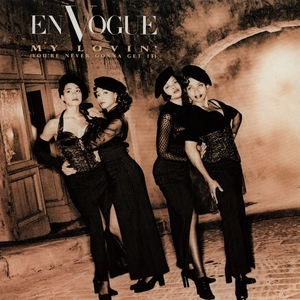
August 10: En Vogue, "My Lovin' (You're Never Gonna Get It)"

Artist: En Vogue
Song: "My Lovin' (You're Never Gonna Get It)"
Album: Funky Divas
Year: 1992


CLICK HERE TO LISTEN (will open in new tab)


Throughout the course of the history of recorded music, there are a number of songs that perfectly capture a specific moment in time due to the sound and style that comes forth within the song.  Then there are a handful of songs that are so unique, that in many ways, they can fit in during nearly any time period.  The songs in this latter category are crafted so perfectly, and highly so many different styles of music, that as the years pass, the song continues to sound just as fresh as it did the first day it was released.  While most bands would be content with a single song of such stature,  During the early 1990's, the world of music was struggling to find its identity, and this provided the ideal environment for one of the most extraordinary records in history.  Packed with nearly half a dozen hit singles, vocal goddesses En Vogue seemed to come out of nowhere with their phenomenal third record, 1992's Funky Divas.  Proving that the r&b style was still alive and well, the quartet dazzled listeners across the thirteen songs, showing a range within the genre that had never before been heard.  From deep, funky grooves to aggressive, in-your-face rockers to hip-hop, En Vogue showed no regard for musical boundaries, and it is largely due to this diversity that the album is held in such high esteem.  While each of the singles from Funky Divas was able to carve out its own place in the history of the decade, few songs have persevered and define the group as well as their superb 1992 single,"My Lovin' (You're Never Gonna Get It)."

From the moment the song begins, it is clear what a unique musical experience is in store, as so many different elements are present from the very first notes.  Though "My Lovin' (You're Never Gonna Get It)" proves to be one of the most perfectly complex musical arrangements of its generation, it is the individual musical pieces that make it such a fantastic song.  Case in point, the looped, slightly distorted guitar piece that runs throughout the entire song evokes the spirit of the era of the funky-soul single, and it instantly gets the listeners' head bobbing.  In fact, the riff is lifted directly from James Brown's song, "The Payback," and it is this element that makes the song have a wonderfully "classic" sound.  Weaving in and around the guitar is a fantastic, though small flute progression, and though it is often overlooked, it is without question one of the most important aspects of the musical brilliance found on "My Lovin' (You're Never Gonna Get It)."  The various percussive elements give the song a strong back-beat, and it is within this aspect, as well as the small sound effects, that give the track a modern feel, very keep it passive enough to engage fans from nearly every musical genre.  With so many diverse musical elements at play, the finished product shows aspects of soul, funk, r&b, and jazz among others, and it is this unique presentation that would have made En Vogue's "My Lovin' (You're Never Gonna Get It)" fit in just as perfectly in 1972 as it did in 1992.

While one cannot detract from the remarkable musical orchestration on "My Lovin' (You're Never Gonna Get It)," much like the entire catalog of En Vogue, the focus and highlight of the song is the vocal work from the quartet.  In an era when actual talent was still a requirement for musical success, few artists could claim to have as much raw skill as the four women who comprised En Vogue.  Never going overboard with their singing strength or singing the musical scale for little more than effect, the sound of the quartet gives a nod to the "girl groups" of the Motown era, yet there is a strong sense of female empowerment that runs throughout their songs.  On "My Lovin' (You're Never Gonna Get It)," the lead vocals are handled by Maxine Jones and Dawn Robinson, and the duo bring a sensational level of sass and strength to the song, and yet there is something strangely seductive that runs throughout as well.  Using their stunningly strong voices and vocal presence, one can easily see "My Lovin' (You're Never Gonna Get It)" as one of the earliest and most important songs in what would become the re-birth of the "women's power" movement that ran throughout much of the decade.  While each lyric is as powerful as the next, there are few moments that sum of the entire attitude and vocal brilliance on the song better than the lines, "...doesn´t matter what you do or what you say, she don´t love you, no way. Maybe next time you´ll give your woman a little respect, so you won't be hearing her say, no way..."  Proving how special a song "My Lovin' (You're Never Gonna Get It)" really is, even nearly twenty years later, the vocal performance remains largely unrivaled, and the meaning behind the song rings just as true and powerful.

It has been said many times that making a hit song, let alone a timeless song, is often done completely by mistake.  This rings true on En Vogue's "My Lovin' (You're Never Gonna Get It)," as it was one of the final songs recorded for their Funky Divas record, and this was the reason that the single was released a mere nine days before the album itself hit record stores.  However, once one hears the song, there is little question why it became an instant success, moving all the way to the top of the charts and selling more than half of a million copies of the single.  Based in the r&b style, yet infusing elements of jazz, funk, and soul, there are few songs ever recorded that have as diverse a sound, yet stay firmly rooted in the core genre.  From their smooth, yet strong harmonies that fill the song to the sensational solo work, there are few vocal recordings one can point to that outmatch those found here from the four members of En Vogue.  Furthermore, "My Lovin' (You're Never Gonna Get It)" spawned what remains a pop culture phrase, as the songs' title can be heard to this day as a part of common vernacular.  Bringing all of these elements together, the song is able to come off as a dance club classic just as much as it is an anthem of female empowerment just as much as it is a perfect song to blast in your car, and this combination can almost never be found anywhere else in the entire history of music, proving just how unique and phenomenal a recording lives within En Vogue's 1992 classic, "My Lovin' (You're Never Gonna Get It)."

Monday, August 9, 2010

August 9: Daily Guru, "Gurucast #32"

CLICK HERE TO LISTEN (will open in new tab)


(Left Click (PC) or Command-Click (Mac) to save it to your desktop...it's about 75MB)

One hour of amazing music and SOME commentary from "The Guru" himself.

Tracklist (all links are to Daily Guru entries on the artist, album, or song):
1. Metallica, "The Four Horsemen"  Kill 'em All
2. Dax Riggs, "No One Will Be A Stranger"  Say Goodnight To The World
3. Grateful Dead, "Cumberland Blues"  Workingman's Dead
4. Joe Strummer & The Mescelaros, "All In A Day"  Streetcore
5. Björk, "Vökuró"  Medúlla
6. Tom Waits, "2:19"  Orphans: Brawlers, Bawlers, & Bastards
7. The Who, "Sally Simpson"  Tommy
8. Gogol Bordello, "My Companjera"  Trans-Continental Hustle
9. Dave Brubeck, "Stompin' For Mili"  Jazz Collection
10. The Rondelles, "Drag Striprace"  Fiction Romance, Fast Machines
11. Janis Joplin, "Flower In The Sun"  Joplin In Concert
12. Ben Folds Five, "Underground"  Ben Folds Five
13. Flaming Lips, "She Don't Use Jelly"  Transmissions from the Satellite Heart
14. Esthero, "Dragonfly's Outro"  Wikked Lil' Grrrls