Thursday, July 15, 2010

July 15: Jerry Lee Lewis, "High School Confidential"

Artist: Jerry Lee Lewis
Song: "High School Confidential"
Album: Live At The Star Club - Hamburg
Year: 1965


CLICK HERE TO LISTEN (will open in new tab)


Throughout history, one of the more interesting aspects of music is the fact that for the most part, the nicknames given by the mass media end up having a rather accurate description of the artist in question.  From "The King" to "The Genius," on many levels these names spoke volumes about the artist, and to this day, such names of stature have never been used again.  Taking this one step further, even with the rise of the overly-macho performer, the "gangsta rappers," and the dark metal superstars, there is still only one man worthy of the title of "The Killer."  Unquestionably one of the most important figures in the entire history of recorded music, few performers can boast as wild and polarizing a reputation alongside as brilliant a musical catalog as the one and only Jerry Lee Lewis.  Having already solidified his name as one of the top acts of his day with the trio of hits, "Great Balls Of Fire," "Whole Lotta Shakin' Going On," and "Breathless," it would be his next single that would lead to what may very well be the greatest live moment ever captured on tape.  While there are a pair of studio recordings of the song (one of which was recorded for the film of the same name), there is simply nothing that can compare to the stunning rendition when one experiences Jerry Lee Lewis' performance of "High School Confidential" taken from his 1965 performance at the Star Club in Hamburg, Germany.

One of the most consistent themes that ran throughout the entire career of Jerry Lee Lewis was the fact that he was one of the most high-energy and aggressive players in history.  The recording that became the album Live At The Star Club - Hamburg, perfectly captures this idea, as Lewis is on fire from the onset, and his performance makes even the most notoriously wild and intense singers in history (read as: Iggy Pop) seem quite tame in comparison.  In reality, this performance, taken from April 5, 1964 is what many would consider the lowest point of Jerry Lee Lewis' career, as it had been more than six years since he had a hit, his recent marriage had been seen as quite scandalous, and the entire would had just fallen in love with four boys from Liverpool, England.  However, none of this seemed to matter to Lewis, as forty-five years after it was recorded, there are few live performances that even come close to Lewis on that evening.  Backed by The Nashville Teens (for that night only), Lewis seems as if he is trying to break the piano into pieces on "High School Confidential," and the energy one can feel in the room is truly unparalleled.  Throughout the entire performance of the song, it seems as if the band is doing everything they can just to keep up with Lewis' speed, and in many ways, it is this unrestrained energy and passion that "is" what rock and roll is all about.  It is this aspect that seems to be largely missing from bands since "The Killer," and after experiencing his performance on "High School Confidential," quite literally every album or performance that followed seems somehow docile in comparison.

Yet if there was one thing that one could count on from Jerry Lee Lewis, it was a consistently extraordinary performance across the board.  Yes, his piano work is other-worldly on "High School Confidential," but one cannot overlook the similar no-holds-bared approach he takes to the vocals as well.  Throughout Live At The Star Club - Hamburg, Lewis seems set on singing himself horse, and from his strong singing voice to his deep growls to his loud yells, Jerry Lee Lewis is completely unrestrained on "High School Confidential," and this live performance makes the studio versions almost humorous in comparison.  Keeping the audience in a complete frenzy throughout, Lewis proves on this song that though he may have been considered "old school" at the time, there was plenty that could still be learned from him about stage presence and pure energy.  The song itself fits perfectly with this overall sense of unrestrained emotion, as there is an amazing electricity when the song explodes off the line, "... honey get your boppin' shoes before the jukebox blows a fuse.."  Lewis pushes things further and into a far more suggestive place when he sings, "... oh I've got to get with you sugar, let's shake things up tonight..."  It is lines like these that perfectly capture the excitement and sexual tension that define the teenage years, and there is nothing one can do other than be in awe at the completely dominating performance in every aspect that Jerry Lee Lewis delivers on "High School Confidential."

Take any band from any genre from any era on their best live night, and the fact of the matter is, they still will not come even remotely close to the energy and power that one finds throughout Jerry Lee Lewis' entire performance found on Live At The Star Club - Hamburg.  For the entire show, the crowd is clearly completely enthralled by Lewis, as they yell and sing with such vigor that one cannot do more than sit back in awe of his masterful performance in every aspect.  From the way he scolds and jibes his backing band to his interaction with the crowd to his fantastic singing, Jerry Lee Lewis personifies everything that "is" rock and roll on this record.  Though there is not one second anywhere on the album that is sub-par, Lewis' rendition of his hit, "High School Confidential" is unquestionably the high-point, and it remains one of the most stunning musical moments ever captured on tape.  Even after countless listenings, one can still quickly picture Lewis hunched over the piano, banging the keys for all their worth, with his hair flying all over the place and sweat covering his face.  This complete commitment to the soul of the song is what sets Lewis far above his peers, as by that point in history, nearly all the artists he came up with had already been relegated to little more than "nostalgia acts."  Laying down a performance with an energy that blows away even the most fierce punk or thrash ever recorded, Live At The Star Club - Hamburg is a performance that simply must be experienced firsthand to be believed and properly understood.  Though he may not have had the title of "The King," after experiencing Jerry Lee Lewis' phenomenal performance of "High School Confidential" from 1965's Live At The Star Club -  Hamburg, it is truly difficult to argue that there was anyone more fitting or deserving of such a title.

Wednesday, July 14, 2010

July 14: Tanya Donelly, "Moonbeam Monkey"

Artist: Tanya Donelly
Song: "Moonbeam Monkey"
Album: Beautysleep
Year: 2002


CLICK HERE TO LISTEN (will open in new tab)


Achieving musical success with a single band is a tough task, regardless of the style of music being played, or the era in which it was recorded.  The musical landscape is littered with countless "could have been" bands, and similarly, many bands that did "make it big" leaves one scratching their head as to exactly how mediocre bands were able to "pass over" those with far more talent.  Taking this into account, it makes the likelihood of success with multiple bands all the more unlikely, and yet there is one performer who went one step further, and it is impossible to picture modern music without her influence.  Founding not one, but three of the most important bands in the development of "alternative rock," there are few voices that better define the style than that of the dreamy, yet powerful singing of Tanya Donelly.  From her beginnings in Throwing Muses to her transition with the early days of The Breeders to what may have been her artistic apex fronting Belly, Donelly has constantly reinvented herself, and yet the unusual, yet brilliant moods and lyrics found on her music is what makes her such an icon to this day.  After closing the books on Belly, Donelly began releasing solo records, and these albums proved to be just as musically intriguing as any of her earlier work, and they served as proof to her extraordinary talent.  In 2002, she released the album Beautysleep, and one can find what may very well be the greatest musical moment of Tanya Donelly's career in the form of the stunning song, "Moonbeam Monkey."

Regardless of which band she was playing with, one of the most consistent factors in the music of Tanya Donelly is her uncanny ability to create uniquely quirky, often dark moods.  This was one of the keys to making Belly's Star such a stunning album, and "Moonbeam Monkey" is in many ways the closest she has ever gotten to returning to that sound.  Overall, the song gives the listener a feeling of something sinister at play, perhaps in a dark forest or an empty back alley.  From the onset of the song, with the lone guitar and echoing wood-block, there is a gloomy, almost haunting feel to the song, and yet at the same time, the song is completely captivating.  This mood is enhanced about halfway through the song, when one of the most somber instruments known to man, the e-bow makes an appearance.  Both the guitar and e-bow are played by Donelly, and this represents the core of the music on "Moonbeam Monkey."  The percussion stays largely a side-note on the song, as along with the wood-block, there is only a light rhythm being dictated by a tom, and this minimalist approach in this area keeps the focus on the eerie, somewhat mysterious mood. An equally impressive keyboard loop enters the song around the same time as the e-bow, and it adds in a feeling of tension, making "Moonbeam Monkey" on the whole one of the most nervously exciting songs to ever be recorded.

Throughout her entire career. Tanya Donelly has proved to have one of the most delightfully sweet voices in history, and the way that this sound plays against the extraordinary musical textures she creates is rarely anything short of stunning.  On "Moonbeam Monkey," it is no different, as her steady, almost soothing voice plays in fantastic contrast to the somewhat sinister feel of the words and singing.  When she lets loose with her voice and uses it for more instrumental purposes than conveying words, the results are quite dramatic, and it adds to the overall feel of the song in an unparalleled manner.  Taking this mood to a truly unprecedented level, the song is very much a vocal duet, as Donelly's singing is complimented perfectly by the similarly spooky, low voice of none other than Morphine's Mark Sandman.  The way in which their voices interact remains one of the most beautiful ever recorded, and one is left to wish that the pair had done more work together.  Sandman's presence on this song make it obvious that "Moonbeam Monkey" had been sitting "on the shelf" for quite some time, as he tragically passed away nearly three years before Beautysleep was released.  Without question, the vocals on "Moonbeam Monkey" are in a class all their own, and they once again prove the ability of a more subtle approach to yield far deeper and more complete musical moods.

History proves time and time again that there are a handful of elite artists who simply have so much music to express, that they constantly find new groupings and approaches with which to convey their songs.  Supporting this idea perfectly, for nearly thirty years, Tanya Donelly has been shaping the world of "alternative" or "indie" rock, and these styles of music simply would not be the same without her contributions.  From the more aggressive sounds of Throwing Muses to the almost dreamy compositions of Belly, to the all-star lineup of The Breeders, Donelly has been the one constant factor, and her work as a solo performer adds further fuel to her revered status.  With 2002's Beautysleep, Donelly seems refreshed, and the album is packed with some of the strongest of her career, also offering a wide range of musical styles.  This ability to cross into so many different musical approaches and yet keep a consistent sound is one of the factors that sets her so far above her peers, and there is not an off moment to be found anywhere on Beautysleep.  Among many highlights, the album offers one of the most captivating compositions of Donelly's entire career, and it is nothing short of a musical treat to experience the way in which her voice weaves together with that of the late, great Mark Sandman.  Unquestionably one of the most stunning, extraordinary songs ever recorded, there is true musical bliss to be found within Tanya Donelly's magnificent 2002 song, "Moonbeam Monkey."

Tuesday, July 13, 2010

July 13: The Miracles, "The Tracks Of My Tears"

Artist: The Miracles
Song: "The Tracks Of My Tears"
Album: Going To A Go-Go
Year: 1965


CLICK HERE TO LISTEN (will open in new tab)


Though one can easily make the case that no single member of a band is larger than the group as a whole, there are a number of instances where if a specific member of the group is removed, the group in question would have a great deal of trouble finding success.  When one takes this idea to the "Motown Era," it becomes harder to support, as a majority of the groups were so talented, that one could argue the "replacability" of nearly every performer.  However, there is one man who not only defined his own group, but in many ways defined the entire Motown era, and while many do not know the name William Robinson, there are few people on the planet who do not know the name "Smokey" Robinson.  Along with the rest of his group, The Miracles, he was part of more than fifty Top Forty hits throughout the 1960's, and he also penned some of the most memorable songs of the era.  The Miracles alone had more that forty of these hits, and looking at the groups' catalog is much like looking at the back of a "Best Of Motown" compilation.  From classics like "Ooh Baby Baby" to "You Really Got A Hold On Me," there are few groups with as impressive a catalog as The Miracles, yet their biggest hit can be found on their 1965 album, Going To A Go-Go.  In many ways summing up the unparalleled talent within the group and standing as one of the defining songs of the "Motown Sound," there are few songs that bring the power and beauty that one finds in The Miracles 1965 single, "The Tracks Of My Tears."

When one considers the most well-known guitar riffs of all time, most do not look to the Motown era, as that period is far better known for its amazing vocal and lyrical contributions.  However, in the case of "The Tracks Of My Tears," the opening guitar refrain is without question one of the most memorable ever composed.  Truth be told, it was this riff, played by Marv Tarplin, around which the song was composed.  After this brief, beautiful intro, the song drops into something far more resembling the classic "Motown sound," yet the music as a whole stays rather reserved, with little more than the guitar and a small rhythm section appearing on the track.  Though the verses seem sparse insofar as instrumentation is concerned, as one expects from The Funk Brothers, it is no less powerful, and the amount of soul and energy the group is able to inject into the somewhat softer arrangement is no less stunning than any of their other work.  When the horns kick in at the choruses of "The Tracks Of My Tears," the song seems to almost overflow with emotion, and it almost creates a somewhat strange "tension/release" quality to the song.  "Tracks Of My Tears" is also musically significant as it is one of the few Motown songs that placed the tambourine as a prominent part of the music, and it is the ability to make this instrument sound so grand that defines the true talents of The Funk Brothers.

While it is hard to claim that anything could outshine the sensational musical performance of The Funk Brothers, on "The Tracks Of My Tears," some of the most well-known and influential vocals in history were recorded. With Smokey Robinson taking the lead vocals throughout, the song remains the defining song of The Miracles and instantly solidified Robinson as one of the most iconic voices to ever record.  Bringing a smooth, somewhat relaxed approach to his singing of the verses, Robinson saves up his stunning power for the chorus sections of the song.  Throughout "The Tracks Of My Tears," Robinson uses the entire vocal scale, and his ability to reach the highest notes in the music register remains largely unrivaled to this day.  Perfectly complimenting his vocal work, one would be hard pressed to find more memorable lyrics than are found on "The Tracks Of My Tears," and the song is without question one of Robinson's finest compositions.  Though nearly every line on the song has become iconic, there are few lyrics ever written that so perfectly capture the emotion of a broken heart than when Robinson sings, "...my smile is my make-up I wear since my break up with you..."  The raw, honest feelings which Robinson conveys throughout the song remain just as powerful today as they did decades ago, and this is the true "magic" behind "The Tracks Of My Tears."

Strangely enough, though it is one of the most iconic songs in history, and was released in the heart of Motown's "Golden Era," when "The Tracks Of My Tears" hit record stores, it did not even crack the Top Ten on the singles charts, and it was not even The Miracles most successful single.  However, the song represents just how extraordinary a song can become when the music and singing "click," and "The Tracks Of My Tears" also puts on display how to properly "balance" vocals versus music on a song.  With The Funk Brothers composing one of their more reserved, yet unquestionably moving songs, "The Tracks Of My Tears" proves the power of subtlety, and one can also hear playing from The Detroit Symphony Orchestra on the song.  Over the decades, everyone from Dolly Parton to Bryan Ferry to Soul Asylum have recorded versions of "The Tracks Of My Tears," but regardless of how good a performance they may have given, no other version has ever come close to the sound and energy found on the original.  This is likely due to the "closeness" to the track that there surely was within the performance of Smokey Robinson, and though the track certainly would not have been as good without the rest of The Miracles, it is hard to argue that it is not Robinson's work that makes the song what it has become over the decades.  Remaining one of, if not the definitive Motown song, there are few recordings of any genre that can compare to the power and emotion found on The Miracles monumental 1965 single, "The Tracks Of My Tears."

Monday, July 12, 2010

July 12: Daily Guru, "Gurucast #28"

CLICK HERE TO LISTEN (will open in new tab)


(Left Click (PC) or Command-Click (Mac) to save it to your desktop...it's about 75MB)

One hour of amazing music and SOME commentary from "The Guru" himself.

Tracklist:
1. The Easybeats, "Friday On My Mind"  Friday On My Mind
2. Jane's Addiction, "Been Caught Stealing"  Ritual De Lo Habitual
3. The Jimi Hendrix Experience, "Spanish Castle Magic"  Axis: Bold As Love
4. The Clash, "Spanish Bombs"  London Calling
5. The Rolling Stones, "Rip This Joint"  Exile On Main Street
6. LL Cool J, "Around The Way GirlMama Said Knock You Out
7. Ween, "Voodoo Lady"  Chocolate & Cheese
8. Wire, "Mary Is A Dyke"  Behind The Curtain: Early Versions
9. Béla Fleck, "Two-Part Invention No. 11"  Perpetual Motion
10. The Victims, "(I'm) Flipped Out Over You"  Murder Punk: Volume 1
11. Soccer Team, "Lobster Season"  "Volunteered" Civility & Professionalism
12. Jim Morrison, "Stoned Immaculate"  An American Prayer
13. Bob Marley & The Wailers, "Sun Is Shining"  Songs Of Freedom
14. Streelight Manifesto, "Point/Counterpoint"  Everything Goes Numb
15. Curtis Mayfield, "Pusherman" Superfly
16. Tori Amos, "Sweet Dreams"  Winter (Single)
17. Portishead, "Glory Box"  Dummy
18. Phish, "First Tube->Moby Dick"  Live, 2000/07/11

Sunday, July 11, 2010

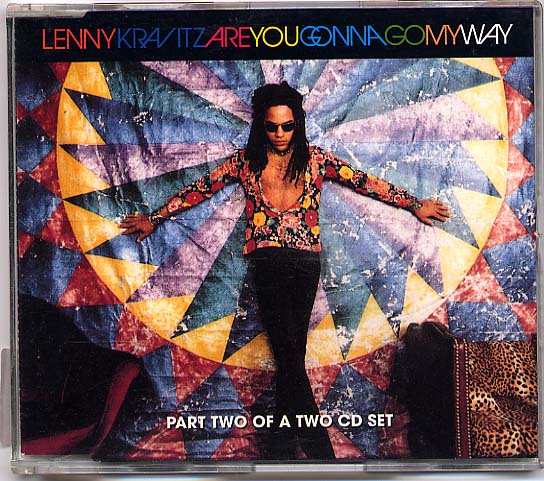
July 11: Lenny Kravitz, "Are You Gonna Go My Way"

Artist: Lenny Kravitz
Song: "Are You Gonna Go My Way"
Album: Are You Gonna Go My Way
Year: 1993


CLICK HERE TO LISTEN (will open in new tab)


Looking at the overall history of recorded music, one of the stranger reoccurring themes is when "modern" critics attempt to place a new title on a sound that has been around for decades.  For whatever reason, even when a new band is clearly playing a style of music that is not new, the critics of that day feel it necessary to hail them as pioneers and slap a new, hip name on the sound.  There was no more clear an example than when critics decided to invent the idea of "grunge music," when in reality, those albums were as punk rock as any from 1977.  During that same period (the early 1990's), there was an artist who had been around for a few years, and when he released a record in 1993, it was termed "retro," when there was no arguing that it was nothing more than a mind-blowingly refreshing rock and rock album.  Though his image may have implied otherwise, the spirit of rock and roll was revived with Lenny Kravitz's 1993 opus, Are You Gonna Go My Way.  Taking a far more aggressive path than his first two records, it was this album that almost instantly solidified Kravitz as one of the most elite musicians of the time, and his style and skill influenced an entire generation of musicians.  Shooting up the charts in more than a dozen countries, there are few songs that better define the music of the 1990's, and perhaps no better song in the Lenny Kravitz catalog than his 1993 single, "Are You Gonna Go My Way."

The instant "Are You Gonna Go My Way" begins, it becomes an unforgettable track, as the blaring riff put forth by Kravtiz's guitar is nothing short of anthemic.  Yet it is not Kravtiz alone that makes the guitar work so memorable, as he has a second guitar being played by Craig Ross, and it is this combination that makes the sound so robust and crushing.  In retrospect, the riff is so powerful and memorable that it is without question one of the defining riffs of the decade, and it perfectly captures the upbeat energy that was present in the music of the first half of the 1990's.  This unrestrained "party" vibe that runs throughout the song remains largely unparalleled to this day, as even in the songs' breakdown and bridge, there is a fantastic energy, which is why the song still appears as "fresh" nearly twenty years after its initial release.  Alongside Lenny Kravitz is one of the finest rhythm sections of the decade, composed of bassist Tony Breit and drummer Cindy Blackman.  The drums are some of the most aggressively played of the era, and Blackman was, for a time, the "face" of "women who rock," and er signature afro made Kravtiz and his band one of the most unmistakable rock outfits on the planet.  The entire band moves as a single, stunning unit, and it is during the spaced-out breakdown section where the group injects the only signs of "retro" to be found, and yet they are clearly more psychedelic than anything else.  Regardless of the classification, few songs of the day rocked harder than "Are You Gonna Go My Way."

Pushing the overall energy of the song even higher, Lenny Kravitz holds nothing back on his vocas, and the sheer delight and exhilaration in his voice remain as unmatched as the music over which he sings.  The fantastic swagger and power with which Kravtiz sings is nothing short of infectious, and if the music somehow failed to get the listener moving, his vocal work certainly does the trick every time.  Whether it is his strangely confident spoken breakdown sections or the unrestrained liveliness on the verses and chorus, few vocal performances are as truly enjoyable from start to finish as one finds on "Are You Gonna Go My Way."  Yet taking all this into account, one can read several meanings behind the lyrics to this song.  At face value, the song may seem to be little more than a question one poses to a potential partner, and yet if one listens closer to the words, they are far deeper, and perhaps more egocentric.  In the opening verse, Kravtiz boasts, "...I have come to save the day, and I won't leave until I'm done..."  Whether it was a musical "saving" from the drudge that was "hair metal," or the tense state that the world was in at the time, it is surely said with a grin when Kravitz claims that, "...I am the chosen, I'm the one..."  However, one cannot argue that these words would ring true with the songs' success, and many saw Lenny Kravitz as revitalizing music with the potency and vibe put forth on "Are You Gonna Go My Way."

While there is no questioning that the song is one of the most memorable of the decade, one cannot overlook the fact that there are clear nods, or even copies of musical progressions recorded previously by other artists.  Within "Are You Gonna Go My Way," one can easily hear remnants of Bo Diddley's take on "Not Fade Away," as well as directly borrowing the breakdown riff from The Kinks, "You Really Got Me."  Furthermore, upon digging deeper, the vocal pattern seems to have been taken from French singer Jean-Jacques Goldman's song, "Quand la Musique est Bonne."  Even taking this slight "biting" into account, clearly none of these other artists were able to blend the sounds together and inject them with the fury and happiness that one finds on "Are You Gonna Go My Way," and it is this talent for bridging so many styles that makes Lenny Kravtiz such a dynamic artist.  Though often written off as "retro" or "neo-psychedelia," it is hard to argue that this song is anything other than pure, unrestrained rock and roll, and one can easily argue that these other titles were simply nothing more than music critics attempting to claim that something "new" was happening in the world of music.  From the unforgettable guitar riff to the pummeling drums to the exuberant vocal work, there are few songs that are as perfectly display the meaning of the word "elated" as one will find in Lenny Kravitz's iconic 1993 single, "Are You Gonna Go My Way."

Saturday, July 10, 2010

July 10: Arlo Guthrie, "City Of New Orleans"

Artist: Arlo Guthrie
Song: "City Of New Orleans"
Album: Hobo's Lullaby
Year: 1972


CLICK HERE TO LISTEN (will open in new tab)


While the major styles or genres within music are rather easy to define, the smaller sub-genres of each of the large groups are often quite difficult, as many of them can crossover into other genres, making for a lot of "gray area."  For example, while it is quite easy to define a song as "folk music," it can also fall into a smaller category of "Americana" or "folk rock" among many other possibilities.  The first of these two subgroups is by far one of the most interesting to explore, as there are songs ranging from blues to jazz to heavy metal that can be described as having a touch of "Americana."   Yet it is within the realm of folk music where a majority of this style can be found, and few artists better capture the essence of "Americana" than Arlo Guthrie.  In many ways picking up where his father, the iconic Woody Guthrie, left off, Arlo's brand of folk was a bit lighter insofar as content was concerned, yet there was always a deeper meaning within his words, and many of his songs went on to define an entire generation.  From the legendary "Alice's Restaurant" to the social critiques of "Coming Into Los Angeles" to the brilliantly covert commentary of "The Motorcycle Song," few have proven to have similar skill with crafting words.  Yet there are few songs in the Arlo Guthrie catalog that better define who he was as an artist than one finds in his 1972 classic, "City Of New Orleans."

Truth be told, for a man who made his name as one of the finest folk singers in history, "City Of New Orleans" was not penned by Arlo Guthrie.  It was in fact written by Steve Goodman, as legend says that he only got Guthrie to listen to his song by buying him beers one evening.  True or not, Guthrie almost immediately recorded the song, and though many others like Johnny Cash and Willie Nelson covered the song, there is little question that the Guthrie version remains the standard by which all others are judged.  Using his trademark light, meandering acoustic guitar sound, Guthrie gives "City Of New Orleans" a somewhat upbeat, shuffle, and this plays in odd contrast to the lonesome words and mood that his voice brings to the song.  With little more than a two-note bassline and simple drum rhythm, it is truly stunning how much of a feel of movement Guthrie is able to bring to the track, as even with this minimalist musical approach, one instantly gets the feeling of being on the train about which the song was written.  It is within this amazing mood that the albums' title, Hobo's Lullaby, becomes understandable, as one can almost picture a lonesome stow-away singing this song as the train clicks down the tracks in the evening.  It is this ability to convey such vivid images and moods that makes all of the songs of Arlo Guthrie so fantastic, and what sets him so high above his peers.

Much like his father, Arlo Guthrie has one of the most pure, honest, and recognizable voices in the entire history of music.  Friendly if nothing less, it is this inviting quality that makes his songs so enjoyable, as there is consistently a welcoming mood on every song he sings.  On "City Of New Orleans," Guthrie's voice is so soothing, that one can imagine the song being sung around a campfire as easily as one can picture the song being played on the train itself, as those sitting around him join in for the fantastic choral harmonies.  It is this power to bring listeners from any genre into his music that made Arlo, as well as his father, such massive successes, and much the reason that nearly forty years after its release, "City Of New Orleans" still sounds fresh and relevant.  Though he did not pen the words to the song, it is the way in which Arlo Guthrie sings the worlds that brings them to live, and few of his songs have as much "movement" and imagery as one finds here.  From the "three conductors, twenty-five sacks of mail" to the scene "dealing card games with the old men in the club car" to the "mothers with their babes asleep," each line adds to the portrait he paints, and it is as if he is walking down the center aisle of the train, looking at each seat.  While one cannot deny that Steve Goodman wrote fantastic words, it is the magic of Guthrie's voice and the rhythm of his words that truly gives them life.

In the era when folk music was still finding consistent commercial success, Arlo Guthrie released his best selling single of his career in the form of the Steve Goodman penned classic, "City Of New Orleans."  At face value, little more than a simple description of a train ride, the sensational talents of Guthrie give the words a life and power that has made them able to transcend generations as well as musical tastes.  Truth be told, Guthrie himself never actually even rode on the train about which he sings until 2005, when he took the train as part of a fund raiser to help the victims of Hurricane Katrina.  Regardless, the mood and spirit which he conveys on the song make it sound as if he himself was sitting on the train as he sang, and his extraordinary talent for involving the listener still make it feel as if you are there in the next seat.  As usual, Guthrie uses very little instrumentation, and one can make the case that the song would have been just as powerful had he not included the sparse bass and drums that are found on the studio recording.  There is also an organ that plays the harmonies throughout, and though does not sound in any way "bad," one can easily picture the song with nothing more than Guthrie and a guitar.  The song is unquestionably the pinnacle of the "Americana" style, and few songs better define the sound or the singer as a whole than one finds in Arlo Guthrie's soft yet stellar 1972 single, "City Of New Orleans."

Friday, July 9, 2010

July 9: Art Tatum, "Tiger Rag"

Artist: Art Tatum
Song: "Tiger Rag"
Album: Piano Starts Here
Year: 1933 (recorded)/1949 (released)


CLICK HERE TO LISTEN (will open in new tab)


In every genre, there are a handful of artists that stand as "the" influences, the early players who shaped the form into what it is today.  Depending on a specific musicians' style of playing, they can sight any one of a number of these pioneers as the one responsible for their sound, and this leads to the overall diversity within any given genre.  Yet as one moves back through the decades, these influences nearly all funnel back to one man, the performer who may very well be the most important piano player in the history of music: Art Tatum.  With a talent that was beyond astounding and an approach that was decades ahead of its time, it was largely due to Tatum's playing that the ragtime sound evolved into jazz, and the recordings he made during the 1920's and 1930's remain light-years beyond nearly everything that has been recorded since.  Furthermore, though he appeared slightly after Fats Waller, there is really no explanation for "where" or "how" he developed his extraordinary style and approach, and throughout his career, Art Tatum proved to be able to easily take on any style of music, and he himself "started" many of his own musical approaches.  From swing to jazz to boogie-woogie, one can find many examples of all of the fundamental musical styles within the Tatum catalog, yet there are few of his recordings that are as stunning as his take on the well-known jazz standard, "Tiger Rag."

Though Piano Starts Here was a compilation released in 1949, all of the recordings found on the album were made during or around 1933.  This fact makes the performances even more stunning, as the emotion and speed with which Tatum plays are clearly at least twenty years ahead of their time, and it is aspects like this that make the title of Piano Starts Here an extremely fitting name.  In reality, there has simply never been another jazz record that is as indispensable as these recordings, as the groundwork for nearly every offshoot of the genre can be found here, and it all flows from the absolutely genius mind of Art Tatum.  Pushing all opinion to the side, the fact of the matter is, "Tiger Rag" is by far the most covered song in the history of recorded music that is not a national anthem or "event" type song (like "Happy Birthday").  It is impossible to grasp, let alone name all of the performers who have taken a go at "Tiger Rag" across the decades, but conservative estimates place the number of different versions somewhere around two thousand.  Even with this staggering number of takes on the tune, there are only one or two versions that are even remotely worthy of being mentioned in the same breath as the Tatum take, and this is due to both the style and speed with which he performs on the Piano Starts Here version.

In many ways, it is those two words, "style" and "speed" which make Art Tatum's take on "Tiger Rag" such a jaw-dropping moment in music history.  Truth be told, it sounds as if there are three different players on the track simultaneously, and this sound is the one that countless followers have attempted (and failed) to mimic.  Taking only a few moments to set the tone with the iconic, wonderfully melodic opening progression, Tatum almost instantly drops into the bulk of the song at a dizzying pace, and he seems to keep pushing to faster and faster speeds as the song unfolds.  The rate at which Art Tatum is playing on this recording of "Tiger Rag" is truly hard to put into words, and it is the sort of moment in music that must be experienced firsthand to be properly appreciated.  Tatum utilizes every key on the piano, as he is constantly jumping from end to end, as well as adjusting the underlying musical refrain throughout the song.  Taking only about forty-five seconds before reaching the songs' most well known progression, it is the unrestrained speed and emotion found at that point which made Tatum's take on the song the inspiration for countless cartoons featuring some sort of animated being seeming to play the song with reckless abandon.  In reality, Tatum shows amazing control throughout his playing on "Tiger Rag," and it is this juxtaposition that makes the performance one of the most breathtaking moments in music history.

Along with this astounding speed and precision that Tatum displays on "Tiger Rag," there is also a great deal of emotion and stylistic adventure to be found.  The ways in which he takes the initial theme and twists it into new sounds can be seen as an early jazz approach, while the work of his left hand keeps the stride-style firmly in place throughout the entire track.  Furthermore, the upbeat, danceable tone to the song links it to ragtime music, and yet there is a harder, almost unorthodox aggression to the music that is in many ways undefinable.  These two aspects, speed and style as why there are few musicians in history who are as important as Art Tatum, yet he remains largely overshadowed which is perhaps due to the early appearance of his recordings.  Ahmad Jamal, Oscar Peterson, Carl Perkins, and nearly every other one of the "founders" of music all owe music of their sound to the earlier work of Tatum, and one can find direct "musical quote" taken from Tatum in countless "seminal" jazz recordings.  Innovating on nearly every song he recorded, it is almost impossible to find an artist he did not impact, and yet it is almost equally impossible to find the people from where Tatum derived his own style.  The only deduction one can make is that Art Tatum was nothing short of a musical genius, and his catalog of recordings easily support this argument.  Though countless musicians have taken a shot at the 1917 composition, "Tiger Rag," there has simply never been a recording that comes remotely close to the stunning performance that one finds on the 1933 recording of the song made by the legendary Art Tatum.