Tuesday, October 20, 2009

October 20: Sleep, "Dopesmoker"

Artist: Sleep
Album: Dopesmoker
Year: 1994 (recorded), 2003 (released)
Label: Tee Pee


Most of the time, when metal bands attempt the "symphonic" approach to their music, it leads to them having full orchestras and ending up looking like completely pompous idiots. This is mostly due to the fact that such bands have lost sight in the fact that the true brilliance of this style of metal is the fact that the classical form is being fused into the metal sound, and in many ways, it has absolutely nothing to do with the "formal" sense of the word symphonic. Understanding this fundamental truth, and creating some of the most phenomenal metal symphonies in history, California doom-metal legends, Sleep, remain one of, if not the greatest artists that the genre has ever heard. The fact that they were creating such sounds in the early 1990's, long before heavy metal had its commercial resurgence, solidifies the fact that, along with being fantastic musicians, Sleep were true musical pioneers as well. Taking heavy influence from the early metal-psychedelic sound of Black Sabbath, it is the extraordinary "wall of sound" approach of Sleep that had massive influence on bands like Om, Sunn O))), Boris, and Dozer. With a pair of full length records, and an EP to their name, it is Sleep's final album, as well as the mystique behind it that stand as their finest work. Though it was recorded as a follow-up to 1993's Holy Mountain, Sleep's final release would not see the light of day for more than a decade, yet the album in question, 2003's Dopesmoker, stands as one of the most stunning and truly unparalleled musical efforts in history.

The story of how Dopesmoker came to be released, nearly a decade after it had been completed is easily one of the most fascinating stories in music history. After their first two albums had earned them a solid following on both sides of the Atlantic, Sleep took two years of writing and recording and delivered to their album an album supposedly entitled Jerusalem. The album, which consisted of a single, sixty minute track, was completely rejected by the label, who demanded that the song be split into a number of shorter, separate tracks. Refusing to compromise their musical vision, Sleep walked away from their label, and the epic song in question never saw the light of day. Years later, after Sleep broke up (without any more albums having been released), a small label in the U.S. worked to have the now mythical track released. With the bands' tacit permission, Jerusalem was finally released in 1999...as a shortened album split into six tracks. Clocking in at fifty-two minutes, and having noticeable sonic splits, Jerusalem was a massive let down for both the bands and fans alike. The mix on Jerusalem is also brighter, and the song loses its flow and much of it's "trudge." Finally, in 2003, more than a decade after the initial recording, independent label Tee Pee Records released the sixty minute masterpiece "Dopesmoker," not only in its entirety, but with a fresh production mix done by metal master, Billy Anderson. Also, Tee Pee Records added a bouns fo fans, including a stunnign live recording of the bands' song, "Sonic Titan."

Clocking in at sixty-three minutes and thirty-two seconds, there is quite literally nothing else every recorded that can be used as comparison to "Dopesmoker." The song title perfectly captures the bands' musical approach, as well as solidifying their spot as "stoner metal" kings. The song itself is a jaw-dropping, trudging musical journey, the likes of which have never been heard, and yet even for non-metal fans, it is a truly mesmerizing musical experience. With five or six distinctive sections of the song (depending on how you justify a beginning and end), the song is clearly a single piece, and the various sections would sound strange as single pieces, as was evidenced in the Jerusalem release. Creating massive hills and valleys within the music, "Dopesmoker" also varies throughout in the mood and tone of the instrumentation. From powerful, crushing chords to more melodic, softer passages, there are few bands of any genre who can play such varied styles anywhere in their catalog, let alone within a single song. Furthermore, "Dopesmoker" is very much a song that gets better and better with additional listenings, as each time one experiences the majesty of the song, new aspects and smaller nuances are revealed. The fact that, over the hour of music, the song never becomes uninteresting is a testament not only to the amazing composition of the song, but also to the stellar musicianship of Sleep's three band members.

After experiencing Dopesmoker it is almost unfathomable to learn that the massive wall of sound that comprises the title song was created by only three musicians. Whether taking brilliant, winding solos, or playing punishing, powerful chords, guitarist Matt Pike is absolutely phenomenal throughout the song. In what can be argued as the single most awe-inspiring performance in music history, drummer Chris Hakius plays with loads of force and power, and he does not stop for the entire run of the song. Such endurance is nothing short of mind-blowing, and this feat remains truly unrivaled throughout music history. Rounding out the band, and creating the trademark "trudge" that dominates "Dopesmoker," bassist Al Cisneros is nothing short of stunning throughout the track. Finding the ideal balance between melody, and an unrelenting, pulverizing tone, Cisneros delivers an extraordinary performance on bass, as well as providing the vocals on the song. While the are vocals scattered throughout the hour long musical masterpiece, they are quite secondary to the music itself. The lyrics themselves are largely mythical in nature, speaking of caravans crossing the desert, as well as strange references to the "Weed Priests." As the song progresses, the lyrics turn far more to marijuana related, almost religious phrasing, and it is fitting in many ways, as "Dopesmoker" is most certainly a religious experience.

Serving as a true benchmark, by which all heavy metal, and more specifically, "stoner metal" is to be judged, Sleep's magnum opus, "Dopesmoker" is a song that has no equal anywhere in music history. While it took the better part of a decade for the song to finally be released in the proper manner, the wait was well worth it, as "Dopesmoker" is by far, one of the greatest musical achievements in history. Taking the idea of creating metal masterpieces, with movements similar to those found in classical symphonies, Sleep were innovating this new approach years before it would come into style. Furthermore, though many bands after them took on a similar musical approach, few of these bands have been able to come even remotely close to Sleep in terms of composition or musicianship. Though the live track found on Dopesmoker is nothing to pass off, the fact of the matter is, the title track is so imposing and staggering, that it overshadows everything else associated with the album. With their own influences, Black Sabbath and Saint Vitus being the most obvious, clearly on display, Sleep completely re-wrote everything about music with their hour long musical epic, released on the truly unmatched and breathtaking 2003 release, Dopesmoker.


Standout tracks: "Dopesmoker" and "Sonic Titan."

Monday, October 19, 2009

October 19: Gorilla Biscuits, "Start Today"

Artist: Gorilla Biscuits
Album: Start Today
Year: 1989
Label: Revelation


The straightedge faction of the hardcore music scene is largely known for its strict, almost militant approach to both music, as well as life in general. Often times coming off as almost arrogant, many of those who live the straightedge lifestyle look down upon those who do not, and this causes a large amount of alienation within the scene. Unquestionably led by the efforts and ethos of Ian MacKaye and Minor Threat, offered (and continues to offer) a safe refuge for those who do not wish to engage in vices like drinking and drugs, yet enjoy hardcore music. However, much like with every other genre of music, there is always another side to the style, and there is one band that changed the entire scene by taking the straightedge sound, and made it an overall lighter affair. Though their "include everyone" approach was largely unpopular at first, the reality is, after experiencing their live performances, even the most militant straightedge fans could not resist the allure of one of the most important bands in music history, Long Island, New York's own, Gorilla Biscuits. Though the band was only together for a few years, releasing only a pair of full length records, their impact and influence rivals that of bands with far more years together. By far their finest studio recording, as well as an album that completely altered the entire music scene, Gorilla Biscuits monumental second (and final) full length release, 1989's Start Today, is nothing short of an icon within music history.

If a music era when "hair metal" was being shown the door, and music was hinged to begin a multi-year transition before grunge began to dominate, the significance of Start Today cannot be overstated. Minor Threat had called it a career years before, and the straightedge scene was being dominated by bands like Agnostic Front and 7 Seconds. Though they clearly share the same attitude and basic life approach, the music of Gorilla Biscuits does bring a lighter and less strict sound and attitude. Also, the songs on Start Today have a bit more of a "musical" feel to them, and often move beyond just crushing chords played at breakneck speed. The title track remains one of the most iconic songs to ever come out of the hardcore scene and has been covered countless times. However, in what can be seen as amazingly ironic, these covers are sadly often performed by completely talentless bands for video game soundtracks. It is on "Start Today" that everything that makes Gorilla Biscuits so amazing comes quickly into focus, as the musicality, vocal delivery, and even the inclusion of a quick harmonica progression make the song far more appealing to a much wider audience. Also, one cannot ignore the cover of Start Today, as it has become almost as iconic as the band itself. Original pressings of the vinyl are among the most highly sought after collectors items, and this serves as a testament as to the music contained within as well as the overall significance of the band.

Gorilla Biscuits formed in what can be seen as the best and most authentic way possible; three high school friends met the rest of the band members after seeing one another at straightedge concerts in the New York area. After a few lineup changes, the band settled in as a powerful quintet, and were soon signed to Revelation Records. The band never used their last names, occasionally using "nicknames" on the liner notes (this is likely where Rage Against The Machine got the idea), and this in some ways, helped the band to keep a bit of anonymity within the scene. Writing a majority of the songs for Gorilla Biscuits, lead guitarist Walter Schreifels remains one of the most highly respected musicians of his generation. Pushing for more musicality within the hardcore genre, Schreifels brilliantly blends high-octane, powerful chords with fantastically melodic and equally fast-paced, more intricate progressions. Creating even more sound and making the music amazingly powerful, Alex Brown brings a second guitar sound, making the sound on Start Today like that of no other band at the time. Easily one of the most mesmerizing aspects of the music of Gorilla Biscuits is the bass playing of Arthur Smilious. Winding through and around Schreifels guitar work, Smilious brings the "menace" that is essential to the hardcore sound, but is also able to simultaneously create fantastic grooves within the songs. Rounding out the musicians strong of Gorilla Biscuits is one of the genres greatest drummers ever, Luke Abbey. Able to often sound like there is a second drummer as on "Time Files," there are few punk-based drummers who can even come close to the skill of Abbey. While they had a unique approach to the straightedge scene, if it were not for their amazing musical talent, there is no way Gorilla Biscuits would have found as much success.

With a voice and delivery that falls somewhere between Henry Rollins and Mike Muir, lead singer Anthony "Civ" Civarelli is a true icon of the straightedge scene. With vocals that are far more measured and clear than a majority of his peers, the songs on Start Today have far more impact as the lyrical content proves to be as important as the way in which they are delivered or the music over which they are presented. Gorilla Biscuits bring the same anti-complacency battle cry as their peers, and it is rarely more apparent than on the anti-TV song, "Stand Still." Calling for doing something more meaningful in life, singer Civ preaches, "...our Lives are led by TV shows, you know it's true...instead of thinking we play Donkey Kong. There's nothing wrong with that...we're made to think life is like a game show. So here we go again...the one who dies with the most toys is the one who wins...I just can't stand it..." It is these unrelenting lyrics, backed by the brilliant hardcore music that gives Gorilla Biscuits as much "street cred" as any of their peers, yet they ability to critique their own scene is one of the key aspects that sets them far apart. Rallying against the fascist, "white power" racists within the scene, "Degradation" remains one of the greatest anti-hate songs ever composed. Again pulling no punches, the band leaves nothing to question when Civ says, "...a loser's way to find some friends, you look like a skin but that's where it ends....True, they're always at our shows, it doesn't mean we fit in with their hatred and racism shit....they ruin our name, you know what I mean...racial supremacists degrade our scene..."

Proving that hardcore music was nowhere near dead, Gorilla Biscuits injected a new spirit and approach into the genre as the 1980's came to a close. Attempting to take some of the "edge" out of straightedge and make it less of an elitist affair, the band remains one of the most influential and highly respected bands of their generation. With fierce musical progressions and all the attitude and angst that one demands from hardcore and punk music, Gorilla Biscuits, much like their influences, understand how to create the perfect soundtrack for regular, small-scale riots. After experiencing Start Today, one can only imagine the wonderful, controlled chaos that undoubtedly defined their live performances. The songs themselves were clearly made to be played live, as they are completely devoid of filler and are completely unrelenting, both in terms of tempo as well as lyrical content. Able to turn the pen on themselves, as well as call out the ills in the world around them, Start Today contains some of the most observant and motivating lyrics ever written, and even the album title alone is a scream against mediocrity, procrastination, and complacency. With a sound and lyrical content that is still as fresh and relevant today as it was more than twenty years ago, Gorilla Biscuits are true icons of the hardcore scene, and their 1989 album, Start Today is beyond essential listening and represents a truly pivotal moment in the overall history of music.


Standout tracks: "New Direction," "Degradation," and "Start Today."

Sunday, October 18, 2009

October 18: Meat Puppets, "Meat Puppets II"

Artist: Meat Puppets
Album: Meat Puppets II
Year: 1984
Label: SST


Acoustic guitars, country influences, and almost psychedelic lyrics are rarely associated with high energy, massively influential punk rock. Seeming to take everything that "wasn't" punk and making unquestionably punk music, Meat Puppets remain one of the most innovative and revered bands in music history. Occupying their own, extremely unique place in the punk explosion of the early 1980's, the band is responsible for some of the most classic songs of the punk genre, and along with label-mates like The Minutemen and Hüsker Dü, they completely re-wrote the books on "what" could be labeled as punk rock. While Meat Puppets never gained the notoriety (until later) like their peers, they were able to gain an extremely dedicated following due to their amazingly unique sound. Pulling influences from bands ranging from ZZ Top and Grateful Dead to The Stooges and The Clash, one of the key aspects that makes the music of Meat Puppets so fantastic is that their songs have more musical variety then nearly any of their contemporaries. While their self-titled debut album was a brilliant explosion of sonic mayhem, it is their second record, 1984's Meat Puppets II that shows the true genius behind the band, and the album stands today as one of the most pivotal and extraordinary albums ever recorded.

The sonic difference between Meat Puppets II and their debut record from two years earlier is so stark that the two albums almost sound like two completely different bands. The band seemed to have grown tired of the "standard" hardcore music style, and have done away with their wild, chaotic music and seemingly random, screaming, almost nonsensical vocals. On Meat Puppets II, the bands' high-octane, aggressive style is still extremely present, but the songs themselves are far more structured, and the band infuses a wide assortment of other styles into their hardcore style. With songs like the quick instrumental, "Magic Toy Missing," one can clearly hear a country influence and can also be seen as one of major influences on later bands like Ween. It is this combination of a country style into their music that largely birthed the term "cowpunk," and bands like Violent Femmes, Pavement, and Dinosaur Jr. owe quite a bit of their success to the pioneering efforts of Meat Puppets. Another band that was heavily influenced by Meat Puppets, and in turn gave them one of their most famous moments was of course, Nirvana. All three of the songs that the two bands played together on Nirvana's legendary EmpTV Unplugged performance can be found on Meat Puppets II, and there is little doubt that the originals are just as good as the later, more well known versions. The fact that the original versions of these songs, as well as every track on Meat Puppets II remain so amazing is a testament to the sensational musicianship of the trio.

While Meat Puppets have all of the angst and aggression of the greatest punk bands in history, it is their often stunning musicality that makes them legends. With truly awe-inspiring instrumentals like the iconic "Aurora Borealis" (which bears a striking resemblance to the main progression on Phish's "Fluffhead"which was written years later), when it comes to raw talent, few other bands at the time could even remotely compare to the extraordinary talent within Meat Puppets. The main force behind these superb songs is writer, lyricist, and guitarist Curt Kirkwood. With absolutely fantastic tone, whether he is playing meandering acoustic progressions or punishing power chords, there are few punk-based guitarists who deserve to be mentioned in the same breath as Kirkwood. The other Kirkwood brother, Cris, perfectly compliments the guitar work with his exceptional bass playing. Able to bring funk and groove as perfectly as power and force, Cris Krikwood's playing style has been copied by countless musicians since his time. Rounding out the band is drummer extraordinaire, Derrick Bostrom. Much like the Kirkwood brothers, Bostrom proves to be a master in any time signature or mood, and there are few drummers of his generation who have shown such diversity in playing. Together as a trio for more than fifteen years, this lineup of Meat Puppets stand as one of the greatest, and longest running bands in not only punk history, but the overall history of music as well.

Along with writing a majority of their songs and playing guitar, Curt Kirkwood also handles all of the lead vocals on Meat Puppets II. This is where the influence that the band had on Nirvana becomes abundantly clear. After listening to Kirkwood's vocals throughout Meat Puppets II, it is beyond obvious where Kurt Cobain got his vocal style. With an overwhelming amount of emotion coming through in his half-sung, half-screamed vocals, Kirkwood's vocals are rarely anything short of awe-inspiring. Again setting themselves far apart from what was traditionally thought to be "punk," both the way in which he sings, as well as the lyrical content, Meat Puppets were like no other band in history. It is on songs like "Oh, Me," where the psychedelic influence of bands like Funkadelic and Jimi Hendrix become clear, and the blissfully bending guitar work makes the song one of the greatest ever written. The fact that they even included instrumentals on their album, alongside heavy rockers like "Split Myself In Two" shows the diversity the band demanded both from themselves as well as their audience. This varied musical approach is what enabled them to have influence on everyone from Ween to Sublime to Nirvana, and remain one of the most highly respected bands in music history.

Incorporating elements of country and western music, as well as psychedelic sounds into a punk-based ethos created a sound like nothing else that had been heard before or after. The masterful, often stunning precision with which the band presents each song on Meat Puppets II is a testament to both their amazing musicianship, as well as their constant quest to create new and original musical textures and moods. With only three band members, Meat Puppets manage to create more powerful and amazing music than a majority of bands with more members. With the sensational rhythm section of Kirkwood and Bostrom, the latitude of styles that the band could attempt catapulted them far beyond the abilities of their contemporaries. Topped off by the unrivaled writing, singing, and guitar playing of Curt Kirkwood, Meat Puppets were by far one of the most talented and brilliant bands anywhere in the world in the early 1980's. Though they never achieved much commercial success until more than a decade later, the truth of the matter is, even the most famous bands in the world could not boast the amazing range and undeniable musical vision that Meat Puppets displayed throughout their entire career. Tossing all traditional ideas aside, the group re-wrote the books on a number of genres with their truly magnificent and largely unrivaled 1984 release, the unique and monumental, Meat Puppets II.


Standout tracks: "Plateau," "Aurora Borealis," and "Oh, Me."

Saturday, October 17, 2009

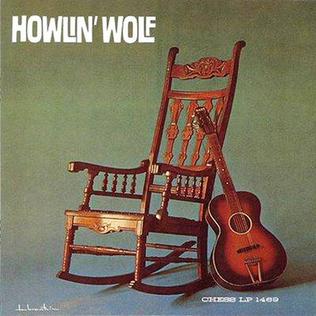
October 17: Howlin' Wolf, "Howlin' Wolf"

Artist: Howlin' Wolf
Album: Howlin' Wolf
Year: 1962
Label: Chess


Everyone has their influences, and everyone at some point or another, takes from that influence. Whether it is a style, a phrase, or even an entire song, there is some point at which every musician reveals the sound(s) he loves. In the case of a majority of the most important rock bands of the late 1960's and early 1970's, there is one musician whose influence is unparalleled. Possessing one of the most distinctive voices in history, as well as one of the most unique personalities ever, one bluesman remains in a class all his own, Howlin' Wolf. With songs that have been covered by everyone from The Doors to The Rolling Stones to Aretha Franklin to PJ Harvey, the sound and style of Howlin' Wolf forever changed the blues-based rock genre. From his wild stage antics to his often risqué lyrics, Howlin' Wolf was truly a one-of-a-kind musician, and there are two distinct phases of his career. Before signing to Chess Records, Howlin' Wolf had a far more angry and aggressive sound, and then once with Chess, he was provided with a Chicago backbeat band that took a bit of the edge off the songs and made them blues classics. By far his finest musical moment, as well as one of the most influential albums ever is his self-titled 1962 debut for Chess Records, and nearly every song on the album is instantly recognizable as both a blues and rock classic.

Not only was Howlin' Wolf one of the most imposing musical forces in history, but at well over six feet tall and three hundred pounds, he was similarly one of the most imposing figures on stage. His stage presence is legendary, as his overly aggressive and often eccentric antics quite literally scared concert-goers on a regular basis. Whether he was driving his motorcycle around the stage or simply the power of his booming voice, Howlin' Wolf represents the darker, more aggressive side of Chicago blues. In many ways, Howlin' Wolf represents one extreme of the Chicago blue style, while on the other end of the spectrum is fellow blues icon, Muddy Waters. Though the two both play in the same style, the manner in which they present the sound could not be more different, yet it proves that even within a sub-genre, there are countless ways in which one can perform the music. After being signed for a few sessions in the early 1950's, Howlin' Wolf bounced from label to label, recording single sides for nearly a decade. Finally, after a handful of hit singles, Howlin' Wolf was finally given the time to record a full length album. Along with this recording time, he was also given what would prove to be one of the most important gifts of his career: an introduction to a younger songwriter who went by the name Willie Dixon.

Nearly every song on Howlin' Wolf (also know as "The Rocking Chair Album") was penned by Dixon, aside from one song by Jimmy Oden, as well as one written by Wolf himself. The collaboration between Wolf and Dixon remains among the greatest musical pairings ever, and each of them became icons though their work together. By the time he was introduced to Howlin' Wolf, Dixon had already established himself as a major force at Chess Records, having written hits for everyone from Bo Diddley and Muddy Waters to Little Walter and Chuck Berry. While the songs he had previously written remain classics, upon meeting Howlin' Wolf, it was clear that Dixon had found the perfect voice for his gritty, somewhat suggestive lyrics. Howlin' Wolf contains some of Dixon's finest work, and songs like "Back Door Man," "The Red Rooster (AKA Little Red Rooster)," and "Spoonful" remain some of the most legendary songs in music history. While these songs were made more famous later by rock bands covering them, it is here on Howlin' Wolf that they were first presented to the world. The fact that nearly every song on the album remains a moving force in modern music serves as a testament to the phenomenal writing ability that lived within Willie Dixon. While it goes without saying that the lyrics penned by Dixon are absolutely fantastic, it is the style and sound of Howlin' Wolf that makes them into true classics.

Search through music history all you like, the fact of the matter is, there has never been another voice that even remotely resembles that of Howlin' Wolf. As gritty as it is menacing, Howlin' Wolf has one of the most instantly recognizable voices in history. Whether singing a slow, winding song like "Back Door Man" or a more fast paced, rocking gem like "Shake For Me," Wolf's performance on every song is nothing short of stunning. Though most people are familiar with The Doors' take on "Back Door Man," after experiencing the original version found on Howlin' Wolf, one gains an entirely new appreciation for the song, and Wolf's vocals and the moods he creates on the track are nothing short of extraordinary. This, in essence, is exactly what makes Howlin' Wolf so amazing and unique; it is the fact that with his distinctive voice, every song he sings sounds like nothing else ever, yet perfectly encapsulates everything that one needs to make a perfect blues song. It is also due to the manner with which he delivers the vocals that each song fully realizes all of the lyrical subtexts and subtleties that Willie Dixon so perfectly crafted. Again, the pairing of Dixon and Wolf remain largely unequaled to this day, and the magic between the two is perhaps no more apparent then on Howlin' Wolf.

Though he is often seen as a "second tier" blues musician, the truth of the matter is, there are few artists who have progressed their genre and have as long lasting impact as Howlin' Wolf. From The Rolling Stones' cover of "Little Red Rooster" to Stevie Ray Vaughan's take on "Tell Me," the influence of Howlin' Wolf can be found all across the musical spectrum. Whether it is the manner in which he crafted the songs, or the swagger than the brought to the lyrics, there are truly few musicians who have had as much impact on later artists then Howlin' Wolf. Taking the brilliant lyrics of Willie Dixon and injecting them with a mesmerizing and stunningly unique vocal sound, Howlin' Wolf is a blues masterpiece of epic proportions. Though Howlin' Wolf had already had a handful of successful singles, it was on his first full length album that his true genius and prowess became evident to the entire world. Though the bands he formed in his later years rank among the finest blues bands ever, it is the more simple and stripped down arrangements found on Howlin' Wolf that represent everything that makes him one of the most well respected musicians to this day. Though it is truly impossible to find a Howlin' Wolf song that is anything less than phenomenal, there is no doubt that his finest musical moment, and one of the pivotal moments in music history is represented on his magnificent 1962 album, Howlin' Wolf.


Standout tracks: "The Red Rooster," "Spoonful," and "Back Door Man."

Friday, October 16, 2009

October 16: L7, "Bricks Are Heavy"

Artist: L7
Album: Bricks Are Heavy
Year: 1992
Label: Slash


Until the late 1960's, the cliché idea of "girls are to be seen, not heard" still had a strong grasp on the world of music. Thankfully, due to the efforts of performers like Janis Joplin, Patti Smith, Polly Styrene, Polly Harvey, and The Runaways (among countless others), women were finally "allowed" to be just as (if not more) loud, aggressive, and open as their male counterparts. As the 1980's came to a close and the stage was set for the musical explosion of the early 1990's, a handful of punk and metal bands fronted by women began to emerge on the national scene. Among these groups, few had as potent and furious a combination of power and musicianship as the wild quartet known as L7. Their name, which is NOT (contrary to popular belief) a veiled sexual reference, is in fact, taken from the slang term for "square" (ie uptight, traditional) and can be traced as far back as Sam The Sham And The Pharaoh's "Wooly Bully" and Elvis Presley's "Jailhouse Rock." Years before the under-talented and over-hyped Courtney Love would attempt to assert herself as "the" female voice of the grunge movement, L7 was staking their claim to the title through their stunning sound and legendary live performances. Presenting influences from artists ranging from Black Sabbath to The Ramones to Blondie and Sonic Youth, L7 were truly a one-of-a-kind band. Though they had already garnered a small, dedicated following, it was their 1992 release, Bricks Are Heavy, that catapulted L7 to the forefront of the national scene and the album remains one of the most defining albums of the decade.

Though L7 almost always tend to get grouped in with the "Seattle Sound" of the early 1990's, the truth of the matter is, the band hails from Los Angeles, and they first began playing as a group in 1985. Perhaps the main reason that they are considered part of the grunge scene is due to their producer, the man behind Nirvana's Nevermind, Butch Vig. Understandably, the sound is clear, yet gritty, and Vig helps the band to perfectly convey their melodious musical mayhem. Though Bricks Are Heavy continues the bands' trademark punk/hardcore sound, there is much more of a heavy metal influence, and this would become the direction the band would follow on later releases. If there was a single moment that broke the band into the mainstream, it was undoubtedly the runaway success of the albums' only single, "Pretend We're Dead." The song cracked the top ten on the "Modern Rock Singles" chart, and it remains one of the most well known songs of the entire decade. The success of "Pretend We're Dead" sent the album to the top of the "Heatseekers" chart, and they received regular rotation on radio, EmpTV, and would later take a prominent spot on the legendary Lollapalooza tour. Truly, there is no other band that has had the mesmerizing sound of L7, and it is largely due to the exceptional musicianship and focus within the band members.

Though there had already been one change in the lineup, and many more would follow, the quartet featured on Bricks Are Heavy is, without a doubt, the bands' finest hour. The dual guitars of band founders Donita Sparks and Suzi Gardner remain one of the most defining and phenomenal sounds of the decade, and the chemistry between the pair is absolutely stunning. Switching between crushing chords and crunching leads, it is within the guitar tone and style where the heavier sound of Bricks Are Heavy becomes most apparent, and the pair are truly fantastic on every track. The interplay between the two is perhaps no more glorious than one can experience on the song, "This Ain't Pleasure." Sparks also remains known for one of the most notorious incidents in music history, as it was she, who at the 1992 Reading Festival, in response to the mud being throw at the stage, returned "fire" by launching her used tampon into the crowd. This attitude perfectly encapsulates the mood and music of L7, and this musical approach is one of the main reasons why they are are so significant. Playing one of the most powerful and menacing basses in history, Jennifer Finch is a music legend in her own right. With her sound and style, Finch re-wrote the books on what could be done on bass, and her work has influenced generations of female musicians. Rounding out the band is one of the greatest drummers in the history of hardcore/punk music, Demetra "Dee" Plakas. Able to play as fast or as heavy as anyone ever, Plakas is absolutely perfect on every song found on Bricks Are Heavy. Every member of L7 is truly superb on the entire album, and it enables the record to achieve an overall sound and impact that remains larely unparalleled to this day.

Though Sparks handles a majority of the lead vocals, Gardner and Finch also take their moment as the lead singer. Sparks' snarling, captivating voice present the ideal balance between attitude and melody, and in many ways, Sparks has the voice that countless hardcore female singers aspire to obtain. Suzi Gardner takes the lead vocals on a trio of tracks, and she is equally as brilliant as Sparks. Interestingly enough, Gardner's voice can be heard on another seminal recording, as a year before forming L7, she supplied backing vocals on the song, "Slip It In" for her friends' band, Black Flag. Regardless of who is singing, the lyrics of L7 are absolutely brilliant, whether they are singing about useless men or making stunning social critiques. In what can be seen as the perfect encapsulation of everything it meant to be a "Gen X'er," their hit single delivers the lines, "...turn the tables with our unity, their neither moral nor majority...wake up and smell the coffee, or just say no to individuality..." Presenting the flip side of their writing, the amazing song, "Shitlist" brilliantly sums up teen angst when Sparks sings, "...when I get mad, and I get pissed, I grab my pen and I write out a list...of all the people that won't be missed...you've made my shitlist..." This blunt yet fantastic songwriting, as well as the extraordinary style with which the lyrics are delivered are one of the key aspects that makes the music of L7 relevant and incredible more than fifteen years after its release.

Whether it is a pulverizing mosh-pit anthem like "Everglade," an edgy, old-school sounding punk number like "Monster," or the legendary sound of "Pretend We're Dead," few bands, regardless of gender, have attained the musical mastery that is presented on L7's Bricks Are Heavy. Truly one of the most iconic albums of the decade, it opened the doors for countless female performers after, and bands like The Donnas, Kittie, and Jack Off Jill truly owe their careers to the pioneering efforts of L7. Featuring as much aggression, distortion, and top-notch musicianship as one can find anywhere else in music history, to this day L7 still represent the pinnacle of the female presence in the "grunge" explosion of the 1990's. The reality is, the band had the perfect sound at the perfect time, and the presence of mega-producer Butch Vig ensured that Bricks Are Heavy would be nothing less than legendary. The mind-blowing guitar playing of Sparks and Gardner, backed by the unmatched rhythm section of Finch and Plakas stand today as one of, if not the, greatest female quartet to ever record. Easily one of the most straightforward and unrelenting bands in history, their stage antics, from auctioning off sex with a band member to "TamponGate" were as "real" and wild as the music that they played. Still standing today as one of the greatest albums ever recorded, L7's 1992 release, Bricks Are Heavy represents everything there is to love about heavy, aggressive music, and it remains one of the most influential and overall phenomenal records ever.


Standout tracks: "Wargasm," "Pretend We're Dead," and "Everglade."

Thursday, October 15, 2009

October 15: Peter Gabriel, "Peter Gabriel (3)"

Artist: Peter Gabriel
Album: Peter Gabriel (3)
Year: 1980
Label: Mercury/Geffen


One of the most challenging tasks for a musician is often the quest to find success as a solo artist after being a part of a successful band. In most cases, the performer in question ends up "trapped" in the shadow of their former band, and rarely move beyond the fan-base they had previously. In a handful of cases, there have been certain musicians who are so amazingly talented, that they are album to completely re-define themselves, and these elite few stand as some of the most recognizable and influential performers in history. High atop this list of artists who were able to overcome their former band stands one of the most progressive and innovative musicians in history, the unmatched Peter Gabriel. Having quickly climbed out of the massive shadow of his former band, Genesis, Peter Gabriel established his place as a solo artist with a handful of hits throughout his first two solo releases. These first two records both cracked the top ten in album sales, as well as spawning a few hit singles. It was Gabriel's amazing ability to fuse together "artsy" musical landscapes with brilliant lyrics and stunning vocal performances that led to his success, but there was clearly something still missing from the albums. Entering the studio in late 1979, Gabriel enlisted the assistance of a few friends, as well as a visionary, up and coming producer and the results remain his most extraordinary work to date, as well as one of the greatest albums ever, 1980's Peter Gabriel.

Peter Gabriel's third self-titled album, also known as 3 or Melt represents his first (and only) release by Mercury Records, though the circumstances surrounding it are a bit odd. After his former label, Atlantic Records, was given the demos for the album, they felt it was not going to be a successful record, and on the advice of John Kaldoner, Gabriel was dropped from the label. Mercury Records was then able to issue the album for about three years, and after their contract lapsed, Gabriel was signed to the newly formed Geffen Records, but their new executive, John Kaldoner. One of the key reasons for the success of Peter Gabriel is undoubtedly the presence of one of musics' most respected producers, Steve Lillywhite. Having worked with everyone from Phish to Talking Heads to Counting Crows, there are few producers in the world today with as impressive a resumé. On Peter Gabriel, Lillywhite clearly has his work cut out for him, as the moods and styles presented by Gabriel are all across the board, from the dark and gloomy sounds of "Intruder" to the complex percussion and synthesizer arrangements scattered throughout the rest of the album. Regardless of the style that Gabriel is exploring, every track sounds perfect, and Lillywhite's ability to balance the myriad of instruments serves as a testament to his amazing ability as a producer and engineer.

This amazing amount of musical complexity could not have been achieved by Gabriel alone, and the list of backing musicians is as impressive as it is lengthy. In what is an exceptionally rare case, one of Gabriel's former bandmates, Phil Collins, lends his fantastic drumming to a few tracks on the album, and each of these is a standout. In fact, Collins used his work on Peter Gabriel to experiment with his own sounds, and the echo-filled, looming sound that he achieves on "Intruder" became one of his trademark sounds, and is the first appearance of the "gated" drumming technique. Shortly before the first reformation of King Crimson, guitar god Robert Fripp lent his talents for a pair of songs on Peter Gabriel, and his presence on the album is nothing short of stunning. Lending backing vocals to a number of songs is the woman who holds the title as being the first female to ever have a number one hit with her own song in the U.K., Kate Bush. One of these songs, "Games Without Frontiers," cracked the top five on the singles charts and remains one of Gabriel's most beloved songs to this day. The song represents one of the most brutal critiques of violence and war that has ever been written, and to this day, the lyrics are still relevant and moving. While the entire lineup found throughout Peter Gabriel play brilliantly on every track, the presence of this trio of musicians is one of the many aspects that makes the record nothing short of legendary.

As amazing as the other musical contributors are all through Peter Gabriel, the album would be nothing without the amazing talent and true musical genius of Peter Gabriel himself. Possessing one of the most wide-ranging and emotive voices in history, Gabriel remains one of the most innovative and dynamic vocalists and performers of all time. Along with his fantastic voice, there are few artists who have pushed music forward as much as Gabriel, as throughout his career, he has constantly been searching for something "new" on every album. His ability to create truly theatrical musical works further sets him aside from his peers, and his live performances are nothing short of legendary. Along with all of this, Peter Gabriel is also one of the finest lyricists of his generation, musing on topics both humorous and serious. On Peter Gabriel, he presents one of his most well known and moving songs in the form of the anti-apartheid, anti-hate song, "Biko." Written about the (then) still recent and shocking torture and murder of South African activist, Steven Biko, the song found moderate chart success, and became the a staple closer for Gabriel's live performances. Furthering the dark overtones of Peter Gabriel is the beautifully melodic, yet hauntingly lyric'd, "Family Snapshot." Written about the attempted assassination of George Wallace, with undeniable references to the assassination of John F. Kennedy, both the mood and vocal performance remain unrivaled to this day. Though he had already proven his ability, it is on his third self-titled album that Peter Gabriel reached his musical apex, and his performance on every song is nothing short of extraordinary.

Finding the perfect balance between melody, pop appeal, and making an "artsy" record, Peter Gabriel's third self-titled record is one of the most mind-blowing albums one can ever hope to experience. Blending together a wide variety of instruments, from rich horn sections to multiple synthesizers, to more traditional guitars and piled vocals, Gabriel creates musical textures like nothing else heard before this album. With musical cameos from some of the biggest names in music, as well as the incomparable production work from Steve Lillywhite, Peter Gabriel stands today as one of the most progressive and forward-thinking albums of all time. The success of the album is somewhat strange, as most records that are as dark and bleak as Peter Gabriel do not see much public popularity. However, this serves as a testament to the phenomenal music found therein, as well as the brilliant writing and vocal performance delivered by Gabriel himself. Truly exploring every aspect of his music, the songs run the gamut in everything from length to theme to the choices in instrumentation, and this enables the music itself to become nearly as memorable as the lyrics and vocal work. Though he made amazing records in his days with Genesis, after releasing his third solo album, 1980's Peter Gabriel, he had unquestionably found his own, unique sound, and both the record, as well as Gabriel himself, remain among the most highly respected releases in the history of recorded music.


Standout tracks: "Intruder," "Games Without Frontiers," and "Biko."

Wednesday, October 14, 2009

October 14: Stevie Ray Vaughan, "Texas Flood"

Artist: Stevie Ray Vaughan
Album: Texas Flood
Year: 1983
Label: Epic


It seems that nearly every day, another music publication is putting out a "greatest guitarists" list, and the top few never seem to change, regardless of the magazine. Though names like Hendrix, Page, and Allman are certainly hard to argue, there always seems to be one individual who is thought to be a "second tier" player. This is confusing, as the guitarist in question is by far more talented than many who regularly rank above him, and his contributions and influence can be heard in everyone from Kenny Wayne Shepard to Pearl Jam's Mike McCready. Unquestionably one of the greatest blues and blues-rock guitarists of all time, Stevie Ray Vaughan is nearly peerless when it comes to conveying true beauty and emotion through his playing. When one looks at the overall picture of guitar players, there is truly nobody with a sound and style quite like Stevie Ray Vaughan, and the manner with which he fuses together rock, jazz, and blues remains unrivaled to this day. Possessing one of the most unique guitar tones, as well as an instantly recognizable voice, it is he who is largely responsible for the blues revival that occurred during the early 1980's. Recording five extraordinary albums before his tragic death in 1990, it is his phenomenal debut record, 1983's Texas Flood, that instantly propelled him to "icon" status across the globe.

Even before breaking out on his own, Stevie Ray Vaughan experienced the highs and lows of being a professional musician. Shortly after he and his band, Double Trouble, played a private show for The Rolling Stones, they became the first unsigned band ever to play Switzerland's legendary Montreux Jazz Festival...where they were booed for nearly their entire set due to being a louder, electric act and a festival dominated by acoustic acts. However, this performance led to a late night jam session with Jackson Browne and David Bowie. Much later, Browne would offer Vaughan free time in his recording studio, but it is the work with Bowie that made him a "name." After the jam session, Bowie invited Stevie Ray Vaughan to play on his next album, Let's Dance, and the record would become the most successful of Bowie's career. After declining an offer to be in Bowie's touring band, Stevie Ray Vaughan and Double Trouble entered Browne's studio and it was there that they recorded and self-produced Texas Flood. Completing the entire album in just under three days of recording, the album was a surprisingly large hit, earning Grammy nominations, as well as bringing blues-based rock music back to the forefront of popular music. Texas Flood is truly a magical musical experience, and many later re-issues make the original recording even better by adding a handful of live tracks, including the blisteringly stunning "Tin Pan Alley." After listening to Texas Flood, it is immediately clear why the album was so successful, as the music found therein finds a group of musicians with amazing chemistry, creating a soulful sound that had not been heard in decades.

Having honed the songs on Texas Flood with countless live performances, the group nails every nuance of each song, and the manner with which they are album to move as a single unit is a stunning testament to their combined musicianship. While Stevie Ray Vaughan is unquestionably the core of the group, his rhythm section, Double Trouble, help to take the songs to another level. Having honed his skills backing Johnny Winters throughout the 1960's, bassist Tommy Shannon met Stevie Ray Vaughan in the early 1970's when they briefly played together in the band Krakerjack. A decade later, the two reunited and formed two thirds of one of the greatest blues bands in history. Whether he is taking a slow "walking" bassline, or twirling around the brilliant guitar patterns of Stevie Ray Vaughan, Shannon's playing throughout Texas Flood is nothing short of superb, and it is due to his presences that the songs contain a funky, soulful feel. The other half of Double Trouble, drummer Chris Layton, is just as fantastic on the album, bringing a jazzy, swinging style to the compositions. Completely ignoring traditional blues and rock drumming styles and time signatures, Layton is truly in a class all his own, and his brilliance is highlighted by his work on the Isley Brothers' cover, "Testify." Proving that the sum is greater than the individuals, the wall of music presented throughout Texas Flood remains one of the most amazing and powerful musical experiences ever recorded.

While Stevie Ray Vaughan was unquestionably unique in his own right, was also a performer who made no attempt to hide his influence. Instead, he paid tribute to them in everything from his singing style to the way in which he approached the guitar. With his gritty, wailing voice, the singing to Stevie Ray Vaughan evokes the spirit of B.B. King and Larry Davis among many other musical greats. His ability to turn something as simple as a nursery rhyme into an explosive blues powerhouse ("Mary Had A Little Lamb") serves as proof that, with the right attitude and talent, there are truly no limits to what can be accomplished musically. The unmatched playing ability of Stevie Ray Vaughan can be perfectly summed up in the four minutes and forty seconds that is called, "Rude Mood." A fast-paced, truly gorgeous instrumental track, every element, from blues to jazz to rock, is found on the song, and Vaughan's performance is simply perfect. On the flip side, the albums' title track remains one of Stevie Ray Vaughan's crowing achievements and is truly the song that jump-started the blues revival. Using a standard blues progression both musically and lyrically, the song, which was originally recorded in 1958 by Larry Davis, highlights both the phenomenal emotion within Vaughan's voice, as well as his unparalleled guitar skills. With his guitar crying as much as his vocals, "Texas Flood" remains one of the greatest blues tracks ever recorded. There is not a moment wasted anywhere on Texas Flood, and nearly every song leaves the listener in true awe, even after countless listenings and more than three decades after its initial release.

Approaching twenty years since his tragic death in a helicopter accident, few musicians hold the level of respect that is given to Stevie Ray Vaughan. Truly a musician of unparalleled proportions, his impact on the world of music cannot be overstated. Traces of his sound and style can be heard in everything from grunge to rock and obviously, he was the catalyst for the blues-rock explosion that lasted for more than twenty years after the release of Texas Flood. The album is perfectly sequenced, reflecting the mood and flow of a live performance, and this is no doubt due to the time that the trio spent attempting to break into the mainstream. While his talent is undeniable, the true beauty behind the guitar playing to Stevie Ray Vaughan lies within the way he clearly emotionally connects to every single song. This distinctive, unguarded, soulful sound is what sets him far above his contemporaries, and what makes his songs so mesmerizing. The manner with which Vaughan combines the "old school" of crying blues guitar, with the "new school" of more upbeat, almost forceful music is unparalleled, and it is another aspect that makes Texas Flood so sensational. Easily one of the most talented guitarists of all time, Stevie Ray Vaughan ranks among the most elite to every play, and his tremendous 1983 debut album, Texas Flood, remains one of the most indispensable records ever recorded, and similarly one of the most significant musical landmarks in history.


Standout tracks: "Pride And Joy," "Texas Flood," and "Rude Mood."